Find the Best Drain Field Repair Companies for Your Business
No obligation • Fast responses • Nationwide coverage

Why you can trust Septic Spot
Septic Spot is a leading United States resource for understanding and comparing septic services. Our editors review providers using consistent criteria and verify key business details. Listings and scores are independent, and companies cannot pay to influence our content.
Search providers near you
Top Drain Field Repair Companies in Orange, California Ranked
A failing drain field, also known as a leach field or absorption field, is a serious issue for any Orange County homeowner with a septic system. This critical component is responsible for safely dispersing and filtering treated wastewater into the soil. When it fails, it can lead to soggy yards, foul odors, and even sewage backups into your home. Finding a qualified professional to assess, repair, or replace your septic drain field is essential for protecting your property, your health, and the local environment. This guide will help you understand the local process, regulations, and costs so you can make informed decisions when seeking service.

Understanding Your Septic Drain Field
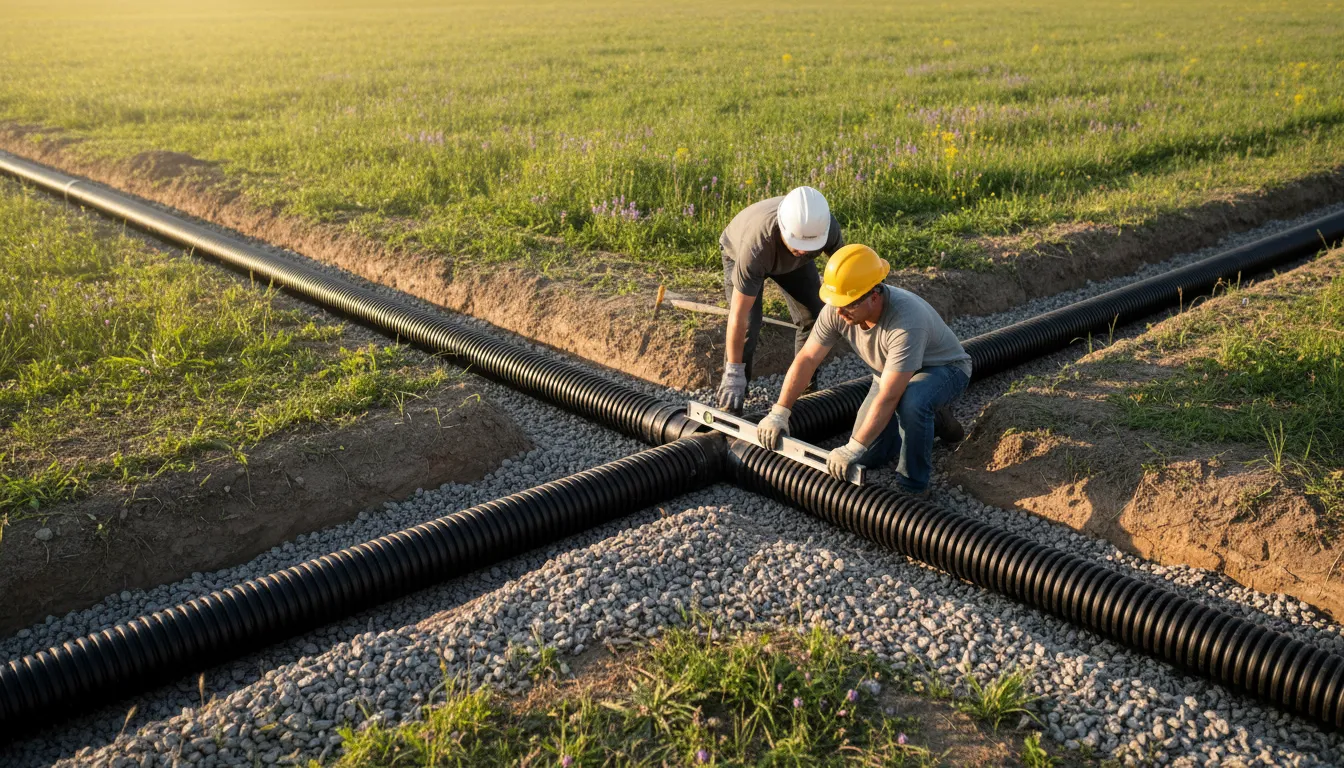
The drain field is the final stage of your onsite wastewater treatment system. After solids settle in the septic tank, the liquid effluent flows out to the drain field. Here, it percolates through a series of perforated pipes buried in gravel-filled trenches, allowing the soil to naturally filter out remaining contaminants before the water rejoins the groundwater table. A healthy leach field is vital for the entire system to function. Common signs of failure include persistently wet or spongy ground over the field, lush green grass patches (indicating a nutrient surge), slow-draining household fixtures, and unpleasant sewage smells in your yard.
Orange County Regulations and Permitting
All work on a septic system in Orange, including drain field repair or replacement, is strictly regulated by OC Public Works (OCPW). You cannot simply hire a contractor to dig a new leach field; the project requires approved plans and permits before any construction begins.
- Permit Requirement: Any repair or replacement of an onsite sewage system must have plans submitted and approved by OCPW. This ensures the new design meets all health and environmental standards.
- Site Evaluation: A qualified professional, such as a licensed septic engineer or contractor, must conduct a thorough site evaluation. This assessment determines critical factors like soil type, percolation rate (how fast water soaks in), and the depth to the seasonal high groundwater table.
- Key Setbacks: The system must be located within your property lines while maintaining specific minimum distances from wells, surface water, buildings, and property lines 1.
- Slope Considerations: Properties with slopes exceeding 20% require a special geotechnical report, and the maximum allowable slope for a system is 35% 2.
Soil and Site Suitability in Orange
The success of a new absorption field hinges entirely on local soil conditions. The OCPW guidelines and state standards outline strict requirements.
- Soil Percolation: The soil must have an appropriate percolation rate, typically between 1 and 12 inches per hour. Soil that drains too slowly will cause ponding, while soil that drains too quickly won't provide adequate filtration.
- Groundwater Separation: There must be a minimum of 5 feet of vertical separation between the bottom of the drain field trenches and the highest level of the groundwater table. This prevents contamination.
- Soil Depth: At least 3 feet of suitable, unsaturated soil is required beneath the trenches for proper wastewater treatment and absorption.
- Compaction and Flooding: The chosen area must be protected from vehicle traffic and heavy compaction, and it cannot be in a flood-prone zone, as saturation will cause system failure.
The Process: From Inspection to Installation
Addressing a suspected leach field problem follows a structured process. Skipping steps, especially the permit, can lead to costly fines and an illegal system.
- Professional Inspection: The first step is a comprehensive system inspection by a licensed provider. This often involves digging inspection holes in the leach field area and at both ends of the septic tank to assess the baffles, pipes, and soil saturation levels 3 4. The goal is to diagnose whether the issue is a clogged pipe, a failing distribution box, or a completely saturated and failed absorption field.
- Assessment & Design: If replacement is necessary, the professional will perform the required soil tests (perc tests) and design a new system that complies with all OCPW regulations for your specific property 5.
- Permit Submission: The design plans are submitted to OC Public Works for review and approval. Only with an approved permit in hand can work legally proceed.
- Construction: Once permitted, the contractor will install the new drain field. This involves excavating the new trenches, placing gravel and perforated pipe, and covering it with soil. The old, failed field is properly abandoned according to code.
Find the perfect drain field repair companies for your needs
Get personalized recommendations and expert advice
Cost Factors for Drain Field Work in Orange
The cost for leach field services in Orange varies widely based on the extent of the problem, soil conditions, property size, and system design. It's important to get multiple detailed quotes from licensed, insured professionals.
- Minor Repairs: Addressing issues like a clogged pipe or repairing a distribution box typically ranges from $300 to $900, though more complex pipe repairs can cost $1,200 to $4,000 6.
- Drain Field Replacement: Replacing just the leach field itself is a major undertaking. In California, this cost often averages between $7,000 and $15,000 7. This range covers the new field installation but not a new tank.
- Full System Replacement: If both the septic tank and drain field need to be replaced, total costs commonly range from $6,000 to $10,000, and can reach $20,000 or more for large or complex systems 8 9.
- What Influences Cost: Key factors include the size of the field needed (based on household size and soil percolation), accessibility of your yard, the need for heavy equipment, soil amendment requirements, and the permitting and design engineering fees.
Common Causes of Drain Field Failure
Understanding what causes a leach field to fail can help you prevent future problems after a repair or replacement.
- Lack of Regular Pumping: The most common cause of system failure is neglecting to pump the septic tank every 3-5 years. Excess solids flow out of the tank and clog the pores in the drain field soil, causing irreversible saturation and failure 10.
- Excessive Water Use: Overloading the system with more wastewater than it was designed to handle prevents the drain field from drying out and rejuvenating.
- Improper Disposal: Flushing chemicals, grease, non-biodegradable items, or excessive use of garbage disposals can kill the beneficial bacteria in the tank and clog the system.
- Physical Damage: Driving or parking vehicles over the drain field compacts the soil and can crush the underground pipes. Planting trees too close can also lead to root intrusion.
Maintaining Your New or Repaired System
After investing in a repair or new leach field installation, proper maintenance is key to ensuring its longevity. Follow the pumping schedule recommended by your professional based on your household size and tank size. Conserve water by fixing leaks and spreading out laundry loads. Never pour grease or chemicals down the drain, and avoid using septic system additives marketed as "cleaners," as they can sometimes do more harm than good. Most importantly, keep a detailed record of all inspections, pumping, and repairs for future reference and for potential home buyers.
Frequently asked questions
Sources
Footnotes
-
California Septic Tank Requirements | Onsite Wastewater ... ↩
-
Septic Repair Cost in California: Complete Breakdown of Pricing ... ↩
-
Cost to Replace Septic Tank and Drain Field [2026 Data] | Angi ↩
-
Septic Tank Replacement and Drain Field Cost in California ↩
-
Septic System Design and Installation in Orange County, CA ↩