Find the Best Drain Field Repair Companies for Your Business
No obligation • Fast responses • Nationwide coverage

Why you can trust Septic Spot
Septic Spot is a leading United States resource for understanding and comparing septic services. Our editors review providers using consistent criteria and verify key business details. Listings and scores are independent, and companies cannot pay to influence our content.
Search providers near you
Top Drain Field Repair Companies in Palm Desert, California Ranked
A failing septic drain field is a serious concern for any homeowner, leading to unpleasant odors, soggy yards, and potential environmental contamination. In Palm Desert, addressing these issues requires specialized knowledge of the local desert environment and strict adherence to Riverside County and Coachella Valley Water District (CVWD) regulations. This guide explains the critical aspects of leach field repair and replacement, helping you understand the process, costs, and local requirements so you can effectively find qualified professionals to restore your system's function.

Understanding Your Septic Drain Field in the Coachella Valley
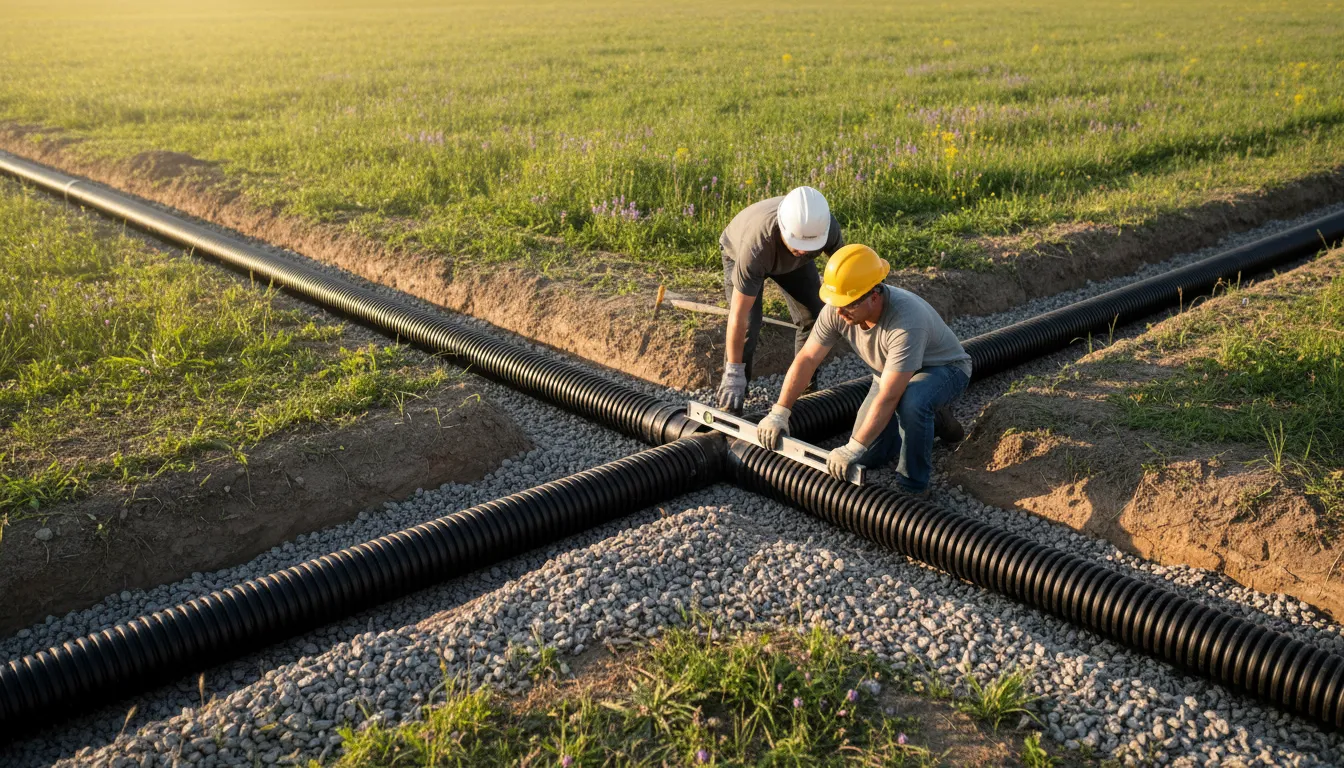
The drain field, also known as a leach field or absorption field, is the final and most crucial stage of your onsite wastewater treatment system (OWTS). After solids settle in the septic tank, the liquid effluent flows into a network of perforated pipes buried in trenches filled with gravel. This effluent slowly percolates through the soil, where natural biological processes provide final treatment before the water rejoins the groundwater.
In Palm Desert's unique environment, this process faces specific challenges. The soil composition, high groundwater tables in certain areas, and stringent local regulations all play a significant role in how a system is designed, repaired, or replaced. A malfunctioning soil absorption system is not just an inconvenience; it's a public health concern that must be addressed promptly and correctly.
Local Regulations and Permit Requirements
Any significant repair or full replacement of a septic drain field in Palm Desert is governed by a detailed regulatory framework. The Riverside County Department of Environmental Health operates under a Local Agency Management Program (LAMP) for Onsite Wastewater Treatment Systems, which sets the standard for all work.
Key Regulatory Bodies:
- Riverside County Department of Environmental Health: This agency issues all required permits for septic system work. You cannot begin excavation or installation without their approval.
- Coachella Valley Water District (CVWD): As the local water management agency, CVWD has its own Development Design Manual that must be followed for systems within its jurisdiction 1.
- California Regional Water Quality Control Board: Provides overarching approval of the county's LAMP, ensuring state-level environmental standards are met.
The permitting process is mandatory and involves submitting engineered plans for approval. A final inspection by a county official is required before the system can be backfilled and put into use. Skipping proper permitting can result in fines, an unapproved system, and difficulties when selling your property.
Critical Site and Soil Considerations for Desert Systems
Successful drain field function hinges on proper site evaluation. Local professionals will assess several key factors specific to your Palm Desert property:
- Soil Percolation Rate: The soil must absorb effluent at a rate between 1 and 12 inches per hour. Soils with high clay content, common in some desert basins, absorb too slowly and can cause premature failure. A professional conducts a "perc test" or soil boring analysis to determine this rate.
- Groundwater Separation: State and county codes require a minimum of 5 feet of vertical separation between the bottom of the drain field trench and the seasonal high-water table. This prevents untreated effluent from contaminating groundwater, a critical concern in the Coachella Valley.
- Topography and Slope: Properties with slopes exceeding 20% may require a geotechnical report. The maximum allowable slope for a conventional system is typically 35%. Steeper slopes may necessitate an alternative system design.
- Setbacks: Systems must be located within property lines with specific minimum distances from homes, property lines, wells, and watercourses. These setbacks are strictly enforced during the permit review process.
The Step-by-Step Process for Repair or Replacement
Whether you need a targeted fix or a completely new leach field, the process follows a structured path.
- Professional Site Evaluation: A qualified septic contractor or engineer will assess the failure, perform necessary soil tests (perc tests or deep boring observations), and evaluate the existing system 2.
- Design and Engineering: For replacements and major repairs, an engineered plan must be drawn up. This plan specifies the system type, layout, materials, and how it meets all regulatory requirements for your specific soil conditions 3.
- Permit Acquisition: Your contractor will submit the engineered plans, application, and fees to the Riverside County Department of Environmental Health for review and approval 4.
- Excavation and Installation: Once permitted, the old field may be abandoned or excavated, and new trenches are dug. Perforated pipes are laid in gravel beds, and all components are connected to the septic tank 5.
- Final Inspection and Backfill: A county inspector must visit the site to approve the installation before the trenches are backfilled with soil. This inspection is crucial for obtaining final approval 6.
Find the perfect drain field repair companies for your needs
Get personalized recommendations and expert advice
Cost Factors for Drain Field Work in Palm Desert
Costs for septic drain field work in Palm Desert vary widely based on the scope of the problem, soil conditions, and the system type required. It's important to get multiple detailed quotes from licensed professionals.
- Targeted Drain Field Repair: For minor issues like a clogged line or a small section of failure, repairs can range from $3,000 to $10,000.
- Conventional System Replacement: Completely replacing a standard septic tank and drain field in California typically falls between $5,000 and $12,000, though desert-specific challenges can influence this.
- Alternative System Installation: If your soil fails a standard perc test, you may need an advanced treatment system (like an aerobic treatment unit or mound system). These are more complex and expensive, ranging from $8,000 to over $30,0007 8 9.
- Additional Costs: Remember to budget for permits, engineering design plans, and potential landscaping restoration. These can add several thousand dollars to the total project cost 10.
Maintaining Your New or Repaired Drain Field
Protecting your investment is key. After a repair or replacement, follow these guidelines to extend the life of your leach field:
- Schedule Regular Inspections: Have your entire septic system inspected by a professional every three years 11.
- Conserve Water: Reduce hydraulic overload by fixing leaks and spreading out laundry loads.
- Mind What You Flush: Never flush chemicals, paints, grease, coffee grounds, or non-biodegradable items. Avoid using excessive garbage disposal 12.
- Protect the Area: Never drive, park, or place heavy structures (like sheds or patios) over the drain field. The soil must remain uncompacted to allow for proper air and water flow 13 14.
- Landscape Carefully: Plant only grass or shallow-rooted plants over the field. Trees and shrubs with deep roots can clog and damage the pipes.
Signs You Need Drain Field Attention
Don't wait for a complete failure. Contact a local septic professional if you notice:
- Sewage odors in your yard or home.
- Unusually soggy, spongy, or bright green grass over the drain field area.
- Slow-draining sinks, tubs, or toilets, especially after heavy water use.
- Sewage backing up into your home.
- Standing water or surfacing effluent in your yard.
Addressing these signs early can mean the difference between a relatively minor repair and a costly full replacement.
Frequently asked questions
Sources
Footnotes
-
Development Design Manual Coachella Valley Water District ... - https://www.cvwd.org/DocumentCenter/View/4206/Development-Design-Manual-PDF?bidId= ↩
-
California Septic Tank Requirements | Onsite Wastewater ... - https://www.ntotank.com/blog/california-septic-tank-requirements ↩
-
Septic System Regulations in Southern California: What You ... - https://www.lanikseptic.com/socal-septic-regulations/ ↩
-
County of Riverside Local Agency Management Program - https://www.waterboards.ca.gov/rwqcb7/board_decisions/adopted_orders/orders/2024/2024_0039riv_lamp_attach_a.pdf ↩
-
Septic System Services - https://www.leducusa.com/services/septic-system-services/ ↩
-
LOCAL AGENCY MANAGEMENT PROGRAM for ONSITE ... - https://rivcoeh.org/sites/g/files/aldnop361/files/migrated/Portals-0-PDF-Land-Use-LAMP-2022.pdf ↩
-
Septic Repair Cost in California: Complete Breakdown of Pricing ... - https://www.lanikseptic.com/septic-repair-cost/ ↩
-
Septic Tank Replacement and Drain Field Cost in California - https://www.lanikseptic.com/how-much-does-it-cost-to-replace-a-septic-tank-and-drain-field-in-california/ ↩
-
What is the best septic system if your land fails a perc test? - https://www.premiertechaqua.com/en-us/blog/best-septic-system-failed-perc-test ↩
-
Cost to Replace Septic Tank and Drain Field [2026 Data] | Angi - https://www.angi.com/articles/how-much-new-drain-fields-foot.htm ↩
-
How to Keep Your Septic System Healthy in Riverside County (Pro Guide) - https://www.lanikseptic.com/how-to-keep-your-septic-system-healthy/ ↩
-
The Californian's Guide To Septic Tanks - https://cacciaplumbing.com/blog/california-septic-tank-guide/ ↩
-
Homeowner's Guide to Septic Systems - El Dorado County - https://www.eldoradocounty.ca.gov/files/assets/county/v/1/documents/government/environmental-management/environmental-management/septic-documents/epa_homeowner_septic_guide.pdf ↩
-
7 Things That Will Damage Your Septic System - Russo Bros. & Co. - https://russobrosplumbing.com/blog/3-worst-put-septic-system/ ↩