Find the Best Drain Field Repair Companies for Your Business
No obligation • Fast responses • Nationwide coverage

Why you can trust Septic Spot
Septic Spot is a leading United States resource for understanding and comparing septic services. Our editors review providers using consistent criteria and verify key business details. Listings and scores are independent, and companies cannot pay to influence our content.
Search providers near you
Top Drain Field Repair Companies in Petaluma, California Ranked
A failing drain field is a serious issue for any home with a septic system, leading to soggy yards, unpleasant odors, and potential environmental contamination. In Petaluma, addressing problems with your leach field or absorption area is a regulated process that requires specific expertise and local permits. This guide explains the critical steps, local regulations, and costs involved in septic drain field repair and replacement, helping you understand your options and connect with qualified professionals in the Petaluma area.
Just-in Time Plumbing and Heating
Santa Rosa, CA
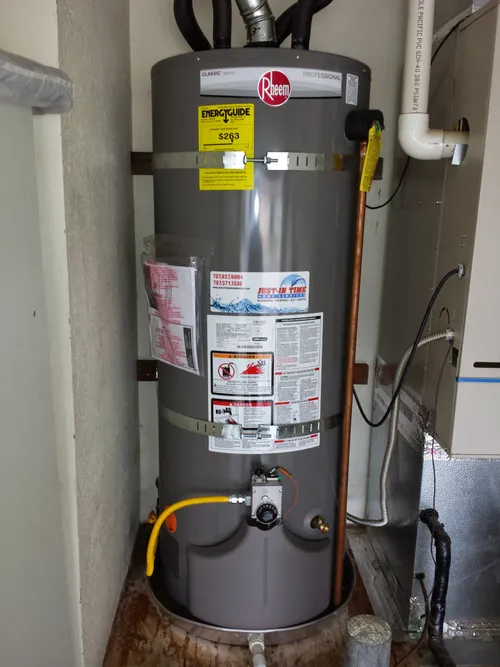
Just-in Time Plumbing and Heating is a family-owned business serving Santa Rosa, CA, and the greater Sonoma County area. They specialize in septic system repair, drain field restoration, septic pump repair and replacement, as well as trenchless sewer line replacements and hydrojetting. With over 20 years of experience, the company offers residential and light commercial plumbing, heating, and sanitation services. As a second-generation contractor, the owner brings extensive knowledge in HVAC and plumbing systems to the business.
Superior Septic Pumping Service
Santa Rosa, CA
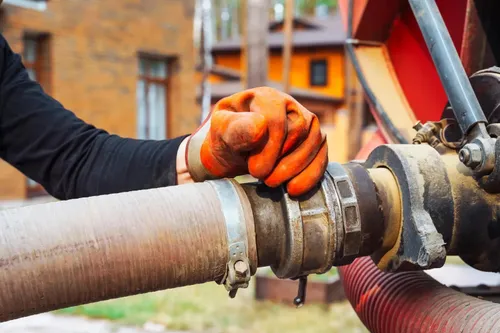
Superior Septic Pumping Service is a septic system maintenance and repair company based in Santa Rosa, CA. They offer services including septic pumping, tank cleanouts, repairs, and real estate inspections. With over 20 years of experience, the owner-operated business uses advanced equipment to handle issues such as sludge buildup, cracked pipes, and faulty drain fields. Their team serves Santa Rosa and surrounding areas, providing comprehensive septic solutions to help prevent backups and contamination.
Understanding Your Septic System's Drain Field
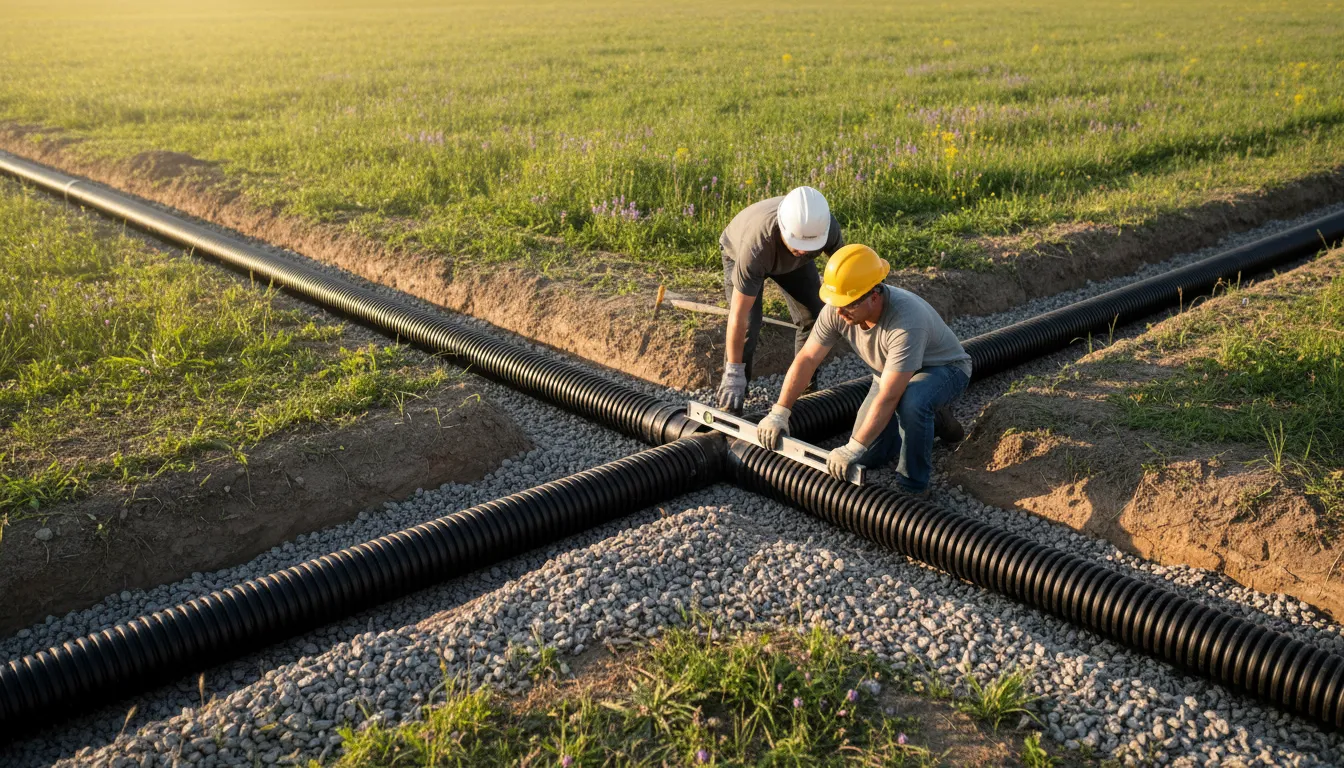
The drain field, also known as a leach field or soil absorption system, is the final and most crucial stage of your onsite wastewater treatment. After solids settle in the septic tank, the clarified liquid effluent flows into a network of perforated pipes buried in trenches filled with gravel. This effluent slowly percolates into the surrounding soil, where natural biological processes provide the final treatment. When this area fails, wastewater can no longer be absorbed, leading to system backups and surface breakout.
Signs You Need Drain Field Service in Petaluma
Recognizing early warning signs can prevent a full system failure and more costly repairs. If you notice any of the following issues around your Petaluma property, it's time to investigate your leach field:
- Soggy Ground or Standing Water: Persistent wet spots, spongy grass, or pooling water over the drain field area, especially when it hasn't rained.
- Sewage Odors: Unpleasant smells emanating from your yard, particularly near the drain field location.
- Slow Drains and Backups: Gurgling pipes, slow-draining sinks and toilets, or sewage backups in the home, indicating the system is not draining properly.
- Unusually Green Grass: Patches of grass over the drain field that are much lusher and greener than the rest of the lawn, indicating a nutrient overload from surfacing effluent.
- Failed Dye Test: Often required during real estate transactions, a dye test introduces colored dye into the system to visually confirm a failure if it appears on the ground surface 1.
The Petaluma and Sonoma County Regulatory Process
All septic system work in unincorporated Sonoma County and Petaluma is strictly regulated by Permit Sonoma. You cannot begin any repair or replacement without the proper permits. The process is designed to protect public health and local groundwater.
1. Initial Site Evaluation and Percolation Test: The first official step is usually a site evaluation conducted by a licensed professional, which includes a percolation (perc) test. This test measures how quickly water drains through your soil by digging a series of holes and timing the water drop. Sonoma County requires soil to have a percolation rate between 1 and 12 inches per hour to be suitable for a standard system 2. This evaluation also checks for a minimum 5-foot separation from the high groundwater level and assesses slope restrictions (land over 35% slope is generally not suitable) 2.
2. Permit Application: Your septic professional will submit an application to Permit Sonoma, including the site evaluation report, proposed system design, and a plot plan. A critical local requirement is designating a reserve replacement area on your property-a space set aside for a future drain field should the primary one fail.
3. System Design and Approval: Based on the soil conditions, the system will be designed as either a standard trench system or a more complex engineered system (like a mound or drip irrigation system) for challenging sites. Non-standard systems require enrollment in the county's Operational Permit (OPR) monitoring program 3.
4. Installation and Inspection: Once permits are issued, the licensed contractor can perform the work. All stages of construction will be inspected by Permit Sonoma to ensure compliance with the approved plans.
Common Drain Field Repair & Replacement Procedures
The solution depends on the extent of the failure, determined through a professional inspection that often includes locating the tank, pumping it, and inspecting the distribution box and field lines 4.
Minor Repairs ($300 - $900)
These address isolated issues before they cause a full field failure.
- Jetting or Cleaning Lines: Using high-pressure water to clear minor clogs or biofilm buildup in the drain field pipes.
- Replacing a Clogged Pipe Section: Excavating and replacing a single compromised section of perforated pipe.
- Leveling a Distribution Box: Re-leveling a tilted distribution box to ensure even effluent flow to all field lines.
Major Drain Field Repairs ($1,000 - $5,000)
This involves more significant work but may avoid a full replacement.
- Field Line Addition (Finger Extension): Adding new trenches to the existing drain field to increase absorption capacity.
- Partial Field Replacement: Excavating and replacing a portion of the failed leach field while leaving functional sections intact.
Full Drain Field Replacement ($5,000 - $20,000+)
When the entire absorption area has failed, a full replacement is necessary. This is a major project that includes:
- Site Preparation: Excavating and removing the old gravel and contaminated soil.
- New Installation: Installing new gravel beds, perforated pipes, and geotextile fabric according to the permitted design.
- Restoration: Backfilling with clean soil and restoring the landscape.
Costs vary dramatically based on soil conditions, system size, and whether a standard or engineered system is required. Mound systems or other alternative technologies can be at the higher end of the cost spectrum or more.
Find the perfect drain field repair companies for your needs
Get personalized recommendations and expert advice
Cost Breakdown for Petaluma Drain Field Work
Understanding the potential investment helps in planning. Here's a detailed look at the costs involved, which align with regional data for Sonoma County 5:
- Site Evaluation & Percolation Test: $4,000 - $6,000. This critical first step includes the professional's fee for the test and report, plus county permit fees (approximately $750).
- Minor Repairs: $300 - $900 for tasks like jetting a line or replacing a short section of pipe.
- Major Repairs: $1,000 - $5,000 for partial field work or extensions 6.
- Full Drain Field Replacement: $5,000 - $20,000+. The wide range depends on whether it's a standard trench system or an engineered solution for difficult sites 7 8.
- Septic Tank Replacement (if needed): $3,000 - $10,000. A failing tank often needs replacement during a major drain field project 9.
Maintaining Your Drain Field to Prevent Failure
Proactive maintenance is the most cost-effective strategy. Key practices include:
- Regular Tank Pumping: Pump your septic tank every 3-5 years to prevent solids from washing out into the drain field.
- Conserve Water: Spread out laundry loads and fix leaks to avoid hydraulically overloading the field.
- Mind What You Flush: Only human waste and toilet paper. Never flush chemicals, wipes, or grease.
- Protect the Area: Never drive or park vehicles over the drain field, and avoid planting trees with deep roots nearby.
Choosing a Service Provider in Petaluma
Selecting the right contractor is essential for a compliant and lasting repair. Look for a professional who:
- Is licensed by the state of California for septic system work.
- Has extensive experience with Permit Sonoma procedures and local soil conditions.
- Provides detailed, written estimates that break down permitting, design, labor, and material costs.
- Can explain the pros and cons of different repair versus replacement options for your specific situation.
- Offers references from recent projects in the Petaluma area.
Frequently asked questions
Sources
Footnotes
-
Common Septic Tank Repairs In California (& What They Cost) - https://cacciaplumbing.com/blog/common-septic-tank-repairs-in-california/ ↩
-
The Californian's Guide To Septic Tanks - https://cacciaplumbing.com/blog/california-septic-tank-guide/ ↩ ↩2
-
Septic Systems - https://permitsonoma.org/divisions/engineeringandconstruction/wellandsepticsystems/septicsystems ↩
-
Septic Real Estate Inspections | Petaluma, California - https://www.superiorsepticpumpingserviceca.com/septic-real-estate-inspections ↩
-
How Much Does Septic Repair Cost in 2025? | Blog - https://www.blueribbonseptic.com/blog/septic-repair-cost-sacramento-2025 ↩
-
Septic Repair Cost in California: Complete Breakdown of Pricing ... - https://www.lanikseptic.com/septic-repair-cost/ ↩
-
Septic systems in Sonoma County: costs explained - https://www.modernlivingsonoma.com/2022/09/26/a-guide-to-septic-systems-in-sonoma-county/ ↩
-
Septic Drain Field Replacement Cost - https://dillonseptic.com/septic-drain-field-replacement-cost/ ↩
-
Cost to Replace Septic Tank and Drain Field [2026 Data] | Angi - https://www.angi.com/articles/how-much-new-drain-fields-foot.htm ↩