Find the Best Drain Field Repair Companies for Your Business
No obligation • Fast responses • Nationwide coverage

Why you can trust Septic Spot
Septic Spot is a leading United States resource for understanding and comparing septic services. Our editors review providers using consistent criteria and verify key business details. Listings and scores are independent, and companies cannot pay to influence our content.
Search providers near you
Top Drain Field Repair Companies in Pittsburg, California Ranked
A failing drain field, also known as a leach field or absorption system, is a serious issue for any home with a septic system. This critical component is responsible for safely dispersing and filtering treated wastewater into the soil. When it malfunctions, it can lead to sewage backups, environmental contamination, and significant property damage. This guide provides essential information for Pittsburg homeowners on recognizing drain field problems, navigating the local regulatory process, and understanding the scope and costs of repair or replacement work.
Understanding Your Septic System's Drain Field
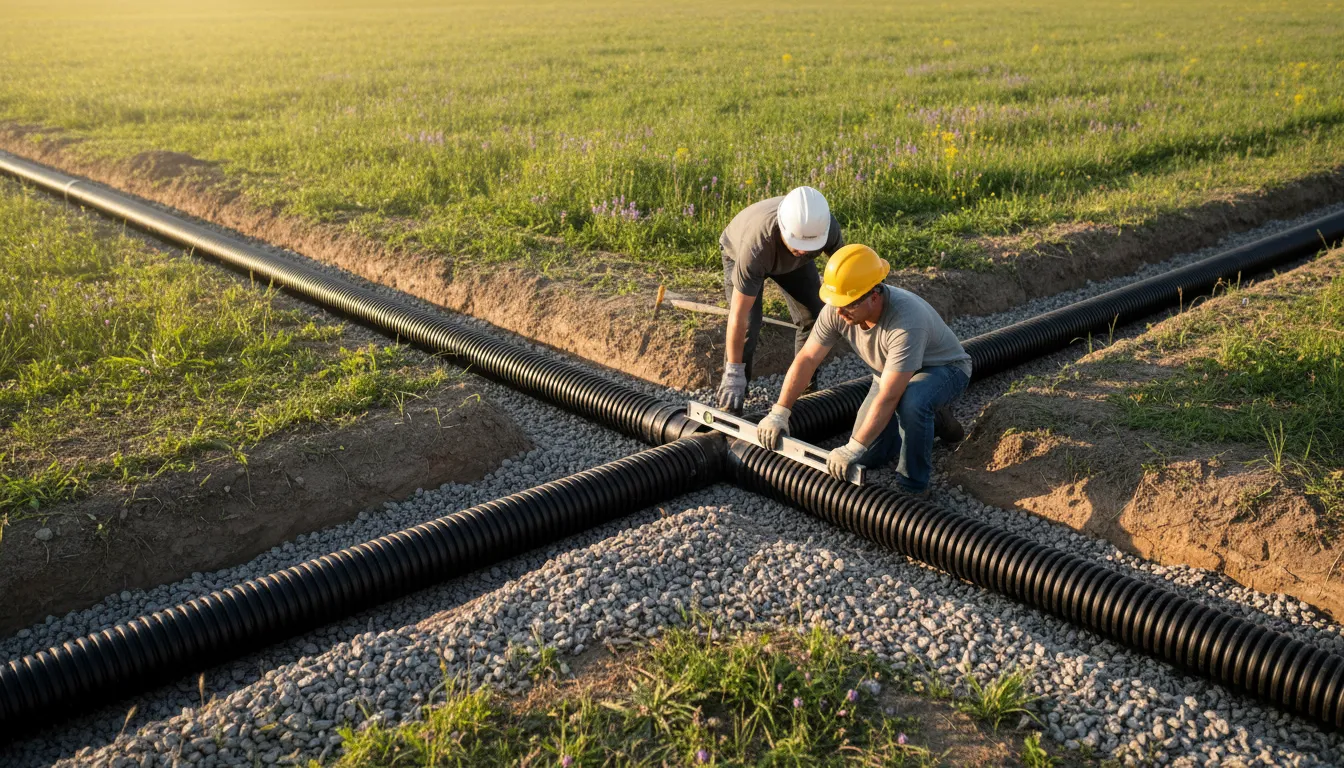
The drain field is the final stage of your onsite wastewater treatment system. After solids settle in the septic tank, the liquid effluent flows into a network of perforated pipes buried in trenches filled with gravel. This effluent slowly seeps into the surrounding soil, where natural processes provide final treatment by removing harmful bacteria, viruses, and nutrients. A properly functioning drain field is invisible and odorless. Its performance is entirely dependent on the condition of the soil, making site evaluation a cornerstone of any new installation or repair project in Contra Costa County.
Signs You Need Drain Field Repair or Replacement
Recognizing early warning signs can prevent a complete system failure and more costly repairs. Common indicators of a failing leach field include:
- Soggy Ground or Surfacing Effluent: Standing water, overly lush grass, or foul-smelling sludge appearing over the drain field area, especially after recent rain.
- Slow Drains and Sewage Backups: Toilets, showers, and sinks that drain very slowly or back up into the home, indicating the system is not accepting wastewater.
- Persistent Odors: Unpleasant sewage smells in the yard or near the drain field, which may indicate that effluent is not percolating into the soil properly.
- Gurgling Sounds: Audible gurgling in plumbing fixtures, suggesting a blockage or saturation in the drainage system.
If you notice these signs, contractors recommend initial troubleshooting like checking for household water leaks and reducing water usage before concluding that major repairs are needed 1 2.
The Regulatory Landscape in Pittsburg and Contra Costa County
Any repair, replacement, or new installation of a septic system component, including the drain field, requires permits and must comply with state and local regulations. In Pittsburg, this process is administered by the Contra Costa County Environmental Health Department, which enforces guidelines set by the California Regional Water Quality Control Board 3.
Property owners are legally responsible for maintaining their private sewer lateral and septic system in compliance with these city and county regulations. Navigating this process successfully requires working with qualified professionals who understand the specific requirements for the region.
Key Steps in the Permit and Evaluation Process
The path to a repaired or new absorption system involves several critical steps designed to protect public health and groundwater.
- Site and Soil Evaluation: This is the most crucial phase. A qualified professional must conduct a soil profile investigation and a percolation test to determine the soil's ability to absorb and treat liquid. They will also assess groundwater depth to ensure a safe separation distance and prevent contamination.
- Design Plan Submission: Based on the evaluation, an engineered design plan is created. This plan must account for setback distances from wells, property lines, waterways, and structures, as well as site constraints like available area and topography. If the ground slope is 20% or greater, additional technical studies for slope stability may be required 4 5.
- Permit Application and Review: The design plan is submitted to Contra Costa County Environmental Health for review and permit approval. No construction can begin until the permit is issued.
- Construction and Inspection: During installation, at least two professional inspections are typically required: one before the trenches are backfilled and a final inspection upon completion to ensure the work matches the approved plan.
Find the perfect drain field repair companies for your needs
Get personalized recommendations and expert advice
Scope of Work: Repair vs. Full Replacement
The necessary solution depends on the extent of the failure. A qualified septic professional can diagnose whether a targeted repair or a full replacement is required.
- Drain Field Repair: This may involve techniques like cleaning clogged pipes, adding new lateral lines to expand the existing field, or using technologies to rehabilitate the soil. Repairs are suitable for partial failures where the soil still has adequate absorption capacity.
- Drain Field Replacement: A full replacement is necessary when the soil is permanently clogged (a condition called "biomat" saturation) or the existing field is undersized. This involves excavating a new area of the property (if space allows) to install a completely new network of trenches and distribution pipes.
In some cases, especially on properties with poor soil, high groundwater, or limited space, an alternative system like a mound, drip irrigation, or aerobic treatment unit (ATU) may be required. These systems provide advanced treatment and can be installed in challenging conditions but come with a higher price tag.
Cost Considerations for Drain Field Projects
Costs for drain field work in Pittsburg vary widely based on soil conditions, system type, site accessibility, and the scope of the project. The figures below are estimates to help with initial planning.
- Drain Field Repair: Costs typically range from $5,000 to $15,000 or more, depending on the repair method and materials needed.
- Full Drain Field Replacement: Replacing the entire leach field generally costs between $5,000 and $15,000+. However, this is often part of a larger system overhaul.
- Complete Septic System Replacement: If both the tank and drain field need to be replaced, homeowners can expect costs ranging from $8,000 to $22,000+ for a conventional system 6.
- Alternative System Installation: Systems like mounds or advanced treatment units can be significantly more expensive, often surpassing $20,000 due to their complex components and installation requirements.
- Required Inspections and Testing: Professional site evaluations, soil percolation tests, and inspections can add $200 to $900 to the total project cost 7.
Investing in proper diagnosis and working with licensed, insured professionals is essential to ensure the job is done correctly and complies with all Contra Costa County regulations, protecting your property value and the local environment.
Frequently asked questions
Sources
Footnotes
-
Troubleshooting Septic System in California - What You Need To ... - https://www.lanikseptic.com/troubleshooting-your-septic-system-in-california/ ↩
-
Drain Field Repair Services in Pittsburg, CA - https://pittsburgseptic.com/get-drain-field-repair ↩
-
City of Pittsburg, CA SEWER MAINTENANCE AND REPAIR - https://ecode360.com/47559329 ↩
-
California Septic Tank Requirements | Onsite Wastewater ... - https://www.ntotank.com/blog/california-septic-tank-requirements ↩
-
The Californian's Guide To Septic Tanks - https://cacciaplumbing.com/blog/california-septic-tank-guide/ ↩
-
Septic Drain Field Replacement Cost - https://dillonseptic.com/septic-drain-field-replacement-cost/ ↩
-
Cost to Replace Septic Tank and Drain Field [2026 Data] | Angi - https://www.angi.com/articles/how-much-new-drain-fields-foot.htm ↩