Find the Best Drain Field Repair Companies for Your Business
No obligation • Fast responses • Nationwide coverage

Why you can trust Septic Spot
Septic Spot is a leading United States resource for understanding and comparing septic services. Our editors review providers using consistent criteria and verify key business details. Listings and scores are independent, and companies cannot pay to influence our content.
Search providers near you
Top Drain Field Repair Companies in San Jacinto, California Ranked
A failing drain field is a serious issue for any property with a septic system. This critical component, also known as a leach field or absorption field, is responsible for safely filtering and dispersing treated wastewater into the soil. When it fails, it can lead to soggy yards, foul odors, and environmental contamination. For homeowners in San Jacinto, navigating the repair or replacement of a septic drain field involves specific local regulations, soil considerations, and costs. This guide provides the essential information you need to understand the process, local requirements, and how to connect with qualified professionals for your project.
Gardner Septic Services
Los Angeles, CA
Gardner Septic Services is a family-owned company based in Los Angeles, CA, specializing in septic system design, installation, pumping, repairs, inspections, and certifications. Serving the Inland Empire area including Riverside, Moreno Valley, Woodcrest, Yucaipa, Redlands, and nearby communities, they handle projects ranging from small repairs to complete septic system installations. With over 20 years of experience and licensed as a C-42 sanitation systems contractor, Gardner Septic Services offers comprehensive septic solutions including septic tank locating, riser and lid installations, and drain field repairs. They provide 24/7 emergency septic services to address urgent needs at any time.
Wright Septic Tank Services
511 N Dillon Ave, San Jacinto, CA 92582
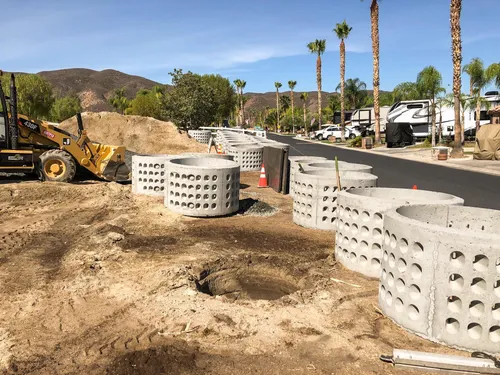
Wright Septic Tank Services is a licensed C42 and C36 contractor based in Los Angeles, CA, offering residential and commercial septic system solutions. Their services include septic tank pumping, repairs, maintenance, installation of new septic systems and leach lines, camera inspections, and electronic tank locating. With over 55 years of experience, Wright Septic uses advanced technology such as waterproof cameras and electronic locating devices to diagnose and address septic system issues effectively.
Aztec Excavation Inc. & Septic
37801 Oxford Dr, Murrieta, CA 92562
Aztec Excavation Inc. & Septic is a licensed sanitation system contractor based near Los Angeles, CA, specializing in septic system installation, repair, and excavation services. Serving Riverside and San Diego counties, the company handles septic tank installation, drain field repair, trench building, lot preparation, and utility line installation. With over a decade of experience, Aztec Excavation offers capabilities such as advanced treatment unit installation and septic system component repairs. The business operates 24/7 to support residential septic and excavation needs in areas including Murrieta, Temecula, and Wildomar.

Gardner Septic Service
12625 Frederick St, Moreno Valley, CA 92553
Gardner Septic Service is a family-owned septic system contractor based in Los Angeles, CA, serving Riverside, Moreno Valley, Woodcrest, Yucaipa, Redlands, and surrounding Inland Empire areas. The company offers a wide range of septic services including tank pumping, repairs, installations, inspections, certifications, and drain field repairs. With over 20 years of experience and licensed as a C-42 sanitation systems contractor, Gardner Septic Service specializes in septic system design and real estate septic certifications. They provide 24/7 emergency septic services to accommodate urgent needs.
Understanding Drain Field Failure in San Jacinto
The drain field is the final stage of your onsite wastewater treatment system. After solids settle in the septic tank, liquid effluent flows into a network of perforated pipes buried in trenches filled with gravel or proprietary chambers. This effluent slowly percolates into the soil, where natural processes provide final treatment.
Failure occurs when the soil can no longer absorb the water. Common signs include:
- Sewage odors in the yard, especially after rain.
- Spongy, soggy, or standing water over the drain field area.
- Unusually lush, green grass growing over the field.
- Slow drains or sewage backups in the house.
In San Jacinto, common causes for failure include soil compaction from driving or parking vehicles over the field, root intrusion from trees and shrubs, hydraulic overloading from excessive water use, and a simple lack of routine system maintenance 1. The region's specific soil types and topography also play a significant role in a system's lifespan and failure mode.
Local Regulations and the Permitting Process
All drain field repair or replacement work in San Jacinto requires permits and must comply with Riverside County and California state regulations. The oversight falls under the Riverside County Department of Environmental Health.
San Jacinto is part of a Local Agency Management Program (LAMP), which sets standards to manage nutrient discharges and protect water quality in the San Jacinto watershed 2. This means your project must meet specific design and siting requirements. A key regulation is that properties must have a designated reserve area suitable for a future replacement field 2. This area must be evaluated and protected during the initial site planning.
The typical permitting process involves:
- Site Evaluation & Soil Testing: A qualified septic professional or engineer must evaluate your property. A percolation (perc) test is almost always required to determine the soil's ability to absorb wastewater. This test measures how quickly water drains through a soil sample.
- Plan Submission: Based on the evaluation, engineered plans for the repair or new leach field system are prepared and submitted to the county for review 3.
- Permit Issuance: Once plans are approved, a construction permit is issued.
- Installation & Final Inspection: A licensed contractor performs the work. Before the new field is covered, a county inspector must perform a final inspection to ensure it matches the approved plans 4.
Key Site Factors Affecting Your Project
The design and cost of your drain field repair in San Jacinto are heavily influenced by your specific property conditions.
- Soil Type: Soil with high clay content absorbs water very slowly, while excessively sandy or rocky soil may not provide adequate filtration. The results of the perc test directly dictate the size and type of system needed 5.
- High Groundwater: If the seasonal groundwater table is too close to the surface, a standard trench system may not be viable. Special engineered systems, like raised mounds or alternative treatment technologies, may be required.
- Slope: Properties with slopes exceeding 20% often require a geotechnical stability analysis to ensure the drain field installation won't cause land movement 6. Special construction techniques may be necessary.
- Setbacks: Regulations enforce minimum distances (setbacks) from wells, streams, property lines, and structures. Your repair design must adhere to these, which can limit where a new field can be placed 7 8.
Find the perfect drain field repair companies for your needs
Get personalized recommendations and expert advice
Repair vs. Replacement: Options and Costs
The course of action depends on the extent of the failure. A professional inspection can determine if a targeted repair is possible or if a full replacement is necessary.
- Partial Repair: Sometimes, only a section of the field is clogged or damaged. Techniques like cleaning pipes or replacing a portion of the lines may be a solution, though this is less common and may not provide a long-term fix.
- Complete Drain Field Replacement: This is the most reliable solution for a fully failed system. It involves excavating the old field and installing a new one, either in the original location (if soil conditions allow) or in the designated reserve area. New systems often use modern materials like plastic leaching chambers, which can be more efficient than traditional gravel trenches.
Costs in San Jacinto are influenced by all the factors above. Based on regional data:
- Drain Field Repair or Replacement: Typically ranges from $5,000 to $15,000 or more 9.
- Complete Septic System Replacement (tank and field): Can range from $8,000 to $22,000+ 10 11.
- Additional Costs: You must also budget for the site evaluation, soil testing, engineered design plans, and permit fees, which vary based on project complexity 12.
While costly upfront, a properly executed replacement is a long-term investment that protects your property value and prevents environmental harm.
The Installation and Project Timeline
Once permits are secured, the physical installation of a new leach field follows a structured process. Understanding this timeline helps set realistic expectations.
- Site Preparation: The area is cleared and marked. Heavy equipment is used to excavate the trenches to precise depths and slopes as specified in the approved plans.
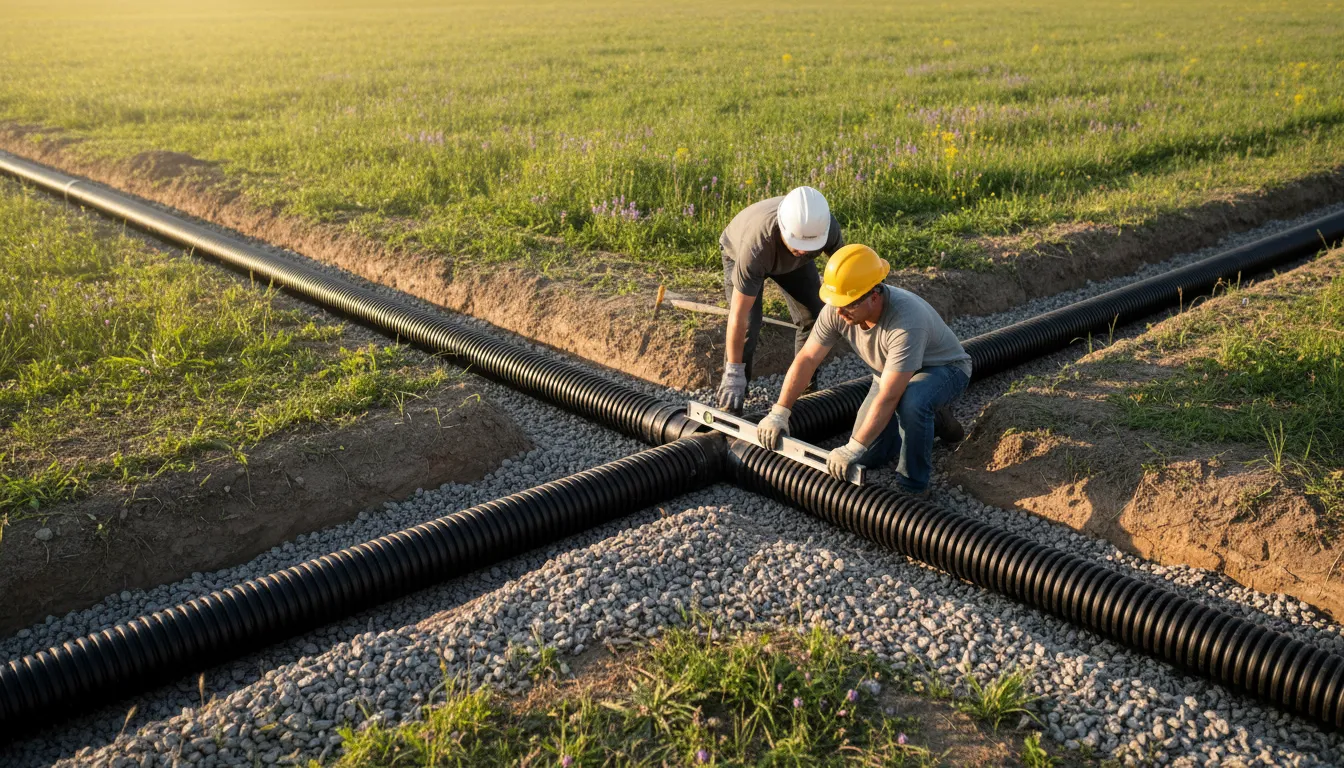
- Bedding & Pipe Installation: A layer of clean gravel is placed in the trench bottom. Perforated distribution pipes are laid on top and connected to the supply line from the septic tank. More gravel is added to cover the pipes.
- Chamber Systems (Alternative): Instead of gravel and pipe, pre-formed plastic chambers may be installed. These create a void space for effluent and are then covered with soil.
- Backfilling & Final Grade: A layer of geotextile fabric is often placed over the gravel to prevent soil intrusion. The trenches are then carefully backfilled with soil and the surface is graded to promote rainwater runoff away from the field.
- Revegetation: The area is typically seeded with grass to prevent erosion. It's crucial to plant only shallow-rooted vegetation over the field.
From initial consultation to final inspection, a drain field replacement project in San Jacinto can take several weeks to a few months, with much of the time dedicated to the planning, design, and permitting phases.
Choosing a Professional for Your Leach Field Work
Given the technical and regulatory complexity, selecting the right contractor is critical. Look for a licensed septic system professional or engineer with extensive experience in Riverside County. They should be familiar with the local LAMP requirements and the Riverside County Environmental Health Department's processes. A reputable provider will handle the permit application, soil testing coordination, and ensure the installation meets all codes. Always verify licenses and ask for references from recent projects in the San Jacinto area.
Frequently asked questions
Sources
Footnotes
-
Septic System DO's and DON'Ts - Oregon.gov - https://www.oregon.gov/deq/FilterDocs/SepticDoDont.pdf ↩
-
san jacinto onsite wastewater management program - https://sawpa.gov/wp-content/uploads/2019/01/San-Jacinto-Septic-Systems-Mgmt-Plan-vNov-17-2007.pdf ↩ ↩2
-
Southern California Septic System Regulations: What You Need to ... - https://www.lanikseptic.com/socal-septic-regulations/ ↩
-
California Septic Tank Requirements | Onsite Wastewater ... - https://www.ntotank.com/blog/california-septic-tank-requirements ↩
-
What is the best septic system if your land fails a perc test? - https://www.premiertechaqua.com/en-us/blog/best-septic-system-failed-perc-test ↩
-
The Californian's Guide To Septic Tanks - https://cacciaplumbing.com/blog/california-septic-tank-guide/ ↩
-
County of Riverside Local Agency Management Program - https://www.waterboards.ca.gov/rwqcb7/board_decisions/adopted_orders/orders/2024/2024_0039riv_lamp_attach_a.pdf ↩
-
Septic Drain Field Replacement Costs Vs. Long-Term Savings - Septic Tank Man - https://www.theseptictankman.com/blog/septic-drain-field-replacement-costs-vs-long-term-savings ↩
-
How Much Does Septic System Repair Really Cost in California - https://www.lanikseptic.com/septic-repair-cost/ ↩
-
Septic Tank Replacement and Drain Field Cost in California - https://www.lanikseptic.com/how-much-does-it-cost-to-replace-a-septic-tank-and-drain-field-in-california/ ↩
-
The SoCal Guide to Septic Tank Installation - https://www.lanikseptic.com/socal-guide-septic-tank-installation/ ↩
-
Understanding Your Septic System Design and Installation Timeline: A Comprehensive Guide - https://www.mapengineering.net/understanding-your-septic-system-design-and-installation-timeline/ ↩