Find the Best Drain Field Repair Companies for Your Business
No obligation • Fast responses • Nationwide coverage

Why you can trust Septic Spot
Septic Spot is a leading United States resource for understanding and comparing septic services. Our editors review providers using consistent criteria and verify key business details. Listings and scores are independent, and companies cannot pay to influence our content.
Search providers near you
Top Drain Field Repair Companies in San Marcos, California Ranked
A failing drain field is a serious issue for any property with a septic system. When the soil absorption area, or leach field, stops properly filtering and dispersing wastewater, it can lead to soggy yards, foul odors, and even environmental contamination. In San Marcos, addressing these problems requires navigating specific local regulations and environmental conditions. This guide provides essential information on the repair and replacement process, local requirements, and how to connect with qualified professionals who can assess and resolve your leach field issues.
Dr. Septic
San Diego, CA
Dr. Septic is a septic tank pumping, inspection, and repair company based in San Diego, CA. They provide services including septic tank pumping, certification, and drain field repair or replacement. Known for attention to detail, Dr. Septic handles complex issues such as clogged septic systems and leach field replacements. Customers have noted their thorough approach and willingness to accommodate urgent needs, including weekend work.

Center Septic
San Diego, CA
Center Septic is a family-owned septic service provider based in San Diego, CA, serving North San Diego County including Valley Center and surrounding areas. The company offers septic tank pumping, cleaning, inspections, repairs, new system installations, and drain field diagnosis and repairs. Center Septic holds a C42 license through the California State Contractor License Board and has been operating since 1995, providing a range of septic system services with trained and knowledgeable staff.
USA Septic
1317 Simpson Way Suite B, Escondido, CA 92029
USA Septic is a septic tank pumping, inspection, repair, and installation company serving San Diego, CA. They provide services including septic system construction, pumping, drain cleaning, and certifications. Their expertise covers drain field repair and replacement, helping maintain and protect septic systems. USA Septic offers guidance on septic system ownership to help customers care for their systems properly.
Abbott Septic Service
3833 Linda Vista Dr, San Marcos, CA 92078
Abbott Septic Service is a septic tank company serving Los Angeles, CA, and the surrounding San Diego County area. They provide septic tank pumping, cleaning, repair, installation, and locating services. Abbott Septic Service is a licensed Class A general engineering contractor capable of major septic system construction work, including excavation, grading, trenching, and drain field installation. Established in 1948, the company has decades of experience and offers 24/7 phone availability for septic system needs.
Understanding Your Drain Field System
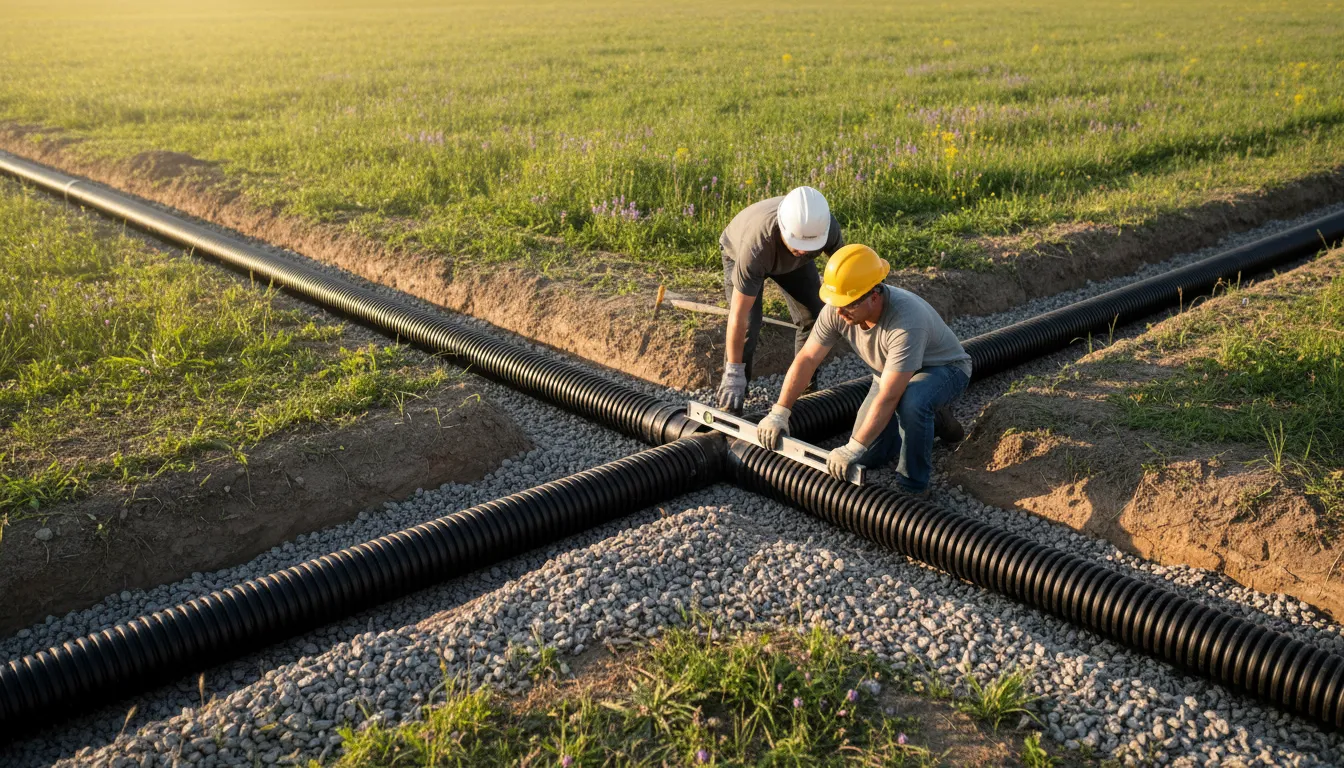
The drain field, also known as a leach field or soil absorption system, is the final and most critical stage of a septic system. After solids settle in the tank, liquid effluent flows into a network of perforated pipes buried in gravel-filled trenches. This effluent slowly percolates through the soil, where natural processes remove harmful bacteria, viruses, and nutrients before the water reaches groundwater. A functioning drain field is vital for protecting public health and local water quality in North County San Diego.
Common signs of a failing absorption field include:
- Sewage odors in the yard or home.
- Standing water or soggy, spongy soil over the field area, especially when it hasn't rained.
- Slow-draining sinks and toilets, or frequent backups.
- Unusually green, lush grass over the drain field.
Why Drain Fields Fail in San Marcos
Several factors can lead to the need for leach field repair or replacement. Understanding the cause is the first step toward a lasting solution.
- Clogging (Biomat Formation): Over time, a layer of organic material, called a biomat, forms on the soil and gravel interface. A healthy, thin biomat aids treatment, but a thick, impermeable layer can prevent effluent from percolating into the soil, causing surfacing.
- Physical Damage: Crushed or clogged perforated pipes from soil compaction, vehicle traffic, or root intrusion can block effluent flow.
- Soil Saturation: High groundwater tables, which can be a concern in parts of San Diego County, reduce the soil's ability to absorb and treat effluent. During wet seasons, the system may simply not have enough unsaturated soil to function.
- System Age and Overload: All components have a lifespan. An old system or one that is consistently overloaded with more water or waste than it was designed for will eventually fail.
San Marcos Regulations and Permit Requirements
Any significant repair or full replacement of a septic drain field in San Marcos is regulated by the San Diego County Department of Environmental Health (DEH). Work must comply with the state's Local Agency Management Program (LAMP) standards and regulations set by the California Regional Water Quality Control Board 1 2.
Key regulatory requirements include:
- Professional Licensing: All design and installation work must be performed by a qualified, state-licensed professional (e.g., a licensed septic contractor, engineer, or engineering geologist) 3.
- Site and Soil Evaluation: A new or replacement system requires a thorough site evaluation, including a percolation (perc) test and soil analysis to determine the absorption rate and appropriate system type.
- Groundwater Separation: A minimum of 5 feet of unsaturated soil is required between the bottom of the disposal trenches and the highest anticipated groundwater level.
- Setback Distances: Systems must maintain specific minimum distances from property lines, wells, streams, buildings, and other structures.
- Slope Considerations: Properties with slopes over 20% typically require a detailed technical report4.
The permitting process generally involves submitting detailed design plans to the DEH for approval before any construction begins, followed by a final inspection once the work is complete.
The Repair and Replacement Process
When a professional assesses a failing leach field, they will determine whether a targeted repair or a full replacement is necessary.
1. Site Evaluation & Diagnosis A contractor will inspect the entire system, often using cameras to check pipes and probes to assess soil conditions. They will locate the original system and identify the exact cause of failure.
2. Design & Permitting For a replacement or major repair, a licensed professional will design a new system based on the current soil conditions, household size, and local codes. This design is submitted to the County DEH for a permit5 6.
3. Construction
- Repair: This might involve jetting clogged pipes, replacing a section of crushed pipe, or adding new infiltration chambers to a portion of the field.
- Full Replacement: This involves excavating the old leach field (or a new area if the old site is unsuitable), installing new perforated pipes, gravel, and geotextile fabric, and connecting it to the existing septic tank. The old field must be properly abandoned7.
4. Final Inspection & Restoration After construction, the county inspector must approve the work before the trenches are backfilled. The contractor will then restore the landscape as agreed.
Find the perfect drain field repair companies for your needs
Get personalized recommendations and expert advice
Types of Systems for San Marcos Properties
Not all properties can support a conventional gravel-and-pipe leach field. Soil conditions in North County, including areas with clay or high groundwater, often require alternative or engineered systems8.
- Conventional Trenches: The standard system for properties with suitable, deep soil and low groundwater.
- Chamber Systems: Use plastic infiltration chambers instead of gravel, providing more storage volume and a larger soil contact area in a smaller footprint.
- Sand Mound or Above-Ground Systems: Used when soil depth is shallow or groundwater is high. Effluent is pumped to a raised mound of sand engineered for treatment.
- Aerobic Treatment Units (ATUs): Mechanically introduce oxygen to break down waste more thoroughly, producing a higher-quality effluent that can be used in drip irrigation or for discharging to more challenging soils.
- Drip Irrigation Dispersal: Treats effluent to a high standard and disperses it slowly over a large area via shallow drip lines, ideal for sloped or shallow-soil properties.
Your contractor and the county will determine the necessary system type based on the mandatory site evaluation.
Cost Considerations for Drain Field Work
The cost to repair or replace a leach field in San Marcos varies widely based on the system type, property conditions, and extent of work required. Prices are typically project-based rather than linear.
- Conventional Drain Field Repair/Replacement: $5,000 - $12,000 is a common range for a standard system.
- Alternative/Engineered System: For properties requiring sand mounds, ATUs, or drip dispersal, costs can range from $8,000 to over $20,0009.
- Engineering & Permit Fees: Design by a licensed engineer and county permit fees can add several thousand dollars to the total project cost.
- Additional Site Work: Costs for regrading land ($1,000-$3,300) or professionally abandoning an old septic system ($100-$250) should also be factored in10.
It's crucial to get detailed, written estimates from multiple licensed contractors that break down all expected costs, including permits, engineering, installation, and restoration.
Maintaining a New or Repaired Drain Field
Protecting your investment is key. Proper maintenance can extend the life of a new leach field for decades.
- Practice Water Conservation: Spread out laundry loads, fix leaks, and install water-efficient fixtures to avoid hydraulically overloading the system.
- Divert Water: Ensure roof gutters, sump pumps, and yard drainage do not flow over the drain field area.
- Avoid Compaction: Never drive or park vehicles, or build structures like sheds or patios, over the drain field.
- Mind What You Flush: Only human waste and toilet paper should go down the drain. Avoid chemicals, grease, and non-biodegradable items.
- Pump the Tank Regularly: Have the septic tank pumped every 3-5 years by a professional to prevent solids from escaping into and clogging the drain field.
Frequently asked questions
Sources
Footnotes
-
Onsite Wastewater Treatment System Policy Final Substitute ... - https://www.waterboards.ca.gov/water_issues/programs/owts/docs/owts_sed_061912.pdf ↩
-
Septic System Regulations in Southern California: What You ... - https://www.lanikseptic.com/socal-septic-regulations/ ↩
-
Frequently Asked Questions on Septic Systems - https://www.sandiegocounty.gov/content/sdc/deh/lwqd/lu_septic_systems/lu_septic_faqs_page.html ↩
-
Frequently Asked Questions on Septic Systems - https://www.sandiegocounty.gov/content/sdc/deh/lwqd/lu_septic_systems/lu_septic_faqs_page.html ↩
-
The Californian's Guide To Septic Tanks - https://cacciaplumbing.com/blog/california-septic-tank-guide/ ↩
-
California Septic Tank Requirements | Onsite Wastewater ... - https://www.ntotank.com/blog/california-septic-tank-requirements ↩
-
Septic Tank Replacement and Drain Field Cost in California - https://www.lanikseptic.com/how-much-does-it-cost-to-replace-a-septic-tank-and-drain-field-in-california/ ↩
-
What is the best septic system if your land fails a perc test? - https://www.premiertechaqua.com/en-us/blog/best-septic-system-failed-perc-test ↩
-
Septic Repair Cost in California: Complete Breakdown of Pricing ... - https://www.lanikseptic.com/septic-repair-cost/ ↩
-
Cost to Replace Septic Tank and Drain Field [2026 Data] | Angi - https://www.angi.com/articles/how-much-new-drain-fields-foot.htm ↩