Find the Best Drain Field Repair Companies for Your Business
No obligation • Fast responses • Nationwide coverage

Why you can trust Septic Spot
Septic Spot is a leading United States resource for understanding and comparing septic services. Our editors review providers using consistent criteria and verify key business details. Listings and scores are independent, and companies cannot pay to influence our content.
Search providers near you
Top Drain Field Repair Companies in Santa Clara, California Ranked
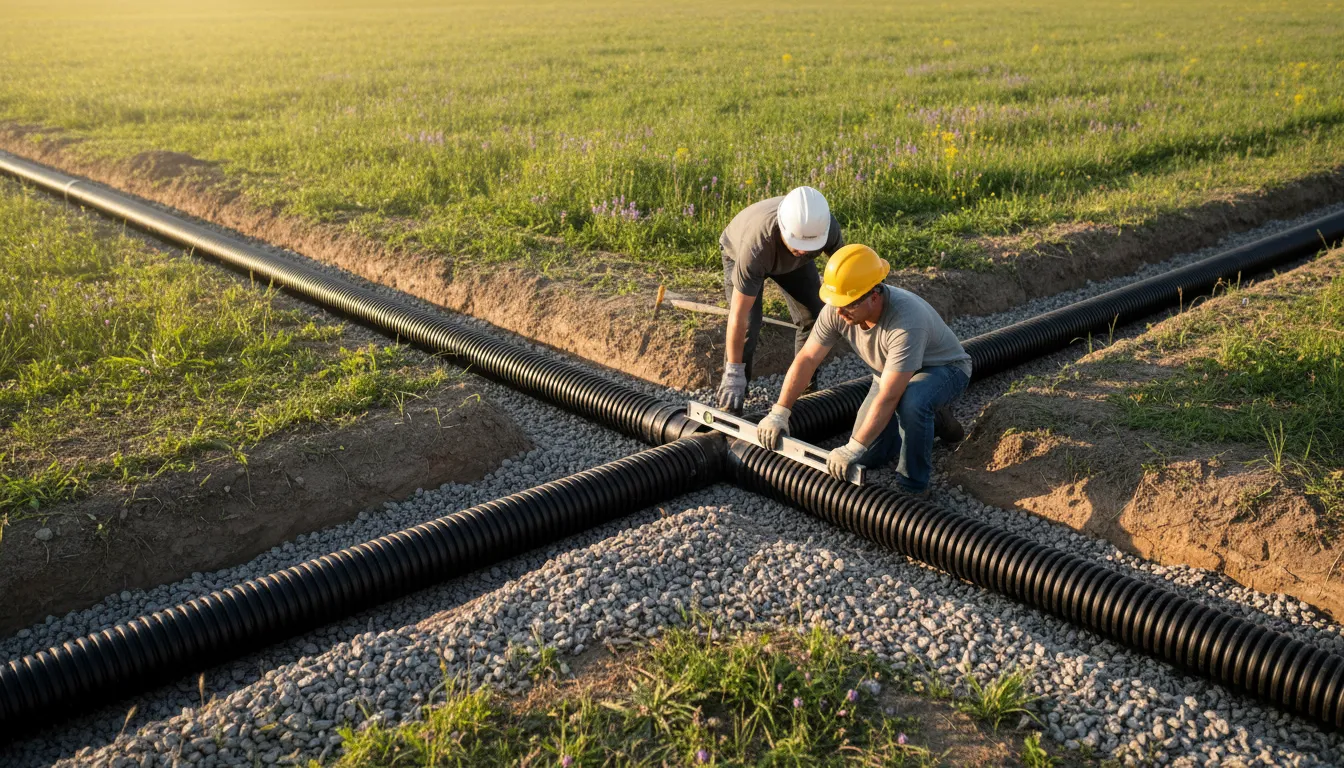
A failing drain field is a serious issue for any property with a septic system. This critical component, also known as a leach field or absorption field, is responsible for safely dispersing and filtering treated wastewater into the soil. When it malfunctions, it can lead to sewage backups, soggy yards, and environmental contamination. In Santa Clara, navigating drain field issues requires a clear understanding of local regulations and the specialized repair or replacement process. This guide will help you understand what's involved, from recognizing failure signs to completing a compliant project with qualified local professionals.
Recognizing the Signs of a Failing Drain Field
Catching problems early can prevent more extensive damage and costly emergency repairs. Be alert for these common indicators that your leach field may be failing:
- Sewage Odors and Soggy Ground: Persistent foul smells in your yard or areas of consistently soggy, spongy grass over the drain field lines, especially when it hasn't rained.
- Slow Drains and Backups: Gurgling pipes, slow-draining sinks and toilets, or sewage backups inside your home, which indicate the system is not draining properly.
- Unusually Green Grass: Strips of grass that are much greener and lusher than the rest of your lawn, as the failing field acts as an over-fertilizer.
- Standing Water: Puddles of grey or black water surfacing in your yard, which is a clear sign of system failure and a public health hazard that must be addressed immediately.
Why Drain Fields Fail in Santa Clara
Understanding the common causes of failure can help with diagnosis and prevention. In this region, several factors are frequently at play:
- Age and Wear: Like any component, drain fields have a finite lifespan, typically 20-30 years. Older systems simply wear out.
- Soil Compaction and Clogging: Over time, the biomat (a layer of bacteria) in the trenches can become too thick, or soil pores can clog with solids, preventing proper percolation. Driving or building over the field accelerates this.
- Hydraulic Overload: Excessive water use from large households, leaking fixtures, or draining pools/spas into the system can flood the field, not allowing it time to drain and recover.
- Inherent Soil Conditions: Santa Clara's soil types vary greatly. Poorly draining clay soils are particularly challenging and can lead to premature failure if the original system wasn't designed appropriately for the percolation rate.
- Physical Damage: Tree root intrusion or damage from excavation and landscaping projects can crush or block dispersal pipes.
The Santa Clara County Regulatory Landscape
All repair and replacement work for onsite wastewater treatment systems (OWTS) in Santa Clara County is strictly regulated by the Department of Environmental Health (DEH). Compliance is not optional-it's essential for protecting groundwater and public health.
Permits Are Mandatory: A DEH repair permit must be obtained before starting any repair or replacement work on a failing system. If a public sewer is not available within 300 feet of your property line, you will be required to repair or replace your existing septic system.
Professional Design Requirements: For many repairs, especially on challenging sites, the county requires plans to be prepared by a Registered Civil Engineer, Professional Geologist, or Registered Environmental Health Specialist1 2. This ensures the new design meets all technical standards.
Critical Setback and Design Rules: Systems must be designed with strict separation distances from wells, buildings, property lines, and waterways. A key rule is maintaining a minimum of 5 feet of vertical separation between the bottom of the drain field trench and the high groundwater table 3. Slopes over 20% require geotechnical reports, and systems are generally not permitted on slopes over 35% 3.
The Step-by-Step Process for Repair or Replacement
1. Professional Evaluation and Soil Testing
The first step is to hire a qualified septic professional or engineer to assess the failure. They will often perform a soil percolation test to determine the rate at which water absorbs into your soil. This rate must fall between 1 to 12 inches per hour for a standard system. Results from this test are foundational for the new design.
2. System Design and Permit Application
Based on the evaluation, a new system will be designed. In cases of poor soil or tight spaces, this may involve alternative systems like mound systems, chamber systems, or drip irrigation dispersal. Your professional will then submit the detailed design and a complete permit application to the Santa Clara County DEH for review and approval 4.
3. Installation and County Inspections
Once the permit is issued, installation can begin. The county mandates a series of inspections that must be scheduled through the DEH to ensure compliance:
- Pre-construction Inspection: Required for all alternative systems or challenging sites.
- Tank Inspection: For water-tightness and proper setting.
- Drainage Field Inspection: During installation, before backfilling.
- Final Inspection: After the system is fully installed and backfilled, verifying everything is accessible and operational 5.
Find the perfect drain field repair companies for your needs
Get personalized recommendations and expert advice
Understanding the Costs Involved
Drain field work is a significant investment. Costs in Santa Clara can be higher than national averages due to stringent regulations, high labor rates, and often challenging site conditions.
- Drain Field Repair/Replacement: Typically ranges from $5,000 to over $15,000.
- Full System Replacement: If both the tank and field need replacement, costs generally range from $8,000 to $22,000 or more.
- Alternative Systems: Engineered solutions for difficult sites cost more. Chamber systems may start around $8,500, while mound systems can be $15,000 or higher 6.
- Additional Design & Testing Costs: Soil tests, engineering reports, and permit fees can add 30%-50% to the total project cost, especially in areas with poor soil percolation 7.
Choosing a Qualified Professional in Santa Clara
Given the complexity, selecting the right contractor is crucial. Look for a licensed septic professional with extensive experience in Santa Clara County. They should be intimately familiar with DEH permit processes, inspection requirements, and local soil challenges. Always verify their license, ask for local references, and ensure they pull all required permits. A reputable professional will handle the entire process from evaluation and design to coordinating inspections.
Maintaining Your New Drain Field
Protect your investment with proper care. Practice water conservation, avoid pouring grease or chemicals down drains, and never drive or build over the field. Have your tank pumped regularly (every 3-5 years) to prevent solids from escaping into the new dispersal area. A well-maintained system can provide decades of reliable service.
Frequently asked questions
Sources
Footnotes
-
ONSITE SYSTEMS MANUAL - California Water Boards - https://www.waterboards.ca.gov/sanfranciscobay/board_info/agendas/2016/January/SantaClaraOWTS/SCC_OWTS_B_Onsite_Systems_Manual.pdf ↩
-
Application for repair of failing septic/OWTS - Environmental Health - https://deh.santaclaracounty.gov/land-use/onsite-wastewater-treatment-system-owts/application-repair-failing-septicowts ↩
-
The Californian's Guide To Septic Tanks - https://cacciaplumbing.com/blog/california-septic-tank-guide/ ↩ ↩2
-
Onsite Wastewater Treatment System (OWTS) - https://deh.santaclaracounty.gov/land-use/onsite-wastewater-treatment-system-owts ↩
-
Application for septic/OWTS clearance for new development - https://deh.santaclaracounty.gov/land-use/onsite-wastewater-treatment-system-owts/application-septicowts-clearance-new-development ↩
-
Cost to Replace Septic Tank and Drain Field [2026 Data] | Angi - https://www.angi.com/articles/how-much-new-drain-fields-foot.htm ↩
-
Septic Drain Field Replacement Cost - https://dillonseptic.com/septic-drain-field-replacement-cost/ ↩