Find the Best Drain Field Repair Companies for Your Business
No obligation • Fast responses • Nationwide coverage

Why you can trust Septic Spot
Septic Spot is a leading United States resource for understanding and comparing septic services. Our editors review providers using consistent criteria and verify key business details. Listings and scores are independent, and companies cannot pay to influence our content.
Search providers near you
Top Drain Field Repair Companies in Santa Cruz, California Ranked
A failing drain field, also known as a leach field or absorption system, is a serious issue for any property on a septic system. It means the final stage of wastewater treatment-where liquid effluent is safely dispersed into the soil-is no longer functioning. In Santa Cruz, with its unique environmental regulations and soil conditions, addressing drain field problems requires careful planning and adherence to strict local codes. This guide helps you understand the process, costs, and critical regulations for leach field repair or replacement, connecting you with qualified local professionals who can navigate Santa Cruz County's specific requirements.
Understanding Your Drain Field's Role
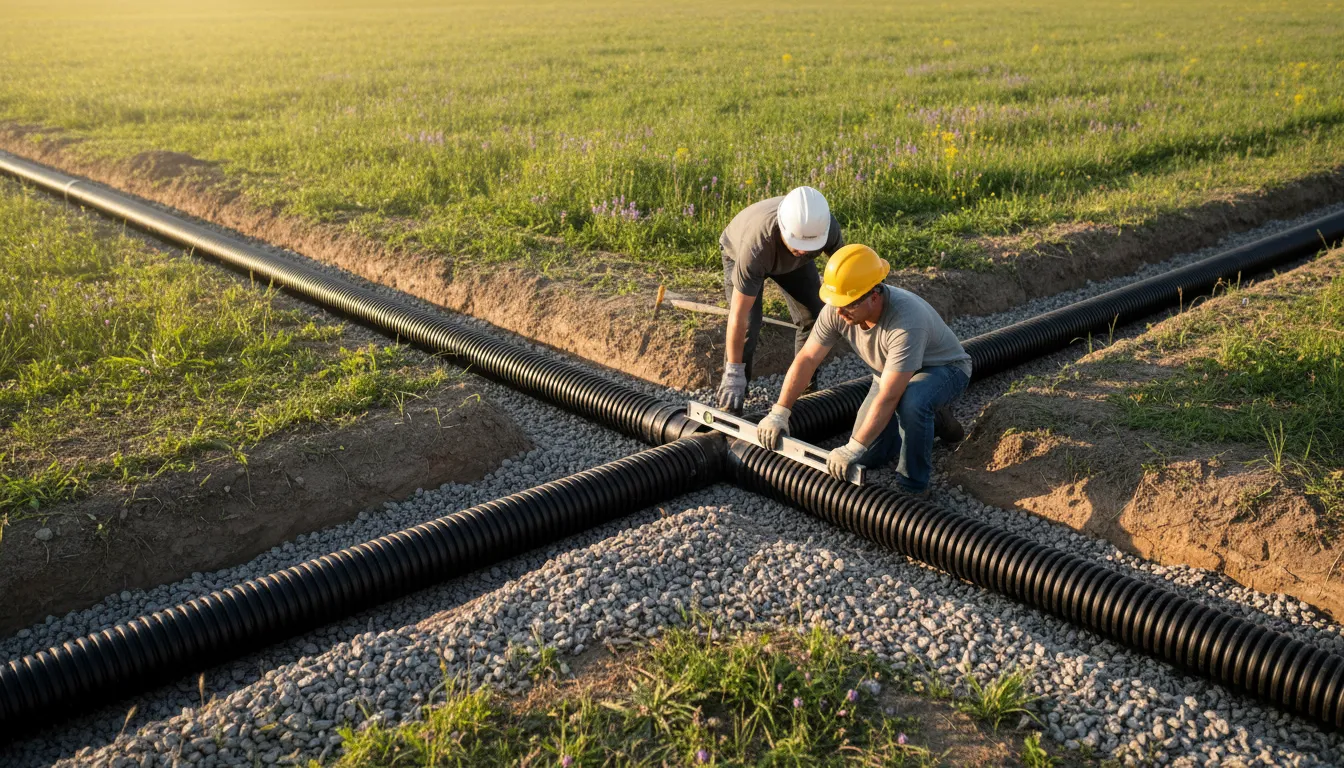
The drain field is the unsung hero of a septic system. After solids settle in the tank, the clarified liquid effluent flows into a network of perforated pipes buried in trenches filled with gravel. This effluent slowly percolates into the surrounding soil, where natural biological processes provide the final treatment. When this area becomes saturated, clogged, or physically damaged, untreated wastewater can surface, creating health hazards and environmental contamination. Recognizing early signs like soggy ground over the field, sewage odors, or slow-draining household fixtures is crucial for timely intervention.
Santa Cruz County's Regulatory Landscape
Santa Cruz County Environmental Health (SCCEH) has stringent regulations governing all Onsite Wastewater Treatment Systems (OWTS), with specific rules for repairs and replacements. The local Sewage Disposal Ordinance and the Local Agency Management Program (LAMP) outline the requirements you must follow 1.
Key Regulatory Points:
- Permits Are Mandatory: Any repair, replacement, or modification to your septic system requires a permit from SCCEH. You cannot proceed with any work without this approval 2.
- Point-of-Sale Inspections: As of July 1, 2023, sellers are required to have their septic system pumped and inspected by a licensed professional prior to transferring a property. If the inspection reveals a failure, a repair permit must typically be obtained within 30 days of close of escrow.
- Enhanced Treatment (ET) Systems: In many parts of the county, conventional gravity-fed drain fields are not feasible due to soil or groundwater conditions. If a standard system cannot be installed, the county will require an Enhanced Treatment system. These advanced systems provide a higher level of treatment and come with annual inspection and operating permit requirements.
The Site Evaluation: Soil and Groundwater
Before any repair design can be approved, a qualified professional must conduct a thorough site evaluation. This is not a mere formality in Santa Cruz; it's a critical step that dictates your repair options and costs.
- Soil Testing: A soil profile evaluation and/or percolation test determines the soil's absorption rate (how quickly water moves through it). Many areas in the county have dense, clay-rich soils with slow percolation, which necessitates a larger leach field or a specialized design 3.
- Groundwater Assessment: The vertical separation between the bottom of your proposed drain field trenches and the seasonal high groundwater level is strictly regulated. If a conventional system cannot meet this setback, an Enhanced Treatment system will be required to protect groundwater quality 4.
- Easements: If the only viable location for a repair area is on a neighboring property, you will need to secure a legally recorded easement for access and maintenance before a permit can be issued 5.
The Repair Process: From Failure to Function
Navigating a drain field failure involves a series of coordinated steps with professionals and the county.
- Inspection & Diagnosis: A licensed liquid waste hauler will pump your septic tank and perform a flow test (introducing a minimum of 250 gallons of water) to hydraulically load the drain field and confirm its failure. The results are submitted directly to SCCEH 6.
- Professional Consultation: Engage a licensed septic designer or engineer. They will review the site evaluation, discuss your options (simple repair vs. full replacement, conventional vs. engineered system), and develop a plan.
- Permit Application: Your designer submits the repair plan and application to SCCEH for review and approval. This is when the county determines if your situation requires an Enhanced Treatment system.
- Construction: Once permitted, a licensed septic contractor executes the plan. This can range from replacing a section of clogged pipe to a complete excavation and installation of a new, engineered leach field with pumps, drip irrigation, or other technologies.
- Final Inspection: SCCEH inspects the completed work before the system is covered. For ET systems, you will receive an operating permit outlining ongoing maintenance responsibilities.
Find the perfect drain field repair companies for your needs
Get personalized recommendations and expert advice
Understanding Costs for Leach Field Work
Costs for absorption system work in Santa Cruz County are highly variable and often significant, reflecting the complex regulations and site challenges. It's essential to budget accordingly.
- Standard Gravity System Replacement: For a relatively straightforward replacement of a tank and conventional drain field where conditions allow, costs can start around $15,000.
- Engineered or "Pump-Up" Systems: When site constraints require a system with pumps, pressure distribution, or elevated mounds, costs frequently range from $25,000 to over $50,000. These prices account for the engineering design, specialized equipment, and more extensive construction 7.
- Enhanced Treatment (ET) Systems: These high-tech systems, which may include aerobic treatment units (ATUs) or textile filters, represent the highest cost tier due to technology, monitoring, and complex installation. Projects can easily exceed $50,000 8 9.
- Fees: Don't forget county fees. A standard septic inspection for a point-of-sale transaction costs $425, while inspections for non-standard or alternative technology systems are $875 and $1,345, respectively. Permit fees for repairs and new installations are additional 10.
Choosing the Right Professional in Santa Cruz
Given the technical and regulatory complexity, your choice of provider is critical. Look for professionals with extensive local experience.
- Licensing: Ensure they hold current California licenses for septic construction (A or C-42) and/or design (engineering or specialist).
- Local Knowledge: Choose companies familiar with SCCEH inspectors, permit processors, and the common soil issues in your specific area (e.g., Aptos, Bonny Doon, Soquel).
- Service Range: Some companies specialize in pumping and inspection, while others focus on design, installation, or repair. Some offer full-service capabilities. Clarify their scope before proceeding.
- References & Reviews: Ask for references from recent projects in Santa Cruz County and check online reviews to gauge reliability and customer service.
Maintenance: Protecting Your Investment
After a major repair or replacement, proper maintenance is non-negotiable. For conventional systems, regular pumping (every 3-5 years) and careful water use are key. For Enhanced Treatment Systems, the county mandates annual inspections by a qualified service provider and the renewal of an operating permit. This ensures the mechanical and electrical components continue to function correctly and protect our sensitive coastal environment 11. Keeping detailed records of all maintenance and inspections is also wise for future property transactions.
Frequently asked questions
Sources
Footnotes
-
Santa Cruz County, CA SEWAGE DISPOSAL - eCode360 - https://ecode360.com/47525230 ↩
-
OWTS Repair - https://scceh.com/NewHome/Programs/LandUse/OWTSRepairUpgrades/OWTSRepair.aspx ↩
-
Site Evaluation & Testing Procedures - County of Santa Cruz - https://scceh.com/Portals/6/Env_Health/Land%20Use/Land%20Use%20Documents/2021/SiteEvaluationandTestingProcedures.pdf ↩
-
Santa Cruz County Chapter 7.38, Sewage Disposal - https://scceh.com/Portals/6/Pdfs/Att%204%20Proposed%207.38%20Changes%20with%20LAMP%209-19-22.pdf ↩
-
PRESS RELEASE - Santa Cruz County - https://www.santacruzcountyca.gov/Portals/0/County/CAO/press%20releases/2022/SepticOrdinance.10262022.pdf ↩
-
Understanding Septic System Regulations in Santa Cruz County - https://www.brezsnyassociates.com/blog/understanding-septic-system-regulations-in-santa-cruz-county-what-buyers-sellers-must-know/ ↩
-
OWTS New Development - https://scceh.com/NewHome/Programs/LandUse/OWTSNewDevelopment.aspx ↩
-
Santa Cruz County Local Agency Management Program 8.2.2021 ... - https://scceh.com/Portals/6/Env_Health/LAMP/FinalDocuments/AppDEnhancedTreatmentSystemRegulations8_2_2021.pdf ↩
-
New Septic Regulations Taking Effect July 2023 - https://slvpost.com/new-septic-regulations-taking-effect-july-2023/ ↩
-
OWTS FAQs - Santa Cruz County Environmental Health - https://scceh.com/NewHome/Programs/LandUse/OWTSFaqs.aspx ↩
-
How an OWTS is Regulated - https://scceh.com/NewHome/Programs/LandUse/HowanOWTSisRegulated.aspx ↩