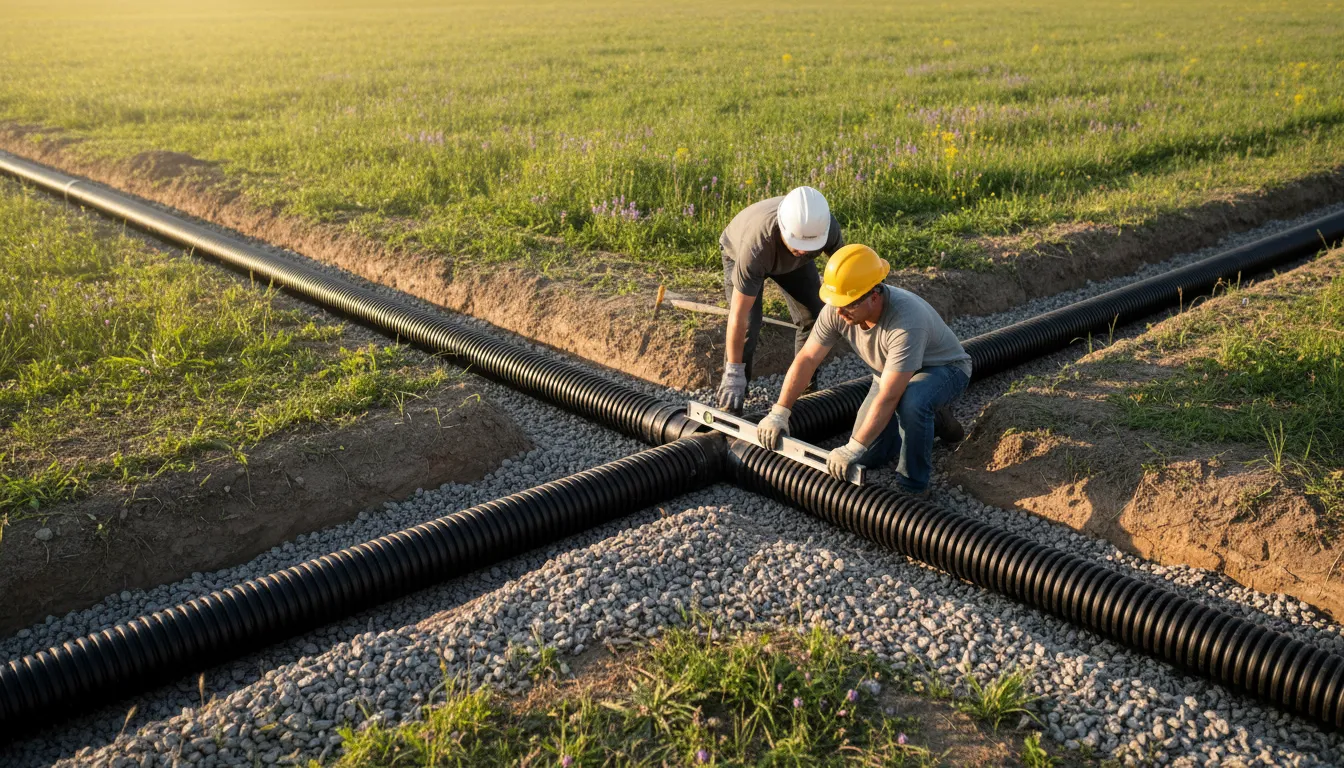
Find the Best Drain Field Repair Companies for Your Business
No obligation • Fast responses • Nationwide coverage

Why you can trust Septic Spot
Septic Spot is a leading United States resource for understanding and comparing septic services. Our editors review providers using consistent criteria and verify key business details. Listings and scores are independent, and companies cannot pay to influence our content.
Search providers near you
Top Drain Field Repair Companies in Santee, California Ranked
A failing drain field, also known as a leach field or absorption field, is a serious issue for any Santee homeowner with a septic system. This critical component is responsible for safely dispersing and filtering treated wastewater into the soil. When it fails, it can lead to soggy yards, foul odors, and environmental contamination. Understanding the local regulations, repair processes, and costs is essential for making informed decisions to restore your property's wastewater system to proper function.
Dr. Septic
San Diego, CA
Dr. Septic is a septic tank pumping, inspection, and repair company based in San Diego, CA. They provide services including septic tank pumping, certification, and drain field repair or replacement. Known for attention to detail, Dr. Septic handles complex issues such as clogged septic systems and leach field replacements. Customers have noted their thorough approach and willingness to accommodate urgent needs, including weekend work.

Center Septic
San Diego, CA
Center Septic is a family-owned septic service provider based in San Diego, CA, serving North San Diego County including Valley Center and surrounding areas. The company offers septic tank pumping, cleaning, inspections, repairs, new system installations, and drain field diagnosis and repairs. Center Septic holds a C42 license through the California State Contractor License Board and has been operating since 1995, providing a range of septic system services with trained and knowledgeable staff.
USA Septic
1317 Simpson Way Suite B, Escondido, CA 92029
USA Septic is a septic tank pumping, inspection, repair, and installation company serving San Diego, CA. They provide services including septic system construction, pumping, drain cleaning, and certifications. Their expertise covers drain field repair and replacement, helping maintain and protect septic systems. USA Septic offers guidance on septic system ownership to help customers care for their systems properly.
Abbott Septic Service
3833 Linda Vista Dr, San Marcos, CA 92078
Abbott Septic Service is a septic tank company serving Los Angeles, CA, and the surrounding San Diego County area. They provide septic tank pumping, cleaning, repair, installation, and locating services. Abbott Septic Service is a licensed Class A general engineering contractor capable of major septic system construction work, including excavation, grading, trenching, and drain field installation. Established in 1948, the company has decades of experience and offers 24/7 phone availability for septic system needs.
Understanding Drain Field Failure in Santee
The drain field is the final stage of your onsite wastewater treatment system (OWTS). After solids settle in the septic tank, the liquid effluent flows into a network of perforated pipes buried in trenches filled with gravel. This effluent slowly percolates into the surrounding soil, where natural processes provide final treatment.
Failure occurs when the soil can no longer absorb the liquid. Common signs in Santee include:
- Soggy Ground or Surfacing Effluent: Puddles or persistently wet, spongy soil over the drain field area, especially after recent pumping.
- Sewage Odors: Unpleasant smells emanating from the yard or backing up into the home.
- Slow Drains & Backups: Gurgling plumbing fixtures, toilets that drain slowly, or sewage backups inside the house.
- Unusually Green Grass: Patches of grass over the drain field that are much lusher and greener than the rest of the lawn, indicating a nutrient overload.
In San Diego County, failures are often due to soil compaction, hydraulic overloading from excessive water use, root intrusion, or the natural aging and biomat clogging of the system 1. Once a dispersal area fails, partial repairs are often not a long-term solution. The San Diego County Department of Environmental Health and Quality (DEHQ) typically requires aiming for 100% replacement of the disposal field to ensure the system functions properly for years to come 2 3.
San Diego County Regulations and Permits
All work on a septic system's leach field in Santee is strictly regulated by the DEHQ. You cannot begin any excavation or repair without the proper authorization. The regulatory framework is designed to protect local groundwater, which is a precious resource in Southern California.
Key County Requirements:
- Permit Mandatory: A Repair/Replacement Permit must be obtained from DEHQ before any work begins. Only a licensed contractor or an authorized owner-builder can apply for this permit.
- Sewer Connection Mandate: If a public sanitary sewer line is available within 300 feet of your property line, the county may require you to connect to it instead of repairing your septic system 4 5.
- Diversion Valve: Installation of a diversion valve is often required. This allows wastewater flow to be switched between a new and an old absorption field, which can be useful for resting a section.
- Licensed Professionals: All design and installation must be performed by or under the supervision of a California-licensed contractor, engineer, or architect specializing in septic systems.
The Site Evaluation Process
Before a repair or replacement plan can be approved, the site must be evaluated to ensure it can support a new leach field. The DEHQ reviews several critical factors 6:
Soil Percolation Test: A "perc test" is required to determine the rate at which water drains through the soil. Soils with high clay content, common in parts of San Diego County, may drain too slowly and be unsuitable without significant modification 7.
Groundwater Separation: There must be a minimum of 5 feet of unsaturated soil between the bottom of the proposed drain field trench and the highest anticipated seasonal groundwater level. This separation is crucial to prevent contamination 8.
Slope Stability: If your property slope exceeds 25%, the county will require a slope stability report from a licensed civil engineer or geologist to ensure the new system won't contribute to land movement 9.
Setback Distances: The new dispersal area must be set back from various features:
- At least 100 feet from any water well.
- Specific distances from property lines, structures, and waterways.
- Away from large trees whose roots could invade the pipes 10.
Find the perfect drain field repair companies for your needs
Get personalized recommendations and expert advice
Step-by-Step: The Repair & Replacement Process
Navigating a drain field project involves a series of defined steps with county oversight.
- Consultation & Site Assessment: A licensed contractor assesses the failure, discusses options with you, and conducts a preliminary site evaluation.
- Permit Application: Your contractor submits a detailed application packet to the DEHQ. This includes a site plan, a layout diagram of the proposed system, and the completed OWTS Repair/Replacement Authorization form 11.
- Plan Review & Preliminary Inspection: An Environmental Health Specialist reviews the submitted plans. They may conduct a field inspection to verify soil conditions, groundwater depth, and setbacks 12.
- Permit Issuance & Construction: Once approved, the permit is issued, and construction can begin. The old field may be abandoned in place, and new trenches are excavated according to the approved design.
- Critical Open Trench Inspection: This is one of the most important steps. Before the new perforated pipes and gravel are covered with soil, you or your contractor must call the DEHQ for an inspection. The specialist will verify the installation matches the approved plans, including pipe placement, trench depth, and gravel quality.
- Final Approval & Backfill: After the open trench inspection passes, the inspector will provide approval to backfill. Once the area is covered, a final inspection may be conducted, after which the system can be put into service.
Understanding the Costs of Drain Field Work in Santee
The cost for leach field rehabilitation in California varies widely based on system size, soil conditions, and permit complexity. The figures below are general ranges; obtaining quotes from licensed local contractors is essential 13.
- Minor Component Repairs: Replacing a distribution box or a section of pipe may cost between $300 and $900.
- Significant Pipe Repairs: Addressing major pipe network issues or replacing a drain field line can range from $1,200 to $4,000.
- Complete Drain Field Replacement: This is the most common major repair. In Santee, due to county requirements and local soil challenges, full replacement typically costs between $5,000 and $15,000 14 15.
- Full System Replacement: If the septic tank also needs replacement, the average total cost for a new tank and drain field in California is often between $6,000 and $10,000, though complex sites can exceed this 16 17.
- Additional Fees: Remember to factor in non-construction costs like DEHQ permit fees, soil percolation test fees, and possible engineering report fees for sloped sites.
Choosing a qualified professional who is familiar with San Diego County's specific regulations is the most important step in ensuring your repair is compliant, effective, and provides long-term value.
Frequently asked questions
Sources
Footnotes
-
Frequently Asked Questions on Septic Systems - https://www.sandiegocounty.gov/content/sdc/deh/lwqd/lu_septic_systems/lu_septic_faqs_page.html ↩
-
Septic Repair Authorization Application - County of San Diego - https://www.sandiegocounty.gov/content/dam/sdc/deh/lwqd/Septic_Repair_Authorization_FILLABLE.pdf ↩
-
ONSITE SYSTEMS MANUAL - California Water Boards - https://www.waterboards.ca.gov/sanfranciscobay/board_info/agendas/2016/January/SantaClaraOWTS/SCC_OWTS_B_Onsite_Systems_Manual.pdf ↩
-
onsite-wastewater-treatment-system-requirements-procedures. ... - http://www.publichealth.lacounty.gov/eh/docs/permit/onsite-wastewater-treatment-system-requirements-procedures.pdf ↩
-
private sewage disposal systems - https://www.waterboards.ca.gov/water_issues/programs/owts/docs/appdxk_ch7ta1401.pdf ↩
-
Design Manual for Onsite Wastewater Treatment Systems - https://mthelixlifestyles.com/wp-content/uploads/sites/638/2018/09/County-of-San-Diego-Department-of-Environmental-and-Helalth-Septic-Systems-Design_Manual_for_OWTS_3-22-10.pdf ↩
-
The Californian's Guide To Septic Tanks - https://cacciaplumbing.com/blog/california-septic-tank-guide/ ↩
-
Septic Installation in San Diego vs Other Regions: Key Differences - Mineo Bros Septic - https://www.mineobrosseptic.com/news/septic-installation-in-san-diego-vs-other-regions-key-differences/ ↩
-
Septic Systems - County of San Diego - https://www.sandiegocounty.gov/content/sdc/deh/lwqd/lu_septic_systems.html ↩
-
The SoCal Guide to Septic Tank Installation - https://www.lanikseptic.com/socal-guide-septic-tank-installation/ ↩
-
County of San Diego - https://www.sandiegocounty.gov/content/dam/sdc/deh/lwqd/Septic%20Repair%20Authorization.pdf ↩
-
standard septic system operation and maintenance plan - https://www.sandiegocounty.gov/content/dam/sdc/deh/lwqd/Standard_Operation_and_Maintenance_Plan_Template_FILLABLE.pdf ↩
-
Understanding the Costs of Septic Tank Installation and Repair: A Guide for Homeowners - https://mathisandsonsseptic.com/mathis-sons-septic-blog-orlando-fl/understanding-the-costs-of-septic-tank-installation-and-repair/ ↩
-
How Much Does Septic System Repair Really Cost in California - https://www.lanikseptic.com/septic-repair-cost/ ↩
-
Septic Tank Replacement and Drain Field Cost in California - https://www.lanikseptic.com/how-much-does-it-cost-to-replace-a-septic-tank-and-drain-field-in-california/ ↩
-
Septic System Cost 2024: Installation, Maintenance & Replacement - https://www.protoolreviews.com/septic-tank-cost/ ↩
-
How Much Does Replacing a Septic System Cost - https://www.rismedia.com/2023/12/04/how-much-does-replacing-a-septic-system-cost/ ↩