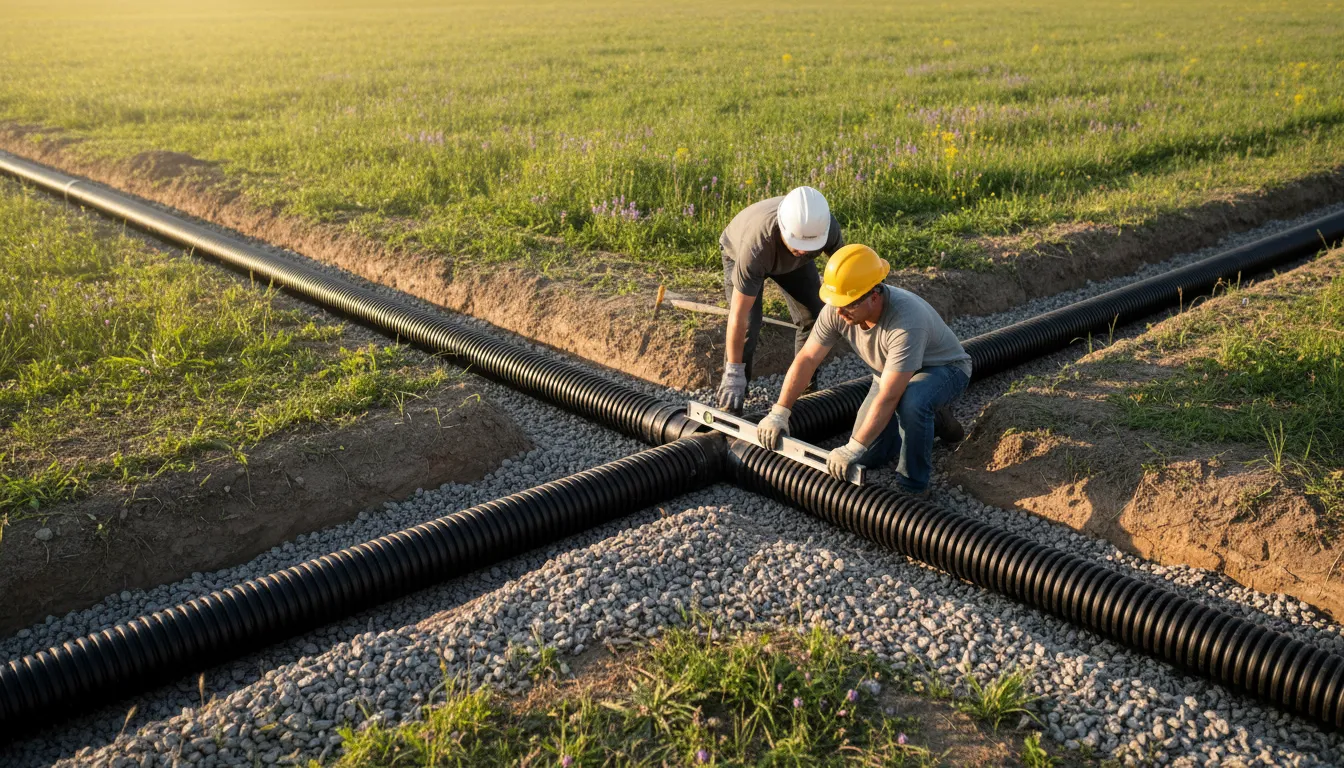
Find the Best Drain Field Repair Companies for Your Business
No obligation • Fast responses • Nationwide coverage

Why you can trust Septic Spot
Septic Spot is a leading United States resource for understanding and comparing septic services. Our editors review providers using consistent criteria and verify key business details. Listings and scores are independent, and companies cannot pay to influence our content.
Search providers near you
Top Drain Field Repair Companies in Tracy, California Ranked
A failing septic drain field is a serious issue that can lead to property damage, environmental contamination, and costly repairs. Drain field repair and replacement involves diagnosing and fixing the underground network of perforated pipes that treat and disperse wastewater from your septic tank. This guide explains the process, local regulations, and costs for Tracy homeowners, helping you understand your options and connect with qualified local professionals for an assessment.
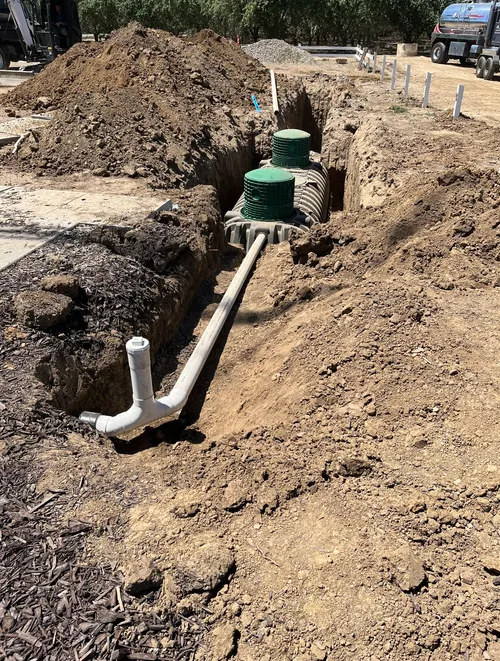
A-1 Septic Services
2125 Wylie Dr #6, Modesto, CA 95355
A-1 Septic Services is a full-service septic company based in San Jose, CA, offering comprehensive septic system solutions. They provide septic tank installation, repair, pumping, inspections, and drain field services, along with grading, excavation, and underground utility trenching. The company manages all aspects from design and permitting to final installation, ensuring code compliance and system longevity. With over 30 years of experience serving Stanislaus, San Joaquin, and Merced counties, A-1 Septic Services has extensive local knowledge and expertise. Their capabilities include septic system design, leach field installation, and utility trenching, supported by in-house crews and equipment to maintain control over project quality and scheduling.
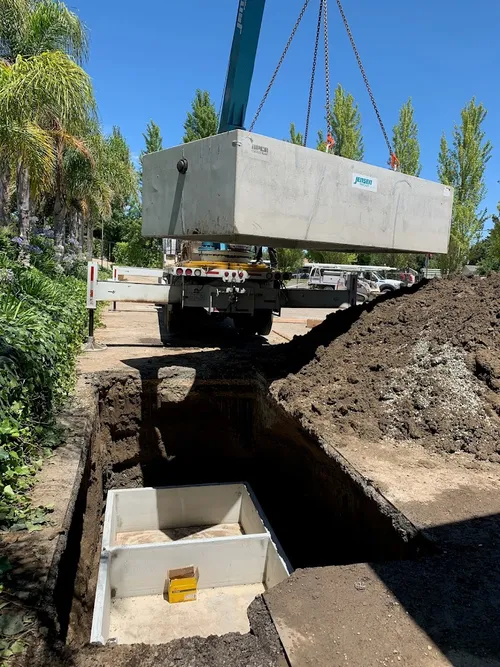
Central Valley Septic Backhoe & Drilling
3746 Fourteen Mile Dr, Stockton, CA 95219
Central Valley Septic Backhoe & Drilling is a septic system contractor serving Stockton, CA, and the surrounding Northern California region. Established in 1992, the company provides residential and commercial septic services including tank installation, pumping, inspection, system repair, and leach line repair. They also offer foundation drilling and backhoe services for various construction needs. Their expertise includes designing and installing septic systems that comply with San Joaquin and Sacramento county codes as well as California state regulations.
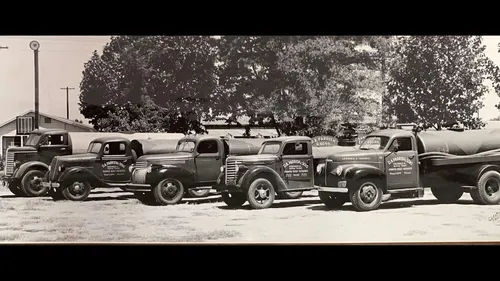
Parrish & Sons Inc
4698 Waterloo Rd, Stockton, CA 95215
Parrish & Sons Inc is a full-service septic and construction company based in Stockton, CA, serving San Joaquin and Sacramento Counties. They offer septic system pumping, installation, repair, and maintenance along with foundation drilling, backhoe services, and leach line repair. With over 80 years of experience since 1942, they provide expert solutions for residential and commercial septic needs, including soil testing and site preparation to ensure system efficiency and durability.
Understanding Your Septic Drain Field
Often called a leach field or absorption field, the drain field is the final and most critical stage of a septic system. After solids settle in the tank, liquid effluent flows into a series of buried trenches lined with gravel and perforated pipes. This effluent slowly percolates through the soil, where natural processes filter out harmful bacteria and nutrients before the water rejoins the groundwater. When this area fails, untreated wastewater can surface, creating health hazards and unpleasant conditions.
Signs You Need Drain Field Repair in Tracy
Recognizing early warning signs can prevent a minor issue from becoming a full system replacement. Common indicators include:
- Soggy Spots or Lush Grass: Unexplained wet, spongy areas or patches of grass that are noticeably greener and faster-growing than the rest of your yard, especially near the drain field location. This often signals that effluent is surfacing.
- Sewage Odors: Persistent smells of sewage in the yard or even inside the home can indicate a saturated or failing drain field.
- Slow Drains and Backups: If sinks, toilets, and showers drain very slowly or back up, and this is not resolved by pumping the septic tank, the drain field may be clogged and unable to accept more water.
- Standing Water: Puddles of grey or foul-smelling water over the drain field area are a clear sign of failure.
If you notice any of these signs, it's crucial to contact a professional for an inspection immediately to assess the scope of the problem.
Tracy's Regulatory Landscape: Permits and Standards
All septic system work in Tracy falls under the jurisdiction of the San Joaquin County Environmental Health Department and must comply with California's State Water Resources Control Board policies for Onsite Wastewater Treatment Systems (OWTS). You cannot simply dig up and replace a drain field on your own.
- Permit Required: A county permit is mandatory for any repair or replacement of a septic tank or leach field. Starting work without a permit can result in fines and orders to undo the work 1.
- Professional Design: A qualified septic engineer or professional must design the new or repaired system. This design plan must be submitted and approved by the county before any construction begins 2.
- Final Inspection: Once work is completed, a county official must inspect the installation to ensure it matches the approved plan and meets all codes before the system can be covered and put back into use.
Key Factors Influencing Drain Field Work in Tracy
Several local environmental and site-specific factors dictate what repair or replacement options are viable for your property.
- Soil Percolation: The soil must allow for adequate percolation, typically between 1 and 12 inches per hour. Tracy's clay-heavy soils can be problematic, as they absorb water slowly and are prone to compaction, which is a common cause of drain field failure. A new perc test is often required for a replacement system.
- Groundwater Separation: California standards require a minimum of 5 feet of separation between the bottom of the drain field trenches and the highest seasonal level of groundwater. This prevents contamination.
- Property Slope: Land slopes should not exceed 35%. For slopes over 20%, the county will likely require a geotechnical report to ensure stability 3.
- Setbacks: Systems must maintain specific distances from property lines, wells, buildings, and water bodies. These setbacks can limit where a new drain field can be placed on your lot.
The Professional Assessment and Repair Process
When you call a professional for suspected drain field issues, they will follow a systematic process:
- Initial Inspection: The technician will first check the septic tank for sludge levels, leaks, and structural integrity to rule out a tank issue as the primary cause 4.
- Comprehensive Diagnosis: To confirm a drain field problem, they may use a camera to inspect distribution lines or conduct a percolation (perc) test. This test, which can cost between $300 and $3,000 depending on its complexity, determines the soil's absorption rate and is critical for designing a compliant replacement system 5 6.
- Solution Design: Based on the diagnosis and site constraints, the professional will design a repair or replacement solution. For minor issues, this may involve cleaning pipes or replacing a small section. For major failures, a completely new leach field design is necessary.
- Permitting & Installation: The approved professional will handle the permit application with your design. Once approved, the excavation and installation work begins.
- Final Approval: After installation, the county performs a final inspection. Only after they approve the work can the system be backfilled and returned to service.
Find the perfect drain field repair companies for your needs
Get personalized recommendations and expert advice
Cost of Drain Field Repair and Replacement in Tracy
Costs can vary widely based on the extent of the damage, soil conditions, and the size of the system needed. The figures below are estimates for the Tracy area.
- Minor Repairs: Addressing a clogged pipe or a small section of the field typically ranges from $300 to $900.
- Major Repairs: More extensive work, like replacing several distribution lines or addressing significant soil compaction, can cost between $1,200 and $4,000 7.
- Full Drain Field Replacement: When the entire absorption field has failed, replacement is necessary. In Tracy, this major project typically costs between $5,000 and $15,000 or more, with an average often cited around $7,000 to $8,000 8 9 10. This price includes excavation, new piping, gravel, soil, and labor.
- Additional Costs: Remember to budget for the required percolation test ($300-$3,000) and county permit fees, which are separate from the repair or installation costs 11 12.
Alternatives to Conventional Drain Field Replacement
If your existing leach field has failed and site conditions (like poor soil or high groundwater) make a standard replacement difficult, a professional may recommend an alternative system:
- Mound Systems: Effluent is pumped to a raised, constructed sand mound, providing the necessary soil depth for treatment.
- Aerobic Treatment Units (ATUs): These systems use oxygen to break down waste more efficiently, producing a higher-quality effluent that can be dispersed in more challenging soils.
- Drip Irrigation Systems: Treated effluent is slowly dispersed through a network of shallow drip lines over a larger area.
These advanced systems have higher upfront costs but can be the only viable solution for properties that fail a standard perc test.
Maintaining Your New or Repaired Drain Field
Protect your investment with proper care:
- Direct Water Away: Ensure roof gutters and yard drainage do not flow over the drain field.
- Avoid Heavy Loads: Never drive or park vehicles, or build structures like sheds or patios, over the drain field area.
- Plant Carefully: Only grass should be planted over the field. Tree and shrub roots can clog and damage pipes.
- Conserve Water: Spread out laundry loads and fix leaky fixtures to avoid hydraulically overloading the system.
Frequently asked questions
Sources
Footnotes
-
San Joaquin County Drought Resilience Plan - sjgov.org - https://www.sjgov.org/docs/default-source/office-of-emergency-services-documents/emergency-plans/hazard/sjdrp_draft_readyforcountyreview_02132026.pdf?sfvrsn=5b29aebb_7 ↩
-
chapter 15.18 - Alameda County - http://www.acgov.org/board/bos_calendar/documents/DocsAgendaReg_05_10_16/HEALTH%20CARE%20SERVICES/Consent%20Calendar/ENVHLTH_231352.pdf ↩
-
What is the best septic system if your land fails a perc test? - https://www.premiertechaqua.com/en-us/blog/best-septic-system-failed-perc-test ↩
-
Homeowner's Guide to Septic Systems - Tuolumne County - https://www.tuolumnecounty.ca.gov/DocumentCenter/View/21759/Onsite-System-Care-and-Maintenance ↩
-
California Septic Tank Requirements | Onsite Wastewater ... - https://www.ntotank.com/blog/california-septic-tank-requirements ↩
-
The Californian's Guide To Septic Tanks - https://cacciaplumbing.com/blog/california-septic-tank-guide/ ↩
-
Cost to Replace Septic Tank and Drain Field [2026 Data] | Angi - https://www.angi.com/articles/how-much-new-drain-fields-foot.htm ↩
-
Septic System Installation Cost [2025 Data] - HomeAdvisor - https://www.homeadvisor.com/cost/plumbing/install-a-septic-tank/ ↩
-
Septic Repair Cost in California: Complete Breakdown of Pricing ... - https://www.lanikseptic.com/septic-repair-cost/ ↩
-
Drain Field Installation Services in Tracy, CA | Livermore Septic - https://livermoreseptic.com/drain-field-installation-tracy-ca ↩
-
How Much Does a Septic Soil Test Cost in 2026? - Land Perc - https://landperc.com/septic-soil-test-cost/ ↩
-
Septic Tank Replacement and Drain Field Cost in California - https://www.lanikseptic.com/how-much-does-it-cost-to-replace-a-septic-tank-and-drain-field-in-california/ ↩