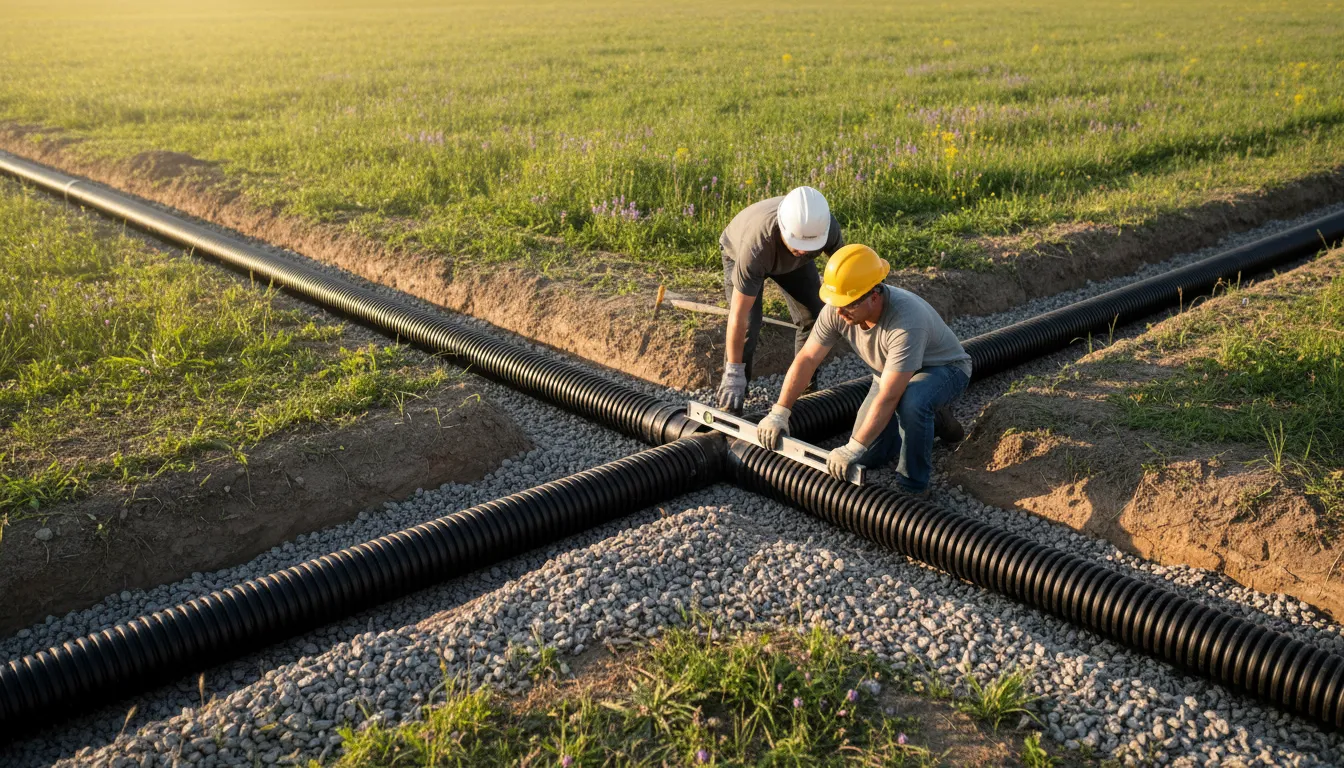
Find the Best Drain Field Repair Companies for Your Business
No obligation • Fast responses • Nationwide coverage

Why you can trust Septic Spot
Septic Spot is a leading United States resource for understanding and comparing septic services. Our editors review providers using consistent criteria and verify key business details. Listings and scores are independent, and companies cannot pay to influence our content.
Search providers near you
Top Drain Field Repair Companies in Tulare, California Ranked
A failing septic drain field is a serious issue that can lead to sewage backups, foul odors, and environmental contamination. Drain field repair or replacement involves addressing the underground network of perforated pipes and soil that treats and disperses wastewater from your home. This guide explains the local regulations, processes, and costs for leach field work in Tulare, helping you understand what to expect and how to connect with qualified local professionals for your project.
PRS Plumber Tulare
Visalia, CA
PRS Plumber Tulare provides septic tank pumping, inspection, installation, and repair services in Visalia, CA. They serve residential, commercial, and industrial clients throughout the Central Valley. The company offers specialized capabilities such as trenchless sewer line installation and sewer video inspection to efficiently diagnose and repair plumbing and septic issues. With over 40 years of experience, PRS Plumber Tulare is a family-owned business known for its licensed, bonded, and insured crews. They also provide 24/7 emergency plumbing services to address urgent needs at any time.
Pro Rooter & Septic - Visalia Plumbing
12148 Ave 272, Visalia, CA 93277
Pro Rooter & Septic - Visalia Plumbing provides septic tank pumping, inspection, repair, and installation services in Visalia, CA. They also handle drain field repair and sewer line services, including trenchless sewer line installation and sewer video inspection. With over 40 years of experience serving the Central Valley, the company is family owned and operated, offering 24/7 availability for plumbing and septic emergencies.
Understanding Your Septic System's Leach Field
The drain field, also known as a leach field or absorption field, is the final and most critical stage of a septic system. After solids settle in the septic tank, the liquid effluent flows into a distribution box and out through a series of perforated pipes buried in trenches filled with gravel. This effluent slowly percolates through the soil, where natural processes filter and treat it before it rejoins the groundwater. When this area becomes clogged, saturated, or otherwise compromised, the entire system fails. Common signs include soggy ground or standing water over the field, sewage odors, and slow-draining or backing-up household fixtures.
Tulare County Regulations and Permit Requirements
All septic system repairs and replacements in Tulare County are strictly regulated. The county operates under a Local Agency Management Program (LAMP), and the Environmental Health Division (EHD) is the permitting authority. You must obtain a permit from the EHD before any construction begins on your leach field. This ensures the work protects public health and groundwater quality. Attempting a repair or replacement without a permit can result in fines and an illegal, non-compliant system.
Key Site and System Requirements
Tulare County enforces specific standards for any new or replacement dispersal system. A professional site evaluation is required to verify these conditions:
- Soil Suitability: The soil must have suitable percolation rates, generally between 1 and 12 inches per hour, to properly treat wastewater. At least 3 feet of suitable soil is required above any limiting layer like bedrock or clay.
- Groundwater Separation: A minimum of 5 feet of vertical separation is required between the bottom of the drain field trench and the highest seasonal groundwater level.
- Setback Distances: Systems must maintain specific distances from property lines, wells, streams, and structures. For example, a typical setback from a water well is 100 feet or more.
- Slope Limitations: Properties with slopes greater than 20% require a geotechnical report, and the maximum slope for a conventional system is generally 35% 1.
- No Fill Areas: Dispersal systems are not allowed to be constructed in filled areas.
The Step-by-Step Process for Repair or Replacement
Navigating a drain field project involves a series of coordinated steps with professionals and the county.
- Professional System Evaluation: The first step is to hire a licensed septic professional to diagnose the problem. They will perform tests, such as a dye test or soil evaluation, to confirm the drain field has failed and determine the cause 2.
- Site Evaluation & Design: A qualified contractor or engineer will conduct a formal site evaluation to assess soil conditions, groundwater depth, and available space. They will then design a repair or replacement system that meets all Tulare County LAMP standards.
- Permit Application: Your contractor will submit the site evaluation report and engineered design plans to the Tulare County Environmental Health Division for review and permit approval 3 4.
- Construction/Installation: Once the permit is issued, the licensed contractor can begin construction. This may involve excavating the old leach field, preparing the soil, and installing new distribution lines, gravel, and soil cover.
- Final Inspection: After construction, the county EHD must perform a final inspection to approve the repaired or replaced system before it is covered and put into use 5.
Find the perfect drain field repair companies for your needs
Get personalized recommendations and expert advice
Cost Considerations for Leach Field Work in Tulare
Costs for drain field work vary widely based on the extent of the failure, soil conditions, system size, and permit fees. The figures below are estimates for the Tulare area.
- Minor Repairs: Addressing a single clogged line or a small section might cost between $300 and $900.
- Complete Drain Field Replacement: This is the most common major expense. For a full leach field replacement, homeowners can expect to pay between $5,000 and $15,000 or more6. Complex sites with poor soil or access challenges will be on the higher end.
- Total System Replacement: If both the septic tank and drain field need to be replaced, the total cost typically ranges from $6,000 to over $20,0007 8.
- Additional Costs: Remember to budget for the required soil testing, engineering design work, county permit fees, and final landscaping restoration, which can add significantly to the total project cost 9.
Choosing the Right Professional for the Job
Given the technical and regulatory complexity, selecting the right contractor is crucial. Look for professionals who are:
- Licensed and Insured: They must hold current state and county licenses for septic system installation and repair.
- Familiar with Tulare County LAMP: Experience navigating the local permit process with the Environmental Health Division is invaluable.
- Transparent in Communication: They should clearly explain the diagnosis, proposed solution, detailed cost estimate, and project timeline.
- Willing to Provide References: Ask for and contact references from recent similar projects in the area.
A properly functioning leach field is essential for your home's sanitation and environmental safety. By understanding the local requirements and process, you can make informed decisions and ensure your septic system is repaired or replaced correctly and compliantly.
Frequently asked questions
Sources
Footnotes
-
The Californian's Guide To Septic Tanks - https://cacciaplumbing.com/blog/california-septic-tank-guide/ ↩
-
Troubleshooting Septic System in California - What You Need To ... - https://www.lanikseptic.com/troubleshooting-your-septic-system-in-california/ ↩
-
Septic System - Tulare County Environmental Health - https://tularecountyeh.org/eh/guidance-library/septic-system ↩
-
California Septic Tank Requirements | Onsite Wastewater ... - https://www.ntotank.com/blog/california-septic-tank-requirements ↩
-
Septic Systems | Tulare - Environmental Health - https://tularecountyeh.org/eh/our-services/land-use/septic-systems ↩
-
How Much Does Septic System Repair Really Cost in California - https://www.lanikseptic.com/septic-repair-cost/ ↩
-
How Much Does A Septic System Cost? - https://uniquedrainseptic.com/blogs/resources/how-much-does-a-septic-system-cost ↩
-
Septic Tank Replacement and Drain Field Cost in California - https://www.lanikseptic.com/how-much-does-it-cost-to-replace-a-septic-tank-and-drain-field-in-california/ ↩
-
Septic System Cost Estimator | Septic Tank Size Calculator - https://septiccalculator.com/calculator/cost ↩