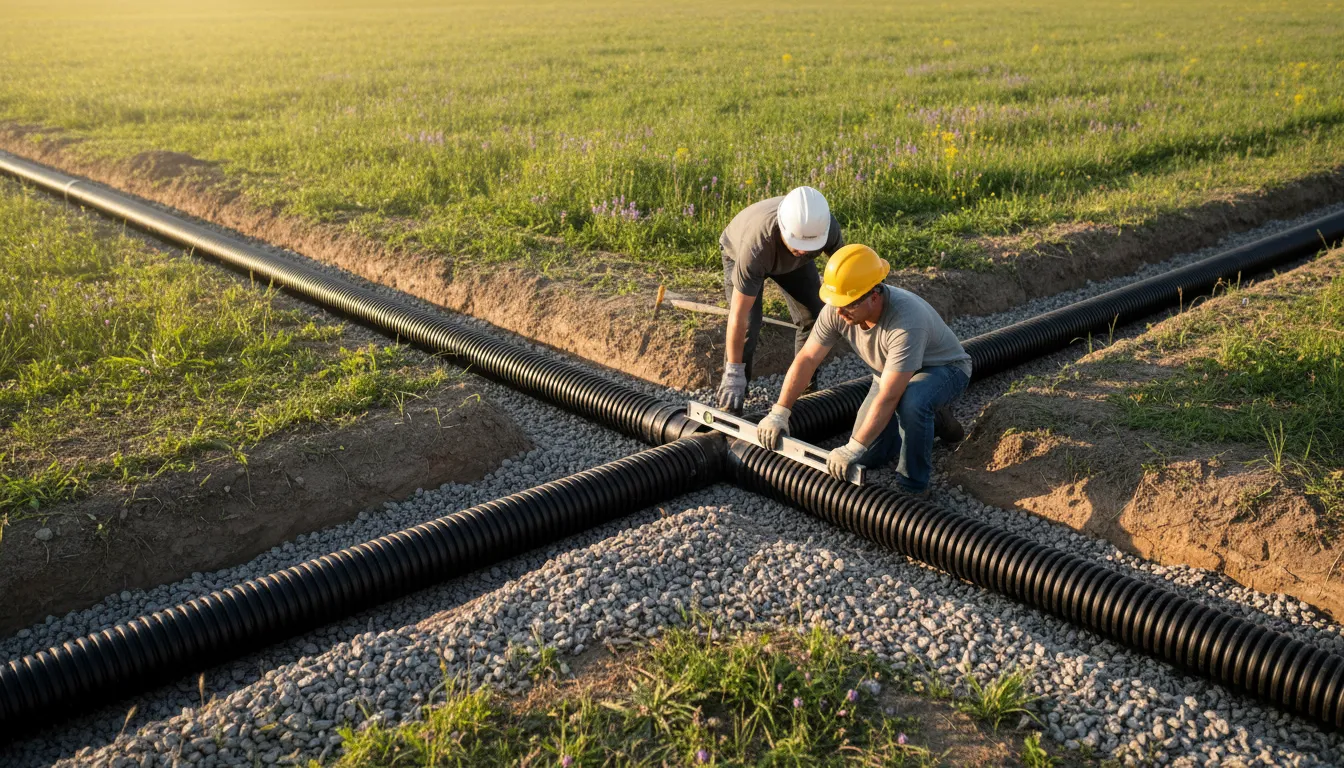
Find the Best Drain Field Repair Companies for Your Business
No obligation • Fast responses • Nationwide coverage

Why you can trust Septic Spot
Septic Spot is a leading United States resource for understanding and comparing septic services. Our editors review providers using consistent criteria and verify key business details. Listings and scores are independent, and companies cannot pay to influence our content.
Search providers near you
Top Drain Field Repair Companies in Turlock, California Ranked
A failing drain field is a serious issue that can lead to sewage backups, soggy yards, and environmental contamination. Drain field repair and replacement involves diagnosing the cause of failure, obtaining the necessary permits, and executing a solution to restore your septic system's ability to safely treat and disperse wastewater. This guide explains the local process, costs, and regulations, helping you understand your options and connect with qualified professionals in the Turlock area who can assess and address your system's needs.
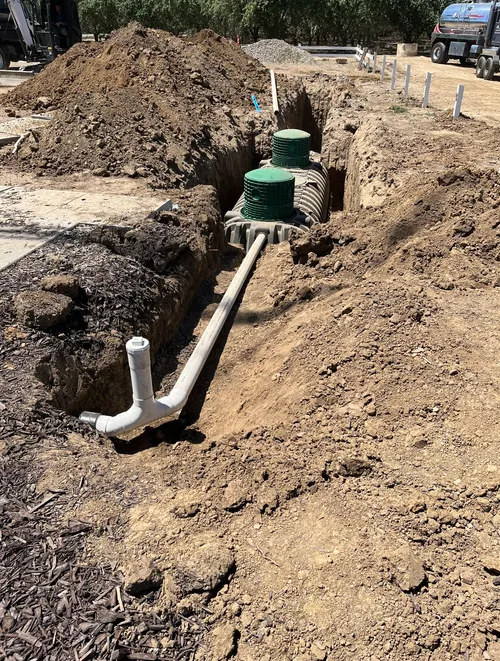
Understanding Your Septic Drain Field
Often called a leach field or absorption field, the drain field is the final, critical stage of a septic system. After solids settle in the tank, the clarified liquid effluent flows into a network of perforated pipes buried in trenches filled with gravel. This effluent slowly percolates through the soil, where natural biological processes provide the final treatment before it rejoins the groundwater. A properly functioning drain field is essential for protecting your property and public health.
In Turlock and throughout Stanislaus County, the performance of a drain field is heavily influenced by local soil conditions and strict state water quality regulations. When this component fails, it requires immediate attention from a licensed septic professional.
Signs You Need Drain Field Repair or Replacement
Recognizing early warning signs can prevent a complete system failure and more costly repairs. Key indicators of a failing leach field include:
- Soggy Ground or Standing Water: Persistent wet, spongy areas or puddles over the drain field, especially when it hasn't rained.
- Sewage Odors: Unpleasant smells emanating from the yard near the drain field or even inside the home.
- Unusually Lush Vegetation: Patches of grass over the field that are noticeably greener and grow faster than the rest of the lawn.
- Slow Drains and Backups: Gurgling pipes, slow-draining sinks and toilets, or sewage backups in the home, indicating the system is not draining properly.
- Algae Blooms in Nearby Ditches or Ponds: Nutrient-rich effluent reaching surface water can cause excessive algae growth.
If you notice any of these signs, it's crucial to stop using water excessively and contact a professional for an inspection.
Common Causes of Drain Field Failure
Understanding why a leach field fails is the first step toward a lasting repair. In the Turlock area, common causes include:
- Soil Compaction: Driving vehicles, parking, or building structures over the drain field compacts the soil, crushing pipes and destroying its ability to absorb and treat effluent.
- Hydraulic Overloading: Consistently exceeding the system's design capacity with excessive water use from long showers, frequent laundry loads, or leaking fixtures floods the field, preventing proper percolation.
- Aging and Clogging: Over decades, a biomat-a layer of bacteria and organic material-naturally forms at the soil interface. An excessively thick biomat, often due to lack of regular tank pumping, can clog the soil and prevent drainage.
- Improper Design or Installation: Systems not designed for the specific soil type or slope of the property may fail prematurely.
- Root Intrusion: Tree and shrub roots can infiltrate and clog perforated pipes.
The Professional Inspection and Diagnosis Process
A qualified septic contractor will perform a systematic evaluation to determine the exact problem and the appropriate solution. This process typically involves:
- Locating System Components: Using probes and records to find the septic tank and drain field lines.
- Inspecting the Tank: Pumping the tank (if needed) to inspect inlet/outlet baffles and measure sludge/scum levels. This rules out tank issues as the primary cause 1.
- Assessing the Drain Field: Probing the field area to check for saturated soil and possibly using a camera to inspect the distribution pipes for breaks or blockages.
- Providing a Report: The professional will diagnose the failure's cause and scope, presenting you with repair or replacement options.
Find the perfect drain field repair companies for your needs
Get personalized recommendations and expert advice
Turlock and Stanislaus County Regulations and Permits
All significant septic work in Turlock requires permits and must comply with regulations from multiple agencies. Navigating this process is a key part of any contractor's job.
- Primary Permit Agency: Stanislaus County Environmental Resources is the local agency that manages permits for Onsite Wastewater Treatment Systems (OWTS) 2. They ensure installations and repairs meet all county and state requirements.
- Governing Regulations: All systems must comply with the rules set by the Central Valley Regional Water Quality Control Board (Region 5), which protects groundwater quality in the area 3.
- When a Permit is Required: A permit is needed for most repairs, alterations, and any complete drain field replacement. If a repair cannot fix the failure, a new system design and permit are mandatory 4 5.
Key Site and System Requirements
Your property and the proposed repair must meet specific standards, including:
- Soil Percolation Test: A test must confirm the soil has an acceptable percolation rate, typically between 1 and 12 inches per hour, to absorb effluent.
- Groundwater Separation: There must be at least 5 feet of vertical distance between the bottom of the drain field trenches and the highest seasonal groundwater level.
- Setbacks: The system must be located specific minimum distances from property lines, wells, streams, buildings, and other features.
- Slope: Properties with slopes over 20% may require a geotechnical report, and systems are generally not permitted on slopes exceeding 35% 6.
Repair vs. Replacement: Options and Costs
The solution depends on the extent and cause of the failure. Here's a breakdown of common approaches and associated costs for the Turlock region.
Drain Field Repairs
For partial or localized failures, repair may be possible.
- Minor Repairs: Fixing a clogged distribution box, replacing a section of crushed pipe, or cleaning a clogged line. Cost: Typically $300 to $900.
- Major Repairs: Addressing significant pipe damage, repairing a failing septic tank outlet, or installing a new distribution box. Cost: Often ranges from $1,200 to $4,000.
Drain Field Replacement
When repairs are insufficient, a full leach field replacement is necessary. This is a major project involving new design, permitting, excavation, and installation.
- Cost Range: A complete drain field replacement in California is a significant investment, generally ranging from $5,000 to over $15,0007 8. The average total cost often falls between $6,000 and $10,000, though this can vary widely based on system size, soil conditions, and accessibility 7 9.
- The Process: Replacement usually requires a new percolation test, a county-approved design plan, excavation to remove the old field, and installation of new trenches, gravel, and piping. Landscape restoration (sod, seeding) is typically an additional cost.
Maintaining Your New or Repaired Drain Field
Protect your investment and ensure long-term functionality with proper care:
- Pump the Tank Regularly: Have the septic tank pumped every 3 to 5 years to prevent solids from washing out and clogging the field 10.
- Conserve Water: Spread out laundry loads, fix leaks promptly, and consider water-efficient fixtures.
- Keep the Area Clear: Never drive, park, or build over the drain field. Plant only grass over it; keep trees and shrubs with deep roots far away.
- Divert Water: Ensure roof drains, sump pumps, and surface runoff are directed away from the drain field area.
- Avoid Harmful Chemicals: Minimize the use of harsh cleaners, antibiotics, and excessive garbage disposal use, which can disrupt the bacterial balance.
Frequently asked questions
Sources
Footnotes
-
Homeowner's Guide to Septic Systems - Tuolumne County - https://www.tuolumnecounty.ca.gov/DocumentCenter/View/21759/Onsite-System-Care-and-Maintenance ↩
-
Initial Study - Stanislaus County - https://www.stancounty.com/planning/pl/act-proj/PLN2020-0102_30_Day.pdf ↩
-
Onsite Wastewater Treatment Systems Local Agency ... - https://web2.co.merced.ca.us/pdfs/EnvironmentalHealth/Draft_LAMP_Revised_103116.pdf ↩
-
California Septic Tank Requirements | Onsite Wastewater ... - https://www.ntotank.com/blog/california-septic-tank-requirements ↩
-
ALTERATION PERMIT FOR A SEPTIC SYSTEM PROCEDURE & CRITERIA - https://www.washingtoncountyor.gov/hhs/documents/alteration-perm-packet/download?inline ↩
-
The Californian's Guide To Septic Tanks - https://cacciaplumbing.com/blog/california-septic-tank-guide/ ↩
-
Septic Repair Cost in California: Complete Breakdown of Pricing ... - https://www.lanikseptic.com/septic-repair-cost/ ↩ ↩2
-
How Much Does a Septic Tank or Leach Field Replacement Cost? - https://www.elocal.com/resources/home-improvement/plumbing/cost-guide/leach-field-replacement-cost/ ↩
-
Septic Tank Replacement and Drain Field Cost in California - https://www.lanikseptic.com/how-much-does-it-cost-to-replace-a-septic-tank-and-drain-field-in-california/ ↩
-
Homeowner's - Tuolumne County - https://www.tuolumnecounty.ca.gov/DocumentCenter/View/935/Homeowners-Guide?bidId= ↩