Find the Best Drain Field Repair Companies for Your Business
No obligation • Fast responses • Nationwide coverage

Why you can trust Septic Spot
Septic Spot is a leading United States resource for understanding and comparing septic services. Our editors review providers using consistent criteria and verify key business details. Listings and scores are independent, and companies cannot pay to influence our content.
Search providers near you
Top Drain Field Repair Companies in Watsonville, California Ranked
A failing drain field, also known as a leach field or absorption field, is a serious issue for any property with a septic system. It's the final and most critical stage of wastewater treatment, where effluent is dispersed into the soil for final purification. When this component fails, it can lead to soggy yards, foul odors, and environmental contamination. This guide explains the local process, regulations, and costs for drain field repair and replacement in Watsonville, helping you understand your options and connect with qualified local professionals.
Understanding Drain Field Failure in Watsonville
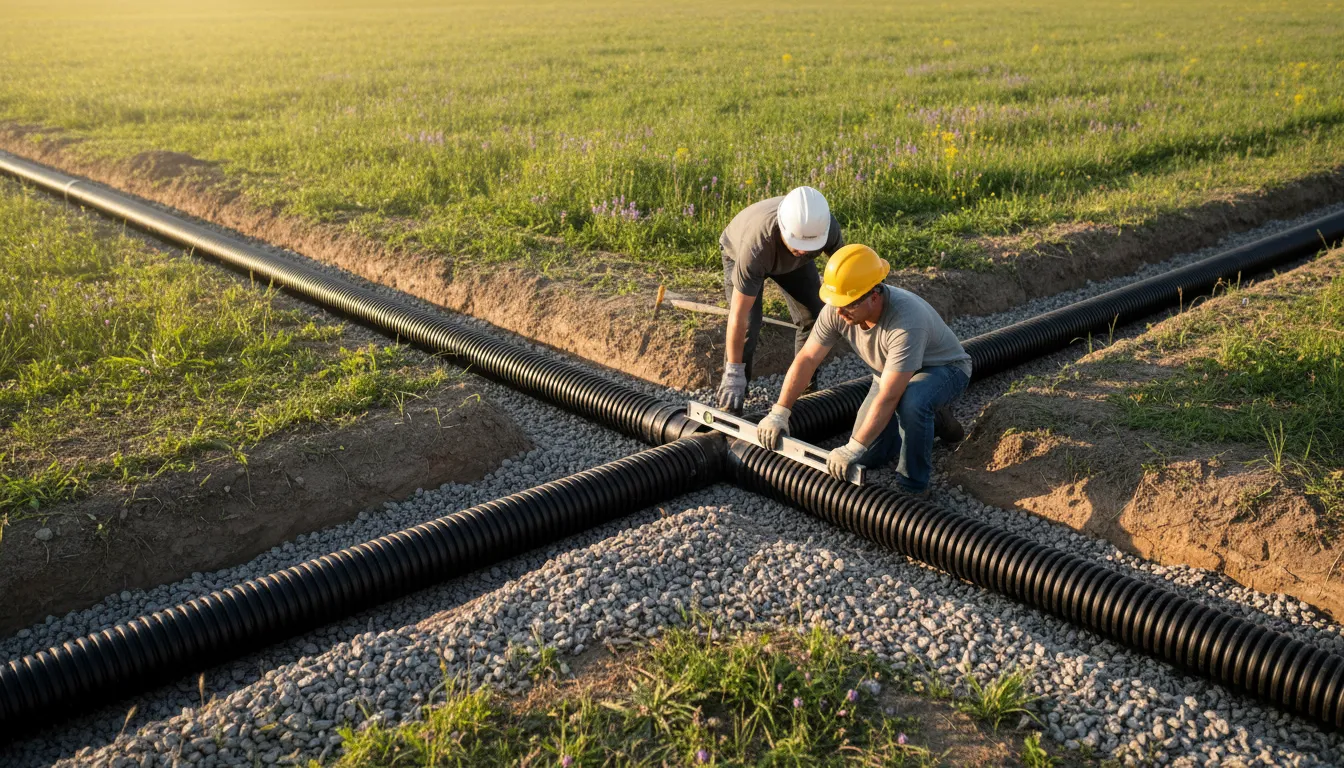
A septic system's leach field is a network of perforated pipes buried in trenches filled with gravel. Over time, this area can fail due to several common factors. Biological mat buildup, where a layer of organic material clogs the soil pores, is a natural process but can be accelerated by excessive water use or improper maintenance. Physical damage from soil compaction due to vehicle traffic or heavy structures over the field is another frequent cause. In Watsonville's agricultural region, root intrusion from trees or large shrubs can crack and block distribution pipes. Finally, simple old age or an original design that doesn't meet current standards for your soil type can lead to systemic failure, signaled by surfacing sewage, slow drains, or lush green patches over the field area.
Santa Cruz County Regulations and Permits
All septic system work in Watsonville is regulated by the Santa Cruz County Environmental Health Department under their Local Area Management Plan (LAMP) 1. You cannot begin any repair or replacement project without first obtaining the proper permits. The county's primary goal is to protect public health and groundwater quality, which means all systems must conform to strict local and state codes. The permitting process ensures that any new or repaired system is appropriately sized, correctly located, and designed to function effectively for years to come, preventing malfunctions that could impact your neighbors or the local environment.
The Critical Site Evaluation
The first technical step toward a solution is a professional site evaluation. A qualified septic contractor or soil scientist will assess your property to diagnose the exact cause of the drain field failure. This evaluation is not just about the problem; it's legally required to determine the geological and soil suitability for a new system. The professional will perform percolation (perc) tests to measure how quickly water drains through your soil. For a standard system to be viable, Santa Cruz County typically requires soil to have a percolation rate between 1 and 12 inches per hour. This evaluation also identifies critical setbacks from wells, property lines, waterways, and structures, and assesses the slope of your land.
Key Installation Requirements
Once a site is deemed suitable, the new leach field installation must meet specific engineering standards. A fundamental rule is maintaining a minimum of 5 feet of vertical separation between the bottom of the drainfield trenches and the highest seasonal groundwater level 2. This buffer is crucial for ensuring adequate wastewater treatment before it reaches the water table. The system must be located entirely on your property, away from water sources and areas prone to compaction or flooding. If your property slope exceeds 20%, the county will likely require a detailed geological report to assess stability and suitability 2. All these factors are reviewed during the permit application process before any digging begins.
The Repair and Replacement Process
Navigating a drain field project involves a clear sequence of steps designed for compliance and success.
- Professional Assessment & Design: A licensed contractor conducts the mandatory site evaluation to diagnose the failure and design a compliant replacement system. This plan accounts for soil data, household size, and all county requirements.
- Permit Acquisition: Your contractor will submit the repair or replacement plans, including the site evaluation report, to the Santa Cruz County Environmental Health Department for review and permit issuance 3 4. Never proceed without this approved permit.
- Installation: The old, failed drain field is properly decommissioned, and the new leach field is installed according to the permitted plans. This involves precise excavation, placement of distribution pipes and gravel, and connection to the existing or new septic tank.
- Final Inspection: Before the new trenches are backfilled, a county inspector will typically visit the site to verify the installation matches the permitted design and meets all code requirements 5. Only after passing this inspection can the system be covered and put into use.
Find the perfect drain field repair companies for your needs
Get personalized recommendations and expert advice
Cost Factors for Drain Field Work in Watsonville
The cost of drain field repair or replacement in California varies widely based on local conditions, but you can expect a significant investment. For a standard drain field replacement in Watsonville, homeowners often see costs ranging from $5,000 to $15,000, with complex sites pushing prices to $20,000 or more 6.
Several key factors drive this cost:
- System Type & Size: A standard gravity-fed trench system is typically the most affordable option. However, if your soil fails perc tests, you may need an engineered system like a mound, drip irrigation, or sand filter system, which can cost $20,000 to $30,000+ due to added materials, pumps, and controls 7 8.
- Soil Conditions & Site Accessibility: Poor-draining clay or high groundwater requires more complex (and expensive) solutions. Tight access for excavation equipment can also increase labor time and cost.
- Extent of Work: Is a full replacement necessary, or is a partial repair or expansion possible? If the septic tank is still sound and the failure is localized, a less extensive repair might be an option for a lower cost 9 10. However, for older systems or those with fundamental design flaws, a complete system replacement is usually the recommended and most durable solution.
Repair vs. Full Replacement: Evaluating Your Options
When faced with a failing leach field, the first question is whether a repair will suffice or if a full replacement is unavoidable. A repair might be possible in cases of minor, localized issues. For example, if only one section of the distribution pipe is crushed or blocked, a contractor might be able to excavate and repair just that segment. In some instances, adding new trenches to expand the existing absorption field can provide the additional capacity needed, assuming the original soil is still acceptable and there is sufficient space on the property.
However, a full drain field replacement is often the necessary course of action. This is especially true if the system is very old, the entire soil absorption area has become clogged (a condition called "biomat overgrowth"), or the original system was improperly sized or located. Modern codes are also more stringent; a system that was legal when installed may not meet today's standards for setbacks or environmental protection, and the county may require an upgrade to current code during any major repair. A qualified professional's site evaluation will provide the definitive answer on which path is viable and compliant for your specific situation.
Maintaining Your New Drain Field
Protecting your investment in a new leach field starts with proper maintenance. Practice water conservation by fixing leaks, installing efficient fixtures, and spreading out laundry loads to prevent hydraulic overload. Never drive or park vehicles, build structures, or plant trees and large shrubs over the drain field area. Have your septic tank pumped regularly by a professional (typically every 3-5 years) to prevent solids from washing out and clogging the new field. Avoid flushing chemicals, grease, diapers, or wipes, as these can disrupt the bacterial balance and clog pipes. By following these guidelines, you can maximize the lifespan of your new system and avoid premature failure.
Frequently asked questions
Sources
Footnotes
-
Onsite Wastewater Treatment Systems - https://scceh.com/Portals/6/Env_Health/LAMP/LAMP11-12-20.pdf ↩
-
The Californian's Guide To Septic Tanks - https://cacciaplumbing.com/blog/california-septic-tank-guide/ ↩ ↩2
-
Do-It-Yourself Septic System Inspection Field Guide - https://doh.wa.gov/sites/default/files/legacy/Documents/Pubs/337-121.pdf ↩
-
California Septic Tank Requirements | Onsite Wastewater ... - https://www.ntotank.com/blog/california-septic-tank-requirements ↩
-
Construction General Permit Fact Sheet - https://www.waterboards.ca.gov/water_issues/programs/stormwater/construction/docs/prelim_staff_draft/psdraft_factsheet.pdf ↩
-
Will Leach Field Replacement Costs Drain Your Wallet? Plan for ... - https://www.homeserve.com/en-us/blog/cost-guide/leach-field-replacement/ ↩
-
Septic Drain Field Replacement Cost - https://dillonseptic.com/septic-drain-field-replacement-cost/ ↩
-
Septic Repair Cost in California: Complete Breakdown of Pricing ... - https://www.lanikseptic.com/septic-repair-cost/ ↩
-
Cost to Replace Septic Tank and Drain Field [2026 Data] | Angi - https://www.angi.com/articles/how-much-new-drain-fields-foot.htm ↩
-
Septic Repair Cost in California: Complete Breakdown of Pricing Factors and Variations - https://www.lanikseptic.com/septic-repair-cost/ ↩