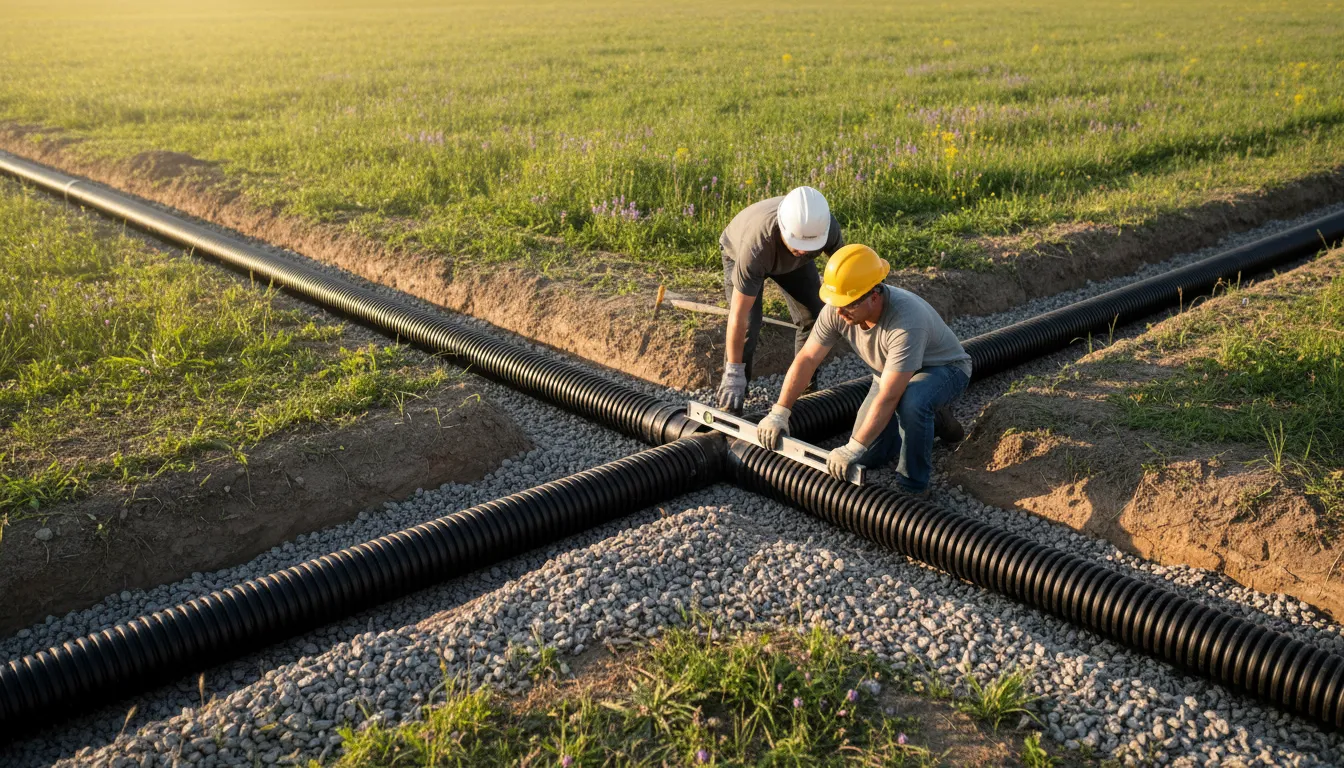
Find the Best Drain Field Repair Companies for Your Business
No obligation • Fast responses • Nationwide coverage

Why you can trust Septic Spot
Septic Spot is a leading United States resource for understanding and comparing septic services. Our editors review providers using consistent criteria and verify key business details. Listings and scores are independent, and companies cannot pay to influence our content.
Search providers near you
Top Drain Field Repair Companies in Fort Pierce, Florida Ranked
A failing drain field is a serious issue for any home with a septic system, leading to soggy yards, foul odors, and potential environmental contamination. In Fort Pierce, addressing problems with your leach field or absorption area is crucial due to the region's unique environmental conditions. This guide explains the local process, costs, and regulations for drain field work, helping you understand your options and connect with qualified professionals who can assess and resolve your system's issues.
All Coast Septic Services
3106 Mura Dr, Fort Pierce, FL 34982
All Coast Septic Services is a septic system company based in Port St Lucie, FL, offering a full range of septic services including installation, maintenance, inspection, repair, and drainfield replacement. With over 20 years of experience, their licensed technicians handle issues from septic tank pumping to drainfield repairs. They provide 24/7 emergency services for urgent septic system problems and specialize in maintaining and repairing various septic components to extend system life and prevent backups.
All About Septic Services inc.
991 Edwards Rd, Fort Pierce, FL 34982
All About Septic Services inc. provides comprehensive septic system services in Port St Lucie, FL. Their offerings include septic tank pumping, inspections, repairs, installations, and drain field repairs or replacements. The company emphasizes environmentally responsible practices and uses modern technology to maintain and extend the life of septic systems. They also provide 24/7 emergency septic services to address urgent needs promptly.
KRK Pumping and Plumbing
3102 Enterprise Rd, Fort Pierce, FL 34982
KRK Pumping and Plumbing provides septic tank inspection, repair, and drain field services in Port St Lucie, FL. They offer a wide range of plumbing solutions including grease trap repair, clogged drain cleaning, backflow certification, and hydro-jetting. Using advanced technology such as video camera inspections and vacuum trucks, they diagnose and address plumbing issues efficiently. Established in 1985, KRK has over 20 years of experience serving Florida and offers 24/7 emergency services for urgent plumbing needs.
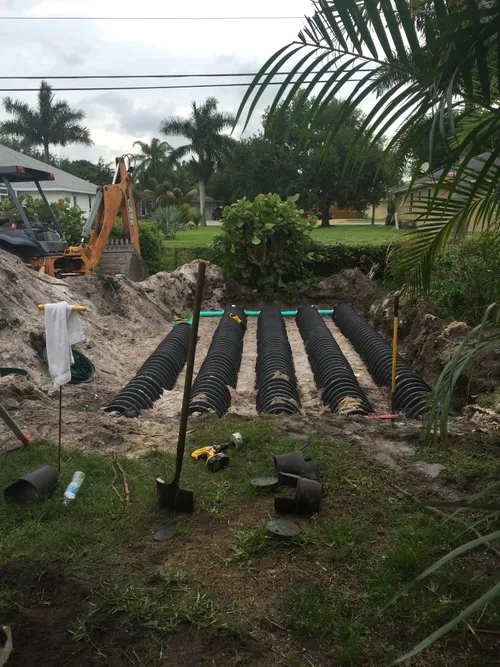
Septic Environmental Services Inc.
4738 Selvitz Rd, Fort Pierce, FL 34981
Septic Environmental Services Inc. is a family-owned septic service provider based in Port St Lucie, FL. Founded in 2014, the company offers septic tank pumping, inspections, repairs, installations, and drain field replacement. They also handle commercial grease trap cleaning for restaurants. With over 20 years of experience, the team serves the Treasure Coast and Palm Beaches area. They provide 24/7 availability and same-day service for septic emergencies.
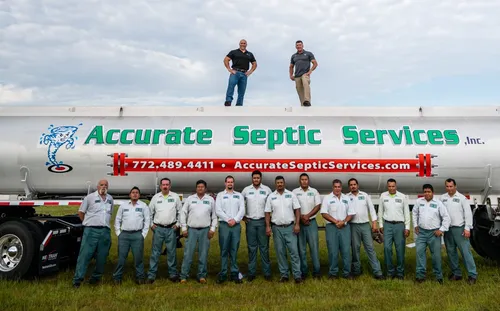
Accurate Septic Services Inc.
4120 Selvitz Rd, Fort Pierce, FL 34981
Accurate Septic Services Inc. is a septic and plumbing service provider located in Port St Lucie, FL. The company offers a wide range of services including septic tank pumping, repair, and installation, drain field repair and replacement, grease trap and oil separator installations, pump repair and replacements, and hydro jetting. They also operate a state-of-the-art receiving facility for septic and portable toilet waste, serving local companies on the Treasure Coast. Accurate Septic Services provides both residential and commercial services with capabilities such as video camera sewer inspection and leak detection.
Understanding Your Drain Field's Role
The drain field, also known as a leach field or soil absorption system, is the final and most critical stage of your onsite sewage treatment. After solids settle in the septic tank, liquid effluent flows into a network of perforated pipes buried in trenches. This effluent slowly percolates through the soil, where natural processes provide final treatment before the water rejoins the groundwater. When this area fails, it means the soil can no longer absorb the liquid, causing backups and surfacing wastewater.
Why Fort Pierce Presents Unique Challenges
Several local factors make drain field repair and replacement in Fort Pierce particularly complex and regulated.
High Water Table: Coastal Florida, including St. Lucie County, has a naturally high groundwater level. State law requires a mandatory 24-inch separation (unsaturated soil) between the bottom of any drain field trench and the seasonal high-water table. If your property cannot meet this separation, a standard system cannot be installed.
Sandy Soil Composition: The sandy soils common in the area allow for fast absorption, which is good for drainage but can reduce the soil's ability to filter out pathogens and nutrients effectively before they reach the groundwater.
Environmental Sensitivities: Proximity to the Indian River Lagoon means nutrient pollution from failing systems is a major concern. This can influence the type of system repairs or replacements that are permitted 1.
Reserve Area Requirement: Florida law requires that a 50% reserve area be available on your property. This is a space set aside for a future, second drain field should the primary one fail. This area must meet all the same permitting and soil requirements as the original field 2.
The Permitting Process with DOH-St. Lucie
Any significant repair or full replacement of a drain field in Fort Pierce requires a permit from the Florida Department of Health in St. Lucie County (DOH-St. Lucie). You cannot legally begin work without one. Here's what the process typically involves:
- Site Evaluation and Soil Testing: A licensed professional must perform a site evaluation, including a soil percolation ("perc") test. This test determines how quickly water drains through your soil, which directly dictates the size and design of the required drain field 3.
- Plan Submission: A detailed site plan must be submitted to the health department. This plan shows the proposed leach field location, the house, wells, property lines, and all required setbacks from water bodies and structures 4.
- "Like-for-Like" Consideration: If you can locate the original system permit and site conditions haven't changed, the health department may approve a repair that matches the old system's design. However, current rules often apply, so this is not guaranteed 5.
- Inspections: The DOH will require an inspection after the trenches are dug but before the pipes are covered with gravel and soil. A final inspection is conducted once the system is complete and ready for use 6.
Repair vs. Replacement: Knowing Your Options
Not all drain field problems require a complete overhaul. A professional assessment is key to determining the right solution.
Minor Repairs: Issues might be isolated to a clogged distribution box or a single clogged lateral line. These repairs can often be made without redoing the entire absorption area and are the most affordable option.
Partial Replacement: If only a section of the field has failed due to soil compaction or root intrusion, it may be possible to replace just that portion, assuming the rest of the system is functional and the reserve area is used.
Full Drain Field Replacement: This is necessary when the entire soil absorption area is saturated and no longer accepting effluent. This involves constructing a completely new leach field in the designated reserve area on your property.
Alternative Systems: If your property cannot support a conventional drain field due to high water table or poor soil, you may need an engineered system. This could include a mounded system (where suitable soil is brought in to create an elevated drain field) or other advanced treatment technologies designed to handle difficult sites 7 8.
Find the perfect drain field repair companies for your needs
Get personalized recommendations and expert advice
Cost Estimates for Drain Field Work in Fort Pierce
Costs can vary widely based on the scope of work, soil conditions, and system type. The following estimates are based on local industry data 9:
- Simple Repairs: Fixing a distribution box or clearing a lateral line typically ranges from $1,000 to $3,000.
- Partial Drain Field Replacement: Replacing a section of the leach field can cost between $3,000 and $7,000.
- Full Drain Field Replacement: Installing a completely new soil absorption system is a major project, often costing $8,000 to $15,000 or more, especially if an engineered or mounded system is required.
A Critical Alternative: Connecting to City Sewer
For some Fort Pierce homeowners, the most permanent solution is to abandon the septic system entirely and connect to the municipal sewer system operated by the Fort Pierce Utilities Authority (FPUA).
- The Cost: The estimated cost for a single-family home to connect to the FPUA sewer system is approximately $10,395, though this can vary based on your specific location and the required pipe run from the street to your home 10.
- The Benefit: This eliminates future septic maintenance, repair costs, and environmental concerns. It can also increase property value and is often encouraged by the city for community health and environmental reasons.
Financial Assistance and Incentive Programs
The significant cost of drain field work or sewer conversion can be daunting. Fortunately, there are potential sources of financial help:
- Florida Septic Upgrade Incentive Program: This state program may offer funding to eligible homeowners in designated Priority Focus Areas, which are often environmentally sensitive regions where upgrading systems is critical 11.
- FPUA Sewer Connection Incentives: The Fort Pierce Utilities Authority has historically offered grants or low-interest loan programs to help offset the cost of converting from septic to sewer. It's essential to contact FPUA directly to inquire about current program availability 12.
Choosing a Qualified Professional
Given the technical and regulatory complexity, selecting the right contractor is vital. Look for a licensed septic contractor experienced in St. Lucie County. They should handle the entire process, from the initial site evaluation and soil testing to pulling permits, performing the work to code, and coordinating with DOH-St. Lucie inspectors. Always verify their license is in good standing and ask for references from recent, similar projects in the area.
Frequently asked questions
Sources
Footnotes
-
Florida New Septic System Law: What Homeowners Need to Know - https://rooterone.com/florida-homeowners-new-septic-system-law/ ↩
-
Florida Well and Septic System Placement Regulations for ... - https://flengineeringllc.com/florida-well-septic-placement-2025/ ↩
-
Septic Inspections Made Easy: What Every Contractor Needs to ... - https://flengineeringllc.com/septic-inspections-guide-contractors-2025/ ↩
-
Florida Septic Tank Requirements | Onsite Sewage Treatment ... - https://www.ntotank.com/blog/florida-septic-tank-requirements ↩
-
Septic Permits in Florida: Do You Need One? (2025 Guide) - https://landperc.com/do-i-need-a-permit-for-a-septic-system-in-florida/ ↩
-
Septic Systems - Florida Department of Health - https://www.floridahealth.gov/community-environmental-public-health/environmental-public-health/water-quality/septic-systems/ ↩
-
Septic Drainfield Design 101: A Complete Guide - Land Perc - https://landperc.com/septic-drainfield-design-guide/ ↩
-
Septic System Cost Estimate: A Complete Breakdown - Land Perc - https://landperc.com/septic-system-cost-estimate/ ↩
-
Fixing Septic Drain Fields: What Florida Homeowners Should Know - https://mathisandsonsseptic.com/mathis-sons-septic-blog-orlando-fl/septic-drain-fields-what-florida-homeowners-should-know/ ↩
-
Septic to Sewer Program - Fort Pierce Utilities Authority - https://fpua.com/wp-content/uploads/2025/04/5.7.25_Presentation.pdf ↩
-
Stay Compliant with Septic Tank Requirements in Florida - https://mathisandsonsseptic.com/mathis-sons-septic-blog-orlando-fl/florida-septic-tank-regulations-and-incentives-what-homeowners-need-to-know/ ↩
-
Septic to Sewer Conversion - FPUA Sustainable Sewer - https://www.sustainablesewer.net/septicfaqs ↩