Find the Best Drain Field Repair Companies for Your Business
No obligation • Fast responses • Nationwide coverage

Why you can trust Septic Spot
Septic Spot is a leading United States resource for understanding and comparing septic services. Our editors review providers using consistent criteria and verify key business details. Listings and scores are independent, and companies cannot pay to influence our content.
Search providers near you
Top Drain Field Repair Companies in Tallahassee, Florida Ranked
When your septic system's drain field begins to fail, it's a serious issue that requires prompt and professional attention. In Tallahassee, addressing problems with your leach field or soil absorption system is governed by specific state and county health regulations to protect both your property and the local environment. This guide will help you understand the process, costs, and critical local requirements for septic drain field work, empowering you to make informed decisions when seeking service.
Brian's Septic Service
4973 Capital Cir SE, Tallahassee, FL 32311
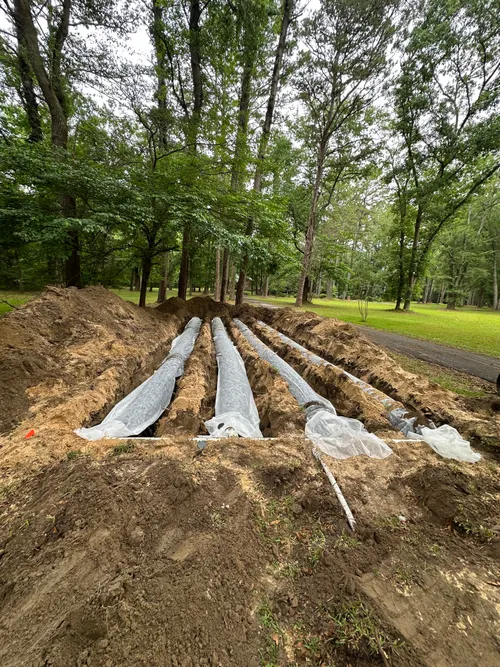
Brian's Septic Service is a septic tank pumping, inspection, repair, and installation company serving Tallahassee, FL. They offer a wide range of services including septic tank cleaning, drainfield repair, grease trap cleaning, aerobic system installation, and permit assistance. The company uses state-of-the-art equipment for septic tank installations and provides thorough inspections for both residential and commercial properties. Their capabilities include complete repair services such as septic pump repair and replacement, as well as soil testing and site evaluations to ensure proper system function. Brian's Septic Service also assists with FHA septic tank inspections and offers financing options through a local credit union.
Apalachee Backhoe & Septic Tank, LLC
4104 Apalachee Pkwy, Tallahassee, FL 32311
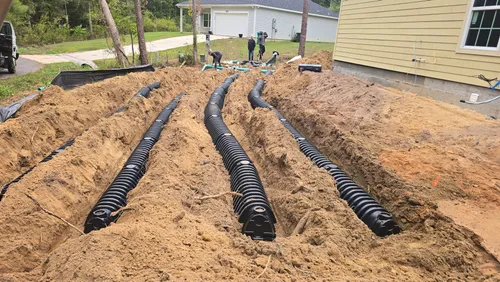
Apalachee Backhoe & Septic Tank, LLC provides septic system installation, inspection, maintenance, and repair services in Tallahassee, FL. They serve Tallahassee and nearby communities including Crawfordville, Quincy, and Monticello. The company handles complex septic projects and offers specialized services such as grease trap cleaning, septic system design, permitting assistance, and odor control. With over 30 years of experience, they focus on maintaining safe and effective onsite sewage treatment systems to protect local water quality and property values.
Good Soil Septic Service
Tallahassee, FL
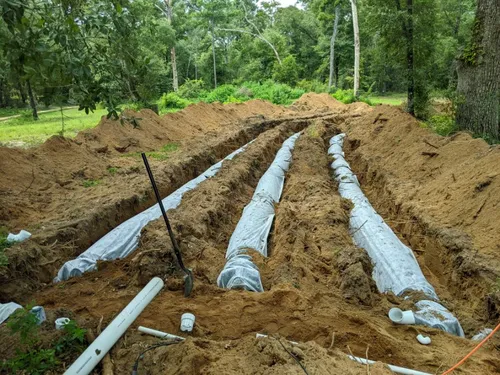
Good Soil Septic Service is a family-owned company based in Tallahassee, FL, specializing in septic system solutions. They focus on drain field repairs, septic tank pumping, inspections, installations, and septic system repairs. Their services include site evaluation, soil testing, permitting, and installation to ensure effective septic system functioning. Good Soil Septic Service emphasizes environmental sustainability and works closely with homeowners and installers to diagnose system failures and find optimal repair solutions.

Miller Septic Services
Tallahassee, FL
Miller Septic Services is a septic tank pumping, inspection, repair, and installation company serving Tallahassee, FL. They offer a range of services including new septic tank installations using modern equipment, septic tank inspections for both residential and commercial properties, grease trap cleaning, and drainfield repair. The company also assists with permit acquisition and real estate inspections required for FHA loans. One notable capability is their alternative drainfield repair method, which can fix failing systems without the need for full drainfield replacement.
Understanding Drain Field Failure
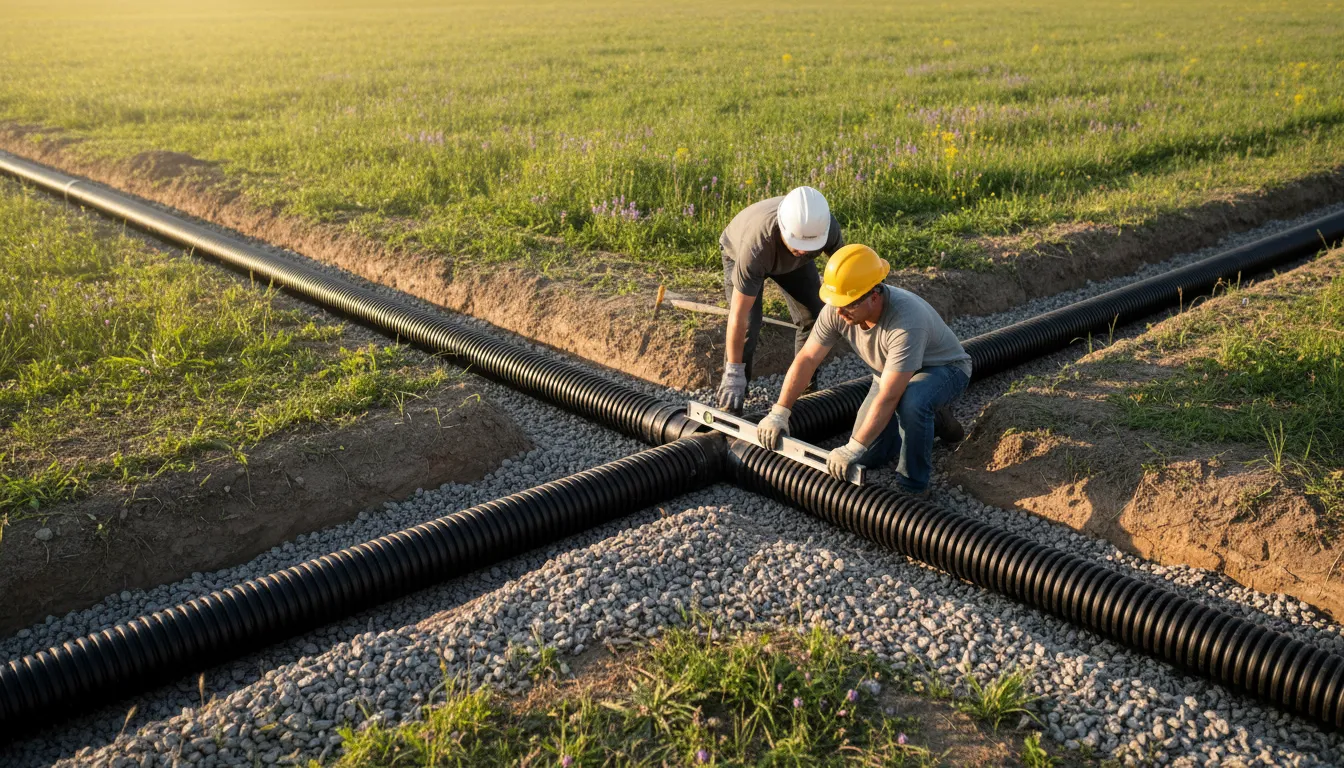
A drain field, also known as a leach field or absorption field, is the final stage of your onsite sewage treatment and disposal system (OSTDS). After solids settle in the septic tank, liquid effluent flows into a network of perforated pipes buried in trenches filled with gravel. This effluent slowly percolates through the soil, where natural processes provide final treatment.
Failure occurs when the soil can no longer absorb the liquid. Common signs include:
- Sewage odors in the yard, especially after rain.
- Soggy, spongy, or standing water over the drain field area.
- Lush, green grass growing over the field while the rest of the lawn is dry.
- Slow drains or sewage backups in the house.
In Tallahassee and throughout Florida, a failing system is a public health concern and must be repaired to comply with state law.
Tallahassee & Florida Regulatory Overview
All septic system repair and replacement work in Leon County requires permitting and oversight. The Florida Department of Health (DOH) enforces the standards found in Chapter 62-6 of the Florida Administrative Code (F.A.C.). You cannot simply hire a contractor to dig up and replace a drain field; the process must start with a proper evaluation and permit application to the local health department.
Key regulatory pillars for any drain field project include:
1. The 24-Inch Unsaturated Zone: State code mandates a minimum of 24 inches of naturally occurring unsaturated soil between the bottom of the drain field trenches and the seasonal high water table. This vertical separation is crucial for filtering pathogens before they reach groundwater. In areas of Tallahassee with high water tables, this requirement often dictates the need for engineered solutions like mound systems.
2. Mandatory Reserve Area: A critical and often overlooked rule is the requirement for a 50% reserve area. This means your property must have space set aside, equal to half the size of your initial drain field, for future expansion or replacement 1 2. This area must meet all the same setback and soil requirements as the original field.
3. Soil and Site Evaluation: Before any design, a site evaluation-often including a soil percolation (perc) test-is conducted to determine the absorption rate of your soil. Sites with "severely limited" or dense clay soils common in parts of North Florida may not support a conventional drain field and will require an alternative system design.
4. Updated Sizing Standards: If you are repairing or replacing a system due to increased wastewater flow (like adding a bedroom to your home), the new drain field must be sized according to current standards, not the original, possibly outdated, capacity.
The Step-by-Step Process for Repair or Replacement
Navigating a drain field project involves a series of defined steps. Working with a licensed septic contractor who is familiar with Leon County procedures is essential.
1. Professional Evaluation and Design: The process begins when a licensed septic contractor or professional engineer assesses the failure. They will evaluate the soil, check the water table, and locate the reserve area. They then create a site plan and system design that complies with Chapter 62-6 F.A.C..
2. Permit Application: Your contractor will submit the official "Existing System and System Repair Evaluation Form" along with the detailed site plan to the Florida Department of Health in Leon County for review 3. This step ensures the proposed solution meets all health and environmental standards.
3. Installation and Critical Inspection: Once the permit is issued, installation can begin. A crucial milestone is the pre-cover inspection. Before the new or repaired drain field is covered with soil, it must be inspected by the county health department or an authorized private provider to verify it was built according to the permitted plans 4.
4. Final Approval and System Check: The inspector will also typically check the septic tank for structural soundness and proper sizing to ensure the entire system functions as an integrated unit 5. After passing inspection, the system can be covered and put into service.
Find the perfect drain field repair companies for your needs
Get personalized recommendations and expert advice
Cost Factors for Drain Field Work in Tallahassee
The cost to address drain field issues varies widely based on the scope of work, soil conditions, and system type. The figures below are estimates for the Tallahassee area, but always get multiple detailed quotes.
- Permit and Inspection Fees: Budget between $450 and $2,000 for required county permits, plan reviews, and inspections.
- Simple Repairs: Fixing a broken pipe or a localized clog might cost between $1,000 and $3,000.
- Partial Drain Field Replacement: If only a section of the field has failed, replacement costs can range from $3,000 to $7,000.
- Full Drain Field Replacement: A complete replacement of a conventional leach field is a major excavation project. In Tallahassee, homeowners can expect costs ranging from $8,000 to $15,000 or more 6 7.
- Alternative Systems: For properties with poor soil or high water tables requiring a mound, aerobic treatment unit (ATU), or other engineered system, costs can start at $15,000 and increase significantly.
These costs are highly dependent on site-specific challenges. Clay-heavy soils, limited access, and the need for engineered solutions are the primary drivers of higher expenses.
Types of Drain Field Systems Used Locally
Depending on your property's soil and topography, different types of absorption systems may be employed.
- Conventional Trenches: The most common type, involving gravel-filled trenches with perforated pipes. Viability depends entirely on meeting the 24-inch unsaturated zone requirement.
- Mound Systems: An engineered system where a sand mound is constructed above the natural soil surface. This is a common solution in Tallahassee for properties with high water tables or shallow permeable soils.
- Low-Pressure Dose (LPD) Systems: These systems use a pump to distribute effluent more evenly across the drain field, improving efficiency and allowing for use in some marginal soil conditions.
- Aerobic Treatment Units (ATUs): These systems treat effluent to a higher standard inside a multi-chambered tank before dispersal, often allowing for a smaller drain field and use on challenging sites.
Your licensed contractor will determine the appropriate system type based on the mandatory site evaluation.
Maintaining Your New or Repaired Drain Field
Protecting your investment is key. Proper maintenance can extend the life of a drain field by decades:
- Pump the Tank Regularly: Have your septic tank pumped every 3-5 years to prevent solids from escaping into the drain field.
- Conserve Water: Spread out laundry loads and fix leaks to avoid hydraulically overloading the field.
- Mind What You Flush: Only human waste and toilet paper. Never flush chemicals, wipes, or grease.
- Protect the Area: Never drive or park over the drain field, and keep large trees and shrubs with deep roots away from the area.
Frequently asked questions
Sources
Footnotes
-
Florida Well and Septic System Placement Regulations for ... - https://flengineeringllc.com/florida-well-septic-placement-2025/ ↩
-
Florida Septic Tank Requirements | Onsite Sewage Treatment ... - https://www.ntotank.com/blog/florida-septic-tank-requirements ↩
-
Failing Septic System Repair Application Requirements - https://lee.floridahealth.gov/programs-and-services/environmental-health/onsite-sewage-disposal/permits/ostds-repair-permit/ ↩
-
62-6 Standards for Onsite Sewage Treatment and Disposal ... - https://pasco.floridahealth.gov/wp-content/uploads/sites/53/2025/06/62-6.pdf ↩
-
Septic Systems - Florida Department of Health - https://www.floridahealth.gov/community-environmental-public-health/environmental-public-health/water-quality/septic-systems/ ↩
-
Fixing Septic Drain Fields: What Florida Homeowners Should Know - https://mathisandsonsseptic.com/mathis-sons-septic-blog-orlando-fl/septic-drain-fields-what-florida-homeowners-should-know/ ↩
-
Cost to Replace Septic Tank and Drain Field [2026 Data] | Angi - https://www.angi.com/articles/how-much-new-drain-fields-foot.htm ↩