Find the Best Drain Field Repair Companies for Your Business
No obligation • Fast responses • Nationwide coverage

Why you can trust Septic Spot
Septic Spot is a leading United States resource for understanding and comparing septic services. Our editors review providers using consistent criteria and verify key business details. Listings and scores are independent, and companies cannot pay to influence our content.
Search providers near you
Top Drain Field Repair Companies in Lakeland, Florida Ranked
A failing septic drain field is a serious issue for any Lakeland homeowner, leading to soggy yards, foul odors, and potential environmental contamination. Drain field repair or replacement is a specialized process that involves diagnosing the problem, navigating local health department regulations, and executing a solution that works with Central Florida's unique sandy soil and high water table. This guide will help you understand the critical steps, costs, and local requirements for restoring your septic system's vital absorption area, connecting you with the information needed to find qualified local professionals.
ACE Septic & Waste
3151 Bartow Rd, Lakeland, FL 33803
ACE Septic & Waste is a full-service septic and wastewater company serving Lakeland, FL, and the broader Tampa Bay and Central Florida regions. They provide a wide range of services including septic tank pumping, system installation, drainfield repair, lift station maintenance, and certified septic inspections for residential, commercial, and municipal clients. The company is uniquely licensed in plumbing, electrical, septic, and general contracting, allowing them to manage all aspects of wastewater projects in-house, from permitting to installation and maintenance. ACE Septic & Waste also offers advanced solutions like aerobic treatment units and low-pressure sewer systems, meeting Florida's environmental standards. Their emergency response team is available 24/7 to handle urgent wastewater issues.
Septic Services of Central Florida
2301 US-17, Bartow, FL 33830
Septic Services of Central Florida is a family-owned company based in Tampa, FL, offering residential and commercial septic system services. They provide a full range of septic care including pumping, inspections, repairs, installations, and drainfield replacements. The company specializes in Advanced Treatment Units for enhanced wastewater management and handles everything from site evaluation to permitting and installation. With over 35 years of combined experience, they offer an industry-leading 8-year warranty and emergency services to address urgent septic issues.

Quality Septic Inc.
1811 M Rd, Brandon, FL 33511
Quality Septic Inc. is a family-owned septic service provider based in Tampa, FL, serving Brandon and the surrounding Tampa Bay area. Since 1994, they have offered a full range of septic services including tank pumping, system inspections, repairs, and new installations. Their expertise covers drain field repair and installation, lift station pump services, and custom-engineered septic systems tailored to property needs. Quality Septic emphasizes thorough property assessments and adherence to Florida state building codes in their installations. They serve multiple communities including Valrico, Seffner, Riverview, and more, ensuring comprehensive septic solutions across the region.
Septic Blue of Tampa
249 S 78th St Suite A, Tampa, FL 33619
Septic Blue of Tampa is a septic service provider located in Tampa, FL. They offer a range of services including septic tank pumping, inspection, repair, installation, and drain field repair or replacement. Their team uses advanced equipment and personalized approaches to maintain and restore septic systems while emphasizing environmental sustainability. The company also educates clients on proper septic care to help prevent future issues. Septic Blue of Tampa is locally owned and committed to transparent pricing and professional integrity.

Eco Septic Tank Pumping Lakeland
Tampa, FL
Eco Septic Tank Pumping Lakeland provides comprehensive septic services in Tampa, FL, including septic tank pumping, inspection, repair, and installation. They handle routine cleaning to prevent system blockages and offer emergency septic sewer cleaning when urgent issues arise. Their services also include septic system repairs, drain field replacement, and biological treatments to maintain microbial balance. The company follows a detailed pumping process and ensures proper waste disposal in compliance with environmental regulations. They serve multiple areas around Tampa and offer 24/7 emergency septic services.
Understanding Your Septic Drain Field
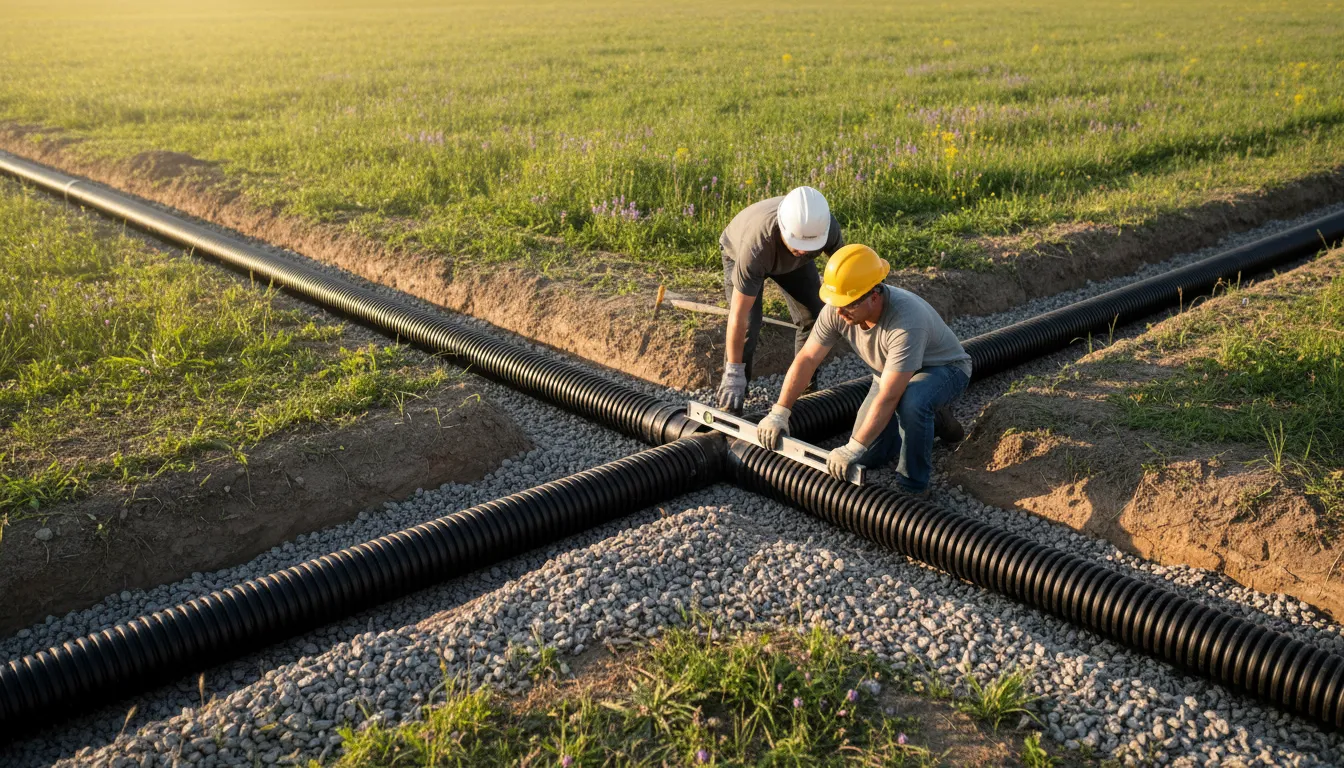
Often called a leach field or absorption field, the drain field is the final and most crucial stage of your onsite wastewater treatment system. After solids settle in the septic tank, liquid effluent flows into a network of perforated pipes buried in trenches filled with gravel. This effluent slowly percolates through the soil, where natural processes provide final treatment. When this area fails, untreated wastewater can surface, creating health hazards and violating Florida law.
Common signs of drain field failure in Lakeland include:
- Persistently soggy or spongy ground over the field, especially with a sewage odor.
- Slow-draining toilets, sinks, and showers throughout the home.
- Unusually lush, green grass growing over the drain field area.
- Standing water or sewage backing up into the home (a severe sign).
Why Drain Fields Fail in Lakeland's Environment
The local environment plays a significant role in septic system performance. Understanding these factors is key to both diagnosing failure and planning a lasting repair or replacement.
- Sandy Soil: While sandy soil drains quickly, it can also allow effluent to move too rapidly without proper treatment. It requires specific design considerations to ensure adequate filtration.
- High Water Table: Florida's seasonal rains can cause the groundwater level to rise, saturating the drain field and preventing proper percolation. Systems may need to be engineered or elevated to account for this.
- Tree Root Intrusion: Roots from trees and large shrubs are attracted to the moisture and nutrients in drain field lines. They can infiltrate and clog perforated pipes, a common cause of failure that necessitates repair.
- System Age and Overload: Like any component, drain fields have a finite lifespan, typically 20-30 years. Excess water use from large households or leaking fixtures can also hydraulically overload the field, causing premature failure.
The Local Regulatory Landscape: Permits and Requirements
Any significant repair or full replacement of a septic drain field in Lakeland and Polk County is strictly regulated. You cannot simply hire a contractor to dig up your yard. The process is overseen by the Florida Department of Health in Polk County (or the Polk County Health Department) to protect public health and groundwater.
Key requirements include:
- Mandatory Permitting: A permit is required for any alteration, repair, or replacement of a drain field. Your licensed contractor will typically handle this process, which involves submitting a site plan and system design for approval 1.
- Site Evaluation and Soil Testing: A licensed professional must conduct a soil evaluation, including a percolation (perc) test. This test determines how fast water moves through your soil, which dictates the size and design of the replacement field 2.
- Strict Setback Rules: New or repaired systems must adhere to minimum distances from structures, property lines, wells, and water bodies. For example, systems often need to be at least 10 feet from a home foundation and much farther from private wells.
- Licensed Contractors: All work must be performed by a septic contractor licensed by the state of Florida. This ensures the work meets all technical and health standards.
- Connection Ordinance: A critical local rule in Lakeland is Ordinance #5716. If your septic system fails and a public sewer line is available within 200 feet of your property line, you may be legally required to abandon your septic system and connect to the city sewer, which can be a major project with different costs 3.
The Step-by-Step Process for Repair or Replacement
Navigating a drain field project involves a clear sequence of events from diagnosis to completion.
1. Professional Inspection and Diagnosis The first step is a thorough inspection by a licensed septic professional. They will assess the symptoms, often using a camera to inspect lines, and perform tests like a "deep hole" evaluation to check soil conditions and groundwater levels 4. This diagnosis determines if a simple repair is possible or if a full replacement is necessary.
2. Design, Permitting, and Planning If replacement is needed, a site-specific design is created based on the soil evaluation. Your contractor will submit the design, engineer's report (if required), and permit application to the health department for approval 5. This stage ensures the new system is compliant and properly sized for your home and property.
3. Execution of the Work Once the permit is issued, construction can begin. For a full replacement, this involves:
- Excavating the old, failed drain field.
- Preparing the new area, which may include bringing in specific soil or sand.
- Installing new distribution lines, a distribution box (or "D-box"), and gravel according to the approved design.
- For repairs, work may be more targeted, such as replacing a clogged section of pipe or a broken distribution box 6.
4. Final Inspection and Restoration Before the new trenches are backfilled, a final inspection by the health department is mandatory 7. After passing inspection, the area is covered, graded, and seeded or sodded to restore your landscape.
Find the perfect drain field repair companies for your needs
Get personalized recommendations and expert advice
Cost Considerations for Lakeland Homeowners
The cost of drain field work varies widely based on the scope, system size, soil conditions, and engineering complexity. The figures below are typical ranges for the Lakeland area, but always get multiple detailed quotes.
- Targeted Repairs: Fixing a specific issue like a broken pipe or replacing a damaged distribution box typically ranges from $1,000 to $3,000.
- Partial Drain Field Replacement: If only a portion of the field has failed, a partial replacement may be an option, with costs generally between $3,000 and $7,000.
- Complete Drain Field Replacement: A full replacement of the entire absorption area is the most significant expense, often ranging from $8,000 to $15,000 or more. The final price depends heavily on the required size (based on bedroom count and soil percolation rate) and any special engineering needed for challenging sites 8 9 10.
Maintaining Your New or Repaired Drain Field
Protecting your investment is crucial. Proper maintenance extends the life of your new leach field significantly.
- Practice Water Conservation: Spread out laundry loads, fix leaky faucets and toilets promptly, and consider installing water-efficient fixtures.
- Divert Surface Water: Ensure roof gutters, yard drains, and pavement slope away from the drain field area to prevent saturation.
- Mind What You Flush: Only human waste and toilet paper should go into the system. Avoid chemicals, grease, wipes, and feminine hygiene products.
- Keep it Clear: Do not drive, park, or build structures over the drain field. Avoid planting trees or deep-rooted shrubs nearby.
- Pump the Tank Regularly: Have your septic tank pumped every 3-5 years by a licensed pumper to prevent solids from escaping into and clogging the new drain field.
Frequently asked questions
Sources
Footnotes
-
Septic Permits in Florida: Do You Need One? (2025 Guide) - Land Perc - https://landperc.com/do-i-need-a-permit-for-a-septic-system-in-florida/ ↩
-
Septic Drainfield Design 101: A Complete Guide - Land Perc - https://landperc.com/septic-drainfield-design-guide/ ↩
-
1 ORDINANCE NO. - City of Lakeland - https://www.lakelandgov.net/portals/CityClerk/City%20Commission/Agendas/2024/09-03-24/24-032Ord.pdf ↩
-
Expert Drain Field Inspections In Lakeland FL & Polk County - https://anytimesepticsolutionsinc.com/drain-field-inspection/ ↩
-
Take A Look At The Process Behind Your Septic System Installation - https://lakelandsepticcompany.com/septic-system-installation/ ↩
-
Drain Field Repair In Lakeland, FL | Septic Install, Cleaning & More - https://lakelandsepticcompany.com/lakeland-fl-drain-field-repair/ ↩
-
Can My Septic Drain Field Be Fixed? - https://lakelandsepticcompany.com/can-my-septic-drain-field-be-fixed/ ↩
-
Florida Septic Tank Requirements | Onsite Sewage Treatment ... - https://www.ntotank.com/blog/florida-septic-tank-requirements ↩
-
Fixing Septic Drain Fields: What Florida Homeowners Should Know - https://mathisandsonsseptic.com/mathis-sons-septic-blog-orlando-fl/septic-drain-fields-what-florida-homeowners-should-know/ ↩
-
Septic System Cost Estimate: A Complete Breakdown - Land Perc - https://landperc.com/septic-system-cost-estimate/ ↩