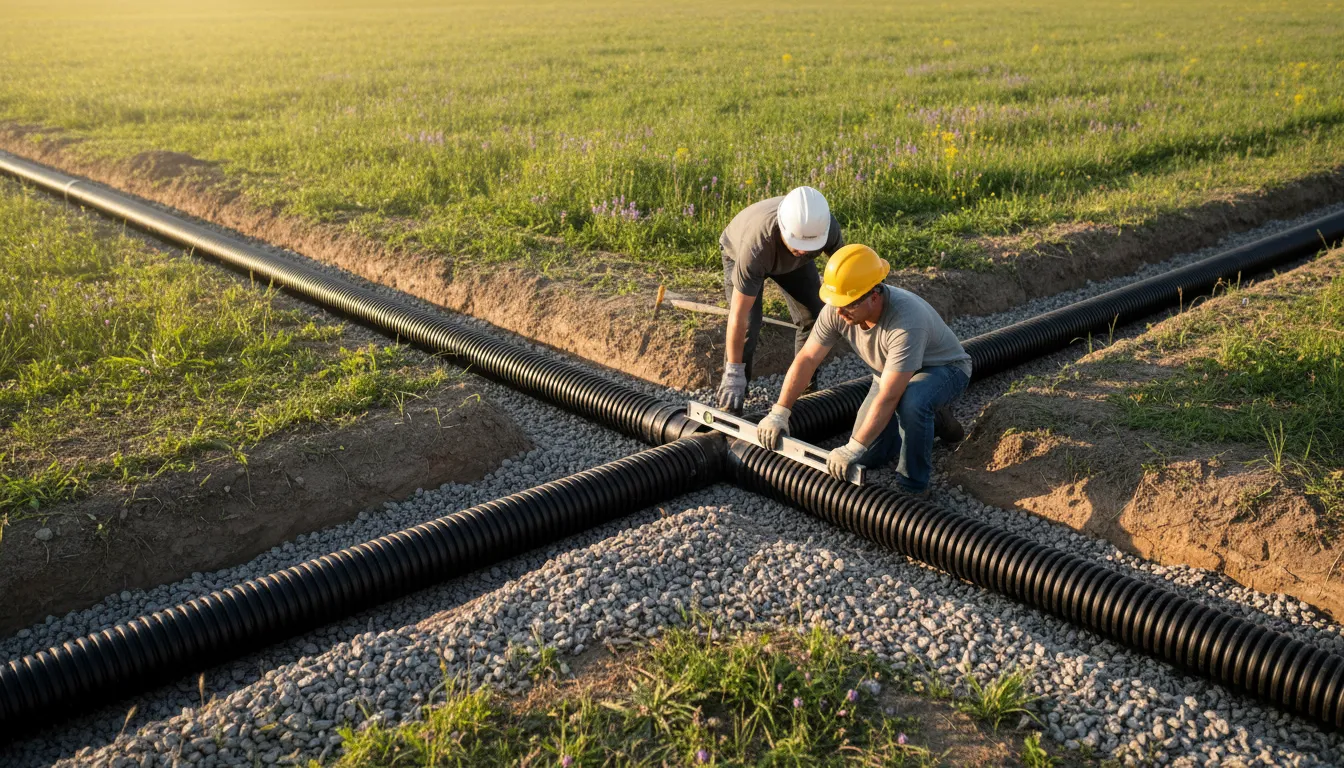
Find the Best Drain Field Repair Companies for Your Business
No obligation • Fast responses • Nationwide coverage

Why you can trust Septic Spot
Septic Spot is a leading United States resource for understanding and comparing septic services. Our editors review providers using consistent criteria and verify key business details. Listings and scores are independent, and companies cannot pay to influence our content.
Search providers near you
Top Drain Field Repair Companies in Port St Lucie, Florida Ranked
A failing drain field is a serious issue for any home with a septic system, leading to soggy yards, unpleasant odors, and potential environmental contamination. In Port St. Lucie, addressing problems with your leach field, absorption field, or soil treatment area is especially critical due to the region's high water table and proximity to sensitive ecosystems like the Indian River Lagoon. This guide explains the local repair and replacement process, the strict regulations you must follow, and how to find qualified local professionals to ensure your system is fixed correctly and legally.
All Coast Septic Services
3106 Mura Dr, Fort Pierce, FL 34982
All Coast Septic Services is a septic system company based in Port St Lucie, FL, offering a full range of septic services including installation, maintenance, inspection, repair, and drainfield replacement. With over 20 years of experience, their licensed technicians handle issues from septic tank pumping to drainfield repairs. They provide 24/7 emergency services for urgent septic system problems and specialize in maintaining and repairing various septic components to extend system life and prevent backups.
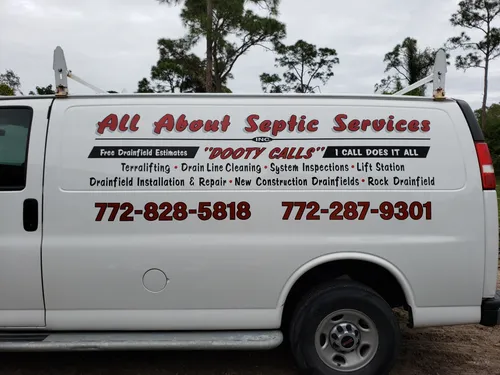
All About Septic Services inc.
991 Edwards Rd, Fort Pierce, FL 34982
All About Septic Services inc. provides comprehensive septic system services in Port St Lucie, FL. Their offerings include septic tank pumping, inspections, repairs, installations, and drain field repairs or replacements. The company emphasizes environmentally responsible practices and uses modern technology to maintain and extend the life of septic systems. They also provide 24/7 emergency septic services to address urgent needs promptly.
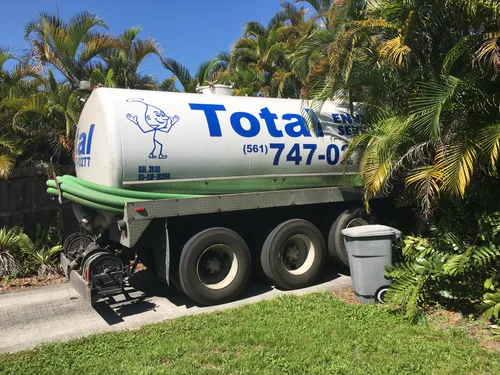
Total Septic Services
300 Center St, Jupiter, FL 33458
Total Septic Services is a septic tank and plumbing contractor based in Jupiter, Florida, serving West Palm Beach and the surrounding areas. They offer septic tank pumping, grease trap cleaning, drain field repair and rejuvenation, and high velocity line jetting. The company is part of a third-generation business with a central office in Orlando, providing a broad range of services including camera inspections and storm drain cleaning. Total Septic Services is available 24 hours a day to handle septic, sewer, or drain emergencies promptly.
KRK Pumping and Plumbing
3102 Enterprise Rd, Fort Pierce, FL 34982
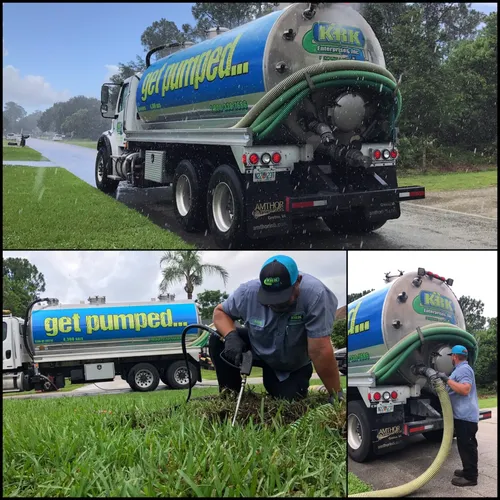
KRK Pumping and Plumbing provides septic tank inspection, repair, and drain field services in Port St Lucie, FL. They offer a wide range of plumbing solutions including grease trap repair, clogged drain cleaning, backflow certification, and hydro-jetting. Using advanced technology such as video camera inspections and vacuum trucks, they diagnose and address plumbing issues efficiently. Established in 1985, KRK has over 20 years of experience serving Florida and offers 24/7 emergency services for urgent plumbing needs.
Septic Environmental Services Inc.
4738 Selvitz Rd, Fort Pierce, FL 34981
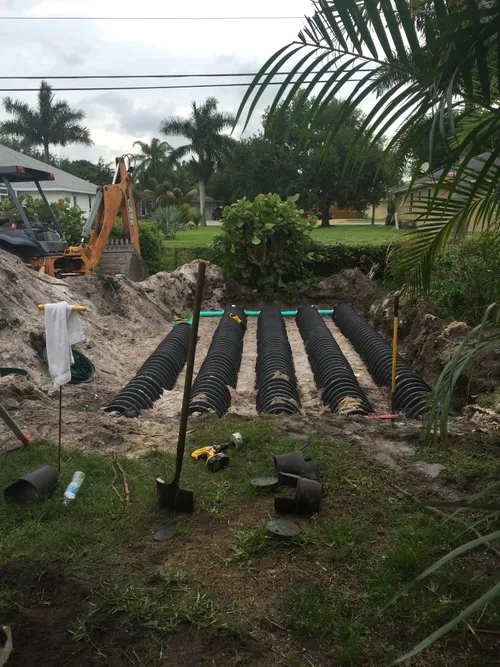
Septic Environmental Services Inc. is a family-owned septic service provider based in Port St Lucie, FL. Founded in 2014, the company offers septic tank pumping, inspections, repairs, installations, and drain field replacement. They also handle commercial grease trap cleaning for restaurants. With over 20 years of experience, the team serves the Treasure Coast and Palm Beaches area. They provide 24/7 availability and same-day service for septic emergencies.
Understanding Drain Field Failure in Port St. Lucie
The drain field is the final stage of your onsite sewage treatment and disposal system (OSTDS). After solids settle in the tank, liquid effluent flows into a network of perforated pipes buried in trenches filled with gravel. This effluent slowly percolates through the soil, where natural processes provide final treatment. When this area fails, it's often due to a combination of age, hydraulic overloading, and soil conditions prevalent in our area.
Common signs you need drain field repair or a new leach field include:
- Sewage odors in the yard or inside the home.
- Soggy ground or standing water over the drain field area, even in dry weather.
- Unusually lush, green grass growing over the field.
- Slow drains or sewage backups in the house.
- Failed inspections required for real estate transactions.
In Port St. Lucie, the environmental stakes are high. A malfunctioning system can pollute groundwater and surface waters, which is why the Florida Department of Health in St. Lucie County and the Florida Department of Environmental Protection enforce stringent rules for all system work.
Port St. Lucie's Regulatory Landscape
Any repair or modification to your septic system's drain field requires a construction permit from the local health department 1. Since July 2022, homeowners can use qualified private providers for the required inspections, which can sometimes streamline the process.
Florida law, specifically HB 1379, designates certain areas as "nutrient-impacted" to protect water quality. Parts of St. Lucie County fall under this designation, which has a major impact on replacement projects. For properties of one acre or less within these areas, a full drain field replacement now legally requires the installation of an Enhanced Nutrient Reducing (ENR) system, not a conventional one 2. These advanced systems are designed to significantly reduce the nitrogen load entering the environment.
Other key regulations for your soil absorption system include:
- Setbacks: The drain field must be at least 50 feet from surface water, 75 feet from private wells, and 10 feet from storm sewers.
- Reserve Area: You must have a designated, undisturbed reserve area equal to 50% of the initial drain field's size for potential future expansion 3.
- Seasonal High Water Table: A minimum of 24 inches of clearance is required between the bottom of the drain field and the seasonal high-water table. This is a critical factor in our low-lying, coastal community.
The Technical Challenges: High Water Tables and Soil
Port St. Lucie's geography presents unique challenges for subsurface wastewater disposal. The high groundwater level means a standard trench system often cannot achieve the legally required 24-inch separation 4. As a result, mounded or elevated drain fields are a common necessity. These systems are built above the natural grade using specially selected sand fill to create the required separation distance.
The native soil type also plays a crucial role. Soils classified as "severely limited" for septic systems may require an engineered solution or special fill material to ensure proper effluent absorption. A professional site evaluation, including percolation (perc) tests, is essential to determine the correct design for a replacement field 5.
Find the perfect drain field repair companies for your needs
Get personalized recommendations and expert advice
The Step-by-Step Process for Repair or Replacement
- Professional Assessment: The first step is always a thorough inspection by a licensed septic contractor or engineer. They will locate all system components (an "as-built" diagram is invaluable if you have one), inspect the tank's integrity and baffles, and perform a hydraulic load test to confirm the drain field failure 6 7 8.
- Site Evaluation & Design: For a replacement, a new site evaluation and soil analysis will determine the appropriate system type and size. In impacted areas, this will mean designing an ENR-OSTDS 9 10.
- Permitting: Your contractor will submit the design and application for a construction permit to the Florida Department of Health in St. Lucie County. As of recent data, the permit application fee is approximately $475 11 12.
- Construction: Once permitted, the old field may be abandoned in place, and the new leach field or mounded system is constructed. If the existing tank is structurally sound and correctly sized, it can often be reused after being pumped and fitted with a modern effluent filter or solids deflection device.
- Final Inspection: The completed system must be inspected and approved by the health department or an authorized private provider before it can be covered and put into use.
Cost Considerations for Drain Field Work
Costs in Port St. Lucie vary widely based on the scope of work and system type required by local conditions and regulations.
- Minor Repairs: Fixing a broken pipe or replacing a distribution box typically ranges from $1,000 to $3,000.
- Partial Field Replacement: Addressing a section of a failed field may cost between $3,000 and $7,000.
- Full Drain Field Replacement: This is a major project. For a conventional system, expect costs from $8,000 to $15,000. If an Enhanced Nutrient Reducing (ENR) system or a complex mounded design is required, the price can exceed this range significantly 13 14.
- Septic-to-Sewer Conversion: For some properties, connecting to the city sewer may be a viable long-term solution. The City of Port St. Lucie operates a conversion program. As of a 2025 city council presentation, the assessed cost for connection was $8,258, which can be financed over 10 years on the utility bill 15.
Choosing the Right Professional
Given the complex regulations and technical challenges, selecting a licensed and experienced septic contractor is non-negotiable. They will navigate the permitting process, design a system that complies with all Florida Administrative Code and St. Lucie County requirements, and ensure the construction meets health department standards 16. Always verify a contractor's license with the Florida Department of Business and Professional Regulation and ask for references from recent projects in the local area.
Frequently asked questions
Sources
Footnotes
-
Do I Need a Permit for a Septic System in Florida? - Land Perc - https://landperc.com/do-i-need-a-permit-for-a-septic-system-in-florida/ ↩
-
Chapter 381 Section 0065 - 2018 Florida Statutes - https://www.flsenate.gov/laws/statutes/2018/381.0065 ↩
-
Onsite Sewage Disposal - Florida Department of Health in St ... - https://stlucie.floridahealth.gov/programs-and-services/environmental-public-health/onsite-sewage-disposal/ ↩
-
Florida Well and Septic System Placement Regulations for New Construction (2025 Guide) - https://flengineeringllc.com/florida-well-septic-placement-2025/ ↩
-
Septic Inspection Process: What Homeowners Should Know ... - https://www.lunspro.com/vlog/the-septic-system-inspection-process-what-homeowners-should-know ↩
-
Residential Septic Inspections in St. Lucie & Martin Counties - https://www.wrenvironmental.com/st-lucie-and-martin-counties/residential/septic-inspections/ ↩
-
Septic Tank Inspector Port St. Lucie - Guardian Angel Inspections - https://www.guardianangelinspections.com/septic-inspection-port-st-lucie-county ↩
-
Preparing for Septic Tank Inspection: 7 Key Steps - https://septic911.com/preparing-for-septic-tank-inspection/ ↩
-
Permitting of Enhanced Nutrient Reducing Onsite Sewage ... - https://floridadep.gov/water/onsite-sewage/content/permitting-enhanced-nutrient-reducing-onsite-sewage-treatment-and ↩
-
Best Practices for Septic Installation in 2025 - Florida Engineering LLC - https://flengineeringllc.com/north-florida-septic-installation-2025/ ↩
-
Repair or Replace Septic Permit - Florida Department of ... - https://charlotte.floridahealth.gov/programs-and-services/environmental-public-health/onsite-sewage-program/repair-or-replacement-permit/ ↩
-
Untitled - https://psl.granicus.com/MetaViewer.php?view_id=6&event_id=1691&meta_id=168544 ↩
-
Fixing Septic Drain Fields: What Florida Homeowners Should Know - https://mathisandsonsseptic.com/mathis-sons-septic-blog-orlando-fl/septic-drain-fields-what-florida-homeowners-should-know/ ↩
-
Fixing Septic Drain Fields: What Florida Homeowners Should ... - https://mathisandsonsseptic.com/mathis-sons-septic-blog-orlando-fl/septic-drain-fields-what-florida-homeowners-should-know/ ↩
-
Septic to Sewer Conversion Program - https://www.cityofpsl.com/Government/Your-City-Government/Departments/Utility-Systems/Utility-Projects-Programs/Septic-to-Sewer-Conversion-Program ↩
-
Florida Well and Septic System Placement Regulations for ... - https://flengineeringllc.com/florida-well-septic-placement-2025/ ↩