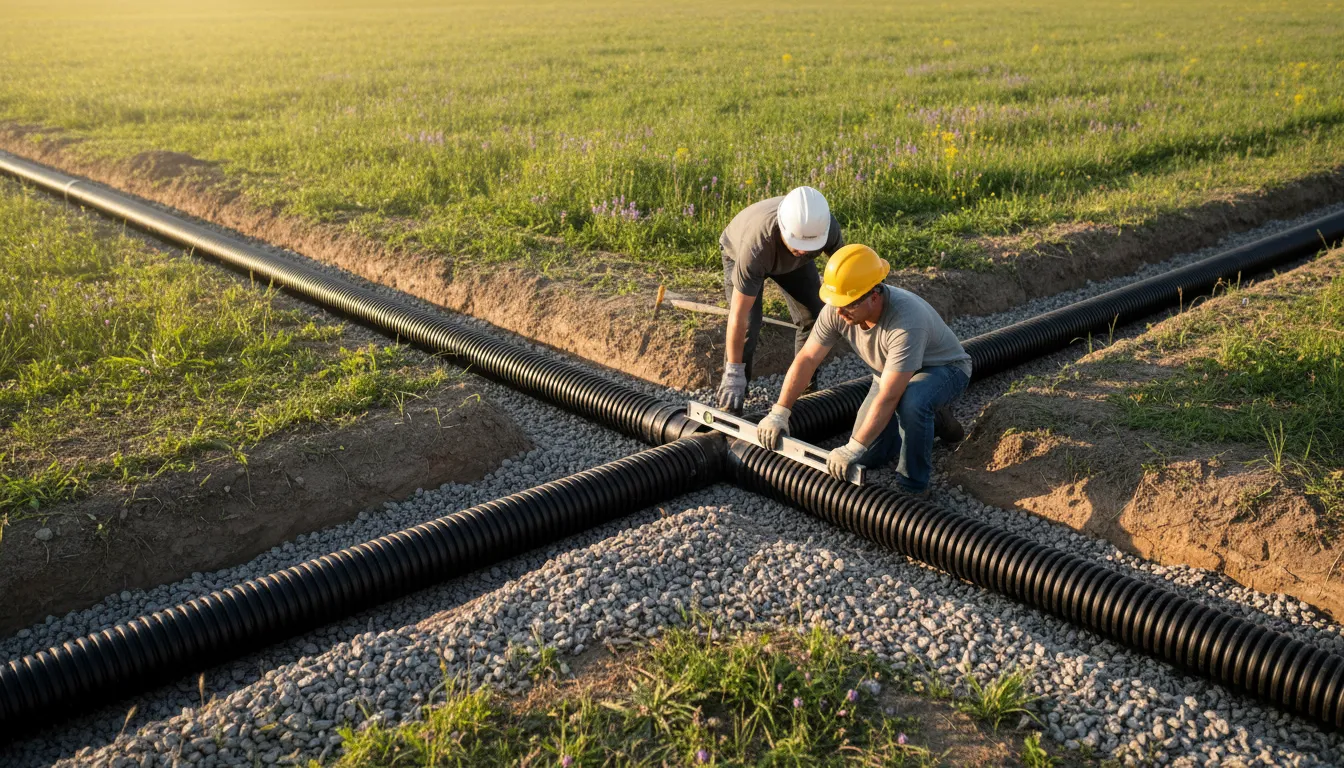
Find the Best Drain Field Repair Companies for Your Business
No obligation • Fast responses • Nationwide coverage

Why you can trust Septic Spot
Septic Spot is a leading United States resource for understanding and comparing septic services. Our editors review providers using consistent criteria and verify key business details. Listings and scores are independent, and companies cannot pay to influence our content.
Search providers near you
Top Drain Field Repair Companies in Homestead, Florida Ranked
A failing drain field is a serious issue for any Florida homeowner, requiring prompt and professional attention to protect your property and the environment. This guide explains the process, costs, and critical local regulations for drain field repair and replacement in Homestead. You can use this information to understand your options and connect with qualified local professionals who can assess your system and provide the necessary solutions.

Champion Septic Tank - Grease Trap, Drain Field, Lift Station, Storm Drain
405 E 41st St Unit 1D, Hialeah, FL 33013
Champion Septic Tank - Grease Trap, Drain Field, Lift Station, Storm Drain provides septic system services in Miami, FL. They offer septic tank pumping, inspection, cleaning, and drain field repair, using advanced technology and professional tools. Their licensed team handles locating tanks, hydro jet cleaning, and riser installation to maintain system performance. Serving Miami-Dade and Broward counties, the company emphasizes thorough maintenance to prevent backups and extend system life. Champion Septic Tank is family-owned and offers 24/7 emergency septic services.
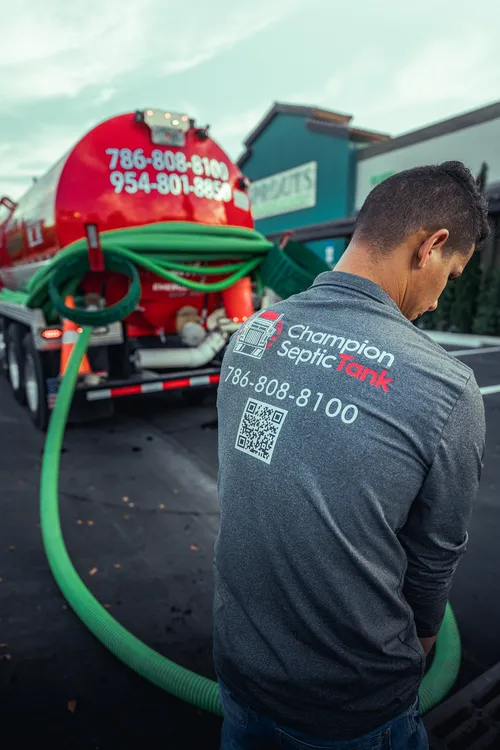
Champion Septic Tank - Grease Trap, Storm Drain, Lift Station
1001 Brickell Bay Dr Unit 2800, Miami, FL 33131
Champion Septic Tank - Grease Trap, Storm Drain, Lift Station provides comprehensive septic system services in Miami, FL. They offer septic tank pumping, inspection, cleaning, and drain field repair, using advanced technology and professional-grade tools. Their licensed team handles everything from locating buried tanks to thorough pump-outs and pressure washing to maintain system health. Champion Septic Tank serves Miami-Dade and Broward counties, including North Miami, Hollywood, and surrounding areas. They specialize in hydro jet cleaning and riser installation to ensure efficient septic system performance. The company also offers 24/7 emergency septic services to address urgent issues promptly.
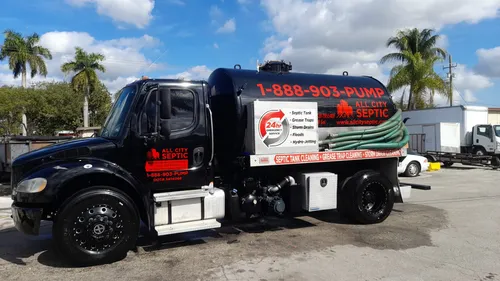
All City Septic
9715 SW 16th St, Miami, FL 33165
All City Septic is a licensed and insured septic contractor based in Miami, FL. The company provides septic tank pumping, installation, and drain field repair or replacement services across Miami-Dade, Broward, and Palm Beach counties, with additional coverage in Martin and St. Lucie counties. They operate a fleet of septic pump trucks and offer hydro-jetting as part of their service capabilities. All City Septic is a family-owned business committed to long-lasting drain field systems and offers 24/7 availability for septic services.
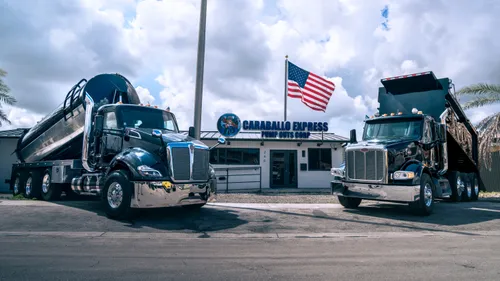
Caraballo Express – Septic, Grease Trap & Drainfield Services
240 W 28th St, Hialeah, FL 33010
Caraballo Express - Septic, Grease Trap & Drainfield Services is a family-owned septic and environmental services company based in Miami, FL. They serve residential, commercial, and industrial clients throughout Miami-Dade and Broward County. Their services include septic tank pumping and cleaning, drainfield installation and repair, grease trap cleaning, storm drain cleaning, hydro jetting, and camera inspections. With over 10 years of experience, Caraballo Express offers 24/7 emergency septic services and full septic system support tailored to South Florida's unique conditions.
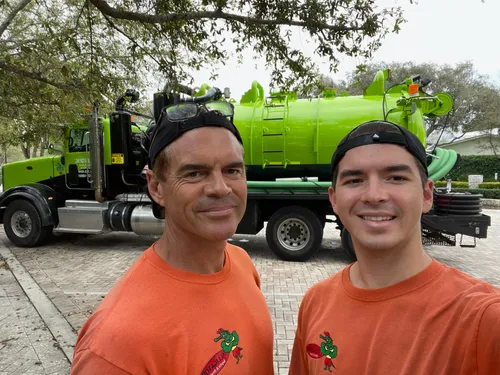
Alligator Septic
3735 SW 8th St # 208, Coral Gables, FL 33134
Alligator Septic is a family-owned septic service company based in Miami, FL, with over 30 years of experience. They provide a full range of septic system services including pumping, inspections, repairs, installations, drain field work, and septic pump replacement. Their expertise includes advanced septic repair techniques and the use of modern equipment such as cameras and digital tank locators to accurately diagnose and address issues. Established in 1989, Alligator Septic serves Miami-Dade County and offers 24-hour customer support for septic system needs.
Understanding Your Septic Drain Field
Often called a leach field or absorption field, the drain field is the final, crucial stage of your onsite sewage treatment system. After solids settle in the septic tank, the clarified liquid effluent flows into a network of perforated pipes buried in trenches filled with gravel. This effluent slowly percolates down through the soil, where natural processes provide the final treatment before it re-enters the groundwater. A properly functioning drain field is essential for preventing wastewater from backing up into your home or surfacing in your yard.
Why Drain Fields Fail in Homestead
The unique environmental conditions in South Florida, particularly in the Homestead area, present specific challenges for septic systems.
- High Water Table: Florida law mandates a minimum of 24 inches of vertical separation between the bottom of the drain field trenches and the seasonal high water table. In many parts of Homestead, the groundwater is naturally close to the surface, making this clearance difficult to achieve with a standard, in-ground system.
- Soil Composition: The local soil is often a mix of sandy, fast-draining material over a layer of porous limestone or coral rock. While sandy soil drains quickly, it doesn't filter effluent as effectively. The underlying rock can also complicate installation and limit soil treatment capacity.
- Lack of Maintenance: The most common cause of premature failure is neglecting to pump the septic tank regularly. When solids (sludge and scum) are not removed every 3-5 years, they can flow out of the tank and clog the drain field pipes and soil pores, a condition known as "biomat" buildup 1. This irreversible clogging is a primary reason for drain field replacement.
Signs You Need Drain Field Repair or Replacement
Recognizing the early warning signs can help you address problems before they become an emergency or environmental hazard.
- Wet Spots or Standing Water: Soggy ground, puddles, or sewage odors in your yard, especially near the drain field area.
- Slow Drains and Backups: Gurgling pipes, slow-draining sinks and toilets, or sewage backups inside your home.
- Unusually Lush Vegetation: Grass over the drain field that is noticeably greener, thicker, and grows faster than the rest of the lawn, indicating a nutrient-rich wastewater leak.
- Failed Inspection: A routine septic inspection may reveal saturated soil, clogged distribution boxes, or broken pipes that necessitate repair.
Homestead Regulations and Permitting
All work on a septic system drain field in Florida is strictly regulated. You cannot begin any repair, modification, or full replacement without the proper approvals.
- Mandatory Permit: A construction permit from the Florida Department of Health in Miami-Dade County is required before any work begins. The permit process ensures the proposed system meets all health and environmental codes.
- Licensed Contractors: Only state-licensed plumbing contractors or registered septic tank contractors are legally authorized to perform drain field work 2. Always verify a contractor's license before hiring.
- Setback Requirements: Strict rules dictate minimum distances (setbacks) that a drain field must be from your home, property lines, wells, water bodies, and other structures.
- Reserve Area: Florida law requires that a 50% reserve area, equal to half the size of the initial drain field, be set aside on your property for future expansion or replacement 3 4. This area must remain undisturbed and cannot have permanent structures, pools, or pavement placed on it.
The Professional Process: From Evaluation to Inspection
A reputable contractor will manage a drain field project through a series of defined steps to ensure compliance and proper function.
- Site Evaluation and Soil Testing: The process begins with a thorough site evaluation. This includes determining the seasonal high water table, conducting percolation ("perc") tests to assess soil absorption rates, and mapping all existing structures, wells, and property lines 5. In Homestead, this evaluation often reveals the need for a specialized system design.
- System Design and Permitting: Based on the evaluation, the contractor designs a system that complies with all regulations. For many Homestead properties, a traditional gravity-fed trench system may not be feasible. The design may call for a mounded drain field (where suitable soil is brought in to create an elevated absorption area) or an Aerobic Treatment Unit (ATU) that provides advanced treatment before dispersal 6. The contractor then submits the design and obtains the necessary permit.
- Installation or Repair: For a full replacement, the old drain field is abandoned (often filled in) and the new one is constructed in the designated reserve area. Installation involves precise excavation, laying of distribution pipes and gravel, and connecting to the septic tank. Repairs might involve excavating to fix a broken pipe, clean a clogged line, or level a malfunctioning distribution box.
- Final Inspection: Before the new or repaired drain field is covered with soil, a final inspection by the county health department is mandatory 7 8. The inspector will check for proper pipe slope, adequate setbacks, and correct installation of all components. Passing this inspection is required to close the permit.
Find the perfect drain field repair companies for your needs
Get personalized recommendations and expert advice
Cost of Drain Field Work in Homestead
The cost for drain field solutions in Homestead varies significantly based on the scope of work, soil conditions, and the type of system required. Recent local data provides a framework for what homeowners might expect.
- Minor Repairs: Unclogging distribution lines or repairing a broken pipe typically ranges from $1,000 to $3,000.
- Partial Replacement: Replacing a section of a failed drain field can cost between $3,000 and $7,000.
- Full Drain Field Replacement: This is the most significant investment. Costs for a complete new leach field in Homestead commonly range from $8,000 to $15,000 or more9 10. Specific local projects have been reported between $3,000 and $13,000, with a common installation cost averaging between $4,177 and $5,969 for the area 11. Some complex projects, particularly those requiring mounded systems or ATUs, can reach $10,475 or higher11.
These figures generally include excavation, materials, labor, and permitting fees, but it's crucial to get detailed, written estimates from multiple licensed contractors.
Protecting Your New Drain Field Investment
Once your drain field is repaired or replaced, proper maintenance is key to ensuring its longevity.
- Regular Pumping: Have your septic tank pumped by a professional every 3-5 years to prevent solids from escaping and clogging the new field 12 13.
- Conserve Water: Spread out laundry loads and fix leaky faucets to avoid hydraulically overloading the system.
- Mind What You Flush: Only human waste and toilet paper should go down the drain. Avoid chemicals, grease, wipes, and feminine hygiene products.
- Protect the Area: Never drive or park vehicles over the drain field, and avoid planting trees with deep roots nearby. Keep the reserve area completely clear.
Frequently asked questions
Sources
Footnotes
-
Septic Drain Field Help: A Guide to Repair and Maintenance - https://mathisandsonsseptic.com/mathis-sons-septic-blog-orlando-fl/septic-drain-field-help-a-comprehensive-guide-to-septic-system-repair-and-maintenance/ ↩
-
Septic Contracting Frequently Asked Questions - https://floridadep.gov/water/onsite-sewage/content/septic-contracting-frequently-asked-questions ↩
-
Florida Well and Septic System Placement Regulations for ... - https://flengineeringllc.com/florida-well-septic-placement-2025/ ↩
-
Florida Statute §381.0065 - Online Sunshine - https://www.leg.state.fl.us/Statutes/index.cfm?App_mode=Display_Statute&URL=0300-0399/0381/Sections/0381.0065.html ↩
-
Septic Tank Plans: A Complete Homeowner's Guide - Land Perc - https://landperc.com/septic-tank-plans-guide/ ↩
-
Drain Field Installation, Repair & Replacement | Champion Septic - https://www.championseptictank.com/drain-field-installation ↩
-
Septic Inspections Made Easy: What Every Contractor Needs to ... - https://flengineeringllc.com/septic-inspections-guide-contractors-2025/ ↩
-
The Ultimate Guide to Septic System Installation Process | Septic System Professionals - https://septic911.com/septic-system-installation-process/ ↩
-
Answering Top Questions About Drain Field Replacement - https://tampabayseptic.com/blog/answering-top-questions-about-drain-field-replacement/ ↩
-
Fixing Septic Drain Fields: What Florida Homeowners Should Know - https://mathisandsonsseptic.com/mathis-sons-septic-blog-orlando-fl/septic-drain-fields-what-florida-homeowners-should-know/ ↩
-
Septic Tank Installation in Homestead, FL - Costs 03 / 2026 - Homeyou - https://www.homeyou.com/fl/septic-tank-installation-homestead-costs ↩ ↩2
-
Septic System Care - https://www.miamidade.gov/global/environment/ecosystems/septic-system-care.page ↩
-
Septic System Owner's Guide - St. Johns County Health Department - https://stjohns.floridahealth.gov/wp-content/uploads/sites/57/2025/06/septic-folder-8x11-link2.pdf ↩