Find the Best Drain Field Repair Companies for Your Business
No obligation • Fast responses • Nationwide coverage

Why you can trust Septic Spot
Septic Spot is a leading United States resource for understanding and comparing septic services. Our editors review providers using consistent criteria and verify key business details. Listings and scores are independent, and companies cannot pay to influence our content.
Search providers near you
Top Drain Field Repair Companies in Ocala, Florida Ranked
A failing drain field is a serious issue that can threaten your home's sanitation, your property's value, and the local environment. This component of your septic system is responsible for the final treatment and dispersal of wastewater into the soil. When it malfunctions, immediate professional attention is required. For Ocala homeowners, navigating the repair or replacement process involves understanding local soil conditions, strict Florida health regulations, and finding qualified, licensed professionals to perform the work. This guide provides the essential information you need to identify problems, understand your options, and connect with local experts for drain field solutions.
Understanding Your Septic Drain Field
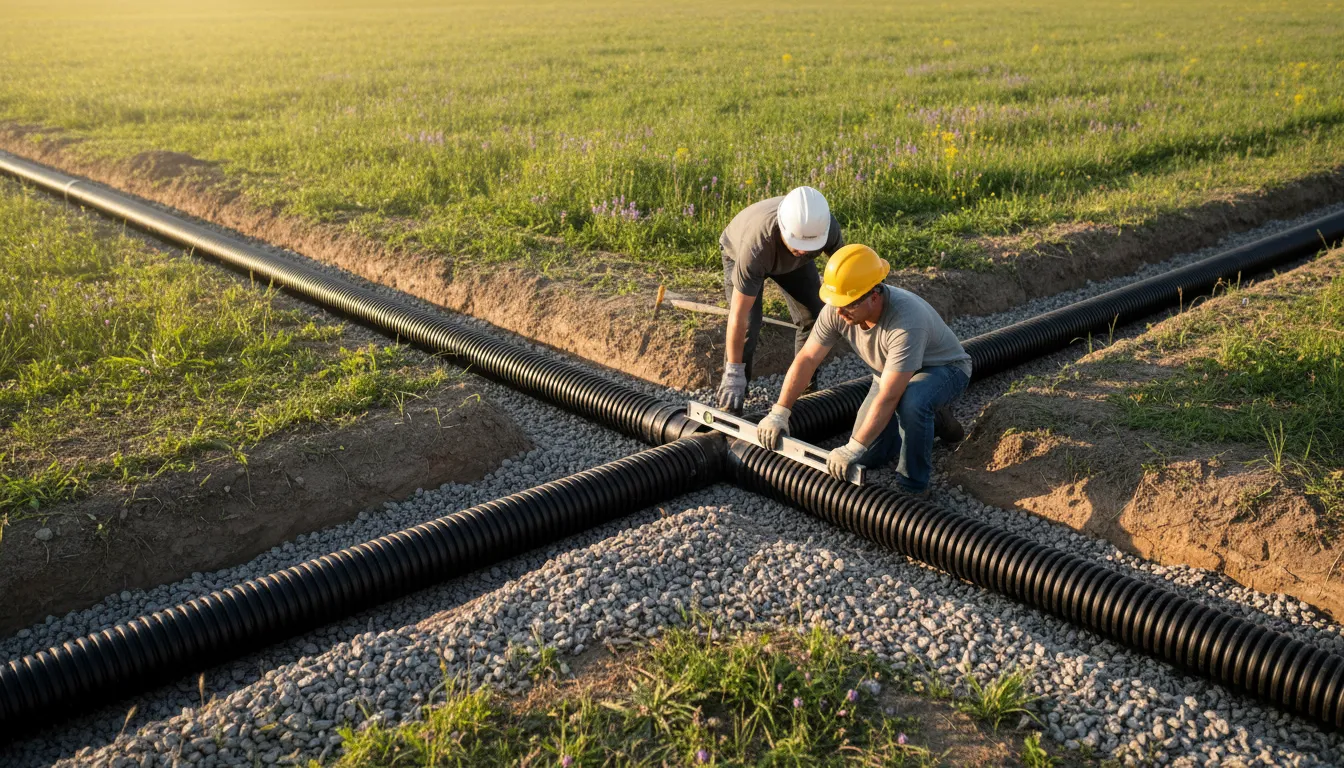
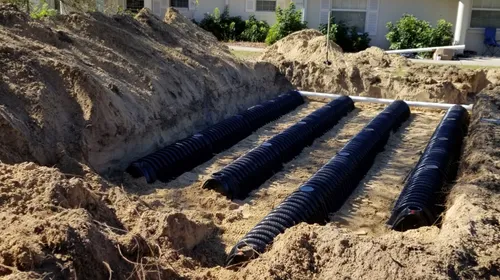
Often called a leach field or absorption field, the drain field is the final and most critical stage of a conventional septic system. After solids settle in the septic tank, the liquid effluent flows into a network of perforated pipes buried in trenches filled with gravel or within proprietary chamber systems. This effluent slowly percolates through the soil, where natural biological processes filter and purify it before it rejoins the groundwater.
In Ocala, the performance and longevity of your drain field are intrinsically linked to the local environment. A properly functioning system protects your family's health and prevents contamination of Florida's sensitive aquifer system.
Signs of Drain Field Failure
Recognizing the early warning signs of a failing leach field can mean the difference between a manageable repair and a costly full replacement. If you notice any of the following issues, it's time to schedule a professional inspection 1.
- Standing Water or Soggy Soil: The most common sign is persistently wet, mushy, or spongy ground over the drain field area, especially when it hasn't rained. You may also see lush, green grass growing over the field while the rest of your lawn is dry.
- Sewage Odors: Unpleasant smells of sewage in your yard or even inside your home can indicate that wastewater is not being properly treated and absorbed.
- Slow Drains and Backups: If drains throughout your house are gurgling or emptying slowly, or if toilets are backing up, the problem may originate in a saturated drain field that can no longer accept water from the tank.
- Contaminated Well Water: For homes with private wells, a failed drain field located too close to the well can lead to bacterial contamination. Regular well water testing is advised.
Under Florida law, a system exhibiting standing water, sewage odors, or backups is legally defined as a failure and requires remediation.
Ocala's Unique Soil and Site Challenges
The success of a drain field depends on the soil's ability to treat wastewater. Ocala's geology presents specific considerations for septic system design and repair 2.
- Sandy Soil: The Ocala area is known for its sandy soil, which generally offers excellent drainage. However, if the sand is too coarse, wastewater may pass through too quickly without adequate filtration. Conversely, some layers may be compacted or contain restrictive layers that hinder percolation.
- High Water Table: Florida's seasonal high water table is a major factor in system design. State regulations require a minimum of 24 inches of clearance between the bottom of the drain field trenches and the highest level the groundwater reaches 3. In many parts of Marion County, the water table is too high for a conventional system, necessitating an engineered solution.
- Site Constraints: All systems must meet specific setback distances from wells, property lines, buildings, surface water, and conservation areas. These setbacks are strictly enforced by the Florida Department of Health in Marion County during the permitting process.
The Professional Repair & Replacement Process
Drain field work is not a DIY project. It requires licensed contractors who understand complex regulations and engineering principles. Here is the standard process you can expect when working with a professional in Ocala.
1. Site Evaluation and Problem Diagnosis
A licensed septic contractor will begin with a thorough inspection. This includes a visual assessment of the property and the suspected failure signs. To diagnose the issue, they will likely dig test pits to examine the soil structure and moisture content and may perform a percolation (perc) test to measure the soil's water absorption rate 4. This evaluation determines if the problem is a simple clog, a broken pipe, or a complete systemic failure of the soil's absorption capacity.
2. Permitting and System Design
Any major repair or full replacement requires a permit from the local health department. Your contractor will handle this process, submitting a site plan based on the soil evaluation results. The design will specify whether a conventional trench system, a chamber system, or an elevated "mound" system is needed to overcome site limitations like a high water table or poor soil 5. All designs must comply with Florida Administrative Code Rule 62-6.
3. Installation or Repair Work
For a full replacement, the old drain field is excavated and removed. New trenches are dug according to the approved plan, and either gravel and perforated pipe or modern plastic chambers are installed with precise grading to ensure even distribution of effluent. For partial repairs, the work may be localized to a clogged line or a damaged distribution box 6.
4. Final Inspection and Restoration
Before the new system is covered, a final inspection by the county health department is mandatory to ensure it was installed according to the permitted design 7. Once approved, the area is backfilled and the landscape is restored.
Find the perfect drain field repair companies for your needs
Get personalized recommendations and expert advice
Cost Considerations for Ocala Homeowners
The cost of addressing drain field issues in Ocala varies widely based on the scope of the problem and your property's specific conditions. Understanding these factors can help you budget appropriately.
- Minor Repairs: Fixing a clogged line, repairing a distribution box, or addressing a single failed lateral may cost between $1,000 and $3,000 8.
- Partial Replacement: Replacing a section of the drain field or adding new lines to expand capacity typically ranges from $3,000 to $7,000.
- Full Drain Field Replacement: A complete new leach field is a significant investment, with costs in Ocala generally falling between $8,000 and $15,000 or more 9 10 11.
Several key factors drive the final price:
- Soil Conditions: If the native soil fails perc tests, an engineered sand fill or a mound system must be constructed, adding material and labor costs.
- Water Table: Properties with a high water table require more complex (and expensive) systems like mounds to maintain the legally required separation.
- System Size: The size is based on your home's bedroom count and water usage.
- Site Accessibility: Difficult terrain or limited access for heavy equipment can increase labor time and cost.
- Permitting and Design Fees: These are typically included in the contractor's quote.
Choosing the Right Licensed Professional in Ocala
Florida law is explicit: only contractors registered under Part III of Chapter 489, Florida Statutes, are authorized to perform septic tank and drain field construction, repair, and maintenance 12. Here's what to look for:
- State License: Verify the contractor holds a valid Florida septic tank contractor license. You can check this through the Florida Department of Business and Professional Regulation (DBPR).
- Local Experience: Choose a company familiar with Marion County's health department officials, common soil types, and permitting timelines.
- Comprehensive Services: Look for a provider that handles the entire process-inspection, design, permitting, installation, and restoration.
- References and Insurance: Ask for local references and proof of liability and workers' compensation insurance.
Frequently asked questions
Sources
Footnotes
-
Septic Drain Field Issues Every Homeowner Should Watch For - https://septicservicescfl.com/septic-drain-field-issues-every-homeowner-should-watch-for/ ↩
-
A Guide to Choosing the Right Drain Field for Your Septic System - https://advancedsepticservicesfl.com/choosing-right-drain-field/ ↩
-
Septic Inspections Made Easy: What Every Contractor Needs to Know Before Breaking Ground (2025) - Florida Engineering LLC - https://flengineeringllc.com/septic-inspections-guide-contractors-2025/ ↩
-
Septic Drainfield Design 101: A Complete Guide - Land Perc - https://landperc.com/septic-drainfield-design-guide/ ↩
-
Drain Field Installation & Repair in Ocala, FL - Miller & Sons Plumbing - https://millerandsonsplumbing.net/drain-field-installation-repair/ ↩
-
Drain Field Installation - Trusted Septic Services in Ocala, FL - https://www.ocalaseptics.com/drain-field-installation ↩
-
Septic Installation Ocala FL | Licensed Experts - https://ocalaseptics.com/septic-installation ↩
-
Florida Well and Septic System Placement Regulations for New ... - https://flengineeringllc.com/florida-well-septic-placement-2025/ ↩
-
Septic System Cost Estimate: A Complete Breakdown - Land Perc - https://landperc.com/septic-system-cost-estimate/ ↩
-
Fixing Septic Drain Fields: What Florida Homeowners Should Know - https://mathisandsonsseptic.com/mathis-sons-septic-blog-orlando-fl/septic-drain-fields-what-florida-homeowners-should-know/ ↩
-
How Much Does it Cost to Upgrade a Septic System in Florida? - https://mathisandsonsseptic.com/mathis-sons-septic-blog-orlando-fl/a-florida-homeowners-guide-to-septic-system-maintenance-costs/ ↩
-
Septic Contracting Frequently Asked Questions - https://floridadep.gov/water/onsite-sewage/content/septic-contracting-frequently-asked-questions ↩