Find the Best Drain Field Repair Companies for Your Business
No obligation • Fast responses • Nationwide coverage

Why you can trust Septic Spot
Septic Spot is a leading United States resource for understanding and comparing septic services. Our editors review providers using consistent criteria and verify key business details. Listings and scores are independent, and companies cannot pay to influence our content.
Search providers near you
Top Drain Field Repair Companies in Pensacola, Florida Ranked
A failing drain field is a serious issue for any Pensacola home with a septic system. This critical component, also known as a leach field or absorption field, is responsible for safely filtering and dispersing treated wastewater into the soil. When it fails, it can lead to soggy yards, foul odors, and even sewage backups into your home. Understanding the local requirements, costs, and process for drain field work is essential for a successful and compliant repair or replacement. This guide helps you navigate the specifics of septic drain field services in Pensacola, from permitting to final inspection, so you can make informed decisions when seeking local professionals.
Understanding Your Septic Drain Field
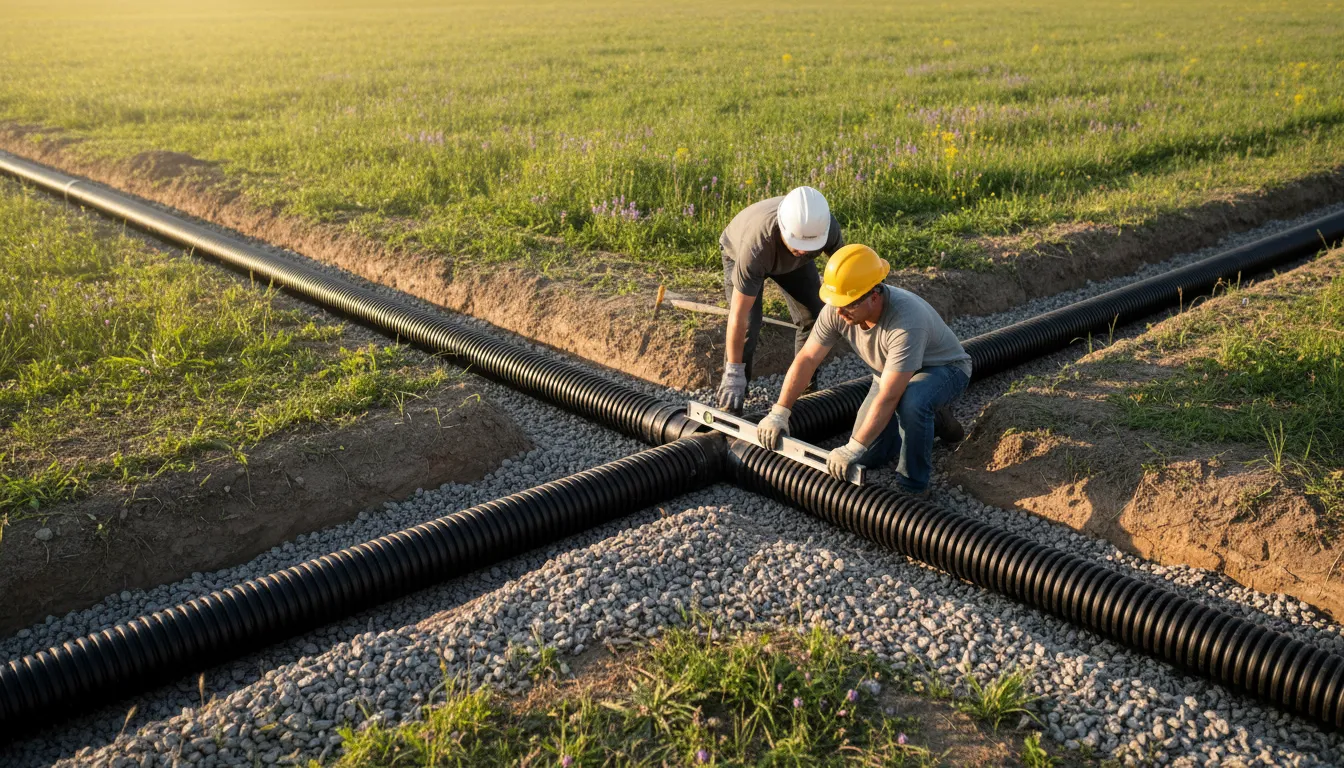
The drain field is the final stage of your onsite wastewater treatment system. After solids settle in the septic tank, the liquid effluent flows into a network of perforated pipes buried in trenches filled with gravel or proprietary chambers. This effluent slowly percolates through the soil, where natural processes provide final treatment. In Pensacola's coastal environment, the performance of your leach field is heavily influenced by local soil conditions and regulations designed to protect public health and groundwater 1.
Why Drain Fields Fail in Pensacola
Several factors common to Northwest Florida can lead to premature drain field failure:
- High Water Table: Pensacola's flat terrain and proximity to the coast often result in a high seasonal water table. A drain field requires a minimum 24-inch separation between the bottom of the trenches and the seasonal high water table to function properly. When groundwater rises, it saturates the field, preventing effluent from percolating.
- Soil Compaction: Sandy soils, while common, can become compacted over time, especially from driving or construction over the field. Compacted soil loses its ability to absorb and treat wastewater.
- Biological Mat Buildup: A natural layer of biomat forms where effluent meets the soil in the trenches. If this layer becomes too thick due to excessive water use or improper maintenance, it can clog the system.
- Physical Damage: Tree roots seeking moisture can invade and crush distribution pipes. Crushing from vehicle traffic or soil settling can also damage the network.
- System Age and Overload: All systems have a finite lifespan. Flushing non-biodegradable items, overusing garbage disposals, and exceeding the system's daily design flow (based on bedroom count) can accelerate failure 2.
The Regulatory Landscape: Permits and Professionals
Any significant repair or full replacement of a septic drain field in Pensacola is regulated by the Florida Department of Health (DOH) in Escambia County. You cannot simply hire an excavator to dig a new field.
- Permits Are Mandatory: A construction permit from the DOH is required before any work begins on repairing or replacing a drain field 3. This ensures the new design meets all current health and environmental standards.
- Licensed Contractors: With few exceptions, the work must be performed by a state-licensed septic contractor or a licensed plumbing contractor certified in septic systems 4. For owner-occupied, single-family homes, homeowners may perform their own work, but they are still responsible for obtaining permits and passing inspections-a risky endeavor given the technical and legal complexities.
- Final Inspection: Before the new or repaired drain field is backfilled, a final inspection by the DOH is mandatory. Only after they approve the installation can the area be covered and landscaped 5.
The Drain Field Repair & Replacement Process
A professional septic company will guide you through a multi-step process designed for compliance and longevity.
- Site Evaluation and Soil Testing: This is the critical first step. A contractor or septic engineer will dig deep test pits to evaluate the soil profile, texture, and-most importantly-the depth of the seasonal high water table 6. This data determines the feasibility and design of the new system.
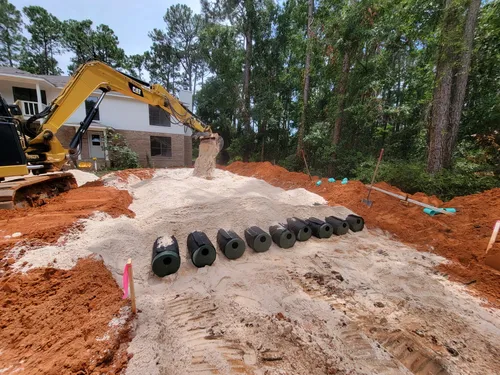
- System Design and Engineering: Based on the soil evaluation and your home's size (number of bedrooms), a new drain field is designed. In areas with high groundwater, this often means designing a mounded system, where suitable soil is imported and built up to create the required 24-inch separation 7. The design must also adhere to strict setback distances from wells, property lines, buildings, and surface water.
- Permitting: Your licensed contractor will submit the design, application, and site plan to the DOH for permit approval. This step formalizes the project with the county.
- Excavation and Installation: The old, failed drain field area is carefully excavated. New trenches are dug according to the approved plan. The system is then installed, which may involve laying a gravel bed, placing distribution pipes or modern plastic chambers, and connecting them to the distribution box from the septic tank 8.
- Inspection and Closure: Once installed, the DOH inspector visits the site to verify the work matches the permitted design. After passing inspection, the trenches are covered with a geotextile fabric and clean fill soil, then graded to promote surface water runoff away from the area.
Find the perfect drain field repair companies for your needs
Get personalized recommendations and expert advice
Cost Factors for Pensacola Drain Field Work
The cost for drain field solutions in Pensacola varies widely based on the scope of work and site-specific challenges. The high water table is a primary cost driver, as it frequently necessitates more complex, engineered systems.
- Minor Repairs: Addressing issues like a clogged distribution line or repairing a damaged distribution box may range from $1,000 to $3,000.
- Partial Drain Field Replacement: Replacing a section or one leg of a larger field can cost between $3,000 and $7,000, depending on size and access.
- Full Drain Field Replacement: A complete leach field replacement is a major project. In Pensacola, homeowners can expect costs typically ranging from $5,000 to $15,000 or more9 10. The higher end includes situations requiring a mounded system, significant fill dirt, or alternative technologies due to poor soil conditions.
- Site Restoration: After installation, regrading, sodding, or reseeding the disturbed area can add $2,000 to $10,000 to the total project cost, depending on the size of the field and landscaping choices 11.
Preventing Premature Failure
Proactive maintenance is the most cost-effective strategy. Have your entire septic system, including the tank and drain field, inspected by a professional every 3-5 years 12. Practice water conservation, avoid pouring grease or chemicals down drains, and never drive or park over your drain field. Protecting this investment starts with daily habits and regular check-ups.
Choosing a Service Provider in Pensacola
When you need work on your absorption field, select a licensed and insured septic contractor with extensive local experience. They should be familiar with Escambia County's permitting process and the common soil challenges in the Pensacola area. Ask for references, verify their license with the state, and ensure they provide a detailed written estimate that includes design, permitting, installation, inspection, and site restoration. A reputable professional will be transparent about the process and help you navigate the regulatory requirements to restore your home's wastewater system safely and effectively.
Frequently asked questions
Sources
Footnotes
-
Septic Engineering | Pensacola - Florida Engineering LLC - https://flengineeringllc.com/septic-engineering-pensacola/ ↩
-
Septic Drain Field Issues Every Homeowner Should Watch For - https://septicservicescfl.com/septic-drain-field-issues-every-homeowner-should-watch-for/ ↩
-
Septic Permits in Florida: Do You Need One? (2025 Guide) - https://landperc.com/do-i-need-a-permit-for-a-septic-system-in-florida/ ↩
-
Septic Contracting Frequently Asked Questions - https://floridadep.gov/water/onsite-sewage/content/septic-contracting-frequently-asked-questions ↩
-
The Process of Drain Field Replacement - William Dustin Septic - https://williamdustinseptic.com/lakeland-septic-services-blog/the-process-of-drain-field-replacement/ ↩
-
Septic Inspections Made Easy: What Every Contractor Needs to Know Before Breaking Ground (2025) - Florida Engineering LLC - https://flengineeringllc.com/septic-inspections-guide-contractors-2025/ ↩
-
Florida Well and Septic System Placement Regulations for New ... - https://flengineeringllc.com/florida-well-septic-placement-2025/ ↩
-
Septic Drainfield Design 101: A Complete Guide - Land Perc - https://landperc.com/septic-drainfield-design-guide/ ↩
-
Fixing Septic Drain Fields: What Florida Homeowners Should Know - https://mathisandsonsseptic.com/mathis-sons-septic-blog-orlando-fl/septic-drain-fields-what-florida-homeowners-should-know/ ↩
-
How Much Does it Cost to Upgrade a Septic System in Florida? - https://mathisandsonsseptic.com/mathis-sons-septic-blog-orlando-fl/a-florida-homeowners-guide-to-septic-system-maintenance-costs/ ↩
-
Septic System Cost Estimate: A Complete Breakdown - Land Perc - https://landperc.com/septic-system-cost-estimate/ ↩
-
Drain Field Installation | Pensacola, FL - https://www.ensleyseptic.com/drain-field-installation ↩