Find the Best Drain Field Repair Companies for Your Business
No obligation • Fast responses • Nationwide coverage

Why you can trust Septic Spot
Septic Spot is a leading United States resource for understanding and comparing septic services. Our editors review providers using consistent criteria and verify key business details. Listings and scores are independent, and companies cannot pay to influence our content.
Search providers near you
Top Drain Field Repair Companies in Tamarac, Florida Ranked
A failing drain field, also known as a leach field or absorption field, is a serious issue for any home with a septic system. It's the final, crucial stage where treated wastewater is safely dispersed into the soil. When this component fails, it can lead to sewage backups, soggy yards, and environmental contamination. For homeowners in Tamarac, navigating the repair or replacement of a septic drain field involves understanding local regulations, site-specific challenges, and the steps to a compliant solution. This guide provides the essential information to help you identify issues, understand the process, and connect with qualified local professionals for your septic system needs.

Champion Septic Tank - Grease Trap, Drain Field, Lift Station, Storm Drain
405 E 41st St Unit 1D, Hialeah, FL 33013
Champion Septic Tank - Grease Trap, Drain Field, Lift Station, Storm Drain provides septic system services in Miami, FL. They offer septic tank pumping, inspection, cleaning, and drain field repair, using advanced technology and professional tools. Their licensed team handles locating tanks, hydro jet cleaning, and riser installation to maintain system performance. Serving Miami-Dade and Broward counties, the company emphasizes thorough maintenance to prevent backups and extend system life. Champion Septic Tank is family-owned and offers 24/7 emergency septic services.
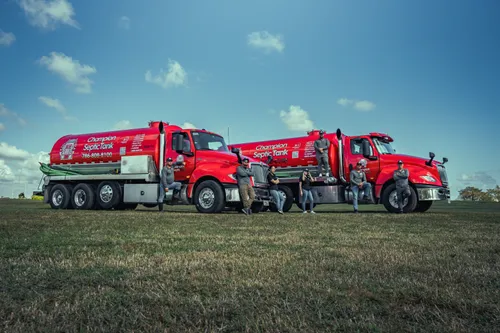
Champion Septic Tank - Grease Trap, Drain Field, Storm Drain, Lift Station
4000 Hollywood Blvd suite 555-s, Hollywood, FL 33021
Champion Septic Tank - Grease Trap, Drain Field, Storm Drain, Lift Station provides septic system services in Miami, FL. The company offers septic tank pumping, inspection, cleaning, and drain field repair using advanced technology and professional tools. Their licensed team handles locating, accessing, and maintaining septic systems to ensure proper flow and function. Champion Septic Tank serves Miami-Dade and Broward counties, including North Miami, Hollywood, and surrounding areas. They provide hydro jet cleaning and riser installation as part of their capabilities. The company emphasizes thorough maintenance to extend system life and prevent backups. Champion Septic Tank offers 24/7 emergency septic services for urgent needs.

Champion Septic Tank - Grease Trap, Lift Station, Storm Drain
5151 Collins Ave, Miami, FL 33140
Champion Septic Tank - Grease Trap, Lift Station, Storm Drain provides septic system services in Miami, FL. They offer septic tank pumping, inspection, cleaning, and drain field repair, using advanced technology and professional tools. The company serves Miami-Dade and Broward counties, including North Miami, Hollywood, and Miami Shores. Champion Septic Tank is equipped for hydro jetting and full septic system maintenance to ensure proper flow and function. They provide 24/7 emergency septic services to address urgent issues promptly.
YP Septic Excavations LLC
1474 NE 183rd St, Miami, FL 33179
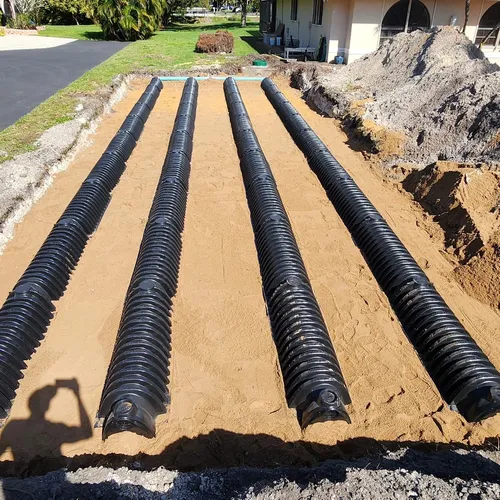
YP Septic Excavations LLC is a family-owned company based in Miami, FL, specializing in septic system installation, repair, and inspection. They provide a range of services including septic tank installations, drain field replacement, lift station repair, and French drainage systems. The company also offers asphalting and concrete pouring to complete projects with a clean, leveled finish. Founded in 2021 by Yosbel Paez, YP Septic Excavations LLC has completed over 500 projects and focuses on delivering customized, environmentally conscious solutions.
Caraballo Express – Septic, Grease Trap & Drainfield Services
240 W 28th St, Hialeah, FL 33010
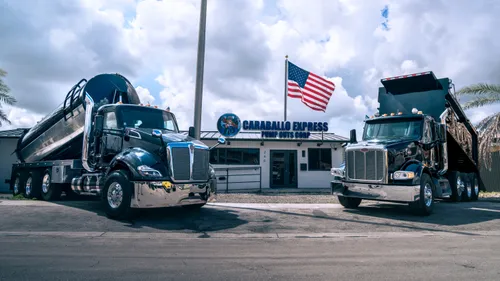
Caraballo Express - Septic, Grease Trap & Drainfield Services is a family-owned septic and environmental services company based in Miami, FL. They serve residential, commercial, and industrial clients throughout Miami-Dade and Broward County. Their services include septic tank pumping and cleaning, drainfield installation and repair, grease trap cleaning, storm drain cleaning, hydro jetting, and camera inspections. With over 10 years of experience, Caraballo Express offers 24/7 emergency septic services and full septic system support tailored to South Florida's unique conditions.
Understanding Your Septic Drain Field in South Florida
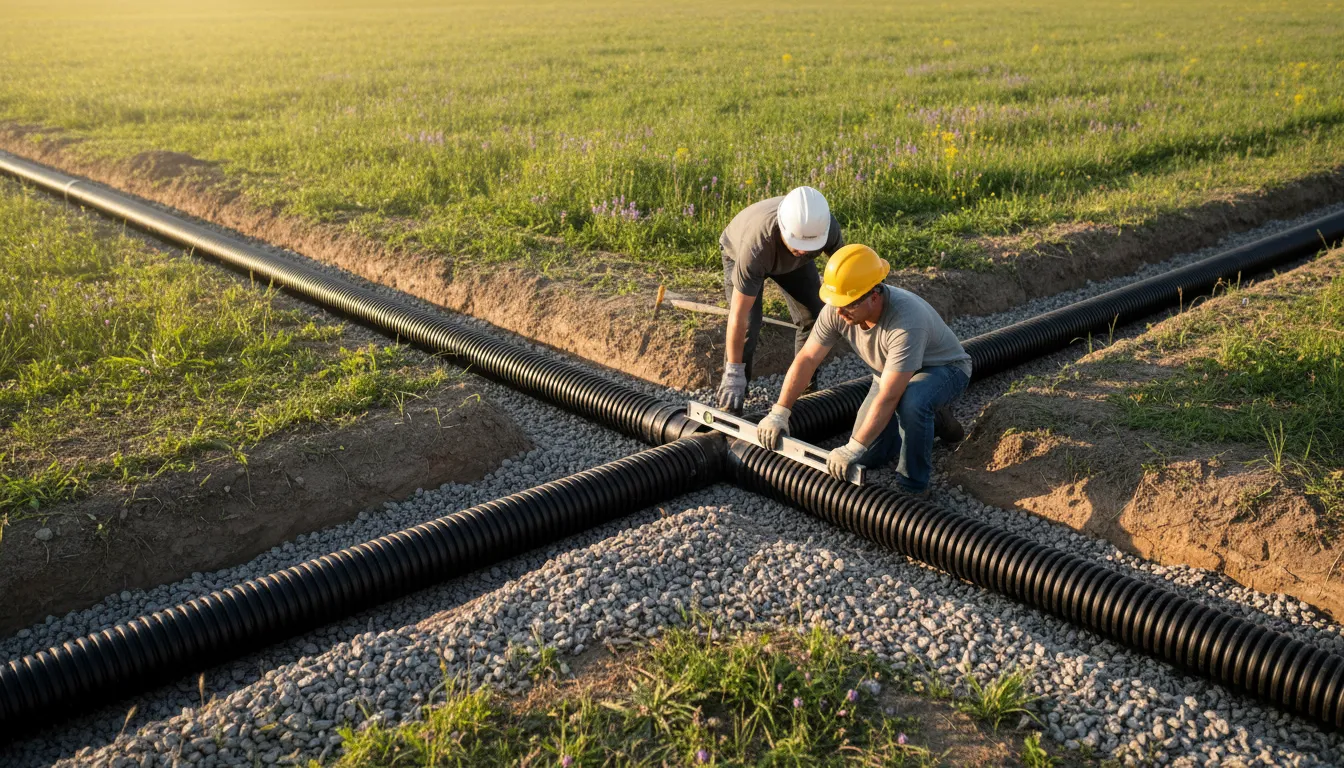
The drain field is a network of perforated pipes buried in trenches filled with gravel. After solids settle in the septic tank, the liquid effluent flows into the drain field, where it percolates through the soil for final treatment and dispersal. In Tamarac and across Broward County, several environmental factors make these systems particularly sensitive. The region's high water table and sandy soil composition directly impact the design, performance, and longevity of your leach field.
Common signs of a failing absorption field include:
- Sewage odors in the yard or home.
- Slow-draining toilets and sinks.
- Gurgling sounds in plumbing.
- Unusually lush, green grass or soggy, wet patches over the drain field area.
- Sewage backing up into the home.
If you notice any of these signs, it's critical to act quickly to prevent further damage to your property and the local groundwater.
Tamarac's Regulatory Landscape: Permits and Setbacks
Before any work begins on your septic system, you must comply with Florida and Broward County regulations. All repair, modification, or replacement of an Onsite Sewage Treatment and Disposal System (OSTDS) requires a permit from the Florida Department of Health (DOH).
Key regulations for Tamarac homeowners include:
- Mandatory Permits: A valid DOH permit is required for any significant work. This ensures the system is designed and installed to protect public health and the environment 1 2.
- Critical Setbacks: Your system must maintain minimum distances from other features:
- 75 feet from private wells, lakes, and streams.
- 10 feet from stormwater pipes and property lines.
- 5 feet from building foundations.
- Site Evaluation: A licensed contractor or engineer must evaluate your property's soil and the depth of the seasonal high-water table. This evaluation dictates the entire design process.
The Impact of Soil and Water Table on System Design
South Florida's geology presents unique challenges for conventional septic drain fields. The two primary constraints are soil permeability and the water table.
- Soil Percolation Rate: The soil's ability to absorb water (its percolation rate) determines the size of the drain field required. Poorly draining, "severely limited" soils may not support a standard system at all, necessitating an alternative design.
- Seasonal High-Water Table: Florida law requires a minimum 24-inch vertical separation between the bottom of the drain field trenches and the seasonal high-water table. In many parts of Tamarac, the water table is naturally high, which can eliminate the possibility of a standard in-ground drain field. In these cases, the system must be built upward.
- Reserve Area: Florida code also requires that a 50% reserve area, equal in size to the initial drain field, be set aside on your property for a potential future replacement system 3. This area must also meet all setback and soil requirements.
Find the perfect drain field repair companies for your needs
Get personalized recommendations and expert advice
The Step-by-Step Process for Drain Field Work
Addressing a failed leach field is a multi-stage process that involves professionals at every step.
- Initial Inspection & Diagnosis: A licensed septic contractor will inspect your entire system to confirm the drain field is the source of the problem. They may check for proper water flow, inspect the distribution box, and probe the drain field area for saturation 4.
- Site Evaluation & Soil Testing: A formal site evaluation is conducted to measure the percolation rate and determine the depth to the seasonal high-water table. This data is essential for the next step.
- Engineered System Design: Based on the site evaluation, a system design is created. If a conventional field isn't possible due to high water or poor soil, the design will specify an alternative system, such as a mounded or aerobic treatment unit (ATU).
- Permit Application: Your contractor will submit the engineered design, site evaluation, and application to the Broward County DOH office for permit approval. No work can legally start without this permit 5.
- Installation: Once permitted, the contractor will install the new or repaired drain field according to the approved plans. This involves careful excavation, placement of pipes and gravel, and connection to the existing septic tank.
- Final Inspection: After installation but before the trenches are covered with soil, a final inspection by a DOH representative (or an approved private provider) is required to verify the work meets code 6. Only after passing this inspection can the system be covered and put into use.
Cost Considerations for Repair and Replacement
The cost to address drain field issues in Tamarac varies widely based on the extent of the failure, your property's conditions, and the type of system required.
- Minor Repairs: Fixing a clogged line or replacing a damaged distribution box typically ranges from $1,000 to $3,000.
- Partial Drain Field Replacement: If only a section of the field has failed, repairs may cost between $3,000 and $7,000.
- Full Conventional Replacement: Replacing an entire in-ground drain field generally costs $8,000 to $15,000 or more, depending on its size 7 8.
- Alternative System Installation: For sites with high water tables or poor soil, a mounded system or an advanced nitrogen-reducing system can significantly exceed $15,000 due to the added materials, engineering, and labor 9 10.
It's important to view these costs as an investment in your property's value and your family's health. A properly functioning system protects your home from damage and safeguards the local groundwater.
Choosing the Right System for Your Property
Given Tamarac's environmental constraints, many homeowners will not qualify for a simple, conventional drain field replacement. The most common alternatives include:
- Mounded Systems: These are drain fields built above the natural grade using clean sand fill. They are the standard solution for sites with high water tables, creating the required 24-inch separation artificially.
- Aerobic Treatment Units (ATUs): These advanced systems use oxygen to break down waste more efficiently than traditional anaerobic tanks. The treated effluent is of higher quality, which sometimes allows for a smaller drain field and is often required in environmentally sensitive areas.
- Peat Filter or Sand Filter Systems: These are other types of advanced pretreatment systems that can be used in challenging sites before effluent reaches a smaller drain field.
Your licensed contractor and the site evaluation will determine which system is both necessary and viable for your property.
Frequently asked questions
Sources
Footnotes
-
Septic Permits in Florida: Do You Need One? (2025 Guide) - Land Perc - https://landperc.com/do-i-need-a-permit-for-a-septic-system-in-florida/ ↩
-
Septic Systems - Florida Department of Health - https://www.floridahealth.gov/community-environmental-public-health/environmental-public-health/water-quality/septic-systems/ ↩
-
Florida Well and Septic System Placement Regulations for ... - https://flengineeringllc.com/florida-well-septic-placement-2025/ ↩
-
Answering Top Questions About Drain Field Replacement - https://tampabayseptic.com/blog/answering-top-questions-about-drain-field-replacement/ ↩
-
Local Septic Regulations Florida Homeowners Should Know - https://www.yoursepticmasters.com/local-septic-regulations-florida-homeowners-should-know ↩
-
Septic Inspections Made Easy: What Every Contractor Needs to ... - https://flengineeringllc.com/septic-inspections-guide-contractors-2025/ ↩
-
Fixing Septic Drain Fields: What Florida Homeowners Should Know - https://mathisandsonsseptic.com/mathis-sons-septic-blog-orlando-fl/septic-drain-fields-what-florida-homeowners-should-know/ ↩
-
Cost to Replace Septic Tank and Drain Field [2026 Data] | Angi - https://www.angi.com/articles/how-much-new-drain-fields-foot.htm ↩
-
How Much Does it Cost to Upgrade a Septic System in Florida? - https://mathisandsonsseptic.com/mathis-sons-septic-blog-orlando-fl/a-florida-homeowners-guide-to-septic-system-maintenance-costs/ ↩
-
Septic Drain Fields | Installation & Repair By Advanced Septic Services - https://advancedsepticservicesfl.com/drain-fields/ ↩