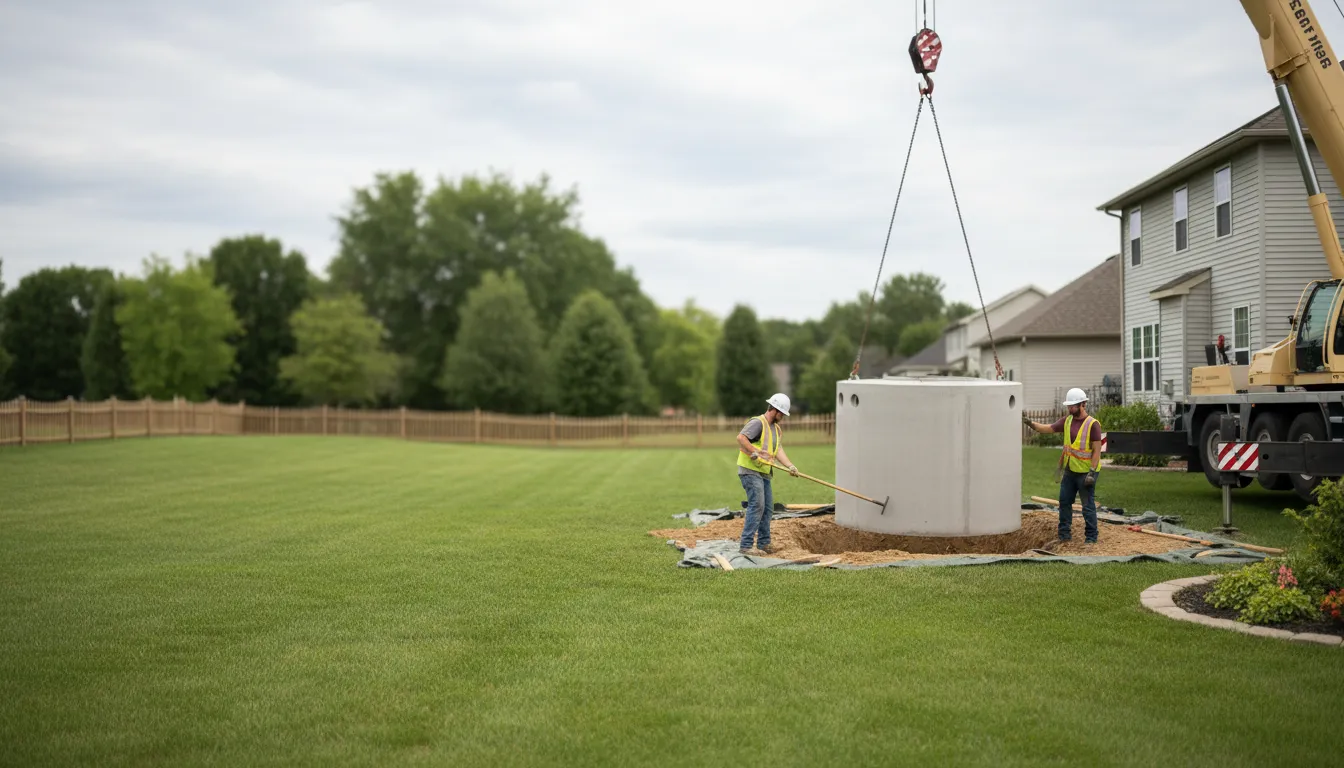
Find the Best Septic Tank Installation & Replacement Contractors for Your Business
No obligation • Fast responses • Nationwide coverage

Why you can trust Septic Spot
Septic Spot is a leading United States resource for understanding and comparing septic services. Our editors review providers using consistent criteria and verify key business details. Listings and scores are independent, and companies cannot pay to influence our content.
Search providers near you
Top Septic Tank Installation & Replacement Contractors in Lompoc, California Ranked
Installing or replacing a septic system is a significant home infrastructure project that requires careful planning and adherence to strict local regulations. For Lompoc homeowners, this process is governed by Santa Barbara County and state water quality boards to protect the unique environment of the Central Coast. This guide explains the key steps, costs, and regulatory requirements for septic system work in Lompoc, helping you understand what to expect and how to connect with qualified local professionals for your project.
E W Rice Construction
Santa Maria, CA
E W Rice Construction is a general engineering contractor based in Santa Maria, CA, specializing in excavation, demolition, grading, and utilities. They provide septic system and sewer line installation and repair services, including new system installations and repairs or replacements of existing systems. The company also offers water tank installation and solar well pump conversion services, allowing clients to switch between electric and solar energy for their well pumps.
Standard Septic Company
Santa Maria, CA
Standard Septic Company provides septic system design and installation services in Santa Maria, CA, and the surrounding Central Coast area. They serve residential and commercial properties across San Luis Obispo and Santa Barbara Counties. With nearly a decade of experience, the company offers expert consultation, soil suitability assessment, and custom septic system installations that comply with environmental standards. Standard Septic Company is led by a Registered Environmental Health Specialist and a licensed plumber, emphasizing environmental safety and long-term property protection.
Understanding the Regulatory Landscape in Lompoc
All septic system installation and replacement projects in Lompoc fall under the jurisdiction of the Santa Barbara County Environmental Health Services (EHS) department 1. They enforce regulations set by the Central Coast Regional Water Quality Control Board to ensure wastewater is treated safely and does not contaminate groundwater or local waterways. A critical first rule: if a public sewer line is available at your property line, connecting to it is mandatory; a new onsite wastewater system will not be permitted 1.
Before any design work begins, you must understand the local setback requirements. These are minimum distances your septic tank and leach field must be from property lines, wells, buildings, streams, and other sensitive areas. These setbacks are non-negotiable and defined by county guidelines, so they will heavily influence where your system can be placed on your lot 2.
The Permit Process: From Application to Approval
Obtaining a permit is the formal gateway to your project. You cannot legally begin construction without one from Santa Barbara County EHS. The approval process is detailed and requires specific documentation.
- Initial Application: You or your contractor will submit an application to the county, which includes a detailed site plan of your property.
- Engineering Design: A licensed engineer or qualified designer must create a system design that complies with all state and county codes. This design is submitted as part of the permit package.
- Soil Evaluation Report: The most crucial component for approval is a passing soil percolation test report (discussed in detail below). The permit will not be issued without proof that your soil can properly absorb and treat effluent.
- Review & Issuance: County staff will review all documents. Once everything is in order and fees are paid, the construction permit is issued.
The Critical Role of Soil Percolation Testing
A perc test, or percolation test, is an engineered assessment to determine if your soil can safely absorb and filter wastewater from a septic system. It is the definitive factor in whether a conventional leach field can be installed on your property.
- Who Performs It: The test must be conducted by a state-licensed engineer, geologist, or certified professional. A homeowner cannot perform their own official test for permit purposes 3.
- The Procedure: The professional will dig several test pits or bore holes in the proposed leach field area. These holes are saturated with water, and the rate at which the water level drops is meticulously measured over time.
- Passing Standards: For a conventional system in this region, soil typically must absorb water at a rate of 120 minutes per inch or faster. Furthermore, there must be at least 24 inches of unsaturated soil (clearance above the seasonal high groundwater table) to provide adequate treatment 4 5. If your soil fails this test, you will need to explore more expensive alternative system designs, such as mound systems or advanced treatment units.
Phases of Installation & Required Inspections
Once permitted, the physical installation follows a sequence of steps, each punctuated by a mandatory county inspection. You cannot proceed to the next phase until the previous one is signed off by an inspector 6.
- Site Evaluation Inspection: This is a preliminary check of the staked-out area before any major excavation begins, confirming the layout matches the approved plan.
- Open Trench/Tank Placement Inspection: After the tank hole and leach field trenches are dug, but before the tank is set and any pipes are covered, the inspector will visit. They verify the tank integrity, proper placement, and the installation of distribution pipes and gravel in the leach field 7.
- Final Inspection: Once the entire system is installed and covered, a final inspection ensures everything was built according to the permitted design and all state and local codes are met. Only after this final approval can the system be put into operation 8 9.
Find the perfect septic tank installation & replacement contractors for your needs
Get personalized recommendations and expert advice
Cost Breakdown for Septic System Projects
The total cost for a new septic system installation or full replacement in Lompoc can vary widely based on soil conditions, system type, and property accessibility. The figures below are typical ranges for a standard residential system 10.
- Permits & Design: $1,000 - $4,000. This covers the county permit fees and the cost for a professional to create the engineered system design.
- Percolation Test: $1,500 - $3,500. This is a separate fee paid to the licensed professional who performs the critical soil evaluation.
- Installation (Tank & Leach Field): $10,000 - $30,000+. This is the major cost for excavation, the septic tank itself, all piping, the leach field construction, backfill, and labor. Complex sites with poor soil, difficult access, or the need for an alternative onsite wastewater treatment system (OWTS) with pumps or advanced treatment components will push costs toward the higher end or even beyond this range 11 12.
Choosing the Right System for Your Property
Most homes in Lompoc with suitable soil will use a conventional gravity-fed system. This consists of a septic tank where solids settle and begin to break down, followed by a distribution box that sends liquid effluent (wastewater) through perforated pipes into a subsurface leach field for soil absorption 13.
If your soil fails the perc test or setbacks are challenging, an engineered alternative system will be necessary. These are more complex and costly but are designed to overcome site limitations. Common types include:
- Mound Systems: Where suitable native soil is shallow, a constructed sand mound is built to house the leach field.
- Pressure-Dosed Systems: Use a pump to evenly distribute effluent across the leach field, improving efficiency.
- Advanced Treatment Systems: Incorporate additional treatment stages (like aerobic treatment units) to purify effluent to a higher standard before dispersal, often used in environmentally sensitive areas 14 15.
Maintaining Your New Septic System
A properly installed system is just the beginning. Protecting your investment requires regular maintenance. This includes having the tank pumped every 3-5 years by a licensed service, conserving water to avoid overloading the leach field, and never flushing harmful chemicals or non-biodegradable materials. Proper maintenance is the best way to avoid premature failure and the need for another costly replacement down the line.
Frequently asked questions
Sources
Footnotes
-
Septic System Program - https://environmentalhealth.co.modoc.ca.us/nav/septic_system_program/index.php ↩ ↩2
-
California Septic Tank Requirements | Onsite Wastewater ... - https://www.ntotank.com/blog/california-septic-tank-requirements ↩
-
Residential Percolation Test - West Coast Sanitation - https://westcoastsanitationinc.com/residential-percolation-test/ ↩
-
Humboldt County LAMP and Technical Standards Manual - https://www.waterboards.ca.gov/northcoast/water_issues/programs/owts/190415/Humboldt%20Co.-OWTS-Regulations-and-Technical-Manual-PDF.pdf ↩
-
Perc Test for Septic System: A Complete Guide - https://landperc.com/perc-test-for-septic-system/ ↩
-
Onsite Wastewater Treatment Systems - https://www.waterboards.ca.gov/rwqcb3/board_info/agendas/2015/november/item19/item19_att2.pdf ↩
-
Septic System Installation 101: A Beginner's Guide - https://www.townesseptic.com/blog/septic-system-installation-beginners-guide ↩
-
Septic Systems Reports, Regulations, Guidance, and Manuals - EPA - https://www.epa.gov/septic/septic-systems-reports-regulations-guidance-and-manuals ↩
-
Onsite Wastewater Treatment Systems (OWTS) | Mono County California - https://www.monohealth.com/environmental-health/page/onsite-wastewater-treatment-systems-owts ↩
-
What are Septic Perc Rates, Septic Layouts and Septic Asbuilts? - https://freemansconstruction.com/what-are-septic-perc-rates-septic-layouts-septic-asbuilts/ ↩
-
Septic System Install Timeline | RCI Septic Service - https://www.rciseptic.com/complete-step-by-step-timeline-septic-system-installation-from-permit-to-finish ↩
-
Septic System Installation in Bend, Oregon - Black Sage Dirt Works - https://www.blacksagedirtworks.com/blog/septic-system-installation-in-bend-oregon ↩
-
On-Site Sewage Guidelines - OC Development Services - https://ocds.ocpublicworks.com/sites/ocpwocds/files/2024-10/On-Site%20Sewage%20Absorption%20System%20Guidelines.pdf ↩
-
Lompoc Wells & Septic: Permits, Costs, and Timelines - Dianna Zlaket - https://diannazlaket.com/blog/wells-and-septic-near-lompoc-permits-and-practicalities ↩
-
The Californian's Guide To Septic Tanks - https://cacciaplumbing.com/blog/california-septic-tank-guide/ ↩