Find the Best Septic Tank Installation & Replacement Contractors for Your Business
No obligation • Fast responses • Nationwide coverage

Why you can trust Septic Spot
Septic Spot is a leading United States resource for understanding and comparing septic services. Our editors review providers using consistent criteria and verify key business details. Listings and scores are independent, and companies cannot pay to influence our content.
Search providers near you
Top Septic Tank Installation & Replacement Contractors in Santa Clarita, California Ranked
Installing or replacing a septic system is a significant investment in your property's long-term functionality and environmental health. In areas of Santa Clarita not served by municipal sewer lines, a properly designed and permitted onsite wastewater treatment system is essential for managing household waste safely. This guide outlines the critical steps, local regulations, and key considerations for septic system installation and replacement, helping you understand the process and connect with qualified local professionals for your project.
Advanced Sanitation - Septic Tank Pumping, Installation & Repair Ventura County
3379 Somis Rd Unit E, Somis, CA 93066
Advanced Sanitation - Septic Tank Pumping, Installation & Repair Ventura County provides septic system services in Los Angeles, CA, and surrounding areas including Ventura County and nearby cities. They offer septic tank pumping, installation, inspection, and repairs, as well as grease trap maintenance. The company uses modern equipment such as advanced camera technology for system inspections and works with registered geological engineers for septic system design and installation. With over 30 years of experience, Advanced Sanitation serves both residential and commercial clients and offers flexible hours to accommodate business schedules.
Sewer Man Septic Tank Pumping
16065 Foothill Blvd # B, Sylmar, CA 91342
Sewer Man Septic Tank Pumping provides septic tank pumping, cleaning, inspection, repair, and installation services in Los Angeles, CA. They use specialized equipment such as vacuum trucks and high-pressure water jets to maintain and clean septic systems, helping prevent backups and slow drainage. The company offers emergency septic pumping services for urgent needs and serves a wide range of nearby communities. Sewer Man Septic Tank Pumping is experienced in handling various septic system maintenance tasks to support property owners in the Los Angeles area.
Michael Penta Septic Tank Pumping
Los Angeles, CA
Michael Penta Septic Tank Pumping provides a range of septic services in Los Angeles, CA, including septic tank pumping, installation, inspection, and repair. The company also handles drain field repairs, sewage ejection pump services, and sewer line replacements. Their expertise includes advanced capabilities such as camera inspections for leaks and cracks, soil analysis for leach line repair, and installation of micro septic systems that treat wastewater to a higher quality. They ensure compliance with local regulations and offer comprehensive maintenance to extend the life of septic systems.
Conejo Bros Plumbing
1386 Del Verde Ct, Thousand Oaks, CA 91320
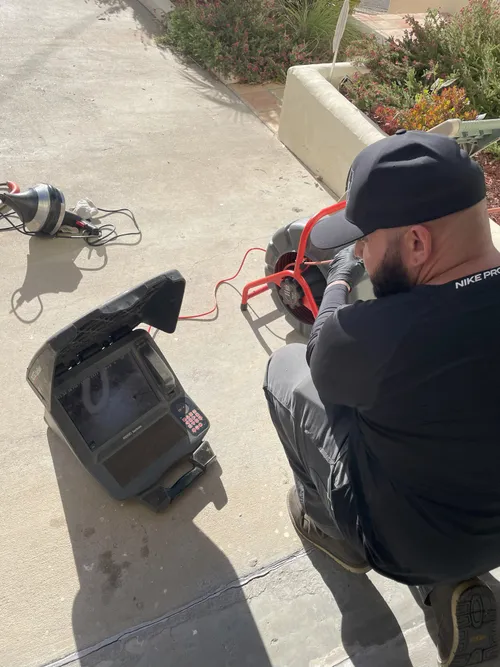
Conejo Bros Plumbing is a septic tank and plumbing service provider based in Oxnard, CA. They offer a wide range of services including septic tank inspection, pumping, repair, and replacement, as well as sewer mainline inspection and trenchless sewer and drain repair. Their capabilities include advanced trenchless pipe relining techniques that allow for pipe repairs without extensive digging, preserving property landscapes. Serving both residential and commercial clients throughout Ventura County and Conejo Valley, Conejo Bros Plumbing also provides 24/7 support for clearing blockages and other urgent plumbing needs.

Brothers Plumbing And Septic
42552 3rd St E, Lancaster, CA 93535
Brothers Plumbing And Septic is a family-owned business with over 20 years of experience serving Los Angeles, CA, and surrounding areas. They offer a range of septic system services including inspections, maintenance, repairs, and full replacements. The company also handles general plumbing issues and commercial plumbing needs. Their expertise includes diagnosing septic tank problems and providing reliable repairs to protect properties. Brothers Plumbing And Septic provides 24/7 emergency plumbing services to address urgent issues promptly.
Understanding Local Requirements and Permits
In Santa Clarita and the surrounding unincorporated areas of Los Angeles County, all septic system installations are regulated by the Los Angeles County Public Health Department, Environmental Health Division 1. The first and most crucial step is determining if your property is even eligible for a new or replacement septic system. If a public sewer line is available within 200-300 feet of your property line, you may be legally required to connect to it instead of installing a private wastewater system.
Assuming a sewer connection is not mandated, the process begins with obtaining the necessary permits. You cannot legally begin any excavation or construction without approval from the county. The permitting process ensures that the proposed septic tank setup protects public health, groundwater, and the local environment. Permit fees can vary significantly but often amount to several thousand dollars as part of the overall project cost.
The Critical Site Evaluation and Soil Testing
Before any design work can be finalized, a qualified professional-typically a licensed engineer or soil consultant-must conduct a thorough site evaluation. This is not a mere formality; it is the foundation of a functional system. The core of this evaluation is the soil percolation (perc) test.
What is a Percolation Test? A perc test determines the soil's ability to absorb and filter liquid effluent from the septic tank. The consultant will dig test pits to assess soil structure, depth to bedrock, and seasonal high groundwater level. The goal is to measure a percolation rate between 1 and 12 inches per hour 2. Soil that drains too quickly won't adequately treat wastewater, while soil that drains too slowly will cause the drain field to fail and back up.
The results of this test directly influence the system's design, including the size of the leach field and the type of system required (e.g., conventional, mound, or alternative technology).
Designing Your Septic System
With the soil data in hand, an engineer will create detailed design plans for your onsite wastewater treatment system. These plans must be submitted to the Los Angeles County Public Health Department for review and approval. The design will account for several key factors:
- System Size: Based on the number of bedrooms in your home, which estimates daily wastewater flow.
- Tank Specifications: The size (e.g., 1,000, 1,500 gallons) and material (concrete is common) of the septic tank.
- Leach Field Layout: The design, dimensions, and placement of the drain field based on soil perc rates.
- Setbacks: California and county codes mandate minimum distances from the tank and leach field to property lines, wells, buildings, streams, and other features. Common setbacks are 5-10 feet from buildings and 50-100 feet from water wells 3.
Find the perfect septic tank installation & replacement contractors for your needs
Get personalized recommendations and expert advice
The Installation Process: A Step-by-Step Overview
Once permits are secured and plans are stamped "approved," the physical septic system installation can begin. This process follows a structured timeline to ensure compliance and quality 4.
- Site Preparation: The installation area is cleared and marked according to the approved plans. Heavy equipment is brought in for excavation.
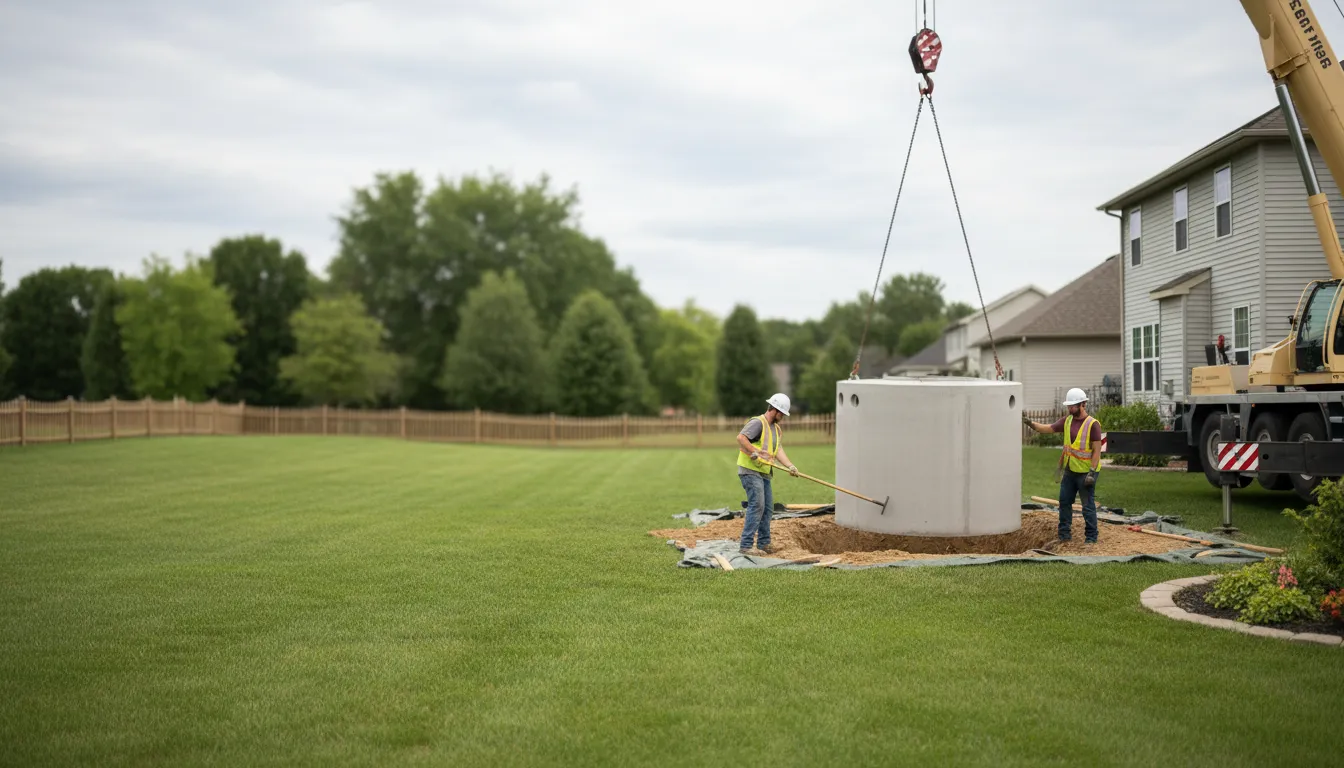
- Tank Placement: The septic tank is carefully lowered into the excavated hole. Tanks must be level and set at the proper depth. Connections for the inlet pipe (from the house) and outlet pipe (to the drain field) are installed.
- Leach Field Construction: Trenches are dug for the distribution pipes and gravel bed. Perforated pipes are laid, connected, and covered with more gravel and a protective barrier fabric.
- Critical Inspections: This is a vital phase. County inspectors will typically visit at key stages:
- Open Trench Inspection: Before the tank or leach field trenches are backfilled, an inspector will check for proper placement, materials, pipe slopes, and depths 5 6.
- Backfilling and Final Grading: After passing inspections, the tank and trenches are carefully backfilled with soil. The site is graded to direct surface water away from the system area.
- Final Inspection: A final inspection is conducted to ensure the entire system is complete, functional, and matches the approved plans. Once passed, the system can be put into service 7 8.
Cost Considerations for Installation and Replacement
The total cost for a new septic system installation or full septic tank replacement in Santa Clarita can vary widely based on site-specific conditions. For a standard residential system, homeowners can generally expect a range between $3,000 and $10,000 or more 9.
Several factors drive the final price:
- System Type & Size: A larger home requires a larger tank and drain field. A standard 1,000-gallon concrete tank may cost $500-$900 for the tank itself, with larger capacities costing more 10 11.
- Soil and Site Conditions: Difficult soil (rocky, clay-heavy, or with a high water table) or challenging topography (steep slopes) can dramatically increase excavation costs and may require a more expensive, engineered system.
- Permit and Design Fees: These are separate from construction costs and cover county permits and professional engineering services.
- System Technology: A conventional gravity-fed system is typically the most affordable. If site conditions are poor, alternative systems like mounds, drip irrigation, or aerobic treatment units (ATUs) will be necessary at a higher cost.
Maintaining Your New Septic System
A properly installed system is just the beginning. Protecting your investment requires regular maintenance. This includes pumping the septic tank every 3-5 years (depending on usage), conserving water to avoid overloading the drain field, and avoiding flushing harmful chemicals or non-biodegradable materials. Proper maintenance is the most effective way to extend the life of your leach field and avoid premature septic system replacement.
Frequently asked questions
Sources
Footnotes
-
Onsite Wastewater Treatment System in Los Angeles County - http://www.publichealth.lacounty.gov/eh/business/septic-systems.htm ↩
-
The Californian's Guide To Septic Tanks - https://cacciaplumbing.com/blog/california-septic-tank-guide/ ↩
-
ONSITE SYSTEMS MANUAL - California Water Boards - https://www.waterboards.ca.gov/sanfranciscobay/board_info/agendas/2016/January/SantaClaraOWTS/SCC_OWTS_B_Onsite_Systems_Manual.pdf ↩
-
Septic System Install Timeline | RCI Septic Service - https://www.rciseptic.com/complete-step-by-step-timeline-septic-system-installation-from-permit-to-finish ↩
-
California Septic Tank Requirements | Onsite Wastewater ... - https://www.ntotank.com/blog/california-septic-tank-requirements ↩
-
Septic Tank Installation Process: A Step-by-Step Guide - https://tidytanksepticservice.com/blog/understanding-the-septic-tank-installation-process/ ↩
-
The Ultimate Guide to Septic System Installation Process - https://septic911.com/septic-system-installation-process/ ↩
-
Building a New Home in Riverside County? Septic System Installation Guide - https://www.lanikseptic.com/septic-system-installation-guide/ ↩
-
Septic Tank Replacement and Drain Field Cost in California - https://www.lanikseptic.com/how-much-does-it-cost-to-replace-a-septic-tank-and-drain-field-in-california/ ↩
-
Residential Septic Tank Pricing | Homeowner's Guide to Costs - https://www.ntotank.com/blog/residential-septic-tank-pricing ↩
-
Septic System Installation Checklist - https://www.mecindustries.com/morse-engineering-and-construction-industries/septic-system-installation-checklist ↩