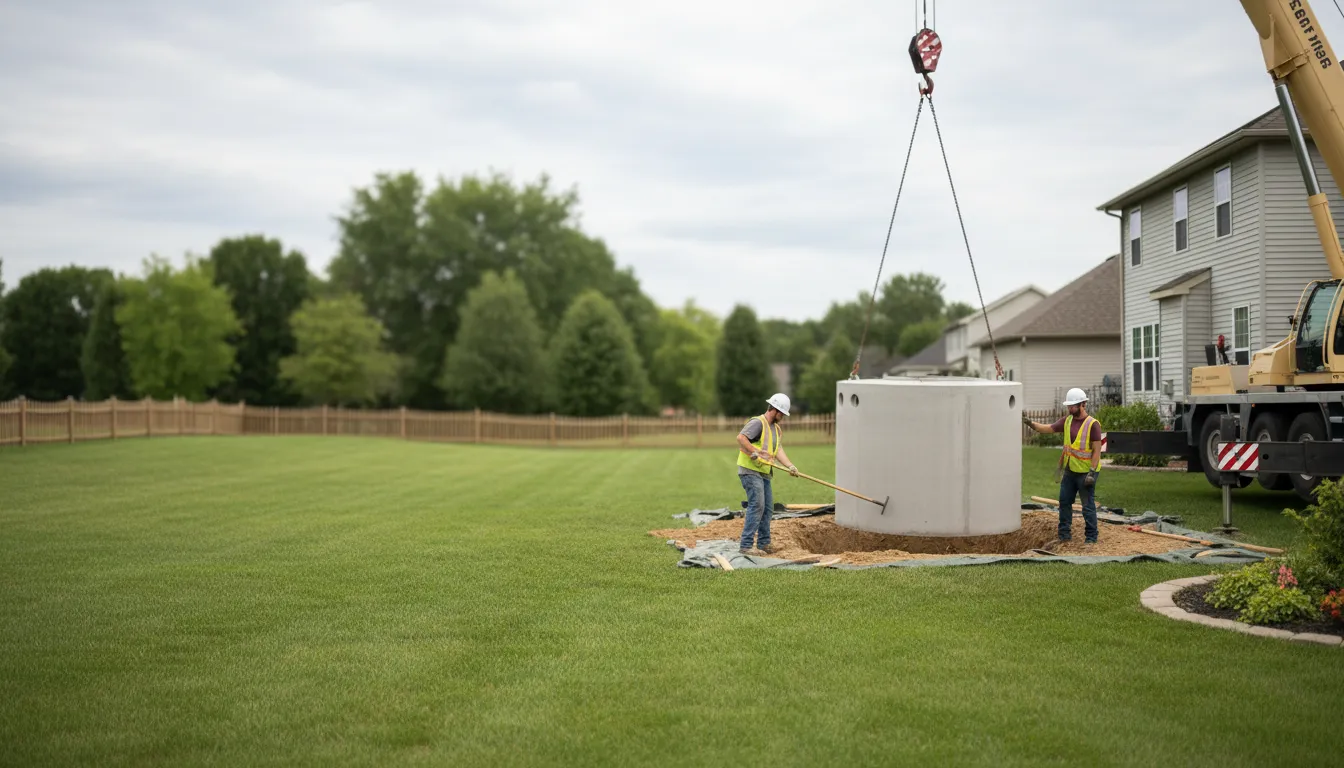
Find the Best Septic Tank Installation & Replacement Contractors for Your Business
No obligation • Fast responses • Nationwide coverage

Why you can trust Septic Spot
Septic Spot is a leading United States resource for understanding and comparing septic services. Our editors review providers using consistent criteria and verify key business details. Listings and scores are independent, and companies cannot pay to influence our content.
Search providers near you
Top Septic Tank Installation & Replacement Contractors in Santee, California Ranked
Installing or replacing a septic system is a significant home infrastructure project that ensures the safe and effective treatment of household wastewater. In Santee, this process is regulated by the County of San Diego to protect public health and the local environment. This guide explains the key steps, regulations, and costs involved, helping you understand what to expect and how to connect with qualified local professionals for your project.
Anytime Septic Service
8867 Gardena Rd, Lakeside, CA 92040
Anytime Septic Service is a family-owned company serving San Diego, CA, with over 55 years of experience in septic system care. They provide septic tank pumping, inspection, repairs, and installation across multiple local communities including El Cajon, Lakeside, La Mesa, and others. The team uses modern techniques and equipment to ensure septic systems function properly, offering thorough visual inspections and detailed explanations of their findings. They also provide after-hours emergency service for urgent septic needs.
Solid State Septic
Escondido, CA
Solid State Septic is a septic system repair and installation company serving Escondido, CA. They provide septic solutions for both homes and businesses throughout San Diego County. Their services include new septic tank installations and repairs, focusing on meeting community needs with reliable septic system care.
North County Backhoe Service
Murrieta, CA
North County Backhoe Service is a septic system repair and installation company serving Murrieta, CA, and surrounding areas. With 50 years of experience, they handle septic tank repairs and installations, addressing issues such as sewage backups and clogs. The company is known for its knowledgeable team and prompt response to septic problems.

Center Septic
San Diego, CA
Center Septic is a family-owned septic service provider based in San Diego, CA, serving North San Diego County including Valley Center and surrounding areas. The company offers septic tank pumping, cleaning, inspections, repairs, new system installations, and drain field diagnosis and repairs. Center Septic holds a C42 license through the California State Contractor License Board and has been operating since 1995, providing a range of septic system services with trained and knowledgeable staff.
USA Septic
1317 Simpson Way Suite B, Escondido, CA 92029
USA Septic is a septic tank pumping, inspection, repair, and installation company serving San Diego, CA. They provide services including septic system construction, pumping, drain cleaning, and certifications. Their expertise covers drain field repair and replacement, helping maintain and protect septic systems. USA Septic offers guidance on septic system ownership to help customers care for their systems properly.
Understanding Septic System Basics
A septic system, or onsite wastewater treatment system (OWTS), is a self-contained, underground system for homes not connected to a municipal sewer line. It consists of a septic tank, where solids settle and begin to decompose, and a leach field (or drain field), where the clarified liquid effluent is dispersed into the soil for final treatment. Proper installation is critical for long-term functionality, preventing backups, environmental contamination, and costly repairs.
In Santee, all new installations and replacements fall under the jurisdiction of the County of San Diego Department of Environmental Health and Quality (DEHQ). Their regulations ensure systems are designed and built to handle Santee's specific soil conditions and environmental protections.
The Permit Process: Your First Step
You cannot begin any installation or replacement work without the proper permits. The DEHQ mandates a permit for every new or replacement septic system. The process is designed to verify that your property and proposed system meet all health and safety standards.
The permit application requires several key components:
- Site Evaluation Report: This includes results from mandatory soil profile observations (test pits) and percolation tests conducted by a qualified professional.
- Engineered Design Plans: Plans must be stamped by a qualified professional (like a civil engineer or geologist) and show the layout of the tank, primary leach field, and a 100% reserve dispersal area 1 2.
- System Specifications: The septic tank must have IAPMO (International Association of Plumbing and Mechanical Officials) approval and be deemed acceptable by the DEHQ 3.
Navigating this process is where an experienced local installer is invaluable, as they understand the specific requirements and can help prepare and submit the necessary documentation.
Critical Site Evaluation: Soil and Percolation Testing
The feasibility and design of your septic system depend entirely on your property's soil conditions. A proper site evaluation is non-negotiable.
- Test Pits: A qualified professional will dig test holes, typically 8-12 inches in diameter, to the proposed depth of the leach field trenches. They examine the soil layers (texture, structure, and color) to determine the absorption rate and identify any limiting layers like bedrock or a high water table.
- Percolation Test: This test measures how quickly water drains through the soil. The results directly dictate the size of the leach field required-slower-draining soils need a larger field 4.
- Depth Requirements: Testing often must extend 5 or more feet below the proposed trench bottom to verify adequate separation from groundwater or restrictive layers, a key factor in preventing contamination 5.
This evaluation ensures the system is sized correctly for your household and the local geology, preventing premature failure.
Design Options for Santee Properties
Once the site is evaluated, your designer will recommend a system type. The standard options in the region include:
- Conventional Rock/Pipe System: A traditional design using a perforated pipe surrounded by gravel in a trench.
- Pipe-less Chamber System: Uses interconnected plastic chambers that provide a large area for effluent dispersal, often requiring less gravel.
- Supplemental Treatment Systems: For sites with challenging soil, high groundwater, or small lots, advanced treatment units may be required to further treat effluent before it reaches the leach field 6.
Your design plans must also account for strict setback requirements. For example, septic tanks and leach fields must be at least 100 feet from natural waterways, streams, and standing water.
Find the perfect septic tank installation & replacement contractors for your needs
Get personalized recommendations and expert advice
The Installation & Inspection Timeline
A proper installation follows a sequence of inspections by the DEHQ to ensure compliance with the approved plans.
- Pre-construction Meeting: Often required to review the design on-site with the installer and inspector 7.
- Construction Inspection: After the tank and distribution lines are installed but before they are backfilled with soil. The inspector verifies proper placement, materials, and construction techniques 8.
- Final Approval: A final inspection is conducted once the entire system is installed and the site is restored. Only after receiving final approval from the DEHQ can the system be put into use or a new home be occupied 9.
Understanding Costs for Installation & Replacement
The total cost for a septic system in Santee can vary widely based on site conditions, system type, and property specifics. For a standard residential system (1,000-5,000 gallons), installation typically ranges from $3,000 to over $10,000. This estimate usually covers the tank, leach field, and labor.
It's crucial to budget for additional required expenses:
- Permit Fees: County permit fees can range from approximately $320 to $1,880, depending on the project's scope 10 11.
- Engineering & Testing: The mandatory site evaluation, percolation testing, and design work by a qualified professional are separate costs that are essential for permit approval.
- Replacement Considerations: If you are replacing an old system, a contractor must first evaluate the existing system to determine if it is damaged, undersized, or doesn't meet current setback rules, which can affect the project scope and cost 12 13.
Choosing a Qualified Professional
Given the technical and regulatory complexity, selecting the right contractor is paramount. Look for a licensed professional with extensive experience installing systems specifically in San Diego County. They should be familiar with DEHQ inspectors, local soil conditions, and the latest approved technologies. A reputable installer will handle the permit process, provide a detailed contract, and ensure every phase passes inspection.
Maintaining Your New System
After a successful installation, protect your investment with proper maintenance. This includes regular pumping of the tank (typically every 3-5 years), conserving water, and avoiding flushing harmful chemicals or non-biodegradable materials. Proper care extends the life of your system for decades.
Frequently asked questions
Sources
Footnotes
-
Design Manual for Onsite Wastewater Treatment Systems - https://www.sandiegocounty.gov/content/dam/sdc/pds/ceqa/Soitec-Documents/Final-EIR-Files/references/rtcref/ch3.1.9/2014-12-19_DEH2010.pdf ↩
-
Septic System (Onsite Wastewater Treatment Systems, OWTS ... - https://www.waterboards.ca.gov/centralcoast/water_issues/programs/septics/permits.html ↩
-
California Septic Tank Requirements | Onsite Wastewater Treatment Systems - https://www.ntotank.com/blog/california-septic-tank-requirements ↩
-
Santa Clara County Onsite Systems Manual - California Water Boards - https://www.waterboards.ca.gov/sanfranciscobay/board_info/agendas/2016/January/SantaClaraOWTS/SCC_OWTS_B_Onsite_Systems_Manual.pdf ↩
-
The SoCal Guide to Septic Tank Installation: What Every Homeowner Needs to Know - https://www.lanikseptic.com/socal-guide-septic-tank-installation/ ↩
-
Septic Systems - County of San Diego - https://www.sandiegocounty.gov/content/sdc/deh/lwqd/lu_septic_systems.html ↩
-
Chapter 6.4 SEWAGE STANDARDS - General Code - https://www.codepublishing.com/CA/SolanoCounty/html/SolanoCounty0604.html ↩
-
Percolation Testing and Reporting Standards for Onsite ... - https://www.sbcounty.gov/uploads/dph/EHS/Programs/WaterAndWaste/percolation-testing-and-reporting-standards-for-onsite-wastewater-treatment-systems.pdf ↩
-
County of Riverside Local Agency Management Program - https://www.waterboards.ca.gov/rwqcb7/board_decisions/adopted_orders/orders/2024/2024_0039riv_lamp_attach_a.pdf ↩
-
Septic Tank Replacement and Drain Field Cost in California - https://www.lanikseptic.com/how-much-does-it-cost-to-replace-a-septic-tank-and-drain-field-in-california/ ↩
-
Breaking down expenses: How much does a septic system cost? - https://point.com/blog/how-much-does-a-septic-system-cost ↩
-
onsite-wastewater-treatment-system-requirements-procedures. ... - http://www.publichealth.lacounty.gov/eh/docs/permit/onsite-wastewater-treatment-system-requirements-procedures.pdf ↩
-
LCP-3-SCO-22-0058-2 (SEPTIC SYSTEMS ... - CA.gov - https://documents.coastal.ca.gov/reports/2023/2/F15b/F15b-2-2023-exhibits.pdf ↩