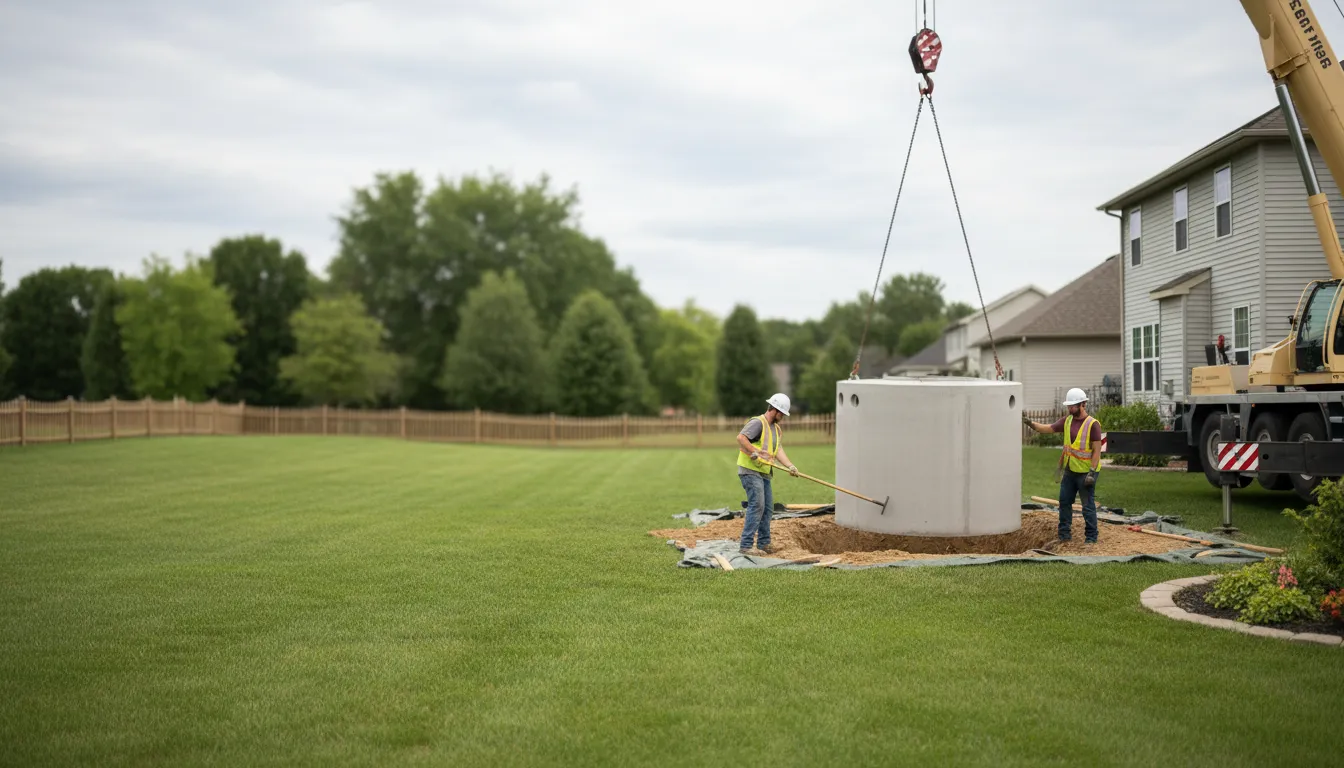
Find the Best Septic Tank Installation & Replacement Contractors for Your Business
No obligation • Fast responses • Nationwide coverage

Why you can trust Septic Spot
Septic Spot is a leading United States resource for understanding and comparing septic services. Our editors review providers using consistent criteria and verify key business details. Listings and scores are independent, and companies cannot pay to influence our content.
Search providers near you
Top Septic Tank Installation & Replacement Contractors in Vallejo, California Ranked
Installing or replacing a septic system is a significant home infrastructure project that requires careful planning, professional expertise, and strict adherence to local codes. In Vallejo, this process is overseen by Solano County Environmental Health to ensure public safety and environmental protection. This guide explains the key steps, regulations, and considerations for septic system work in the area, helping you understand what to expect and how to connect with qualified local professionals for your installation or replacement needs.
Howie Excavating & Grading
49 Ridgewood Dr, San Rafael, CA 94901
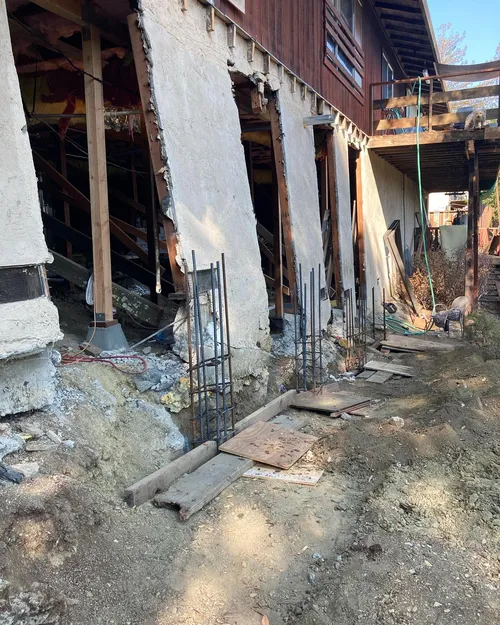
Howie Excavating & Grading is a septic system repair and installation company serving Oakland, CA. They offer a range of services including septic tank installation, septic system repair, sewer line repair and replacement, as well as grading and drainage solutions. Their capabilities also extend to underground utility installation, trenching, and concrete foundation work. The company operates from locations in San Rafael and Santa Rosa, providing services throughout the Oakland area during regular business hours.
Delatorre Septic and Trucking LLC
7000 Leisure Town Rd, Vacaville, CA 95688
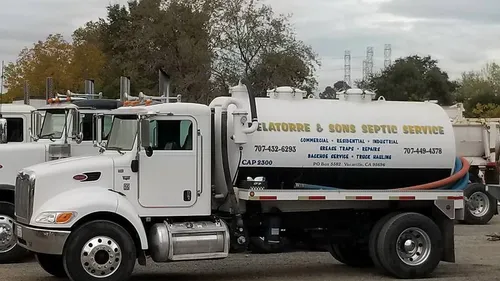
Delatorre Septic and Trucking LLC is a family-owned business providing septic system services in Fairfield, CA, and surrounding areas including Napa, Yolo, and Solano Counties. They offer septic tank pumping, inspection, repair, and installation for both residential and commercial customers. Established in 1992 initially as a trucking company, they have expanded to specialize in septic services and provide 24/7 emergency support. Their trucks can hold up to 2,600 gallons, enabling efficient waste removal for septic systems.
Understanding Solano County's Regulatory Framework
All septic system installations and replacements in Vallejo must comply with regulations set by the Solano County Environmental Health Division. These rules are based on the California Plumbing Code and the county's own Chapter 6.4 Sewage Standards 1. The primary goal is to ensure that wastewater is treated and disposed of safely, preventing contamination of groundwater and soil. Before any digging begins, a property owner must secure the necessary permits, which are only issued after a rigorous site evaluation and plan approval process 2.
The county mandates specific design criteria. For instance, a standard system requires a minimum of three feet of suitable soil beneath the proposed leach field dispersal trenches 3. Furthermore, there must be a 10-foot separation from impervious soil layers or bedrock. Properties with slopes exceeding 20% may require an additional geotechnical report, adding another layer of review to the process 4.
The Critical First Step: Site Evaluation and Percolation Testing
The feasibility and design of your septic system hinge entirely on the conditions of your property. A professional site evaluation is the non-negotiable starting point.
- Soil Profile Analysis: A qualified professional, such as a soil engineer or geologist, will excavate test pits to examine the soil layers (profile). This determines the soil type, depth to groundwater or restrictive layers, and overall absorption capacity 5.
- Percolation Test: Commonly called a "perc test," this measures how quickly water drains through the soil. In Solano County, the acceptable absorption rate typically falls between 1 and 12 inches per hour 6. A minimum of two test holes are required in the proposed leach field area, and tests cannot be performed in fill (imported) soil 7. The results of this test directly dictate the size and type of system your property can support.
Designing Your Septic System
With the site evaluation data in hand, a system can be designed. There are two primary paths:
- Conventional Gravity System: This is the most common and often most cost-effective type, suitable for properties with ideal soil conditions, sufficient space, and gentle slopes. Wastewater flows by gravity from the home to the septic tank and then out to a subsurface leach field.
- Engineered or Alternative System: For properties with high groundwater, poor soil, limited space, or steep slopes, an engineered system is necessary. These systems use advanced technology like pumps, sand filters, or aerobic treatment units (ATUs) to treat wastewater to a higher standard before dispersal. They are more complex and require specific maintenance.
The design plan, including detailed drawings and specifications, must be submitted to Solano County Environmental Health for review and approval before a construction permit is issued 8 9.
The Installation Process: Step-by-Step
Once permitted, the physical installation follows a defined sequence, performed by a licensed contractor (typically holding a Class A or C-42 license).
- Excavation: The septic tank and leach field areas are carefully excavated according to the approved plans.
- Tank Placement: The septic tank (often concrete or plastic) is set in place. Tanks must be watertight and may include compartments or effluent filters.
- Leach Field Construction: Trenches are dug and lined with gravel or pre-manufactured chambers. Perforated pipes are laid to distribute the effluent from the tank throughout the field.
- System Integration: All piping from the house to the tank and from the tank to the distribution box and leach field is connected.
- Backfilling: Once inspections are passed, the system is carefully backfilled with soil.
Find the perfect septic tank installation & replacement contractors for your needs
Get personalized recommendations and expert advice
Mandatory Inspections: Don't Cover Anything Up
Solano County requires critical inspections at various stages of construction. It is illegal to cover any component before it has been inspected and approved.
- Tank Inspection: Before the tank is buried, an inspector will check its placement, structural integrity, and connections, and often require a watertightness test.
- Leach Field Inspection: The excavated trenches, along with the gravel, chambers, and distribution pipes, must be inspected before any rock or soil cover is placed. This verifies depth, materials, and construction quality.
- Final Inspection: After the system is fully installed but before the landscape is fully restored, a final inspection ensures everything is operational and meets the approved design. Passing this inspection leads to the county's final approval of the system 10.
Understanding Costs for Septic System Installation
The total cost for a new septic system in Vallejo varies widely based on system type and site conditions. It's important to budget for both hard construction costs and soft costs.
- Conventional Gravity System: For a standard residential installation on a favorable site, homeowners can expect costs generally ranging from $10,000 to $20,000 or more 11.
- Engineered/Alternative System: Due to advanced components and complex design, these systems often range from $20,000 to over $30,000 12.
- Additional Pre-Construction Costs: The necessary site evaluation, percolation testing, engineering design, and permit fees are separate expenses that can add several thousand dollars to the total project cost.
Replacing an Existing Septic System
The process for replacing a failing or outdated system is similar to a new installation but begins with an assessment of why the old system failed. Often, replacement is required because the original leach field has become clogged and can no longer absorb effluent. In many cases, a new leach field must be constructed in a different location on the property, following all the same permit and inspection procedures as a brand-new system. Upgrading to a more advanced system type during a replacement may be necessary if local codes have changed or if soil conditions have deteriorated.
Choosing a Licensed Professional
This is not a DIY project. Selecting the right contractor is crucial. Ensure they are licensed by the state of California, have extensive experience with Solano County's specific regulations, and can provide references for similar projects in the area. A reputable professional will handle the permit application, coordinate inspections, and ensure the entire installation meets code, protecting your investment and your property's value.
Disclaimer: Regulations, procedures, and costs can change. Always confirm current requirements directly with the Solano County Environmental Health Division before beginning any project.
Frequently asked questions
Sources
Footnotes
-
Chapter 6.4 SEWAGE STANDARDS - https://www.codepublishing.com/CA/SolanoCounty/html/SolanoCounty0604.html ↩
-
Frequent Questions on Septic Systems | US EPA - https://www.epa.gov/septic/frequent-questions-septic-systems ↩
-
private sewage disposal systems - https://www.waterboards.ca.gov/water_issues/programs/owts/docs/appdxk_ch7ta1401.pdf ↩
-
How to Know if You Need a Septic System Permit - Pippin Home Designs - https://www.pippinhomedesigns.com/septic-system-permit/ ↩
-
The Californian's Guide To Septic Tanks - https://cacciaplumbing.com/blog/california-septic-tank-guide/ ↩
-
Percolation Test Requirements | Kern County, CA - https://www.kernpublichealth.com/permitting-compliance/waste/septic-systems/percolation-test-requirements ↩
-
On-Site Sewage Guidelines - OC Development Services - https://ocds.ocpublicworks.com/sites/ocpwocds/files/2021-06/On-Site%20Sewage%20Guidelines.pdf ↩
-
Chapter 6.4 SEWAGE STANDARDS - https://www.codepublishing.com/CA/SolanoCounty/html/SolanoCounty0604.html ↩
-
Design - TBC SEPTIC - https://tbcseptic.com/design/ ↩
-
Required Inspections during Installation of OWTS - Yolo County - https://www.yolocounty.gov/government/general-government-departments/community-services/environmental-health-division/land-use-programs/onsite-wastewater-treatment-system-program/owts-septic-systems-inspections ↩
-
California Septic Tank Requirements | Onsite Wastewater ... - https://www.ntotank.com/blog/california-septic-tank-requirements ↩
-
How Much Does a Septic System Cost? [2026 Data] - https://www.angi.com/articles/what-does-it-cost-install-septic-system.htm ↩