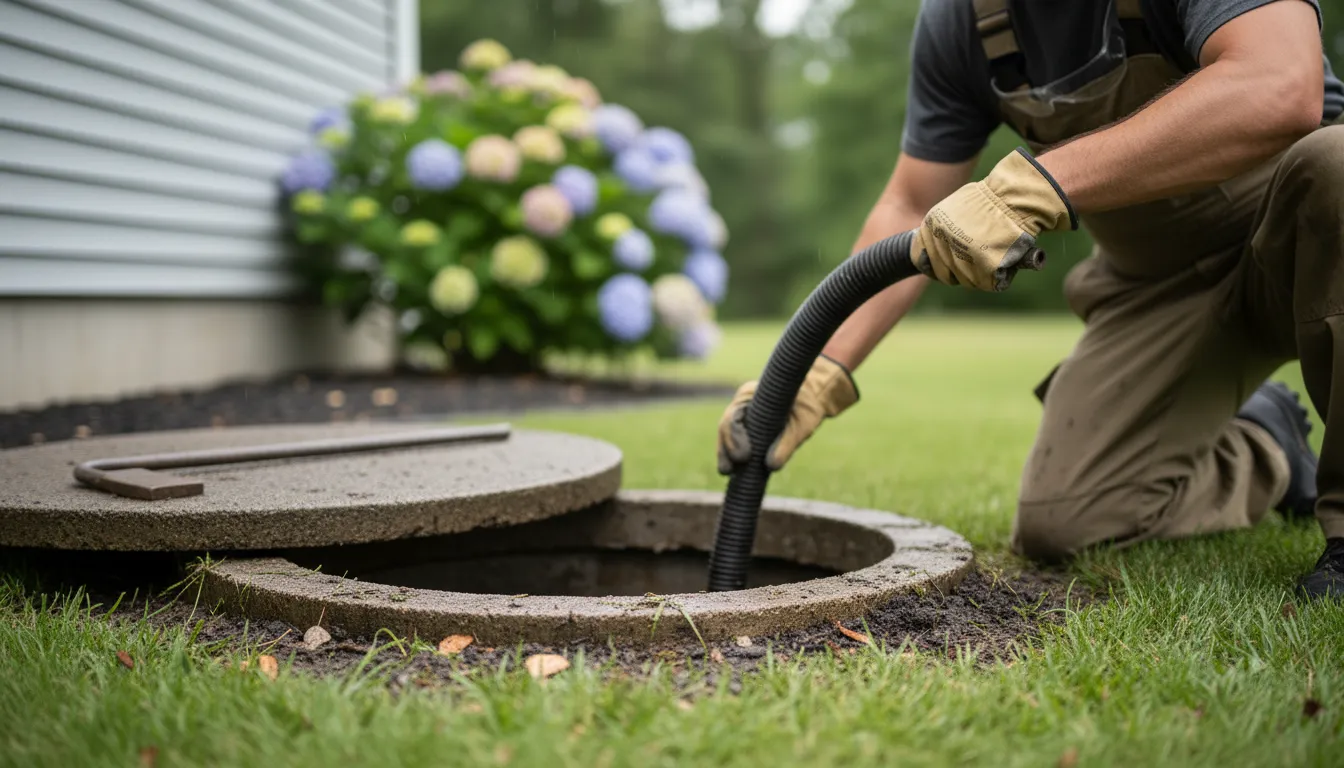
Find the Best Septic Tank Pumping Contractors for Your Business
No obligation • Fast responses • Nationwide coverage

Why you can trust Septic Spot
Septic Spot is a leading United States resource for understanding and comparing septic services. Our editors review providers using consistent criteria and verify key business details. Listings and scores are independent, and companies cannot pay to influence our content.
Search providers near you
Top Septic Tank Pumping Contractors in Durham, North Carolina Ranked
Maintaining your septic system through regular pumping is a critical responsibility for any homeowner not connected to a municipal sewer line. This essential service removes accumulated solids from your tank, preventing system backups, costly repairs, and environmental contamination. For Durham residents, understanding local regulations and finding a reliable professional for septic maintenance is key to protecting your property, your health, and our local waterways.

Advantage Home Inspection
4020 Wake Forest Rd, Raleigh, NC 27609
Advantage Home Inspection is based in Raleigh, NC, offering a range of inspection services including septic tank inspection and pumping. They provide detailed septic inspections that include line scoping when accessible, along with other home and commercial inspection services such as foundation, framing, termite, radon, and sewer scope inspections. Their service area covers a 45-mile radius from their main office, and they cater to both residential and commercial properties.
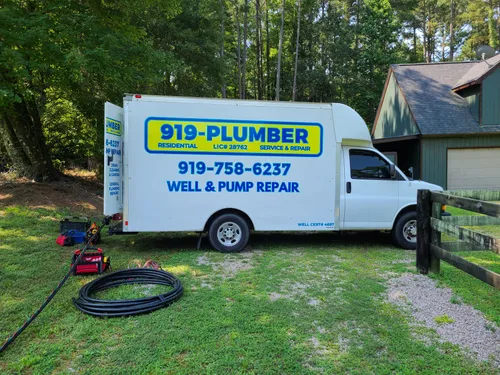
919-Plumber
2228 Davistown Rd, Wendell, NC 27591
919-Plumber is a plumbing company serving Raleigh, NC, and surrounding areas. They provide a range of plumbing services including septic tank pumping, septic pump repair, well pump repair, and full-service plumbing installations and repairs. The company has been in business since 2007 and offers specialized capabilities such as sewer camera inspections and septic alarms. Their service area includes several nearby communities such as Wendell, Garner, and Knightdale.

Quality Service Today Plumbing & Septic
5412 US-70 suit A, Durham, NC 27705
Quality Service Today Plumbing & Septic provides a wide range of plumbing and septic services in Durham, NC. They specialize in septic tank pumping, septic system repair, and drain field repair or replacement, along with general plumbing, water heaters, well pumps, and water filtration. The company serves residential clients across Central North Carolina, including Durham and nearby communities. They are equipped to handle unique plumbing setups and offer 24/7 emergency plumbing services. Their team focuses on practical, effective solutions tailored to each home's specific needs.
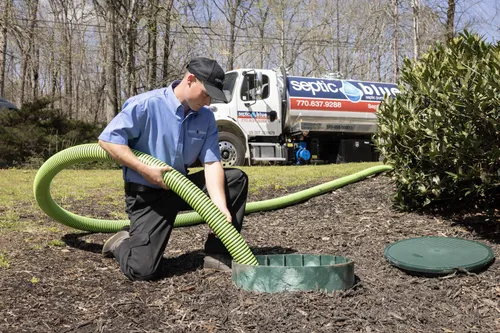
Septic Blue of Burlington
1803 N Jim Minor Rd, Haw River, NC 27258
Septic Blue of Burlington provides septic tank pumping, inspection, repair, and installation services in Greensboro, NC. They offer emergency septic pumping and routine maintenance to help prevent system failures and protect property and local ecosystems. Their services include thorough septic cleaning that removes sludge and buildup to maintain system efficiency. Septic Blue emphasizes eco-friendly practices and personalized maintenance schedules based on household size and water usage.

Quality Service Today Plumbing & Septic
831 S 8th St, Mebane, NC 27302
Quality Service Today Plumbing & Septic provides plumbing and septic services in Greensboro, NC, and the surrounding Central North Carolina area. They handle a variety of home plumbing needs, including septic tank pumping, septic system repairs, and drain field replacements. The company is experienced in working with unique home plumbing setups, such as private wells and complex drainage systems, tailoring solutions to each property's specific requirements. They also offer general plumbing repairs, water heater installation, drain clearing, well pump services, and water filtration. Quality Service Today serves multiple communities including Durham, Cary, and Mebane, and provides 24/7 emergency plumbing support.
Why Regular Septic Maintenance is Non-Negotiable in Durham
A septic system is a private wastewater treatment plant on your property. When functioning correctly, it safely processes household water from toilets, showers, sinks, and appliances. The septic tank is the first stage, where solids settle as sludge and fats float as scum. Over time, this sludge layer builds up. If it isn't removed via pumping, solids can flow into the drain field, clogging the soil and causing a complete system failure. The resulting sewage backup into your home or surfacing in your yard is not only a health hazard but also an expensive emergency to fix.
In Durham County, septic system maintenance is the legal responsibility of the property owner 1. Systems found to be out of compliance can result in notices of violation from state or county health authorities 2. Proactive care is far simpler and less costly than reacting to a failure.
Official Pumping Recommendations for Durham County
Local and state health authorities provide clear guidance. The Durham County Department of Public Health and the North Carolina Division of Public Health recommend having your septic tank pumped every 3 to 5 years as a standard baseline 3. This aligns with guidance from the U.S. Environmental Protection Agency (EPA).
However, this 3-5 year window is a starting point. The North Carolina State University Extension emphasizes that the ideal pumping schedule is not one-size-fits-all; it depends on your specific household and system 4. A professional inspection is the best way to determine your tank's condition and the precise timing for service.
Key Factors That Determine Your Pumping Schedule
Several variables can significantly shorten or extend the time between necessary pump-outs. Understanding these helps you make informed decisions about your system's care.
- Household Size: This is the most direct factor. More people generate more wastewater and solid waste, accelerating sludge accumulation. A family of six will need service much more frequently than a single occupant 5.
- Tank Capacity: Older homes often have 1,000-gallon tanks, while newer constructions may have 1,500 or 2,000-gallon tanks. A larger tank has more volume to hold solids, potentially extending the time between pumpings 6.
- Waste Habits: Using a garbage disposal regularly introduces substantial organic solids into your system. Experts often recommend reducing the standard pumping interval by about one year if a disposal is used frequently 7. Similarly, flushing non-biodegradable items (wipes, feminine products, grease) can cause rapid clogs and require more frequent service.
- System Type and Age: Standard conventional systems are the most common. However, many properties in Durham may have alternative or "Type V" systems (like aerobic treatment units or sand filters) due to soil conditions. These complex systems often require more frequent maintenance, including monthly or quarterly inspections by a certified operator, and may need pumping on a different schedule 8.
Estimated Pumping Intervals Based on Household Size
The following table, synthesized from industry and extension guides, provides a general estimate. Always confirm with a professional inspection 9.
| Household Size | 1,000-Gallon Tank | 1,500-Gallon Tank | 2,000-Gallon Tank |
|---|---|---|---|
| 1-2 people | 5-6 years | 6-7 years | 7-8 years |
| 3-4 people | 3-4 years | 4-5 years | 5-6 years |
| 5-6 people | 2-3 years | 3-4 years | 4-5 years |
| 7+ people | 1-2 years | 2-3 years | 3-4 years |
| Note: Reduce interval by ~1 year if using a garbage disposal. |
The Critical Role of Professional Inspections
Pumping is a maintenance task, but an inspection is a diagnostic one. The EPA and North Carolina health officials recommend a professional septic system inspection every 1 to 3 years 10 11. An inspection typically involves checking the sludge and scum levels inside the tank. Pumping is usually recommended when the combined solids occupy more than 30% to 50% of the tank's liquid volume 12.
A thorough inspection will also:
- Check for leaks in the tank or inlet/outlet pipes.
- Assess the condition of the baffles and tees.
- Evaluate the drain field for signs of failure (like soggy soil or odors).
- Identify any non-compliant or unsafe conditions.
Find the perfect septic tank pumping contractors for your needs
Get personalized recommendations and expert advice
Understanding Costs for Septic Service in North Carolina
The cost for septic tank pumping varies based on several factors. Statewide, pumping a standard 1,000-gallon tank typically ranges from $250 to $350 13. In more urban areas like the Piedmont region, which includes Durham, costs can be higher, ranging from $400 to $900 for a full service 14. This variance is due to local disposal fees, labor rates, and the prevalence of larger, more modern tank systems.
Key factors influencing your final price include:
- Tank Size and Accessibility: A deeply buried or hard-to-reach tank requires more labor and equipment.
- Sludge Volume: A severely neglected tank that is overly full may cost more to pump.
- Additional Services: The price may include an inspection, cleaning of filters (in newer systems), or a report for real estate transactions.
Navigating Durham County Regulations and Records
Any significant repair or new septic system installation in Durham requires a permit from the Durham County Department of Public Health - Environmental Health division. Before a new system can be used, an Operation Permit (O.P.) must be issued 15.
As a homeowner, you should know what system you have and its maintenance history. You can request copies of your property's existing septic system and well records by emailing the county at healthinspector@dconc.gov 16. Keeping these records is invaluable for maintenance, troubleshooting, and property sales.
Protecting Your System Between Pumpings
Proper daily care extends the life of your system and stretches the time between necessary pumpings. Follow these essential tips:
- Conserve Water: Fix leaks and spread out laundry loads to avoid overwhelming the drain field.
- Dispose Wisely: Only flush human waste and toilet paper. Never pour grease, chemicals, or paints down the drain.
- Landscape Carefully: Keep heavy vehicles and structures off your drain field. Plant only grass over and near it.
- Divert Water: Ensure roof drains, sump pumps, and pavement runoff are directed away from the septic system area.
Frequently asked questions
Sources
Footnotes
-
DCoDPH to recognize September 17-21 as SepticSmart Week - https://dconc.gov/DurhamCo-News/Public-Health/DCoDPH-to-recognize-September-17-21-as-SepticSmart-Week.htm ↩
-
Frequent Questions on Septic Systems | US EPA - https://www.epa.gov/septic/frequent-questions-septic-systems ↩
-
NC Homeowners: Caring for Your Septic System - https://www.dph.ncdhhs.gov/programs/environmental-health/site-water-protection-branch/site-wastewater-program/nc-homeowners-caring-your-septic-system ↩
-
Septic Systems and Their Maintenance - https://content.ces.ncsu.edu/septic-systems-and-their-maintenance ↩
-
How Often Should You Pump Your Septic Tank? A Homeowner's ... - https://www.dandsportabletoilets.com/post/how-often-should-you-pump-your-septic-tank-a-homeowner-s-guide ↩
-
How Often Should You Get Your Septic Tank Pumped? - https://www.coastalsepticsolutions.com/blog/how-often-should-you-get-your-septic-tank-pumped ↩
-
How Often Should You Pump Your Septic Tank: 3 Factors Solved - https://www.frasiers.com/blog/sewage-tank-pump-frequency/ ↩
-
STANDARD OPERATING PROCEDURES AND DESIGN ... - https://www.dph.ncdhhs.gov/media/2588/open ↩
-
How Often to Pump Your Septic Tank? 2025 Guide & Tips - https://www.splashplumbing.com/how-often-to-pump-septic-tank-for-a-family-of-4-essential-maintenance-guidelines/ ↩
-
SepticSmart Week: 9 Tips for Your Septic System and Health - https://www.dph.ncdhhs.gov/blog/2025/09/11/septicsmart-week-9-tips-your-septic-system-and-health ↩
-
Why Maintain Your Septic System | US EPA - https://www.epa.gov/septic/why-maintain-your-septic-system ↩
-
How Often to Pump Your Septic Tank? Splash Plumbing's Guide - https://www.splashplumbing.com/how-often-should-septic-tank-be-pumped-for-optimal-maintenance-and-longevity/ ↩
-
How Often to Pump Septic Tank: 2026 Maintenance Guide - https://dandhsepticservices.com/how-often-to-pump-septic-tank/ ↩
-
2025 Septic Pumping & Septic System Facts for North Carolina - https://www.clearwatersepticandpumping.com/septic-tips/2025-septic-pumping-facts-charlotte-nc ↩
-
Understanding and Protecting Your Septic System - https://ehs.dph.ncdhhs.gov/oswp/docs/Understanding-protecting-septic-systems-FACTSHEET.pdf ↩
-
Durham County Septic & Well Records - https://dconc.gov/Public-Health/Health-Data-and-Records/Septic-and-Well-Records ↩