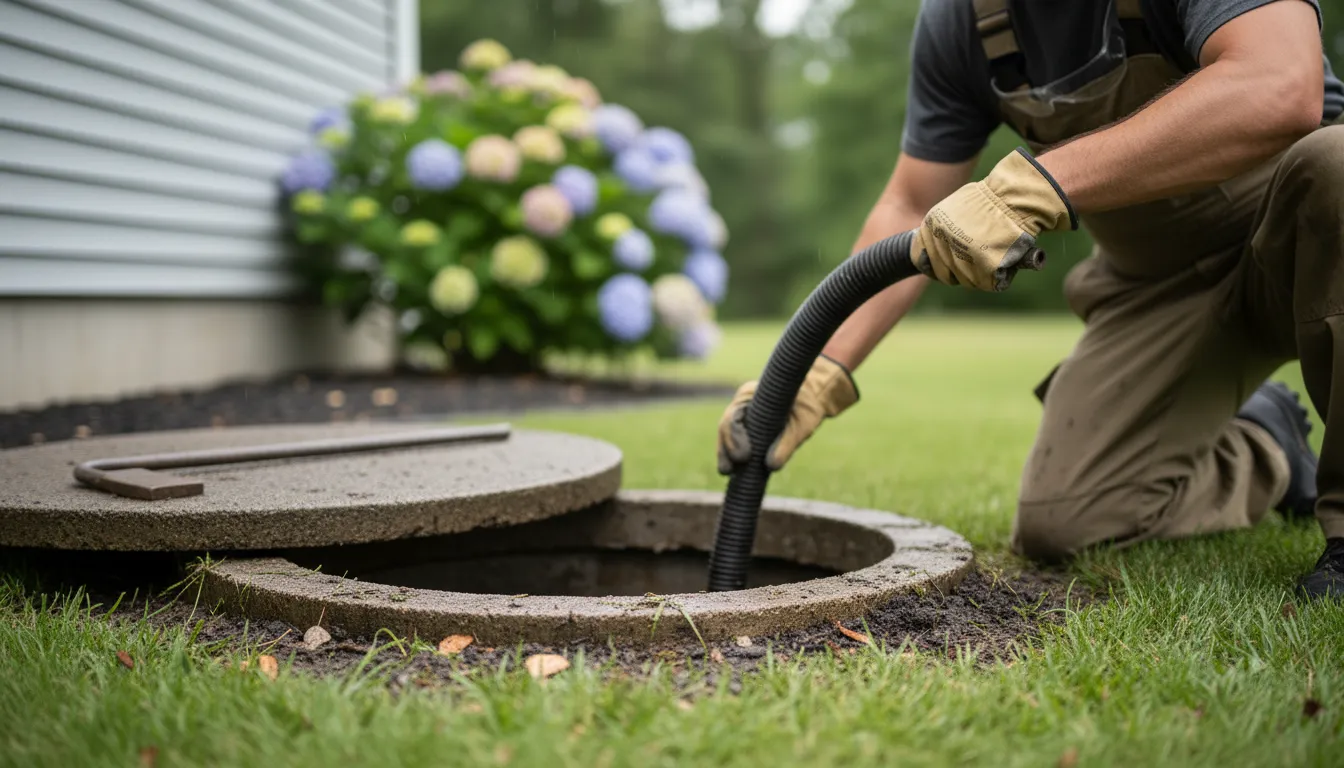
Find the Best Septic Tank Pumping Contractors for Your Business
No obligation • Fast responses • Nationwide coverage

Why you can trust Septic Spot
Septic Spot is a leading United States resource for understanding and comparing septic services. Our editors review providers using consistent criteria and verify key business details. Listings and scores are independent, and companies cannot pay to influence our content.
Search providers near you
Top Septic Tank Pumping Contractors in Raleigh, North Carolina Ranked
Maintaining a healthy septic system is a crucial responsibility for homeowners in Raleigh. Regular septic tank pumping is the most essential service to prevent system failures, protect your property value, and safeguard local groundwater. This guide explains the local requirements, costs, and best practices for septic system maintenance, helping you connect with qualified professionals to keep your system functioning smoothly for years to come.
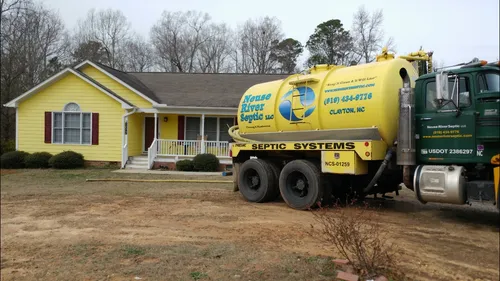
Neuse River Septic Tank Pumping
Clayton, NC 27520
Neuse River Septic Tank Pumping is a family-owned company based near Raleigh, NC, specializing in residential and commercial septic tank pumping and maintenance. They serve Clayton and surrounding areas within 15 miles, including Southern Wake and Johnston County. The company offers septic tank cleaning, sludge recycling at NC-approved sites, and effluent filter cleaning at no extra charge. With over 20 years of experience, they emphasize proper septic system care to prevent costly repairs and provide emergency service when needed.

Advantage Home Inspection
4020 Wake Forest Rd, Raleigh, NC 27609
Advantage Home Inspection is based in Raleigh, NC, offering a range of inspection services including septic tank inspection and pumping. They provide detailed septic inspections that include line scoping when accessible, along with other home and commercial inspection services such as foundation, framing, termite, radon, and sewer scope inspections. Their service area covers a 45-mile radius from their main office, and they cater to both residential and commercial properties.
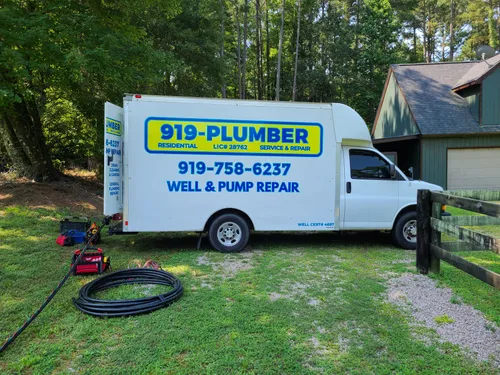
919-Plumber
2228 Davistown Rd, Wendell, NC 27591
919-Plumber is a plumbing company serving Raleigh, NC, and surrounding areas. They provide a range of plumbing services including septic tank pumping, septic pump repair, well pump repair, and full-service plumbing installations and repairs. The company has been in business since 2007 and offers specialized capabilities such as sewer camera inspections and septic alarms. Their service area includes several nearby communities such as Wendell, Garner, and Knightdale.

Quality Service Today Plumbing & Septic
5412 US-70 suit A, Durham, NC 27705
Quality Service Today Plumbing & Septic provides a wide range of plumbing and septic services in Durham, NC. They specialize in septic tank pumping, septic system repair, and drain field repair or replacement, along with general plumbing, water heaters, well pumps, and water filtration. The company serves residential clients across Central North Carolina, including Durham and nearby communities. They are equipped to handle unique plumbing setups and offer 24/7 emergency plumbing services. Their team focuses on practical, effective solutions tailored to each home's specific needs.
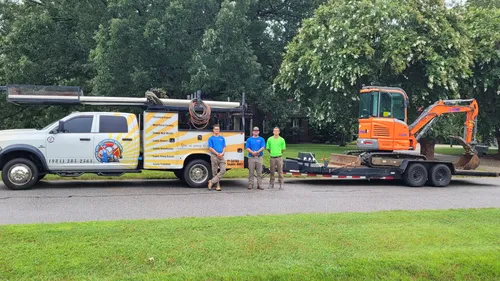
Environmental Systems & Services of NC LLC
Raleigh, NC
Environmental Systems & Services of NC LLC provides comprehensive septic and plumbing services in Raleigh, NC, and throughout Eastern and Central North Carolina. With over 30 years of experience, they handle septic tank pumping, inspections, repairs, and installations, as well as plumbing repairs, sewer line services, and drain field maintenance. Their team uses advanced equipment like cameras and hydro-jetting tools to diagnose and resolve issues efficiently. They offer customized maintenance plans to help extend the lifespan of septic and plumbing systems, ensuring compliance with local regulations and protecting water quality.
Understanding Your Septic System and Why Pumping is Vital
A septic system is an on-site wastewater treatment plant for your home. All the water from your toilets, showers, sinks, and laundry flows into an underground septic tank. Inside, solids settle as sludge, fats and oils float as scum, and the partially treated liquid effluent flows out to a drainfield for further filtration into the soil. Over time, the sludge and scum layers accumulate. If they aren't removed through periodic septic tank cleaning, they can overflow into the drainfield, causing clogs, sewage backups into your home, and costly environmental damage 1 2.
Routine pumping is preventative maintenance. It removes the accumulated waste before it can cause a problem, extending the life of your entire system and avoiding emergency repairs that can cost thousands of dollars. For Raleigh residents, this isn't just a recommendation-it's often a county requirement tied to your specific system type 3.
How Often Should You Pump Your Septic Tank in Raleigh?
The standard recommendation for most households is to schedule septic tank pumping every 3 to 5 years 4. However, this is a general guideline. The exact frequency for your home depends on several key factors:
- Household Size and Water Usage: More people in the home means more wastewater and solids, requiring more frequent pumping.
- Tank Size: A smaller tank will fill up faster than a larger one.
- Garbage Disposal Use: Using a garbage disposal significantly increases the amount of solids entering the tank, shortening the time between necessary pump-outs.
- System Type and Age: Older systems or those with advanced components may have different maintenance needs.
Wake County Inspection and Pumping Requirements
Wake County has formal inspection requirements based on your septic system's design and complexity. These inspections, which often include checking if pumping is needed, are mandated on the following schedule:
- Type IIIB (Systems with a single pump): Inspection required every 5 years.
- Type IV (Systems with multiple pumps or low-pressure distribution): Inspection required every 3 years.
- Type V (Advanced or complex treatment systems): Inspection required every year.
These inspections must be performed by a licensed wastewater system operator. Even if your system type isn't listed here, the U.S. EPA recommends a general inspection by a professional every 1-3 years to catch issues early 5. An inspection will determine if your tank has reached the one-third full threshold for sludge and scum that typically triggers a pump-out 6.
What Does Septic Tank Pumping Cost in Raleigh?
The cost for septic tank pumping in the Raleigh area typically ranges from $250 to $600+. The final price depends on a few variables:
- Tank Size and Capacity: Pumping a standard 1,000-gallon tank will generally cost less than a 1,500-gallon tank.
- Tank Accessibility: If the tank lids are buried deep, under a deck, or far from where the service truck can park, the job will require more labor and time.
- Condition of the Tank: Excessively clogged tanks or those requiring minor lid adjustments may incur additional charges.
- Service Provider: Rates can vary between companies.
On average, many Raleigh homeowners report costs between $250 and $375 for a standard pumping service 7 8. It's always wise to get a few detailed estimates. Remember, this is an investment in preventing far more expensive problems like drainfield replacement.
Find the perfect septic tank pumping contractors for your needs
Get personalized recommendations and expert advice
Key Maintenance Tips Beyond Pumping
Pumping is the cornerstone of care, but a holistic maintenance approach will maximize your system's lifespan. Here are essential practices for Raleigh homeowners:
- Conserve Water: Spread out laundry loads, fix leaky faucets promptly, and install high-efficiency fixtures. Overloading the system with water can push solids into the drainfield 9.
- Mind What You Flush: Only human waste and toilet paper should go down the toilet. Never flush wipes (even "flushable" ones), feminine hygiene products, dental floss, diapers, or cooking grease 10.
- Protect Your Drainfield: Never park cars or build structures like sheds or patios over the drainfield. Avoid planting trees or shrubs with deep roots nearby, as they can clog and damage the pipes.
- Use Cleaning Products Wisely: Excessive use of harsh chemicals, antibacterial soaps, or bleach can kill the beneficial bacteria in your tank that break down waste. Use mild, septic-safe cleaners whenever possible 11.
Recognizing Warning Signs of a Problem
Don't wait for a full-blown failure. Contact a professional for an inspection if you notice any of these red flags:
- Slow Drains: Gurgling sounds or slow drainage from multiple fixtures in your home.
- Sewage Backups: Wastewater backing up into household drains, toilets, or showers.
- Unpleasant Odors: Foul smells coming from drains, the toilet, or around the tank/drainfield area outside.
- Wet Spots: Soggy, bright green grass, or standing water over the drainfield, especially when it hasn't rained.
- Nitrate Contamination: If a water test reveals high nitrate levels in your well water, it could indicate a failing septic system 12.
Addressing these signs quickly can mean the difference between a simple pumping and a major, landscape-disrupting repair.
Choosing a Service Provider in Raleigh
When it's time for septic tank servicing, selecting the right company is important. Look for providers who are licensed by the state of North Carolina and familiar with Wake County's specific regulations. They should be insured, offer clear upfront pricing, and be willing to explain their process. A reputable professional will not only pump the tank but also perform a basic inspection of the baffles, lids, and overall tank condition, providing you with a report for your records.
Frequently asked questions
Sources
Footnotes
-
NC Homeowners: Caring for Your Septic System | Division of Public Health - https://www.dph.ncdhhs.gov/programs/environmental-health/site-water-protection-branch/site-wastewater-program/nc-homeowners-caring-your-septic-system ↩
-
How to Care for Your Septic System | US EPA - https://www.epa.gov/septic/how-care-your-septic-system ↩
-
Septic System Inspections | Wake County Government - https://www.wake.gov/departments-government/onsite-water-protection/septic-systems/septic-system-inspections ↩
-
How Often Should I Pump Out Septic Tank? - Septic Blue of Raleigh - https://www.septicblueraleigh.com/how-often-should-i-pump-out-septic-tank.html ↩
-
Why Maintain Your Septic System | US EPA - https://www.epa.gov/septic/why-maintain-your-septic-system ↩
-
How Often to Pump a Septic Tank 2026 - Clear River Environmental - https://clearriverenvironmental.com/how-often-to-pump-a-septic-tank/ ↩
-
Understanding the Average Cost to Pump a Septic Tank - https://www.scorpionsepticservices.com/blog/understanding-the-average-cost-to-pump-a-septic-tank ↩
-
How Much Does It Cost to Pump a Septic Tank in Raleigh, NC? | Angi - https://www.angi.com/articles/how-much-does-septic-tank-pumping-cost/nc/raleigh ↩
-
How Often Should I Pump Out My Septic Tank? - https://cms2.revize.com/revize/westportma/Documents/Departments/Health/Forms%20And%20Resources/how_often_should_i_pump_out_my_septic_tank_2.pdf?t=202508080914340&t=202508080914340 ↩
-
Septic System Owner's Guide | NC State Extension Publications - https://content.ces.ncsu.edu/septic-system-owners-guide ↩
-
Septic System Maintenance - Alamance County Environmental Health - https://eh.alamancecountync.gov/programs/on-site-wastewater/septic-system-maintenance/ ↩
-
Untitled - https://www.gpbr.com/resources/pimages/1479/files/A%20Guide%20to%20Your%20Septic%20System%20from%20St%20Clair%20County.pdf ↩