
Find the Best Septic System Repair Companies for Your Business
No obligation • Fast responses • Nationwide coverage

Why you can trust Septic Spot
Septic Spot is a leading United States resource for understanding and comparing septic services. Our editors review providers using consistent criteria and verify key business details. Listings and scores are independent, and companies cannot pay to influence our content.
Search providers near you
Top Septic System Repair Companies in Brownsville, Texas Ranked
A failing septic system is more than an inconvenience; it's a health hazard and a threat to your property. Septic system repair involves diagnosing and fixing issues with your on-site sewage facility (OSSF), from clogged drainfields to cracked tanks and malfunctioning aerobic components. For homeowners in Brownsville, understanding local regulations and finding qualified professionals is essential to protect your investment and the environment. This guide helps you navigate the repair process, from recognizing warning signs to completing permitted work with licensed experts.
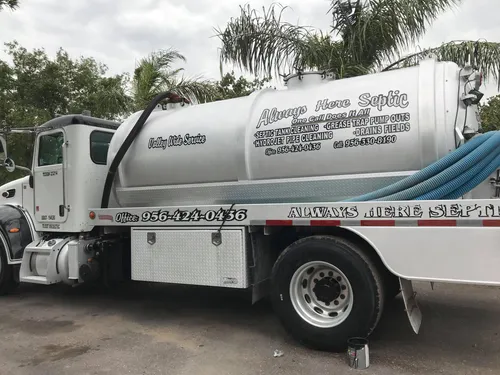
Always Here Septic
McAllen, TX
Always Here Septic is a septic tank pumping and repair company based in Mission, TX, serving McAllen and surrounding areas including Mission, La Hoya, Sullivan City, Pharr, San Juan, and more. They provide services for residential and commercial septic systems, including repairs, maintenance, drain and manhole cover work, and pump and haul wastewater removal. With over 30 years of industry experience and 20 years serving the Mission community, Always Here Septic works with a variety of clients such as businesses, schools, cities, homeowners, and government projects. The company offers after-hours emergency service and free over-the-phone estimates.
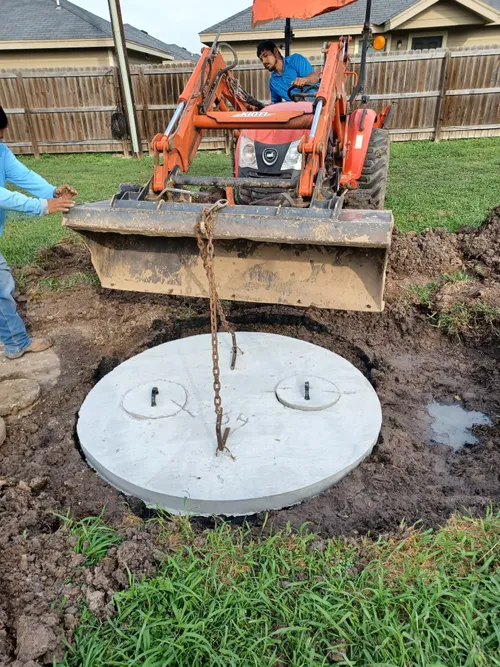
Septic Services By R & R
12967 Tio Cano Lake Cross Rd, La Feria, TX 78559
Septic Services By R & R is a septic tank pumping and repair company serving Brownsville, TX, and the surrounding Rio Grande Valley. With over 40 years of experience, the business offers septic tank sales, servicing, lid replacements, and repairs. The company is family-operated and focuses on maintaining septic systems with honesty and integrity, continuing a legacy passed down through generations.
Understanding Your Septic System and Local Rules
In Cameron County, all septic systems are regulated as On-Site Sewage Facilities (OSSFs) by the Texas Commission on Environmental Quality (TCEQ) and locally administered by the Cameron County Public Health (CCPH) Environmental Health Program 1. Most repairs, installations, or alterations to your system require a permit from CCPH before work begins. The key exception is for emergency repairs where the tank itself does not need replacement; in such cases, work can proceed immediately but must be reported to the county within 72 hours 1. It's crucial to note that while homeowners can perform repairs on their own single-family residence, all other work must be completed by a TCEQ-licensed installer or maintenance provider 1. Final inspections are typically required to verify the repair was done correctly 2.
Common Types of Septic Repairs in the Rio Grande Valley
The hot, often clay-heavy soils of the Brownsville area present unique challenges for septic systems. Here are the most frequent repairs homeowners face:
- Drainfield or Lateral Line Repair: This is often the most serious and costly repair. Symptoms include soggy ground, sewage odors, or plumbing backups. Causes range from soil compaction and hydraulic overloading to root infiltration and collapsing pipes 3 4. Repair may involve jetting lines to clear clogs or excavating to replace damaged sections.
- Aerobic System Maintenance and Repair: Aerobic treatment units (ATUs) are common in the Rio Grande Valley due to soil conditions. These complex systems require electricity and regular servicing. Common fixes include repairing or replacing aerators, water pumps, float switches, and high-water alarms, as well as replenishing disinfectant tablets.
- Tank Repair and Sealing: Concrete tanks can crack, and inlet/outlet pipes can become damaged or disconnected. Repair involves locating the leak, often after pumping the tank, and sealing it with specialized compounds. In severe cases, tank components like baffles or tees may need replacement.
- Effluent Filter Cleaning/Replacement: Many modern systems have a filter on the outlet tee to protect the drainfield. If neglected, this filter can clog completely, causing backups. A standard part of maintenance is cleaning this filter, but it may need replacement if damaged 5.
- Emergency Pumping: While not always a "repair," emergency pumping is a critical service to address immediate system failure or severe backups. It is often a first step before diagnostics and is typically more expensive than scheduled maintenance pumping.
The Diagnostic Process: What to Expect During an Inspection
Before any repair can be planned, a thorough inspection is necessary to pinpoint the problem. A professional inspection for repair purposes goes beyond a simple check for real estate transactions.
- Locating and Accessing the System: The technician will first locate the tank and distribution box, which may require probing if records are lost. The lids are then carefully removed to access the interior 6.
- Assessing Tank Conditions: The inspector measures the sludge and scum layers. If sludge occupies more than one-third of the tank depth, pumping is immediately needed. They will also examine the tank's interior walls for cracks, check the integrity of baffles or tees, and ensure the partition wall in two-compartment tanks is intact.
- Evaluating the Drainfield: The inspector will walk the drainfield area looking for surfacing effluent, overly lush grass, or foul odors. They may use a soil probe to check for saturation. For systems with a distribution box, they will check for even flow to all lateral lines 7 8.
- Testing Aerobic System Components: For ATUs, the diagnostic includes testing the aerator motor, pump function, alarm circuits, and chlorine dispenser (if present) to ensure all mechanical parts are operational 9.
Find the perfect septic system repair companies for your needs
Get personalized recommendations and expert advice
Navigating Permits and Working with Licensed Professionals
Given the environmental and public health implications, septic work in Brownsville is tightly regulated. The permitting authority is the Cameron County Public Health Environmental Health Program, located at 1390 W. Expressway 83 in San Benito (Phone: 956-247-3599) 10. For most repair scenarios, you or your contractor will need to submit an application and site plan to obtain a repair permit before breaking ground 10.
Why Licensing Matters: Always verify that any professional you hire holds a current TCEQ license for OSSF installation or maintenance 11. Licensed providers understand the specific county codes, soil requirements, and installation standards necessary for a repair to pass final inspection. You can search the TCEQ's online database to find licensed professionals serving the Rio Grande Valley 12. Hiring an unlicensed individual may result in improper repairs that fail inspection, leading to more costs and potential legal issues.
Understanding Repair and Replacement Costs
While prices vary based on the scope of work, soil conditions, and system type, having a general cost framework is helpful. Emergency service calls and pumping typically incur premium rates. For significant repairs:
- Drainfield Repair/Replacement: This is a major undertaking. Partial repairs can range from a few thousand dollars, while a full drainfield replacement can cost between $5,000 and $15,000 or more, depending on the system type and size.
- Aerobic System Component Repair: Fixing or replacing an aerator, pump, or control panel can cost anywhere from $500 to $2,500+ for parts and labor.
- Complete System Replacement: When a repair is not feasible, a full system replacement is necessary. In Texas, costs for a new conventional system can range from $7,000 to $25,000. Aerobic system replacements often fall between $9,500 and $15,000, while more complex mound systems (used in poor-draining soils) can cost $10,000 to $18,000 13 14.
Proactive Maintenance to Avoid Major Repairs
The best repair is the one you never need. Proactive maintenance is the most cost-effective strategy for Brownsville homeowners.
- Pump Regularly: Have your tank pumped every 3-5 years, or as recommended by an inspector based on sludge levels 15.
- Conserve Water: Spread out laundry loads and fix leaks to avoid hydraulically overloading the system.
- Mind What You Flush: Only human waste and toilet paper should go down the drain. Avoid grease, chemicals, wipes, and feminine hygiene products 16.
- Protect the Drainfield: Never park or build over the drainfield. Divect downspouts and surface runoff away from the area.
- Service Aerobic Systems: If you have an ATU, adhere to a strict quarterly or semi-annual maintenance contract to keep mechanical components in good working order.
By understanding the repair process, local regulations, and the importance of licensed professionals, you can effectively address septic issues and ensure your system functions properly for years to come.
Frequently asked questions
Sources
Footnotes
-
Advice for an Owner of an On-Site Sewage Facility (Septic System) - https://www.tceq.texas.gov/permitting/ossf/ossfadvice.html ↩ ↩2 ↩3
-
Texas Septic Tank Rules - https://dillonseptic.com/texas-septic-tank-rules/ ↩
-
Central Texas Septic System Repair & Service - Luna Environmental - https://lunaenvironmental.com/services/septic-service-repair/ ↩
-
Frequently Asked Questions about Septic Systems - https://septicsolutionstexas.com/FAQ.htm ↩
-
How to Get Septic to Pass Inspection - https://www.guardianangelinspections.com/how-to-get-septic-to-pass-inspection ↩
-
What is Included in Septic Inspection? - https://texinspec.com/what-is-included-in-septic-inspection/ ↩
-
What is Included in Septic Inspection? - TexInspec - https://texinspec.com/what-is-included-in-septic-inspection/ ↩
-
Septic systems explained - Texas Water Resources Institute - https://twri.tamu.edu/blog/septic-systems-explained/ ↩
-
Aerobic Septic System Inspection by A Action Realty ... - https://www.youtube.com/watch?v=fkcQZlPPPtM ↩
-
The following documents are required to process a Conventional On ... - https://www.cameroncountytx.gov/publichealth/Resources/EH/01/Conventional%20System%20Instructions%2006.21.2022.pdf ↩ ↩2
-
Occupational Licenses: On-Site Sewage Facilities (Septic Systems) - https://www.tceq.texas.gov/licensing/licenses/ossflic ↩
-
On-Site Sewage Facilities (Septic Systems): General Information - https://www.tceq.texas.gov/permitting/ossf/ossfgeneral.html ↩
-
Brownsville TX Septic System Service - https://jlgsepticllc.com/service-areas/texas/brownsville/ ↩
-
Cost of a Septic System in Texas - https://dillonseptic.com/cost-of-a-septic-system-in-texas/ ↩
-
OSSF 101: How to Check and Maintain a Conventional ... - https://www.youtube.com/watch?v=TU4Qo9BIn-8&t=27 ↩
-
Basics for Septic Systems - https://www.tceq.texas.gov/assistance/water/fyiossfs.html ↩