
Find the Best Septic System Repair Companies for Your Business
No obligation • Fast responses • Nationwide coverage

Why you can trust Septic Spot
Septic Spot is a leading United States resource for understanding and comparing septic services. Our editors review providers using consistent criteria and verify key business details. Listings and scores are independent, and companies cannot pay to influence our content.
Search providers near you
Top Septic System Repair Companies in McAllen, Texas Ranked
When your home's wastewater system fails, it's more than an inconvenience-it's a potential health hazard and environmental concern. Septic system repair in McAllen involves diagnosing and fixing issues with your On-Site Sewage Facility (OSSF), which is crucial for protecting your property, your family, and the local groundwater. This guide explains the common types of repairs, the strict local regulations you must follow, and how to find qualified professionals to restore your system to proper working order.
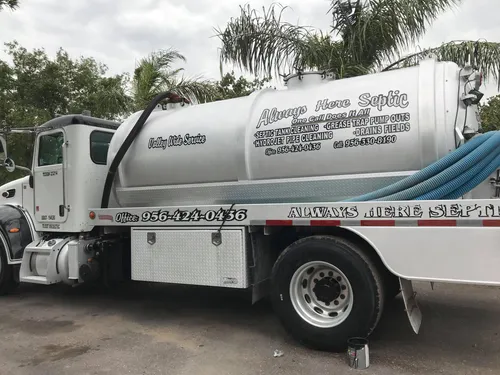
Always Here Septic
McAllen, TX
Always Here Septic is a septic tank pumping and repair company based in Mission, TX, serving McAllen and surrounding areas including Mission, La Hoya, Sullivan City, Pharr, San Juan, and more. They provide services for residential and commercial septic systems, including repairs, maintenance, drain and manhole cover work, and pump and haul wastewater removal. With over 30 years of industry experience and 20 years serving the Mission community, Always Here Septic works with a variety of clients such as businesses, schools, cities, homeowners, and government projects. The company offers after-hours emergency service and free over-the-phone estimates.
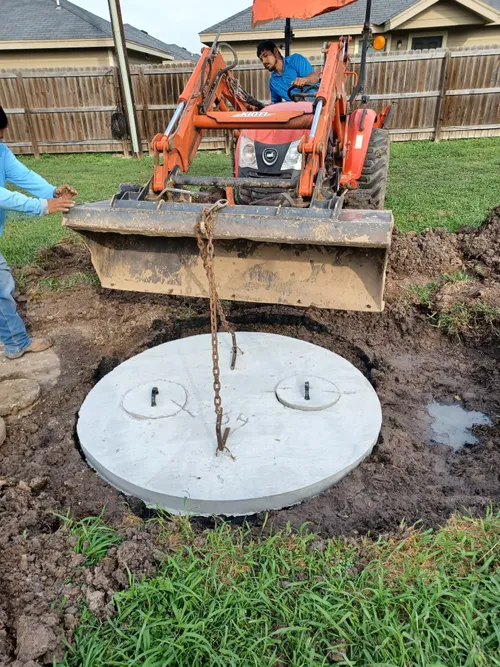
Septic Services By R & R
12967 Tio Cano Lake Cross Rd, La Feria, TX 78559
Septic Services By R & R is a septic tank pumping and repair company serving Brownsville, TX, and the surrounding Rio Grande Valley. With over 40 years of experience, the business offers septic tank sales, servicing, lid replacements, and repairs. The company is family-operated and focuses on maintaining septic systems with honesty and integrity, continuing a legacy passed down through generations.
Understanding Septic Systems in the Rio Grande Valley
Most homes in McAllen and Hidalgo County that are not connected to a municipal sewer line rely on an On-Site Sewage Facility (OSSF), commonly known as a septic system. These systems are heavily regulated by the Texas Commission on Environmental Quality (TCEQ) and local county authorities to ensure safe wastewater treatment. The two primary types you'll encounter are conventional anaerobic systems and aerobic treatment units (ATUs). Aerobic systems are particularly common in the region due to local soil conditions and provide a higher level of treatment, but they also have more mechanical components that can require maintenance and repair 1.
A properly functioning system quietly treats household wastewater from toilets, showers, sinks, and laundry. When it fails, warning signs appear. Understanding the basic components-the tank, where solids settle; the treatment mechanism; and the drainfield (or lateral lines), where treated effluent is dispersed into the soil-helps you communicate effectively with repair technicians.
Common Septic System Repairs in McAllen
Repair needs can range from minor component swaps to major excavation work. Here are the most frequent septic system fixes homeowners face.
Aerobic System Component Repairs Aerobic Treatment Units (ATUs) use pumps, aerators, control panels, and spray heads to break down waste. These mechanical parts are subject to wear and failure.
- Aerator or Pump Motor Failure: The aerator injects oxygen into the tank, which is essential for the treatment process. A failed motor will trigger an alarm and halt treatment.
- Faulty Control Panel or Alarm: The electrical panel manages pump cycles and alerts homeowners to problems. Repairing or replacing this panel is a common service call.
- Clogged or Broken Spray Heads: Effluent is dispersed through spray heads in the yard. These can become clogged with debris or damaged, requiring cleaning or replacement.
Drainfield and Lateral Line Rehabilitation This is often one of the more serious and costly repairs. The drainfield is a network of perforated pipes buried in trenches. Over time, these can become clogged with biomat (a bacterial layer) or physically damaged.
- Symptoms: Surfacing sewage, soggy yards, foul odors, or chronically slow drains indicate a failing drainfield.
- Solutions: Repair may involve cleaning the lines with high-pressure jetting, adding new lateral lines to expand the field, or in severe cases, a complete drainfield replacement.
Tank-Related Repairs The septic tank itself can develop issues that require professional attention.
- Baffle Repair: The inlet and outlet baffles inside the tank are crucial for preventing scum and solids from escaping into the drainfield. These can deteriorate and need replacement.
- Effluent Screen Cleaning/Replacement: Many modern tanks have a screen on the outlet to provide extra protection for the drainfield. This screen must be cleaned regularly during pumping; if damaged, it needs to be replaced.
- Structural Damage: Cracks in concrete tanks or damage to tank lids pose serious safety and functional risks and require immediate repair.
Emergency and Minor Repairs Some issues can be addressed quickly. This includes repairing a stuck float switch, resetting a tripped breaker for the system, or fixing minor leaks in piping before the tank. According to local providers, costs for these smaller repairs can range from a few hundred to over a thousand dollars, depending on the parts and labor involved.
Find the perfect septic system repair companies for your needs
Get personalized recommendations and expert advice
The Critical Role of Inspections and Diagnosis
Before any repair can be planned, a proper diagnosis is essential. A qualified technician will perform a series of checks to pinpoint the problem.
- Visual Site Inspection: The technician will walk your property, especially the drainfield area, looking for telltale signs like unusually lush green grass, soggy soil, or standing wastewater.
- Tank Access and Evaluation: The tank lids will be opened to check scum and sludge levels. A key test is measuring the water level relative to the outlet pipe. A high level suggests an outlet or drainfield blockage, while a low level could indicate a leak 2.
- Mechanical and Electrical Testing: For aerobic systems, every component-aerator, pumps, alarms, and controls-will be tested for proper operation. Remember, Texas law requires aerobic systems to be inspected by a licensed Maintenance Provider every four months, so many issues are caught early through these mandatory inspections.
- Dye Test or Camera Inspection: In some cases, a non-toxic dye may be flushed into the system to confirm a leak, or a camera may be snaked through lateral lines to locate a clog or break.
Navigating Hidalgo County Regulations and Permits
You cannot legally begin most repair work without understanding the permit requirements. Hidalgo County administers the OSSF program locally under TCEQ rules.
- Permit Requirement: Almost all construction, installation, alteration, extension, or repair of an OSSF requires a permit from the county before work begins 3. This ensures the repair meets health and environmental standards.
- The Emergency Repair Exception: There is a critical exception. If a repair can be made to the tank without removing it from the ground-such as fixing a baffle or a pump-it may be classified as an emergency repair. In this case, a permit may not be required beforehand, but the repair must be reported to Hidalgo County within 72 hours of completion 4.
- Licensed Professionals Only: Texas law mandates that any paid work on a septic system must be performed by a licensed Installer or a registered Maintenance Provider 5. Always verify a contractor's license. For official permitting questions, contact Hidalgo County OSSF at 956-383-0111 6.
Cost Considerations for System Repair
Repair costs in McAllen vary dramatically based on the problem's severity and the system type.
- Minor/Aerobic Component Repairs: Replacing an aerator, pump, or control panel typically falls in the range of $350 to $1,500, including parts and labor 7.
- Pumping as a Preliminary Step: Often, the first step in troubleshooting is pumping the tank (recommended every 3-5 years) to rule out simple overfull conditions and allow for proper inspection 8 9.
- Major Drainfield Repair: This is a significant excavation project. Repairing or adding lateral lines can cost several thousand dollars. A complete system replacement, which requires new engineering, a site evaluation, and full permitting, is the most expensive outcome 10.
- Inspection Fees: For aerobic systems, the state-required quarterly inspections are usually part of an annual maintenance contract with a licensed provider, which is a proactive cost that can prevent massive repair bills 11.
Maintaining Your System to Avoid Major Repairs
The best repair is the one you never need. Proactive maintenance is non-negotiable.
- Adhere to Inspection Schedules: Never skip the mandatory 4-month inspections for aerobic systems.
- Pump Regularly: Pump your tank every 3-5 years (or more often for large households) to prevent sludge from overflowing into the drainfield.
- Conserve Water and Mind What You Flush: Excessive water use can hydraulically overload a system. Avoid flushing chemicals, grease, diapers, or wipes, even those labeled "flushable," as they are the leading cause of clogs 12 13.
- Protect Your Drainfield: Never park vehicles or build structures over it. Divect roof drains and surface water away from the area.
Frequently asked questions
Sources
Footnotes
-
Septic systems explained - Texas Water Resources Institute ↩
-
Basics for Septic Systems - Texas Commission on Environmental Quality ↩
-
Top 10 Best Septic tank pros in Mcallen, TX - Angie's List ↩
-
Septic Tank installation repairs service and pumping - Texas Septic ↩
-
Advice for an Owner of an On-Site Sewage Facility (Septic System) - Texas Commission on Environmental Quality ↩
-
Basics for Septic Systems - Texas Commission on Environmental Quality ↩
-
Septic System Maintenance & Inspection Pocket Guide - Texas Water Resources Institute ↩