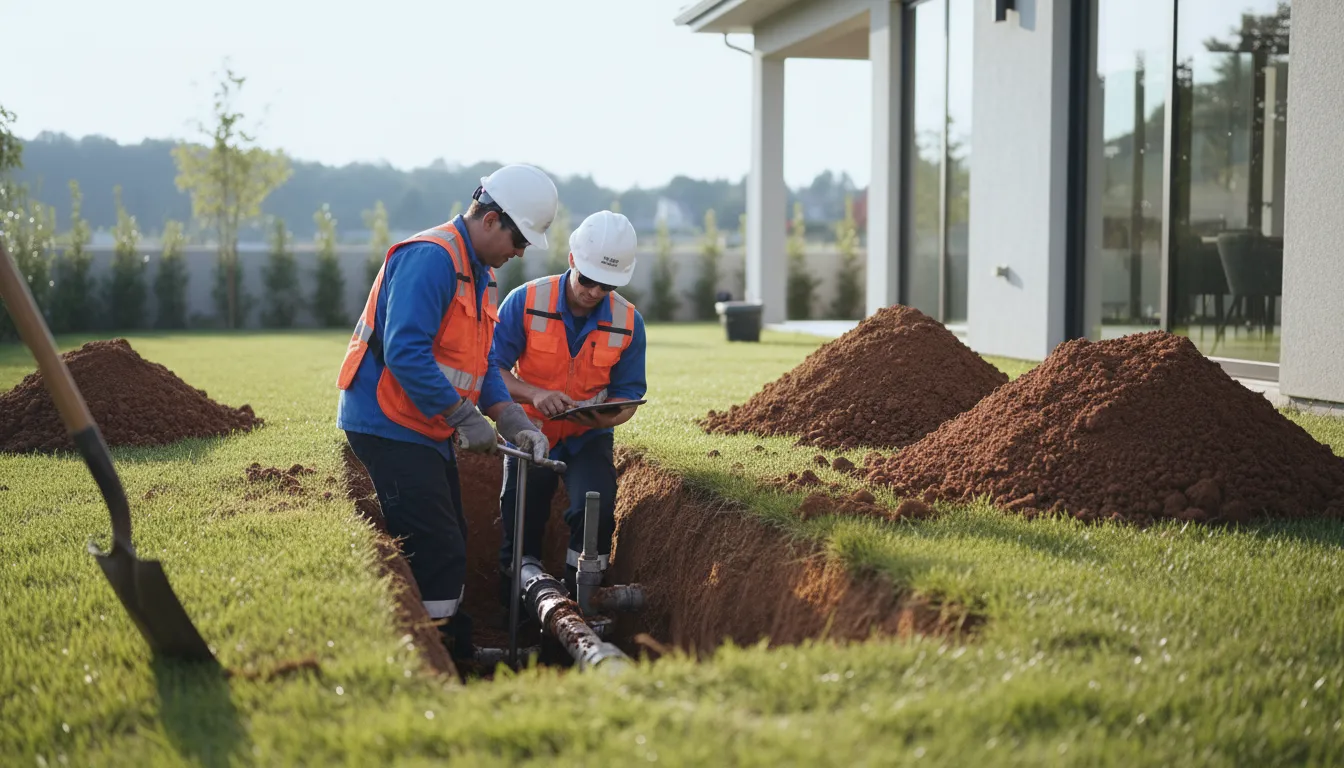
Find the Best Septic System Repair Companies for Your Business
No obligation • Fast responses • Nationwide coverage

Why you can trust Septic Spot
Septic Spot is a leading United States resource for understanding and comparing septic services. Our editors review providers using consistent criteria and verify key business details. Listings and scores are independent, and companies cannot pay to influence our content.
Search providers near you
Top Septic System Repair Companies in Port Arthur, Texas Ranked
When your home's wastewater system fails, it's more than an inconvenience-it's a potential health hazard and environmental concern. Septic system repair in Port Arthur is a regulated process overseen by local and state authorities to ensure safety and proper function. This guide explains the common types of septic repairs, the local rules you must follow, and how to find qualified professionals to restore your system to working order.
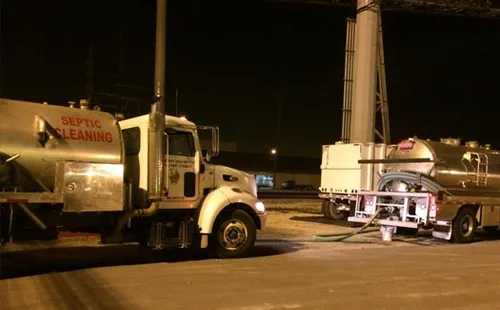
A.S.A.P. Septic Cleaning & Vacuum Truck Services
3760 Hwy 1131, Vidor, TX 77662
A.S.A.P. Septic Cleaning & Vacuum Truck Services is a family-owned company based near Houston, TX, specializing in septic system pumping, repair, and installation. They serve Southeast Texas, including Houston, and offer services such as septic tank pumping, jetting, cleaning, grease trap cleaning, drain services, sewer system repairs, pump replacement, and roto-rooting for clogged lines. The company is licensed by the Texas Commission of Environmental Quality and provides emergency and seven-day-a-week service. They are equipped to install new septic systems or replace existing ones, focusing on maintaining system health to prevent costly damage or replacement.
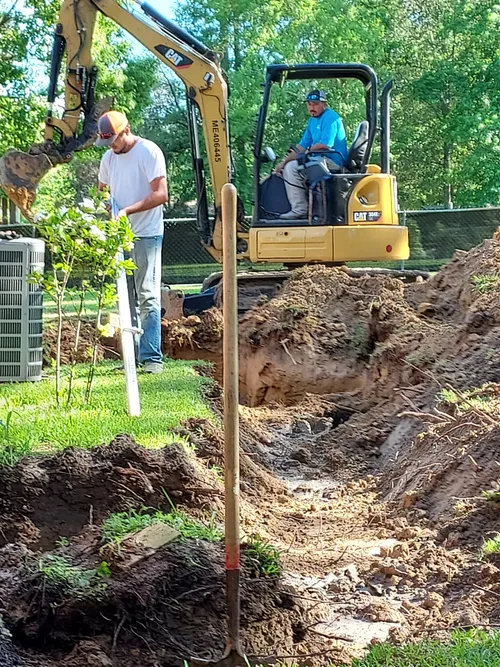
Team Jet of Jet Aeration of Texas LLC
3760 Hwy 1131, Vidor, TX 77662
Team Jet of Jet Aeration of Texas LLC, based in Beaumont, TX, offers comprehensive water and wastewater solutions along with utility construction services. They serve residential, commercial, municipal, industrial, and marine clients, providing septic system installation, repair, and pumping. Their capabilities include vacuum truck services, line jetting, hydro-blasting, and emergency bypass pumping. Established in 1956, the company has over six decades of experience and provides 24/7 disaster and emergency response with trained technicians and equipment ready to deploy within an hour.
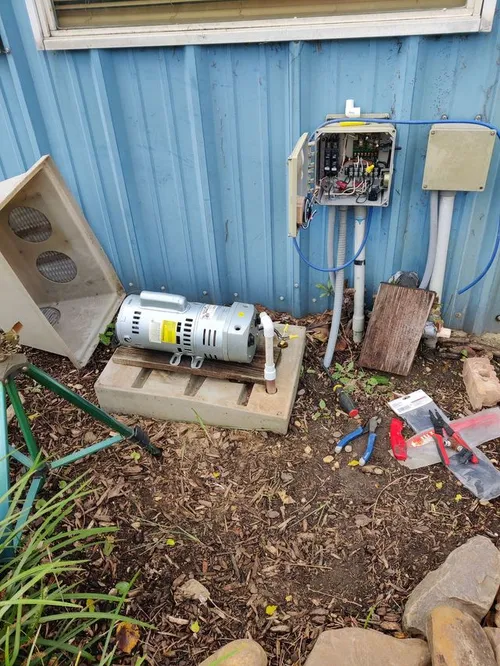
Dr. DooDoo OSSF Services, LLC
Beaumont, TX
Dr. DooDoo OSSF Services, LLC is a septic tank inspection, repair, and installation company based in Beaumont, TX. They serve residential, commercial, and industrial clients, offering services such as septic system inspections for real estate transactions, new system installations, and ongoing maintenance contracts. With over 30 years of experience in the wastewater industry, the company is led by Bobby Brasüell, also known as "Dr. Doo Doo." Their expertise includes comprehensive septic system repairs to address malfunctions and maintain system functionality.
Understanding Your Septic System and Local Regulations
In Texas, septic systems are formally known as On-Site Sewage Facilities (OSSFs). In Port Arthur and Jefferson County, these systems are regulated by both the Texas Commission on Environmental Quality (TCEQ) and the local Jefferson County Environmental Control department. This dual oversight means any significant repair work must comply with state standards and receive local approval.
A critical rule for homeowners is that most repairs must be performed by a licensed installer registered with the state. This isn't just a suggestion-it's a requirement to ensure the work meets TCEQ regulations and protects groundwater in our coastal region. Attempting a major fix yourself could lead to improper function, environmental contamination, and legal penalties.
When Do You Need a Permit for Repairs?
The permitting process is a cornerstone of responsible septic system maintenance. For any repair that involves altering the tank, replacing the drain field, or changing the system's design, you must obtain a permit from Jefferson County Environmental Control before work begins.
There is one key exception: emergency repairs. If a repair is needed to prevent an immediate health hazard and does not require removing or replacing the septic tank, work can begin right away. However, you are legally obligated to notify the permitting authority within 72 hours of starting the emergency fix. It's always safest to call a licensed professional immediately in an emergency-they can assess the situation, make necessary temporary repairs, and handle the required notification.
Common Types of Septic Repairs in Port Arthur
System failures can manifest in different ways, from slow drains to soggy yards. Here are the most common septic system repairs homeowners in the area face.
Drain Field Rehabilitation or Replacement
The drain field (or soil absorption area) is where treated wastewater disperses into the ground. When it fails, you might see standing water, foul odors, or unusually lush grass over the area. Causes include soil compaction, clogging from solids that escaped the tank, or hydraulic overloading from too much water use. Repairing a failing drain field is often the most extensive and costly type of septic work, sometimes requiring a completely new absorption area to be installed 1.
Septic Tank Component Repairs
The tank itself can have issues that require professional attention:
- Fixing Leaks or Cracks: Cracks in concrete tanks or compromised seams in other materials can allow raw sewage to leak out or groundwater to seep in, overwhelming the system.
- Replacing Baffles: The inlet and outlet baffles inside the tank are crucial for preventing scum and solids from flowing into the drain field. If they are broken or missing, they must be replaced.
- Repairing or Installing Risers: Risers are access ports from the ground surface to the tank lid. Installing or repairing them is a common repair that makes future pumping and inspection much easier and less expensive.
- Cleaning or Replacing Effluent Filters: Many modern tanks have an effluent filter on the outlet to catch solids. This filter can become clogged and needs regular cleaning; if damaged, it requires replacement.
Aerobic Treatment Unit (ATU) Service and Repair
Many homes in the region use aerobic systems, which use oxygen and bacteria to treat wastewater more thoroughly before dispersal. These mechanical systems have more components that can fail, such as spray heads, chlorinators, air compressors, and alarms. Repairs here are specialized and often require a technician with specific experience in aerobic systems. Remember, in Texas, owning an aerobic system comes with a legal requirement to maintain a two-year maintenance contract with a licensed provider, who must inspect the system every four months 2 3.
Find the perfect septic system repair companies for your needs
Get personalized recommendations and expert advice
The Professional Repair Process: What to Expect
Hiring a licensed professional ensures the job is done correctly and legally. Here's a typical process for a non-emergency septic system repair.
-
Initial Inspection and Diagnosis: The professional will locate your tank and drain field, inspect tank components for damage, and assess the drain field for signs of failure like wet spots or odors 4 5. They may also perform a "system loading" test to check how wastewater flows through the system.
-
Permitting and Design: For repairs needing a permit, your licensed installer will handle the application with Jefferson County Environmental Control, submitting any necessary design plans or soil evaluations 6 7. In some cases, especially for drain field replacements, a new soil test may be required.
-
Execution of Repairs: Once permitted, the repair work begins. This could involve excavating to access tank components, using a pump truck to empty the tank, or using machinery to install new drain field lines.
-
Final Inspection and Documentation: After repairs are complete, the licensed installer will often need to schedule a final inspection with the county. They are responsible for submitting all required reports and documentation to close out the permit, giving you proof that your system is now compliant 8.
Cost Considerations for Septic Repairs
Repair costs can vary widely based on the extent of the damage, the type of system, and local soil conditions. While we encourage you to get multiple quotes from licensed providers, here are some general ranges based on Texas cost data 9:
- Soil Testing: If required for a new drain field design, a soil test can cost between $350 and $750.
- Conventional System Repair/Replacement: Major repairs or a full conventional system replacement typically range from $6,000 to over $12,000.
- Aerobic System Replacement: Replacing a failing aerobic treatment unit is often more expensive, ranging from $12,000 to $20,000 or more.
- Annual Maintenance (Aerobic): For aerobic systems, the required maintenance contract usually costs between $400 and $800 per year.
The most cost-effective strategy is preventive maintenance. Pumping your septic tank every 3-5 years is a universally recommended practice that can prevent solids from clogging and destroying your drain field, saving you from a far more expensive repair down the line 10 11.
What to Do If Your System Fails
A complete system failure is a serious issue. If you have sewage backing up into your home or surfacing in your yard, you should:
- Conserve water immediately to reduce flow into the system.
- Contact Jefferson County Environmental Control to report the failing system 12.
- Call a licensed septic repair professional for an emergency assessment. They can advise on immediate steps and the long-term repair or replacement process.
Using licensed professionals isn't just about following the law-it's about ensuring the health of your property, your community, and the sensitive Gulf Coast environment. Proper repairs protect our groundwater and prevent contamination.
Frequently asked questions
Sources
Footnotes
-
Texas Septic System Regulations - https://dillonseptic.com/texas-septic-system-regulations/ ↩
-
Advice for an Owner of an On-Site Sewage Facility (Septic System) - https://www.tceq.texas.gov/permitting/ossf/ossfadvice.html ↩
-
What laws in Texas apply to septic systems? - Water School - https://brazos.org/about-us/education/water-school/articleid/349/what-laws-in-texas-apply-to-septic-systems ↩
-
Texas Septic Tank Rules - https://dillonseptic.com/texas-septic-tank-rules/ ↩
-
Maintenance of On-Site Sewage Facilities (Septic Systems) - https://www.tceq.texas.gov/permitting/ossf/ossfmaintenance.html ↩
-
Septic Permits - Environmental Control - Jefferson County TX - https://jeffersoncountytx.gov/env_cntrl/septicpermits.htm ↩
-
Getting a Permit for an OSSF - Such as a Septic System - https://www.tceq.texas.gov/permitting/ossf/ossfpermits.html ↩
-
Essential Septic System Inspection Guide for Homeowners - https://smartsepticpros.com/blog/septic-system-inspection-for-homeowners/ ↩
-
Texas Septic Systems & OSSF Requirements | 2026 Guide - https://texaslandbrokerage.com/resources/texas-septic-systems-ossf-requirements-guide/ ↩
-
Septic System - Texas Water Resources Institute - https://twri.tamu.edu/wp-content/uploads/2024/04/em-126-septic-system-maintenance-inspection-pocket-guide.pdf ↩
-
On-Site Sewage Facilities (Septic Systems): General Information - https://www.tceq.texas.gov/permitting/ossf/ossfgeneral.html ↩
-
Basics for Septic Systems - https://www.tceq.texas.gov/assistance/water/fyiossfs.html ↩