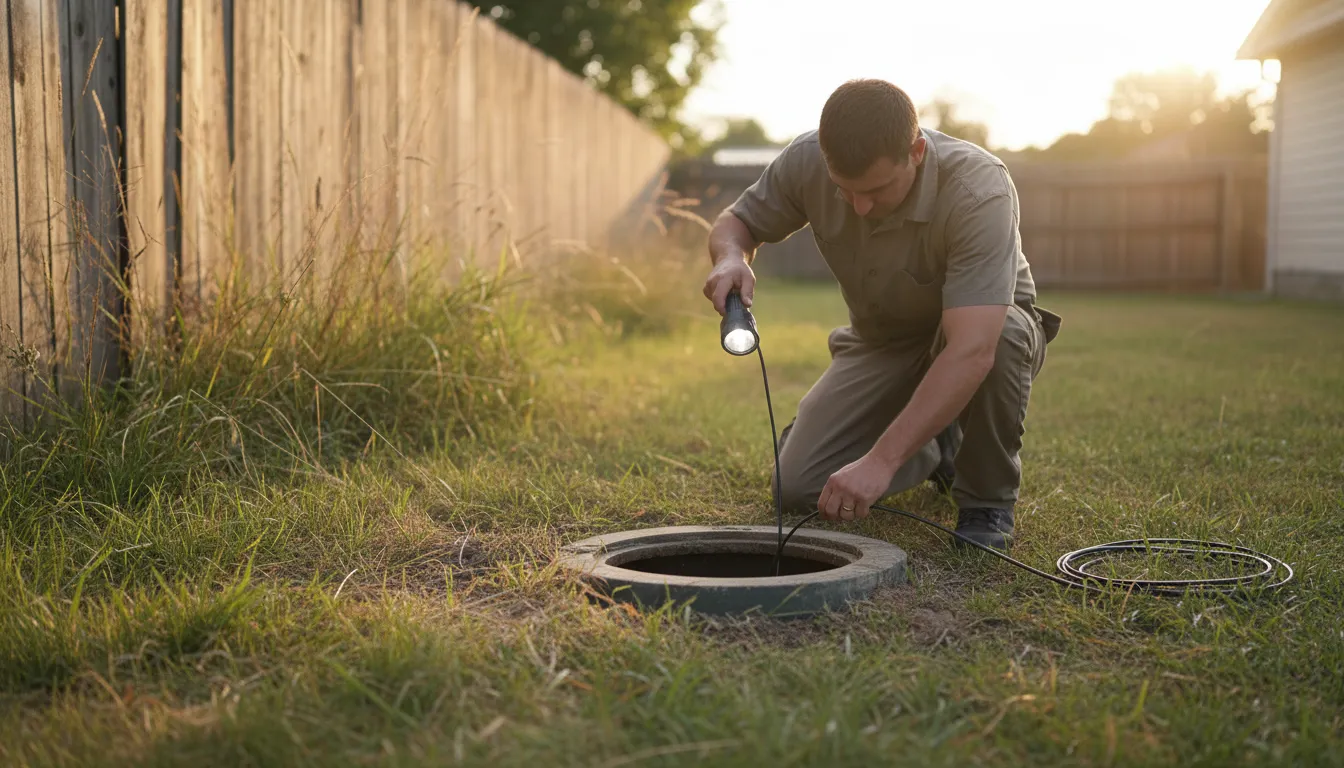
Find the Best Septic Tank Inspection Companies for Your Business
No obligation • Fast responses • Nationwide coverage

Why you can trust Septic Spot
Septic Spot is a leading United States resource for understanding and comparing septic services. Our editors review providers using consistent criteria and verify key business details. Listings and scores are independent, and companies cannot pay to influence our content.
Search providers near you
Top Septic Tank Inspection Companies in Austin, Texas Ranked
A septic tank inspection is a critical evaluation of your on-site sewage system to ensure it is functioning safely and efficiently. In Austin, these assessments are often required by local authorities and are essential for protecting your property value, your family's health, and the local environment. This guide will help you understand the local regulations, what a thorough inspection entails, and how to find qualified professionals to evaluate your system.
Septic Squad
Austin, TX
Septic Squad provides septic tank pumping, cleaning, and inspection services in Austin, TX, and nearby communities. They offer full system inspections, safe pumping, and grease trap cleaning to maintain residential and commercial septic systems. Their licensed technicians deliver detailed maintenance reports and conduct thorough evaluations to identify issues such as blockages or leaks. Septic Squad serves multiple counties including Williamson and Hays, covering cities like Round Rock, Cedar Park, and Kyle.
Hambone Plumbing and Septic Pumping
818 W 2nd St, Taylor, TX 76574
Hambone Plumbing and Septic Pumping is a family-owned business serving the Austin, TX area with over 30 years of experience. They provide residential and commercial plumbing and septic services, including septic tank pumping, inspections, and repairs. Their licensed team offers comprehensive solutions such as water heater installation and flushing, drain and sewer line cleaning, and advanced leak detection using thermal imaging technology. Hambone Plumbing and Septic Pumping is available 24/7 to handle emergency plumbing needs and maintain efficient, safe plumbing systems.
Luna Environmental
151 Las Flores Dr Suite 201, Wimberley, TX 78676
Luna Environmental is a septic service company based in Austin, TX, providing septic tank pumping, inspection, maintenance, and repair services. They serve residential and commercial clients throughout Central Texas, offering tailored solutions to keep septic systems functioning properly. The company is equipped to handle 24-hour emergency maintenance and pumping, ensuring prompt response to urgent septic issues. Luna Environmental emphasizes comprehensive reporting and environmental stewardship in their work, aiming to support sustainable septic system health and community well-being.
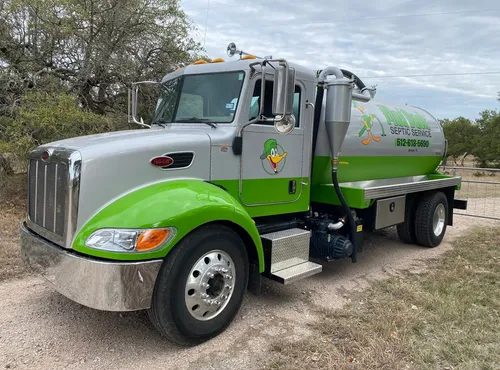
Mud Duck Septic Service
Austin, TX
Mud Duck Septic Service is a family-owned and locally operated company providing septic tank pumping, inspection, and repair services in Austin, TX. They serve nearby communities including Bertram, Burnet, Georgetown, Liberty Hill, and Spicewood. The company is fully licensed and insured, focusing on industry best practices and personalized consultations to address a range of septic system needs. Mud Duck Septic Service emphasizes careful workmanship and attention to detail in all projects.
Hometown Septic Services
Austin, TX
Hometown Septic Services provides comprehensive septic system solutions in Austin, TX, and surrounding communities. They serve both residential and commercial clients, offering services such as septic tank pumping, inspections, repairs, and pump replacements. The company specializes in septic pump repairs to ensure efficient wastewater management and compliance with local regulations. Hometown Septic also offers emergency septic services to address urgent system failures promptly. Their team is equipped to handle a wide range of septic system needs, maintaining system functionality and preventing future issues.
Understanding Septic Systems and Local Regulations in Austin
In Texas, septic systems are formally known as On-Site Sewage Facilities (OSSFs) and are regulated under state rules (30 TAC Chapter 285) enforced by the Texas Commission on Environmental Quality (TCEQ) 1 2. Within Austin city limits, the permitting and oversight authority is Austin Water, while properties in unincorporated Travis County fall under the jurisdiction of the Travis County Transportation and Natural Resources (TNR) department 1. Knowing which agency governs your property is the first step in understanding your compliance responsibilities.
These regulations are in place to prevent groundwater contamination and public health hazards. A failing system can leach untreated wastewater into the soil, potentially contaminating wells, creeks, and the Edwards Aquifer-a primary drinking water source for the region. Regular system checks are not just a bureaucratic formality; they are a cornerstone of environmental stewardship in Central Texas.
When Is a Septic System Inspection Required?
There are several key scenarios where an OSSF evaluation is mandatory or highly recommended in the Austin area:
- Property Transfer: While Texas state law does not universally mandate a septic inspection for real estate transactions, it is almost always required by lenders, title companies, or as a condition of sale in Travis County and Austin 3. A comprehensive inspection report provides crucial peace of mind for both buyers and sellers.
- New Installation or Major Repair: Any time a new system is installed or an existing one undergoes significant repair, it must be permitted and inspected. Travis County TNR requires specific inspections during the installation process, including an open trench inspection, a rock and pipe inspection, and a final inspection 4 5.
- Aerobic System Maintenance: If your home uses an aerobic treatment unit (ATU), state law requires it to be under a maintenance contract with a licensed provider. These contracts typically include inspections every four months to ensure the mechanical components (like aerators and pumps) are working correctly.
- Routine Maintenance: Even without a legal requirement, experts strongly recommend having your conventional septic system inspected every 3-5 years, often in conjunction with pumping, to catch minor issues before they become costly failures.
What Does a Comprehensive Septic Inspection Include?
A full septic system evaluation, especially one for a real estate transaction, is a detailed process that goes far beyond just looking at the tank. Here's what you can expect a qualified inspector to do 6 7 8:
- Locate and Expose the System: The inspector will locate the tank and distribution box, then carefully excavate to uncover the access lids.
- Assess Tank Interior and Sludge Levels: This is a core part of the septic tank check. The inspector will measure the levels of sludge (solid waste) and scum (floating materials). A general rule is that the tank needs pumping if the sludge depth is more than one-third of the liquid depth.
- Inspect Tank and Pipe Integrity: The tank walls, baffles, and the inlet/outlet pipes are examined for cracks, corrosion, or structural failure that could allow sewage to escape or groundwater to enter.
- Evaluate System Function and Flow: The inspector will flush toilets and run water to check for proper drainage from the house and to identify any backups or slow drainage that indicate a blockage or failure.
- Examine the Drainfield: The inspector will assess the soil absorption field (drainfield) for signs of failure, such as surfacing sewage, overly lush and green grass, or persistent soggy areas.
- Review System History and Components: For aerobic systems, this includes testing alarms, aerators, and pumps. The inspector may also check for proper permits and the system's age.
- Provide a Detailed Report: A professional inspection concludes with a written report documenting the system's condition, any deficiencies found, and recommended actions. This report is vital for real estate disclosures and maintenance planning.
Find the perfect septic tank inspection companies for your needs
Get personalized recommendations and expert advice
Understanding Costs for Inspection and Related Services
The price of a septic system assessment in Austin varies based on the scope of work, tank size, and system type. Here's a general breakdown of what you might expect to pay 9 10 11:
- Basic Visual Inspection: A simpler check, which may not include pumping, typically ranges from $250 to $600.
- Comprehensive/Real Estate Inspection: A full evaluation, as described above, often including pumping to properly measure sludge levels, usually costs between $400 and $900 or more.
- Septic Tank Pumping: If pumping is needed as a separate service, costs generally range from $300 to $600+, heavily dependent on tank capacity (e.g., 1,000-gallon vs. 1,500-gallon tanks).
- Aerobic System Maintenance Contracts: For homes with ATUs, annual maintenance contracts that include the required quarterly inspections typically cost between $200 and $400 per year 12.
Investing in a proper inspection can save you tens of thousands of dollars by identifying problems early, before a complete system replacement-which can cost $15,000 or more-becomes necessary.
Choosing a Qualified Septic Inspection Provider in Austin
Not all inspectors are equal. When selecting a professional for your septic system evaluation, ensure they are licensed by the TCEQ as an OSSF installer or maintenance provider. You can verify a company's license on the TCEQ website. Look for providers with extensive local experience who understand the specific soil conditions and regulations in Travis County. Ask for sample reports to ensure they provide the level of detail you need, especially for a real estate transaction. Finally, choose a company that is fully insured for your protection.
Maintaining Your System After the Inspection
An inspection report will give you a roadmap for maintenance. For conventional systems, the most common recommendation is to pump the tank every 3-5 years, but the exact frequency depends on household size and usage. Always conserve water and avoid flushing non-biodegradable items, grease, and harsh chemicals. Protect your drainfield by never parking vehicles on it or planting trees with invasive roots nearby. For aerobic systems, adhering to the maintenance contract is non-negotiable for keeping the system legal and operational.
Proactive care based on a professional inspection is the key to maximizing the lifespan of your on-site sewage facility, ensuring it operates safely and efficiently for years to come.
Frequently asked questions
Sources
Footnotes
-
On-Site Sewage Facilities | AustinTexas.gov - https://www.austintexas.gov/department/site-sewage-facilities ↩ ↩2
-
Getting a Permit for an OSSF - Such as a Septic System - https://www.tceq.texas.gov/permitting/ossf/ossfpermits.html ↩
-
Does Texas Require Septic Inspection | TexInspec - https://texinspec.com/does-texas-require-septic-inspection/ ↩
-
On-Site Sewage Facility (Septic System) Permit - Travis County - https://www.traviscountytx.gov/tnr/development-services/apply-for-a-permit/residential-ossf-septic-system-permit ↩
-
septic tank permitting and inspection information | wcid 17 - https://www.wcid17.org/wp-content/uploads/2022/12/SEPTIC-TANK-PERMITTING-AND-INSPECTION-INFORMATION-1212-2022-1.pdf ↩
-
What to Expect from a Septic Inspection - https://www.wrenvironmental.com/blog/2023/may/what-to-expect-from-a-septic-inspection/ ↩
-
What is Included in Septic Inspection? - TexInspec - https://texinspec.com/what-is-included-in-septic-inspection/ ↩
-
Septic System Inspections: A Step-by-Step How-To Guide - https://westcoastsanitationinc.com/septic-inspection-service/ ↩
-
Basics for Septic Systems - https://www.tceq.texas.gov/assistance/water/fyiossfs.html ↩
-
How Much Does a Septic Inspection Cost? [2026 Data] | Angi - https://www.angi.com/articles/septic-inspection-cost.htm ↩
-
Septic Tank FAQ and Septic System FAQ - https://dillonseptic.com/faq/ ↩
-
Texas Septic Tank Rules - https://dillonseptic.com/texas-septic-tank-rules/ ↩