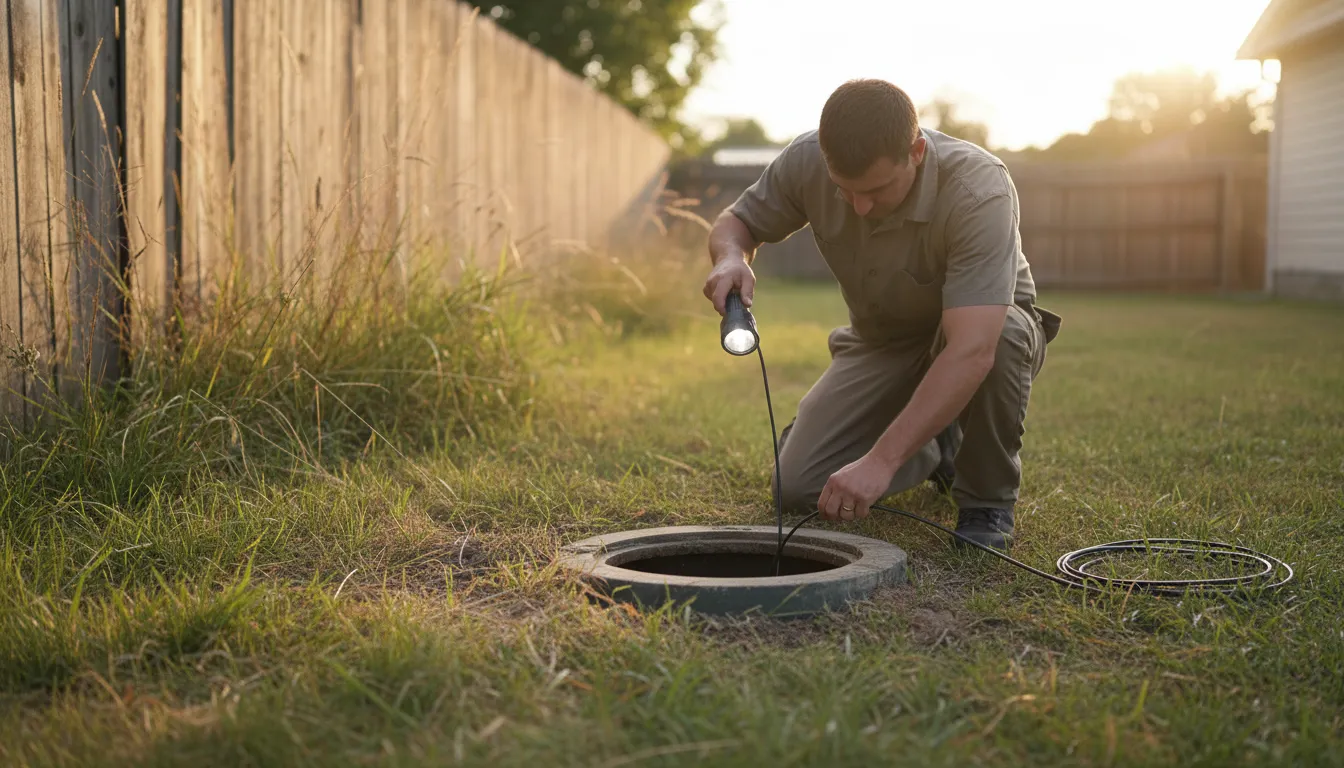
Find the Best Septic Tank Inspection Companies for Your Business
No obligation • Fast responses • Nationwide coverage

Why you can trust Septic Spot
Septic Spot is a leading United States resource for understanding and comparing septic services. Our editors review providers using consistent criteria and verify key business details. Listings and scores are independent, and companies cannot pay to influence our content.
Search providers near you
Top Septic Tank Inspection Companies in College Station, Texas Ranked
A septic tank inspection is a critical evaluation of your home's on-site wastewater treatment system to ensure it is functioning safely and efficiently. For College Station homeowners, regular system checks are not just a good idea-they are often a legal requirement, especially for the aerobic treatment units common in the area. This guide explains what a septic inspection entails, why it's essential for protecting your property and public health, and how you can find qualified local professionals to perform this vital service.
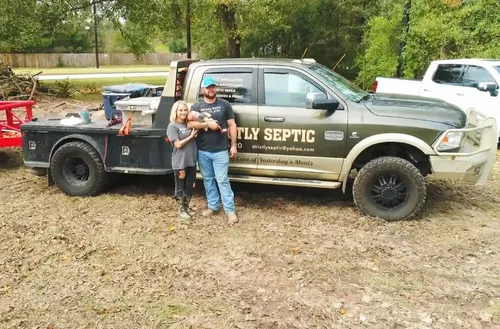
Strictly Septic Service
8874 FM 1696, Bedias, TX 77831
Strictly Septic Service is a family-owned company based in Bedias, TX, serving Houston and nearby communities within a 35-mile radius, including parts of Grimes, Madison, Walker, Leon, Brazos, and Robertson counties. They provide a full range of septic services such as installation, inspection, pumping, maintenance, and repair for residential and commercial systems. Their capabilities include custom septic system design and eco-friendly waste disposal methods that comply with local regulations. With decades of industry experience, Strictly Septic Service offers personalized solutions and guidance through permitting and inspections to ensure efficient septic system operation.

Aerobic System Inspection & Maintenance
4700 Elmo Weedon Rd suite 116, College Station, TX 77845
Aerobic System Inspection & Maintenance is a septic tank pumping, inspection, repair, and installation company serving College Station, TX. They specialize in maintaining and installing aerobic septic systems, with factory certification on most brands. The company has been serving the Brazos Valley area for over eleven years, providing services such as septic system design, troubleshooting, repairs, maintenance, excavation, and pumping. They also offer consulting and supply septic chlorine tablets and parts.
Understanding Septic Systems in Brazos County
In College Station and the surrounding Brazos County, residential wastewater treatment for homes not connected to municipal sewer lines is managed through On-Site Sewage Facilities (OSSFs). These are regulated by the Brazos County Health District and the City of College Station. The two primary types of systems are conventional (or anaerobic) systems and aerobic treatment units (ATUs). Aerobic systems, which use oxygen to break down waste more efficiently, are particularly prevalent in Texas soils and come with specific, mandated maintenance requirements.
Regardless of type, every system has a septic tank where solids settle and begin to decompose, and a drain field where treated liquid effluent is dispersed into the soil. A professional septic system evaluation assesses the health of all these components to prevent environmental contamination, costly repairs, and system failure.
Why Regular Septic Inspections Are Non-Negotiable
Skipping routine septic checks is a risk no homeowner should take. A malfunctioning system can lead to sewage backing up into your home, foul odors, and contamination of groundwater-a serious public health hazard. In Brazos County, the Health District investigates complaints about OSSFs within 72 hours, which can lead to enforcement actions if a system is found to be non-compliant.
For homeowners, the benefits are clear:
- Protects Your Investment: Catching small issues early, like a failing pump or a clogged filter, prevents massive drain field failures that can cost tens of thousands of dollars to replace.
- Ensures Legal Compliance: Aerobic systems must have an active maintenance contract with a licensed provider who inspects the system at least every four months. Conventional systems are recommended for inspection every three years.
- Supports Property Transactions: A clean septic system inspection report is often a required contingency for home sales, giving buyers and lenders confidence in the property's infrastructure.
- Preserves Public Health: Properly functioning systems protect your family and community from exposure to harmful pathogens and nutrients.
What a Professional Septic Inspection Involves
A thorough septic tank assessment is a multi-step process conducted by a licensed inspector or maintenance provider. Here's what you can expect during a comprehensive evaluation1 2 3:
- Locating & Exposing the Tank: The inspector will locate the tank and access lids. Modern systems often have risers that bring the lids to the surface for easier access.
- Evaluating Tank Conditions: The inspector will open the lids to check the wastewater level, which can indicate blockages or leaks. They will measure the sludge and scum layers to determine if pumping is needed.
- Inspecting Tank Components: Key components like the baffles (which prevent solids from exiting the tank) and the inlet/outlet pipes are checked for integrity and blockages.
- Checking the Effluent Filter: Many tanks have an effluent filter on the outlet pipe. This will be cleaned or noted for replacement if it's clogged.
- Inspecting the Pump and Electrical (for ATUs): For aerobic systems, the pump, aerator, alarm, and all electrical controls are tested to ensure they are operating correctly.
- Assessing the Drain Field: The inspector will examine the drain field area for signs of failure, such as soggy soil, standing water, or unusually lush vegetation, which indicate that effluent is not being properly absorbed.
- Conducting a Flow Test: Running water through household fixtures helps verify that wastewater is flowing correctly from the house to the tank and that the drain field is accepting effluent.
Find the perfect septic tank inspection companies for your needs
Get personalized recommendations and expert advice
Local Regulations and Permit Requirements
College Station homeowners must navigate specific local rules. All new installations, repairs, and modifications to an OSSF require a permit from the Brazos County Health District4. For reference, residential permit fees for new systems are approximately $4455.
The most critical local rule pertains to maintenance contracts. If you have an aerobic treatment unit, Texas law and City of College Station regulations require you to keep a valid maintenance contract with a licensed provider6. This provider will perform the legally required inspections every four months and submit reports to the local authority. Failure to maintain this contract can result in notifications and penalties.
Septic Inspection Costs and Related Services
Understanding the costs associated with septic system care helps homeowners budget effectively. It's important to distinguish between an inspection and pumping, as they are different services.
- Routine Inspection Cost: A standard, non-invasive septic tank check typically costs between $100 and $250. This is for the evaluation process described above. More invasive inspections, like a camera scope of lines, will cost extra.
- Pumping Cost: Pumping (or cleaning) the tank is a separate service. The average cost to pump a septic tank in the region ranges from $300 to $600, depending on tank size and sludge volume7 8.
- Pumping Frequency: You should not pump on a rigid schedule but based on need. Conventional systems generally need pumping every 3 to 5 years, while aerobic systems are pumped based on the sludge depth found during the quarterly inspections9.
Choosing a Qualified Inspection Provider in College Station
Selecting the right professional is crucial. Look for a provider who is:
- Licensed by the State of Texas: Ensure they are registered as a licensed OSSF maintenance provider or installer.
- Knowledgeable on Local Codes: They should be familiar with Brazos County and City of College Station regulations.
- Transparent and Thorough: They should explain the process, provide a detailed report with photos, and clearly outline any necessary repairs or maintenance.
- Offering Comprehensive Services: Many companies offer inspection, pumping, repair, and maintenance contract services, providing a one-stop solution for your system's needs.
A proactive approach to septic system maintenance and inspection is the key to long-term system health. By understanding the process, the local rules, and the value of professional service, College Station homeowners can ensure their wastewater system operates safely and reliably for years to come.
Frequently asked questions
Sources
Footnotes
-
Septic System - Texas Water Resources Institute - https://twri.tamu.edu/wp-content/uploads/2024/04/em-126-septic-system-maintenance-inspection-pocket-guide.pdf ↩
-
Septic Inspection Process: What Homeowners Should Know | LunsPro - https://www.lunspro.com/vlog/the-septic-system-inspection-process-what-homeowners-should-know ↩
-
What Does a Septic Inspection Entail? - HomeLight - https://www.homelight.com/blog/septic-inspection/ ↩
-
On Site Sewage Facilities - https://health.brazoscountytx.gov/on-site-sewage-facilities/ ↩
-
Full page photo - https://hudspethcad.org/wp-content/uploads/2023/08/HUDSPETH-COUNTY-OSSF-FREQUENTLY-ASKED-QUESTIONS.pdf ↩
-
On-Site Sewage Facilities | City of College Station - https://www.cstx.gov/business-development/engineering/on-site-sewage-facilities/ ↩
-
Texas Septic Tank Rules - https://dillonseptic.com/texas-septic-tank-rules/ ↩
-
Exploring the Costs of Septic Tank Inspections: What to Expect - https://www.theflushfellas.com/exploring-the-costs-of-septic-tank-inspections-what-to-expect ↩
-
Maintenance of On-Site Sewage Facilities (Septic Systems) - https://www.tceq.texas.gov/permitting/ossf/ossfmaintenance.html ↩