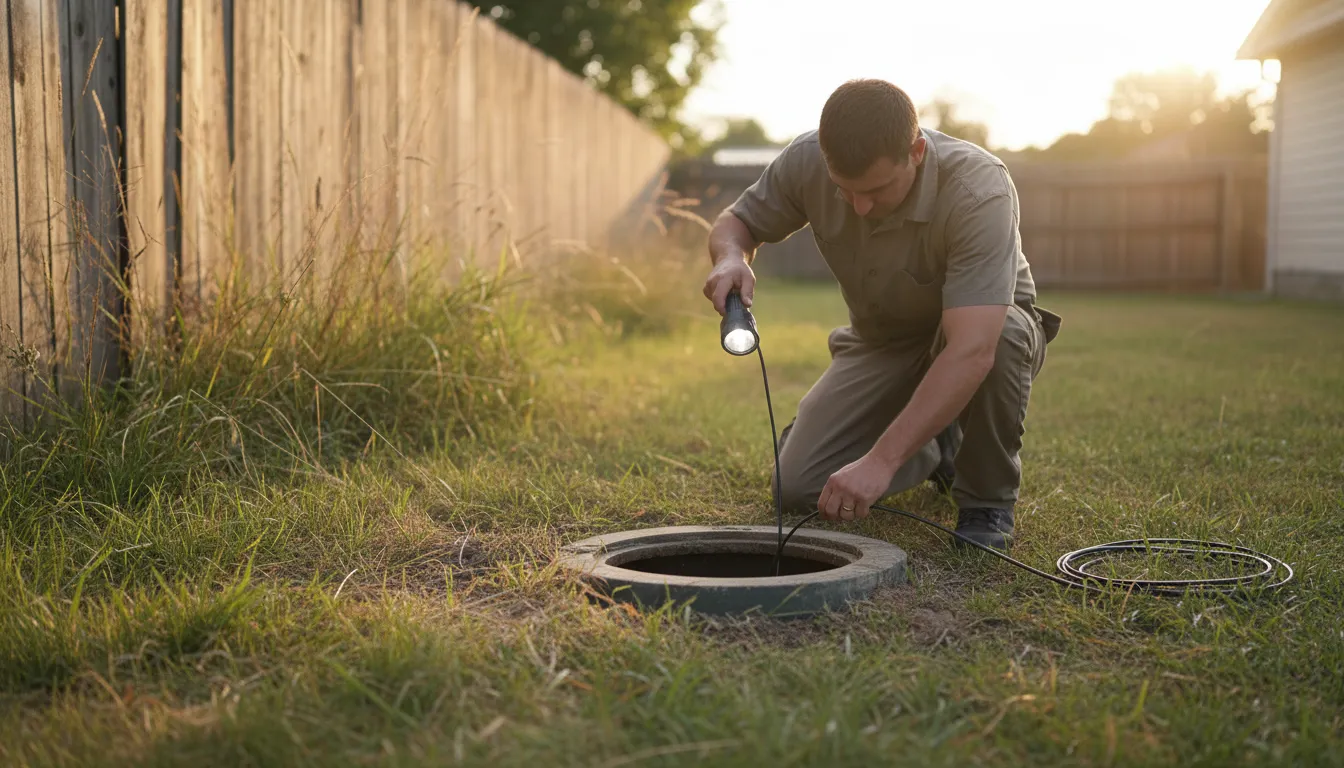
Find the Best Septic Tank Inspection Companies for Your Business
No obligation • Fast responses • Nationwide coverage

Why you can trust Septic Spot
Septic Spot is a leading United States resource for understanding and comparing septic services. Our editors review providers using consistent criteria and verify key business details. Listings and scores are independent, and companies cannot pay to influence our content.
Search providers near you
Top Septic Tank Inspection Companies in Midland, Texas Ranked
A septic tank inspection is a critical evaluation of your on-site sewage facility (OSSF) to ensure it is functioning safely and efficiently. In Midland, where many homes rely on these private wastewater systems, regular assessments are not just a good idea-they are often a regulatory requirement, especially for property sales or system modifications. This guide explains what a septic system evaluation entails, the local rules you must follow, and how you can find qualified professionals to perform this essential service for your home or business.
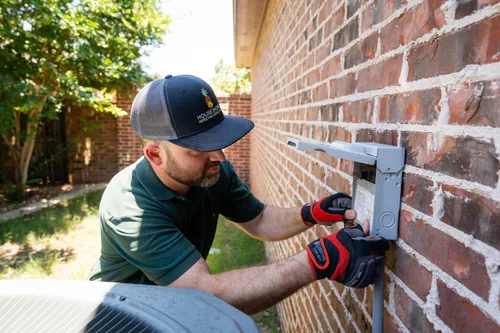
House to Home Inspection Services
Midland, TX
House to Home Inspection Services is a home inspection company based in Midland, TX. They provide comprehensive inspections covering foundation, roofing, electrical systems, plumbing, heating and air conditioning, and more. The company also offers optional add-on inspections for septic systems, swimming pools, sprinkler systems, and sewer scopes, allowing customers to bundle services for convenience. Their inspections focus on visible and accessible components without destructive testing.
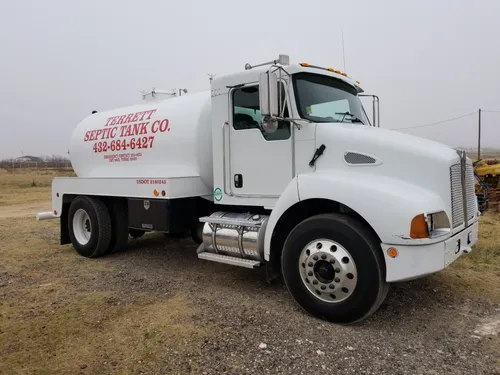
Terrett Septic Tank Company
3806 S County Rd 1135, Midland, TX 79706
Terrett Septic Tank Company provides septic tank installation, pumping, inspection, and repair services in Midland, TX. Serving the Midland and Odessa areas, they offer a range of septic system solutions including lawn wastewater leakage repair, sewage backup pumping, grease and sand trap services, and enzyme treatments. Established in 1953, this family-owned business has decades of experience and uses state-of-the-art equipment to support efficient septic system maintenance and repairs.
Understanding Septic System Inspections in Midland
A septic system inspection, often called an OSSF evaluation, is a thorough process that goes beyond simply checking if your toilets flush. It's a diagnostic review of the entire wastewater treatment system buried on your property. For homeowners in Midland, understanding this process is key to protecting your investment, ensuring public health, and complying with local and state regulations. Whether you're preparing for a real estate transaction, following a routine maintenance schedule, or troubleshooting a potential problem, a professional inspection provides a clear picture of your system's health.
Why Inspections Are Mandatory and Important
In Midland, the City of Midland Health Department acts as the local permitting authority for all septic systems within the city and Midland County. Their primary role is to protect groundwater and public health by ensuring systems are installed and maintained correctly. This is why inspections are legally required at specific times.
The most common mandatory inspection occurs during new installation or major alteration. A city inspector must examine the system before it is covered or backfilled. Furthermore, if you own an aerobic treatment system (a type of septic system that uses an aerator), you are required by Texas law to have a maintenance contract. The maintenance provider performs regular checks and is required to report the system's status to the local authority every 4 to 6 months. For conventional systems, while not always mandated by law for existing homes, an inspection is highly recommended every 3 to 5 years and is almost always required by lenders during a home sale 1.
What Does a Comprehensive Septic Inspection Include?
A full septic system assessment is a multi-step process conducted by a trained professional. Here's what you can expect during a typical evaluation:
1. Locating and Accessing the System: The inspector will first locate all components of your system, including the septic tank and drainfield. They will then excavate and open the manhole and inspection ports on the tank.
2. Evaluating Tank Conditions & Solids: This is a core part of the inspection. The professional will:
- Check Liquid Levels: The depth of the liquid in the tank is measured. A level that is too low could indicate a leak, while a level that is too high suggests a blockage in the outlet or drainfield.
- Measure Sludge and Scum: Using specialized tools, the inspector measures the depth of the sludge layer at the bottom of the tank and the scum layer floating on top. These measurements determine if the tank needs to be pumped. If the combined thickness of sludge and scum exceeds a certain percentage of the tank's liquid depth, pumping is necessary.
3. Inspecting Tank Components: The inspector will examine:
- Inlet and Outlet Baffles: These are crucial for preventing solids from flowing out into the drainfield. They are checked for damage or deterioration.
- Pipes: The inlet and outlet pipes are inspected for blockages or cracks.
- Pump or Aerator: For systems with pumps or aerobic units, these mechanical components are tested to ensure they are operating correctly 2 3.
4. Assessing the Drainfield: The inspector will evaluate the soil absorption area (drainfield) for signs of failure. Red flags include:
- Surfacing sewage or effluent.
- Unusually lush, green grass over the field.
- Soggy ground or standing water with a foul odor 4 5.
5. Reviewing System History and Permits: A good inspector will ask for any available records of past maintenance, pumping, or the original system permit and design. This helps them understand the system's age and expected performance.
Find the perfect septic tank inspection companies for your needs
Get personalized recommendations and expert advice
Midland's Permit and Inspection Regulations
Navigating local regulations is a fundamental part of managing a septic system. The City of Midland Health Department has clear rules to ensure all OSSFs are safe.
When Do You Need a Permit? You must obtain a permit from the Health Department before you can build, install, alter, repair, or extend any septic system. This applies to both residential and commercial properties.
The Mandatory City Inspection Once a permitted system is installed but before it is covered with soil, you must call the Health Department to schedule an inspection. This inspection verifies that the installation matches the approved design and meets all codes. It is illegal to backfill without this inspection.
Fees Associated with Permits and Inspections: The City of Midland charges fees for its regulatory services 6:
- Residential Inspection/Permit Fee: $150
- Commercial Inspection/Permit Fee: $210
- Re-inspection Fee: $75 (if the system fails the initial inspection and needs a second look)
Special Rules for Aerobic Systems: Aerobic treatment units have additional requirements. Homeowners must keep a valid maintenance contract with a licensed provider. This provider will conduct site visits, test the system (as required by state rule 30 TAC §285.91(4)), and file regular reports with the local authority 7 8 9. This maintenance typically costs several hundred dollars per year.
Costs and Scheduling for Professional Services
Beyond city fees, homeowners will pay for services from licensed septic contractors or inspectors.
Third-Party Inspection Costs: For a comprehensive evaluation, especially for a real estate transaction, costs can range from $250 to over $600, depending on the size and complexity of the system.
Pumping Costs: While not the primary focus of an inspection, pumping is often the recommended next step if solids levels are too high. In the Midland area, pumping a standard residential septic tank typically costs between $300 and $600, though prices can vary based on tank size and accessibility 10.
When to Schedule Maintenance:
- Pumping Frequency: Plan to pump your septic tank every 3 to 5 years as a general rule, though an inspection will give you a more precise schedule based on actual usage and solids accumulation.
- Best Time of Year: Schedule pumping and inspections during dry seasons if possible. A empty tank is buoyant, and a high water table during wet periods can cause it to "float" out of the ground, leading to serious damage.
Maintaining Your System Between Inspections
Professional inspections are vital, but day-to-day care extends the life of your system. Follow these best practices:
- Conserve Water: Spread out laundry loads and fix leaky fixtures to avoid overloading the system.
- Mind What You Flush: Never flush grease, coffee grounds, diapers, wipes (even "flushable" ones), feminine hygiene products, or chemicals. These can clog pipes, destroy beneficial bacteria, and contaminate groundwater 11.
- Protect the Drainfield: Never drive or park vehicles over the drainfield. Keep roof drains, sump pumps, and other surface water away from the area. Avoid planting trees or shrubs with deep roots nearby 12.
For the most current local requirements, always contact the City of Midland Health Department at (432) 681-7613 13.
Frequently asked questions
Sources
Footnotes
-
Does Texas Require Septic Inspection - TexInspec - https://texinspec.com/does-texas-require-septic-inspection/ ↩
-
Sims Plastics | Midland Texas - https://simsplastics.com/locations-midland/ ↩
-
What is Included in Septic Inspection? - TexInspec - https://texinspec.com/what-is-included-in-septic-inspection/ ↩
-
Septic System Inspections - InterNACHI® - https://www.nachi.org/inspecting-septic-systems.htm ↩
-
Free Septic Tank Inspection Templates | PDF | SafetyCulture - https://safetyculture.com/checklists/septic-tank-inspection ↩
-
how to obtain a permit for an on-site sewage facility - Midland, TX - https://www.midlandtexas.gov/DocumentCenter/View/4195/2018-OSSF-Application?bidId= ↩
-
Maintenance of On-Site Sewage Facilities (Septic Systems) - https://www.tceq.texas.gov/permitting/ossf/ossfmaintenance.html ↩
-
Frequently Asked Questions - CivicPlus.CMS.FAQ - Midland, TX - https://www.midlandtexas.gov/819/Frequently-Asked-Questions ↩
-
Getting a Permit for an OSSF - Such as a Septic System - https://www.tceq.texas.gov/permitting/ossf/ossfpermits.html ↩
-
Stay Compliant: Avoid Fines with Septic System Regulations - https://smartsepticpros.com/blog/septic-system-regulations/ ↩
-
Basics for Septic Systems - https://www.tceq.texas.gov/assistance/water/fyiossfs.html ↩
-
Septic System - Texas Water Resources Institute - https://twri.tamu.edu/wp-content/uploads/2024/04/em-126-septic-system-maintenance-inspection-pocket-guide.pdf ↩
-
Frequently Asked Questions - CivicPlus.CMS.FAQ - Midland, TX - https://www.midlandtexas.gov/faq.aspx?TID=29 ↩