Find the Best Septic Tank Inspection Companies for Your Business
No obligation • Fast responses • Nationwide coverage

Why you can trust Septic Spot
Septic Spot is a leading United States resource for understanding and comparing septic services. Our editors review providers using consistent criteria and verify key business details. Listings and scores are independent, and companies cannot pay to influence our content.
Search providers near you
Top Septic Tank Inspection Companies in Burleson, Texas Ranked
A professional septic tank inspection is a critical evaluation of your on-site sewage facility (OSSF) to ensure it is functioning safely and in compliance with local and state regulations. For Burleson homeowners, these assessments are vital for protecting your property value, preventing environmental contamination, and avoiding costly system failures. This guide outlines what a thorough septic system evaluation entails, when you need one, and how to find qualified local professionals to perform this essential service.

Understanding Septic Systems and Local Regulations
In Burleson and across Johnson County, septic systems are regulated under Texas Commission on Environmental Quality (TCEQ) standards and local health codes 1. These rules are designed to protect groundwater and public health. A key part of compliance is ensuring any work on your system-from a new installation to a major repair-is performed by a licensed professional and often requires a permit. A formal septic inspection is a core component of this regulatory framework, providing a documented snapshot of your system's health.
Regular evaluations are not just about following rules; they are a proactive maintenance strategy. The TCEQ generally recommends having your septic tank pumped every 3 to 5 years, and a full inspection is an ideal companion to this service. Catching minor issues like a cracked baffle or early-stage drain field saturation during a routine check can prevent a full-system backup or failure, saving you significant money and hassle down the line.
When Is a Septic System Inspection Required?
While regular check-ups are wise, there are specific situations where a septic evaluation becomes particularly crucial or even mandatory for Burleson residents.
Property Transfers: One of the most common triggers for a septic inspection is the sale of a home. While Texas state law does not universally mandate it, many lenders require it, and it is a standard part of most real estate transactions in Johnson County. A clean inspection report provides peace of mind to the buyer and can prevent legal complications for the seller by ensuring the system meets all legal standards at the time of transfer 2 3.
System Malfunction Signs: If you notice warning signs like slow drains, gurgling pipes, sewage odors indoors or outdoors, or unusually lush, green grass over the drain field, you should schedule an inspection immediately. These symptoms indicate a potential failure that needs professional diagnosis.
Permitting for Work: If you plan to alter, repair, or expand your existing septic system, the local permitting authority will likely require an inspection report as part of the application process to determine the scope and necessity of the work.
Routine Maintenance: Adhering to the 3-5 year guideline for a combined inspection and pumping is the best way to manage your system's long-term health and performance 4.
The Step-by-Step Septic Inspection Process
A comprehensive septic system assessment is methodical. Understanding what a qualified inspector will do helps you know what to expect and ensures you receive a thorough evaluation.
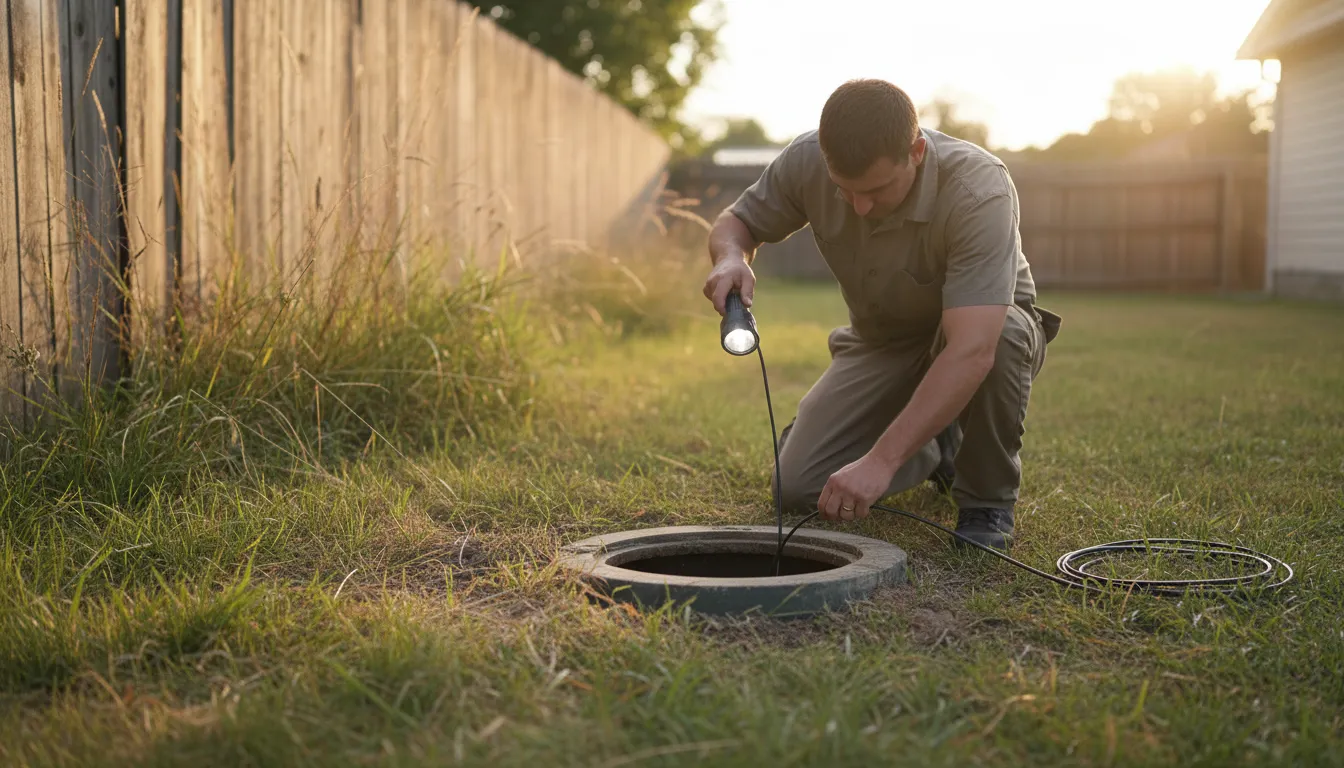
1. Pre-Inspection Review & Locating the System: The process begins with the inspector reviewing any available records of your system's design, age, and past maintenance. They will then locate and expose the tank lids and access ports to the distribution box and drain field, which may involve some light digging.
2. Tank Integrity and Component Check: The inspector opens the tank to assess its interior. They check the structural integrity for cracks, corrosion, or leaks in the concrete, fiberglass, or plastic. The inlet and outlet pipes, tees, and baffles are examined for blockages or damage, as these components are essential for separating solids and preventing scum from exiting into the drain field 5 6.
3. Sludge and Scum Level Measurement: This is a critical quantitative step. The inspector measures the depth of the sludge layer at the bottom of the tank and the scum layer floating at the top. If the combined sludge and scum occupy more than one-third of the tank's liquid depth, pumping is immediately recommended to prevent solids from washing out into the drain field and causing failure 7.
4. Drain Field Evaluation: The inspector surveys the drain field (or leach field) area for visual signs of failure. This includes looking for surfacing effluent, soggy ground, or standing water. Paradoxically, an area of grass that is much greener and lusher than the surrounding yard can also indicate a leaking drain field 8. They may also use a probe to check for soil saturation.
5. Pump and Alarm Testing (if applicable): For systems with a pump tank, the inspector will test the pump, float switches, and any high-water alarm systems to ensure they are operating correctly.
6. Detailed Reporting: Finally, a professional inspector provides a written report detailing their findings, complete with photos, measurements, and clear recommendations for any needed repairs, maintenance, or pumping.
Find the perfect septic tank inspection companies for your needs
Get personalized recommendations and expert advice
What to Expect: Costs and Timing
The cost of a septic inspection in Burleson can vary based on the inspector's experience, the size and complexity of your system, and whether it is a standalone evaluation or bundled with pumping.
A basic visual inspection typically ranges from $250 to $500 9. However, most homeowners benefit from a more comprehensive service that includes pumping the tank. A combined inspection and pumping service generally costs between $500 and $900 or more, with the final price depending on tank size (e.g., 1,000-gallon vs. 1,500-gallon) and the volume of waste removed 9 10.
While this may seem like a significant expense, it is minor compared to the cost of replacing a failed drain field, which can run into the tens of thousands of dollars. Investing in regular inspections is one of the most cost-effective ways to protect your home's infrastructure.
Choosing a Qualified Septic Inspector in Burleson
Selecting the right professional is paramount. Look for an inspector who is licensed by the TCEQ to perform OSSF evaluations in Texas. They should carry proper insurance and have a strong reputation in the Johnson County area. Don't hesitate to ask for references and sample reports. A trustworthy inspector will be willing to walk you through their process, explain their findings in plain language, and provide a detailed, written report you can use for maintenance planning or real estate transactions.
Remember, the goal of a septic system inspection is to give you a clear, accurate understanding of an essential but hidden part of your property. By scheduling regular evaluations with a qualified local professional, you ensure the longevity of your system, protect your local environment, and maintain your home's value.
Frequently asked questions
Sources
Footnotes
-
Basics for Septic Systems - https://www.tceq.texas.gov/assistance/water/fyiossfs.html ↩
-
Compliance with Local Regulations: Burleson Septic Guide - https://www.texwaywastewater.com/compliance-with-local-regulations-burleson-septic-guide/ ↩
-
Texas Septic System Regulations - https://dillonseptic.com/texas-septic-system-regulations/ ↩
-
Maintenance of On-Site Sewage Facilities (Septic Systems) - https://www.tceq.texas.gov/permitting/ossf/ossfmaintenance.html ↩
-
Navigating the Burleson Septic Permit Processes - https://www.texwaywastewater.com/navigating-the-burleson-septic-permit-processes-essential-steps-for-a-smooth-experience/ ↩
-
What is Included in Septic Inspection? - TexInspec - https://texinspec.com/what-is-included-in-septic-inspection/ ↩
-
Does Texas Require Septic Inspection - TexInspec - https://texinspec.com/does-texas-require-septic-inspection/ ↩
-
Texas OSSF Inspection Requirements: Complete Guide for 2025 - https://www.fieldbaseos.com/blog/texas-ossf-inspection-requirements.html ↩
-
Septic Inspection Process: What Homeowners Should Know | LunsPro - https://www.lunspro.com/vlog/the-septic-system-inspection-process-what-homeowners-should-know ↩ ↩2
-
Septic System Inspections: A Step-by-Step How-To Guide - https://westcoastsanitationinc.com/septic-inspection-service/ ↩