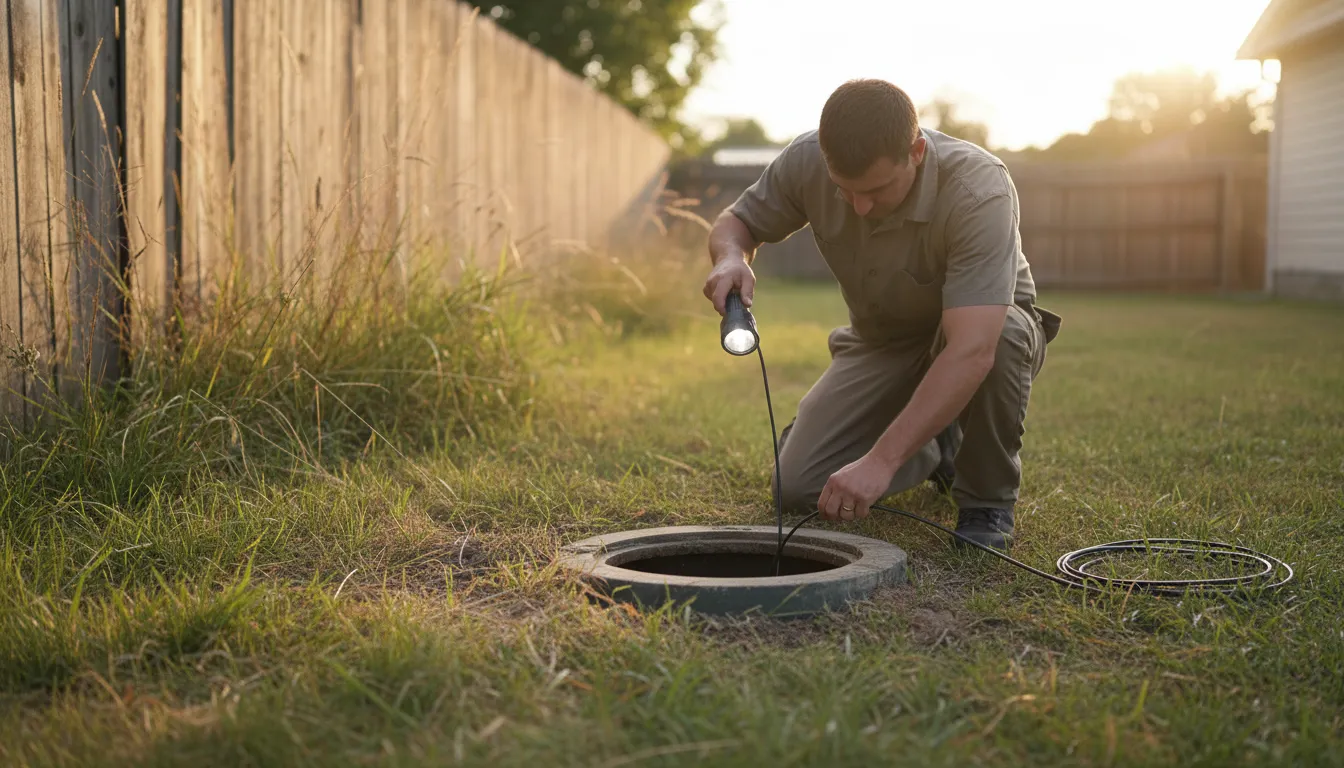
Find the Best Septic Tank Inspection Companies for Your Business
No obligation • Fast responses • Nationwide coverage

Why you can trust Septic Spot
Septic Spot is a leading United States resource for understanding and comparing septic services. Our editors review providers using consistent criteria and verify key business details. Listings and scores are independent, and companies cannot pay to influence our content.
Search providers near you
Top Septic Tank Inspection Companies in Coppell, Texas Ranked
A professional septic tank inspection is a critical evaluation of your on-site sewage facility (OSSF) to ensure it is functioning safely and efficiently. For homeowners in Coppell, these assessments are not just about compliance; they are essential for protecting your property value, your family's health, and the local environment. This guide explains the local requirements, what happens during an inspection, and how you can find qualified professionals to perform this vital service for your home.
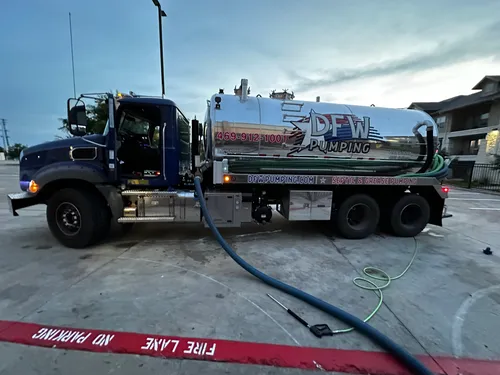
DFW Septic and Grease Services
4881 Montgomery Rd, Midlothian, TX 76065
DFW Septic and Grease Services provides septic tank pumping and inspection services in Dallas, TX. They serve both residential and commercial properties across multiple counties including Ellis, Tarrant, Dallas, Rockwall, Kaufman, Henderson, Navarro, Johnson, and Hill. Their services include septic system cleaning, grease trap maintenance, and thorough onsite inspections for various facilities such as restaurants, retirement homes, and grocery stores. The company offers expert advice and waste collection to help maintain efficient septic systems.

Ninnis Home Inspection
Clubview Dr, Argyle, TX 76226
Ninnis Home Inspection provides certified home inspection services in Dallas, TX, and the surrounding DFW Metroplex area. Their offerings include septic tank inspections, buyers and sellers inspections, pool and spa inspections, water well testing, and new build phase inspections. The company is Texas Real Estate Commission (TREC) certified and serves multiple locations such as Argyle, Denton, Keller, Frisco, and Plano. Ninnis Home Inspection focuses on detailed and thorough inspections to help clients make informed decisions about their homes.
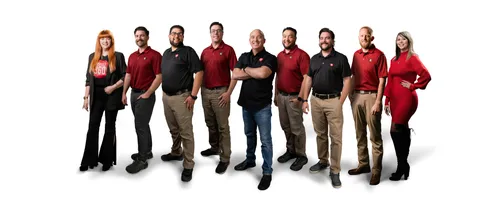
Inspect360
8074 Precinct Line Rd, Colleyville, TX 76034
Inspect360 is a septic tank inspection company based in Dallas, TX, offering professional home and commercial inspection services throughout the Dallas-Fort Worth Metroplex and East Texas. Since 2006, their certified master inspectors have provided specialized inspections including septic, termite, pool, sprinkler, and sewer scope inspections. They use state-of-the-art software to deliver inspection reports within 24 hours, complete with digital photos and detailed findings. Inspect360 also offers complimentary home assistant services with each inspection.

Kissee Inspection Services
5000 Eldorado Pkwy # 150-103, Frisco, TX 75033
Kissee Inspection Services is a septic tank inspection company based in Dallas, TX. They provide comprehensive property inspections that include septic systems along with structural components, electrical, plumbing, HVAC, and ancillary services such as pools and lawn sprinklers. Their inspectors hold multiple certifications, including septic and thermal imaging qualifications, ensuring thorough evaluations. Established in 2009, Kissee Inspection Services has over a decade of experience and emphasizes clear communication and customer support throughout the inspection process.
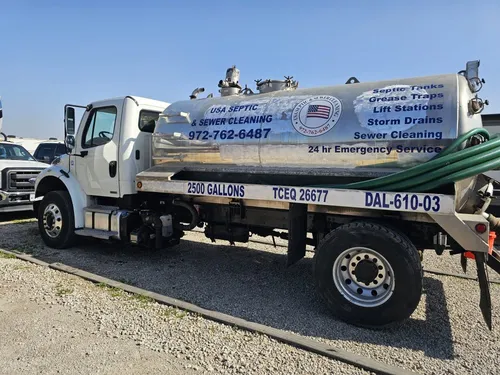
USA Septic and Sewer Cleaning
4661 Ray White Rd, Fort Worth, TX 76244
USA Septic and Sewer Cleaning is a licensed septic service provider based near Dallas, TX, serving Fort Worth, Keller, and Tarrant County. They offer septic tank pumping, inspection, system repair, lift station maintenance, and grease trap cleaning for residential and commercial clients. The company provides 24/7 emergency septic and lift station repair services to address backups, overflows, and pump failures promptly. Their team uses advanced equipment to maintain system efficiency and compliance, helping prevent costly repairs and blockages.
Understanding Septic System Regulations in Coppell
In Texas, septic systems are formally known as On-Site Sewage Facilities (OSSFs). The Texas Commission on Environmental Quality (TCEQ) sets the statewide standards under Title 30, Chapter 285 of the Texas Administrative Code. However, local authorities-such as the Denton County or Dallas County health departments, depending on your location within Coppell-act as the authorized agents who enforce these rules on the ground 1.
This local oversight means that while state law provides the framework, specific permitting, inspection, and enforcement actions are handled by your county. For instance, a permit from your local authority is required for any new septic system installation or a major modification to an existing one. Furthermore, if you need to perform emergency repairs, you must report them to the local authority within 72 hours.
Mandatory vs. Recommended Inspection Schedules
The required frequency for septic system evaluations in Coppell depends heavily on the type of system you have.
- Aerobic Treatment Systems (ATUs): These advanced systems use an aerator to pump oxygen into the tank, enhancing the treatment process. State law mandates that all aerobic systems be under a maintenance contract with a licensed provider 2. This contract requires a professional inspection at least once every four months, or three times per year. This frequent check-up ensures the mechanical and electrical components (like aerators, pumps, and alarms) are working correctly.
- Conventional (Anaerobic) Systems: The more common gravity-fed systems do not have a state-mandated annual inspection requirement. However, the TCEQ and local authorities strongly recommend that these systems be inspected every 1 to 3 years. Regular checks are the best way to catch small problems before they become expensive, disruptive failures.
Regardless of the system type, the property owner is ultimately responsible for ensuring their OSSF is operating correctly and for arranging any necessary repairs 3.
What Does a Professional Septic Inspection Cover?
A thorough septic system assessment is a multi-step process designed to evaluate every critical component. Here's what you can expect a qualified inspector to do:
- Locating and Accessing the System: The inspector will locate the tank and distribution box, then carefully excavate and open the access lids.
- Tank Integrity and Levels: This is the core of the inspection. The professional will:
- Check the tank's structure for cracks or signs of collapse.
- Measure the sludge and scum layers. If the sludge depth exceeds one-third of the tank's liquid depth, pumping is immediately recommended.
- Assess the liquid level. An abnormally high level can indicate a failing drain field, while a low level may suggest a leak.
- Component Check: The inspector will examine the inlet and outlet baffles or tees, outlet pipes, and any effluent filters to ensure they are intact and not clogged.
- Drain Field Evaluation: The inspector will survey the drain field area for warning signs of failure, such as soggy soil, foul odors, or standing wastewater on the surface 4.
- Aerobic System Specifics: For aerobic systems, the inspection includes testing the aerator pump, alarm circuits, spray heads, and timers to confirm proper operation 5.
A comprehensive inspection like this provides a clear snapshot of your system's health and is especially crucial during real estate transactions 6.
Find the perfect septic tank inspection companies for your needs
Get personalized recommendations and expert advice
Costs Associated with Septic Services in Coppell
Understanding the potential costs helps homeowners budget for essential maintenance. Pricing can vary based on tank size, system complexity, and accessibility.
- Standard Septic Inspection: For a conventional system, a full inspection typically ranges from $200 to $500 7.
- Aerobic System Maintenance Visit: A single inspection visit as part of a maintenance contract often costs between $150 and $300 8.
- Septic Tank Pumping: If the inspection reveals your tank needs pumping, this service generally costs $300 to $600 or more, depending on tank capacity 9 10 11. It is critical to hire a registered sludge transporter for this job, as required by the TCEQ 11.
The Importance of Regular Maintenance and Pumping
An inspection often reveals the need for pumping. Regular pumping is the single most important maintenance task for any septic system. It prevents solids from overflowing into the drain field, which is the leading cause of system failure. A failed drain field can cost tens of thousands of dollars to replace and may involve extensive landscaping repairs.
Think of your septic tank like a car's oil filter; it needs to be cleaned out periodically to keep the entire engine-your drain field-running smoothly. Neglecting this can lead to backups in your home, contamination of groundwater, and violations of local health codes.
Choosing a Qualified Service Provider in Coppell
When your home's wastewater system and your family's health are on the line, choosing the right professional is paramount. Look for providers who are licensed by the TCEQ and have a strong reputation in the Coppell area. They should be willing to explain the inspection process, provide a detailed report of their findings, and offer clear recommendations without high-pressure sales tactics. A reliable inspector will be knowledgeable about both state codes and the specific expectations of Denton and Dallas County authorities.
Frequently asked questions
Sources
Footnotes
-
SEPTIC SYSTEM LAWS IN TEXAS - https://www.terseptic.com/posts/septic-systems-its-the-law ↩
-
Texas Septic System Regulations - https://dillonseptic.com/texas-septic-system-regulations/ ↩
-
Maintenance of On-Site Sewage Facilities (Septic Systems) - https://www.tceq.texas.gov/permitting/ossf/ossfmaintenance.html ↩
-
What to Expect from a Septic Inspection - https://www.wrenvironmental.com/blog/2023/may/what-to-expect-from-a-septic-inspection/ ↩
-
What Really Happens During a Septic Inspection? A Step-by-Step Look - https://www.a1septicorlando.com/what-really-happens-during-a-septic-inspection-a-step-by-step-look ↩
-
Does Texas Require Septic Inspection | TexInspec - https://texinspec.com/does-texas-require-septic-inspection/ ↩
-
What is Included in Septic Inspection? - TexInspec - https://texinspec.com/what-is-included-in-septic-inspection/ ↩
-
Texas Septic System Regulations - https://dillonseptic.com/texas-septic-system-regulations/ ↩
-
Texas OSSF Inspection Requirements: Complete Guide for 2025 - https://www.fieldbaseos.com/blog/texas-ossf-inspection-requirements.html ↩
-
Frequent Questions on Septic Systems | US EPA - https://www.epa.gov/septic/frequent-questions-septic-systems ↩
-
Basics for Septic Systems - https://www.tceq.texas.gov/assistance/water/fyiossfs.html ↩ ↩2