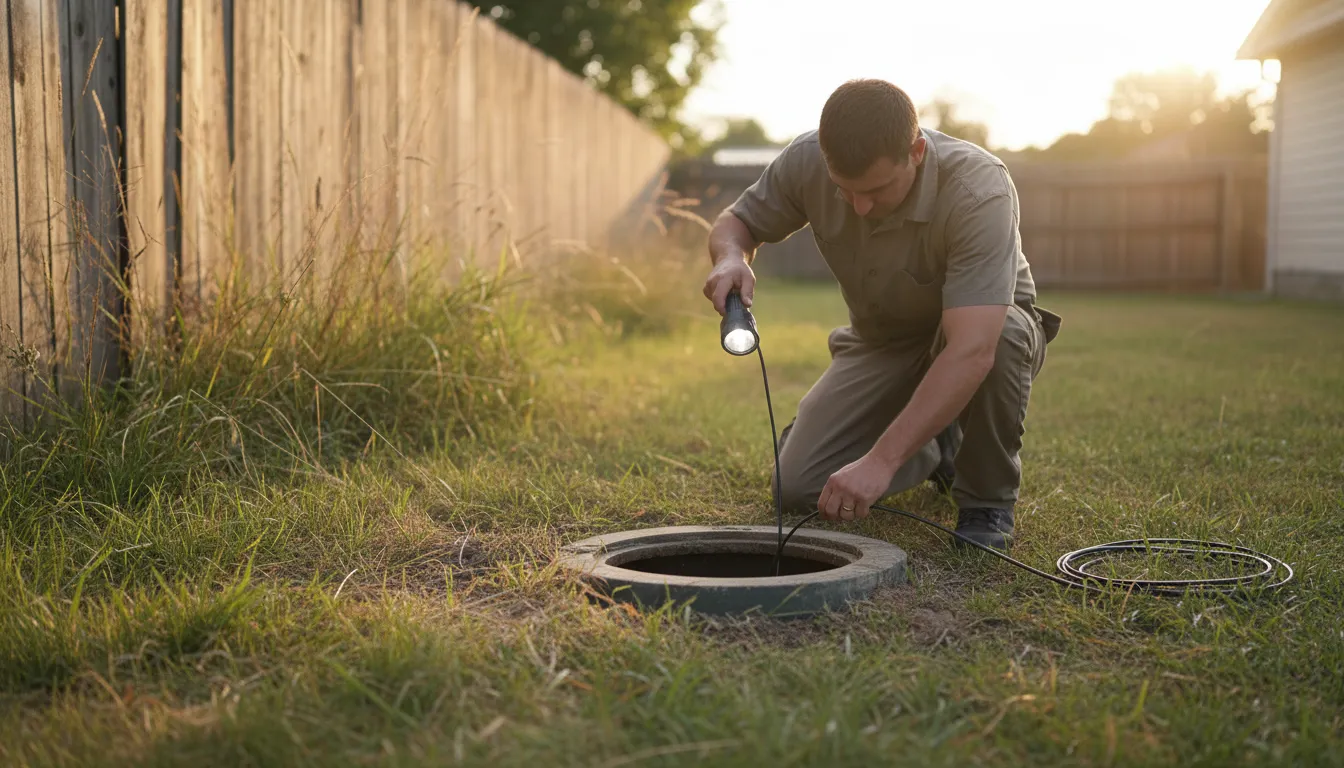
Find the Best Septic Tank Inspection Companies for Your Business
No obligation • Fast responses • Nationwide coverage

Why you can trust Septic Spot
Septic Spot is a leading United States resource for understanding and comparing septic services. Our editors review providers using consistent criteria and verify key business details. Listings and scores are independent, and companies cannot pay to influence our content.
Search providers near you
Top Septic Tank Inspection Companies in Harlingen, Texas Ranked
A septic system inspection is a vital health and safety evaluation of your property's on-site wastewater treatment system. In Harlingen, these assessments are crucial for protecting groundwater, ensuring regulatory compliance, and preventing costly system failures. This guide explains the local inspection process, regulations, and typical costs to help you understand what to expect when you need to evaluate your septic system's condition.
Understanding Septic Systems in the Rio Grande Valley
In Harlingen and across Cameron County, most homes outside municipal sewer lines rely on On-Site Sewage Facilities (OSSFs), commonly known as septic systems. These systems are responsible for treating all household wastewater. Given the region's environmental considerations, Texas state and local authorities have established specific rules to manage these systems effectively. A professional septic inspection is the primary tool for verifying that a system is functioning properly and not posing a risk to public health or the environment.
Why Are Septic Inspections Required in Harlingen?
Regular septic tank evaluations are not just a good idea-they are often mandated. The Texas Commission on Environmental Quality (TCEQ) sets the standards, which are enforced locally. Key triggers for an inspection include:
- Property Transactions: A septic system inspection is almost always required during the sale of a home with an OSSF to satisfy lender and title company requirements.
- Aerobic System Maintenance: If you have an aerobic treatment system (ATU), state law requires a maintenance contract with a licensed provider. This includes mandatory inspections every four months (or every six months if the system uses an electronic monitor).
- System Complaints or Failures: The Cameron County health department or TCEQ may order an inspection if a system is suspected of malfunctioning and creating a nuisance or health hazard.
- Routine Preventive Maintenance: For conventional systems, experts recommend a thorough inspection every 3-5 years, coinciding with the recommended pumping schedule, to catch small issues before they become major problems.
The Professional Septic Inspection Process: A Step-by-Step Look
A comprehensive septic system assessment in Harlingen involves much more than just looking into the tank. A qualified inspector follows a detailed checklist to evaluate the entire system's health.
1. Pre-Inspection & System Location The process often begins with locating the tank and access lids, which may be buried. Inspectors use probe rods or electronic locating equipment. They will also review any available records about the system's age, type, and design.
2. Tank Inspection This is the core of the evaluation. The inspector will:
- Pump the tank (if included in the service) to allow for a clear internal examination.
- Measure the sludge and scum layers to determine if pumping is needed and if the system is being overloaded 1 2.
- Inspect the tank's structural integrity, checking for cracks, leaks, or signs of corrosion.
- Examine the inlet and outlet baffles (or tees) to ensure they are intact and functioning to prevent solids from entering the drain field 3 4.
- Clean and check the effluent filter, if the system is equipped with one.
3. Component & Functional Checks
- For Aerobic Systems: The inspector will test the aerator pump, alarm systems, chlorinator (if used), and all electrical components to ensure proper operation.
- For Pump Systems: The pump, float switches, and control panel are tested for correct function.
4. Drain Field Evaluation The inspector assesses the leach field area for signs of failure, which are serious indicators of system malfunction. They look for:
- Surfacing effluent or soggy, bright green grass over the field.
- Unpleasant odors emanating from the yard.
- Slow-draining fixtures inside the home, which can signal a clogged drain field.
Find the perfect septic tank inspection companies for your needs
Get personalized recommendations and expert advice
Harlingen & Texas Regulations You Need to Know
Local homeowners must navigate a framework of state and county rules. The TCEQ Region 15 office in Harlingen oversees OSSF regulations for the area 5.
- Permits: Any new installation, repair, or alteration of a septic system requires a permit from the local authorized agent (often the county health department) 6.
- Aerobic System Rules: Owners of aerobic treatment units must keep a current maintenance contract with a licensed Maintenance Provider. Inspection reports must be submitted to the local regulating authority as required 7.
- Conventional System Guidelines: While not under the same mandatory inspection contract, conventional gravity systems must still be maintained to prevent nuisances. The "inspect every 3-5 years" guideline is a standard best practice that aligns with TCEQ recommendations 8 9.
- Failure Consequences: A failing system that discharges sewage to the ground surface is a public health violation. Homeowners are typically given a notice to repair the system, and failure to comply can result in fines.
Types of Septic Systems Commonly Inspected
Knowing your system type helps you understand its inspection needs.
- Conventional Gravity System: The most common type. Wastewater flows by gravity from the home to the septic tank, then to a network of perforated pipes in the drain field. Inspections focus on tank levels and drain field performance.
- Aerobic Treatment Unit (ATU): Uses an aerator pump to inject oxygen into the treatment tank, supporting bacteria that break down waste more efficiently. Common in areas with poor soil conditions. Requires frequent, mandatory inspections of mechanical components 10 11.
- Pump System (Pressure Dosed): Uses a pump to move effluent from the tank to the drain field. The inspection includes a thorough check of the pump chamber, pump, and controls.
What to Expect: Septic Inspection Costs in Harlingen
The price of a septic system evaluation varies based on the system's complexity and the services included.
- Basic Visual Inspection: A limited assessment, often for real estate purposes, might range from $200 to $350. This may not include pumping the tank.
- Full Inspection with Pumping: A comprehensive inspection that includes locating the tank, pumping it to enable internal inspection, and evaluating all components typically ranges from $400 to $600+ 12 13. The final cost depends on tank size (e.g., 1,000-gallon vs. 1,500-gallon) and accessibility.
- Aerobic System Maintenance Visit: The cost for the mandatory quarterly inspection is often bundled into an annual maintenance contract, which can range from $200 to $500 per year, depending on the provider and services included 14.
Remember, while pumping is an additional cost during an inspection, it is a necessary step for a proper internal evaluation and is part of routine maintenance.
Finding a Qualified Septic Inspector in Cameron County
Always hire a licensed professional. For aerobic systems, you must use a TCEQ-licensed Maintenance Provider. For conventional system inspections and pumping, look for companies with:
- TCEQ licensing or certification.
- Strong local reputation and experience with Harlingen soil types and regulations.
- Proper insurance.
- The ability to provide a detailed, written report of their findings.
You can verify a provider's license or get a list of local maintenance providers by contacting the TCEQ Region 15 - Harlingen Regional Office or the Cameron County Health Department.
Interpreting Your Septic Inspection Report
After the inspection, you should receive a detailed report. Key sections to review include:
- Condition of Tank: Notes on sludge/scum depth, baffle condition, and structural integrity.
- Component Function: Status of pumps, alarms, and aerators (if applicable).
- Drain Field Observations: Any noted signs of saturation or failure.
- Recommendations: This is the most critical part. It will list necessary actions, such as "tank requires pumping immediately," "baffle needs replacement," or "drain field shows signs of failure, recommend further evaluation."
- Compliance Statement: For aerobic systems, the report will state whether the system is in compliance with state maintenance requirements.
Frequently asked questions
Sources
Footnotes
-
Frequent Questions on Septic Systems | US EPA - https://www.epa.gov/septic/frequent-questions-septic-systems ↩
-
Septic Inspection Process: What Homeowners Should Know | LunsPro - https://www.lunspro.com/vlog/the-septic-system-inspection-process-what-homeowners-should-know ↩
-
What is Included in Septic Inspection? - TexInspec - https://texinspec.com/what-is-included-in-septic-inspection/ ↩
-
How to Read Your Septic Tank Inspection Report: A Complete Guide - https://dandhsepticservices.com/septic-tank-inspection-report/ ↩
-
What laws in Texas apply to septic systems? - Water School - https://brazos.org/about-us/education/water-school/articleid/349/what-laws-in-texas-apply-to-septic-systems ↩
-
Getting a Permit for an OSSF - Such as a Septic System - https://www.tceq.texas.gov/permitting/ossf/ossfpermits.html ↩
-
Septic Tank Laws in Texas - https://dillonseptic.com/septic-tank-laws-in-texas/ ↩
-
Septic System - Texas Water Resources Institute - https://twri.tamu.edu/wp-content/uploads/2024/04/em-126-septic-system-maintenance-inspection-pocket-guide.pdf ↩
-
Texas Septic Tank Rules - https://dillonseptic.com/texas-septic-tank-rules/ ↩
-
Maintenance of On-Site Sewage Facilities (Septic Systems) - https://www.tceq.texas.gov/permitting/ossf/ossfmaintenance.html ↩
-
Texas Septic System Regulations - https://dillonseptic.com/texas-septic-system-regulations/ ↩
-
Septic Tank Inspection: A Guide - https://www.petesoutflow.com/septic-tank-inspection-a-guidee01bcb81 ↩
-
Septic Tank FAQ and Septic System FAQ - https://dillonseptic.com/faq/ ↩
-
Basics for Septic Systems - https://www.tceq.texas.gov/assistance/water/fyiossfs.html ↩