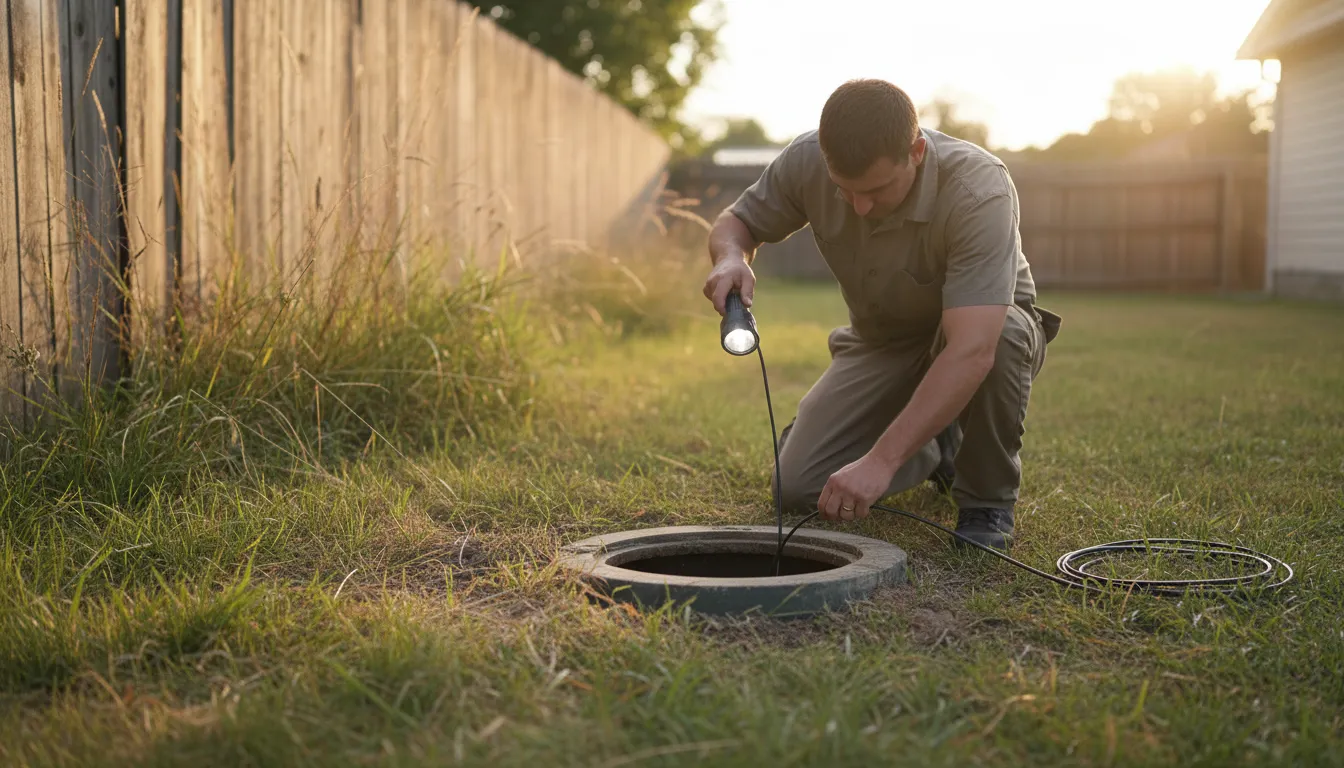
Find the Best Septic Tank Inspection Companies for Your Business
No obligation • Fast responses • Nationwide coverage

Why you can trust Septic Spot
Septic Spot is a leading United States resource for understanding and comparing septic services. Our editors review providers using consistent criteria and verify key business details. Listings and scores are independent, and companies cannot pay to influence our content.
Search providers near you
Top Septic Tank Inspection Companies in Leander, Texas Ranked
A professional septic tank inspection is a critical evaluation of your on-site sewage facility (OSSF) to ensure it is functioning safely and efficiently. For homeowners in Leander, these assessments are not just about routine maintenance; they are often a regulatory requirement for property transfers and a key step in protecting your property value and local groundwater. This guide will help you understand what a thorough septic system evaluation entails, when you need one, and how to find qualified local professionals to perform this essential service.
Septic Squad
Austin, TX
Septic Squad provides septic tank pumping, cleaning, and inspection services in Austin, TX, and nearby communities. They offer full system inspections, safe pumping, and grease trap cleaning to maintain residential and commercial septic systems. Their licensed technicians deliver detailed maintenance reports and conduct thorough evaluations to identify issues such as blockages or leaks. Septic Squad serves multiple counties including Williamson and Hays, covering cities like Round Rock, Cedar Park, and Kyle.
Hambone Plumbing and Septic Pumping
818 W 2nd St, Taylor, TX 76574
Hambone Plumbing and Septic Pumping is a family-owned business serving the Austin, TX area with over 30 years of experience. They provide residential and commercial plumbing and septic services, including septic tank pumping, inspections, and repairs. Their licensed team offers comprehensive solutions such as water heater installation and flushing, drain and sewer line cleaning, and advanced leak detection using thermal imaging technology. Hambone Plumbing and Septic Pumping is available 24/7 to handle emergency plumbing needs and maintain efficient, safe plumbing systems.
Mud Duck Septic Service
Austin, TX
Mud Duck Septic Service is a family-owned and locally operated company providing septic tank pumping, inspection, and repair services in Austin, TX. They serve nearby communities including Bertram, Burnet, Georgetown, Liberty Hill, and Spicewood. The company is fully licensed and insured, focusing on industry best practices and personalized consultations to address a range of septic system needs. Mud Duck Septic Service emphasizes careful workmanship and attention to detail in all projects.
Synergy Onsite Septic Solutions
Austin, TX
Synergy Onsite Septic Solutions is a septic tank inspection, repair, and installation company based in Austin, TX. They serve Austin and Central Texas, including many surrounding communities. Their services include repairs, diagnostics, locating and marking septic systems, installation, replacements, maintenance contracts, and consulting. The company is known for providing accurate assessments and appropriate solutions to septic system issues, often helping customers avoid unnecessary repairs. They also offer assistance with inspection preparation and referrals for pumping and design services.
HomeField Williamson County
40203 Industrial Park Cir, Georgetown, TX 78626
HomeField Williamson County provides comprehensive septic system services in Austin, TX, covering residential and commercial needs. Their offerings include septic tank pumping, inspections, repairs, installations, drain field replacements, and system design. The company emphasizes local expertise and proactive maintenance plans to help prevent future problems. They serve Williamson County with a team familiar with local regulations and conditions, ensuring septic systems meet current requirements. HomeField also offers various maintenance plans tailored to different levels of coverage and support.
Why Septic Inspections Are Essential in Leander
In areas like Leander that are not served by centralized municipal sewer lines, a properly functioning septic system is vital for public health and environmental protection. A failing system can lead to sewage backups in your home, foul odors, and the contamination of nearby soil and water sources. Regular inspections help catch minor issues-like a clogged outlet baffle or a failing aerator pump-before they escalate into costly repairs or complete system failure. Furthermore, Williamson County and the Texas Commission on Environmental Quality (TCEQ) have specific rules that often mandate a licensed inspection during the sale of a property or before major repairs, making it a non-negotiable step in many real estate transactions 1 2.
Understanding Local Regulations and Requirements
Septic system rules in Leander are governed by TCEQ regulations (Title 30, Chapter 285 of the Texas Administrative Code) and are enforced by local county authorities 3. Whether your home falls under Williamson or Travis County jurisdiction can affect specific procedural details, so it's always wise to confirm with the local utility or environmental health department.
Key regulatory triggers for an inspection include:
- Property Transfer: A passing inspection is frequently a contingency for home sales.
- New System Installation: All new OSSF installations require permitting and final inspection.
- Major Repairs: Significant alterations or repairs to an existing system typically need a permit and inspection.
- Aerobic System Maintenance: If you have an aerobic treatment unit (ATU), state law requires an ongoing maintenance contract with a licensed professional who will perform regular inspections and service 4.
System setbacks-the minimum distances your septic tank and drain field must be from structures, property lines, and water wells-are also strictly enforced. Common setbacks include 5 feet from a building, 5-10 feet from a property line, and 50-100 feet from a water well 5.
What a Comprehensive Septic Inspection Covers
A proper septic system evaluation is much more than just looking at the tank. A licensed inspector will conduct a multi-point check to assess the health of the entire system 6 7.
1. Locating and Accessing the System
The inspector first locates the tank, distribution box, and drain field. They will check for proper, secure access ports (lids) on the tank, which are necessary for safe servicing and future inspections.
2. Tank Interior Assessment
This is the core of the inspection. The inspector will:
- Measure Sludge and Scum Levels: Using specialized tools, they measure the depth of sludge at the bottom and scum at the top. The EPA recommends pumping when the sludge layer fills one-third of the tank's liquid depth.
- Check Liquid Levels: Abnormal liquid levels can indicate a blockage in the outlet pipe or a leak in the tank.
- Inspect Structural Components: The inlet and outlet tees or baffles are checked for damage or blockage. The tank's interior walls are examined for cracks, corrosion, or structural failure.
3. Drain Field Evaluation
The inspector surveys the drain field (or leach field) area for tell-tale signs of failure, such as:
- Effluent ponding or surfacing above the ground.
- Unusually lush or green grass over the field lines.
- Foul odors emanating from the soil.
4. Aerobic System Components (If Applicable)
For homes with aerobic treatment units, the inspection is more involved and includes 8:
- Testing the aerator pump and air diffusers to ensure proper oxygenation.
- Checking electrical connections, control panels, and alarm systems.
- Inspecting spray heads for clogs and proper operation.
5. Documentation and Reporting
A professional inspection concludes with a detailed report. This document should outline the condition of each component, note any deficiencies, and provide recommendations for repairs, pumping, or further investigation. Understanding this report is crucial for making informed decisions about your property.
Find the perfect septic tank inspection companies for your needs
Get personalized recommendations and expert advice
Inspection and Maintenance Costs in Leander
Understanding the potential costs helps in planning for this important home maintenance task. Prices can vary based on your tank size, system type, and property accessibility.
- Standard Septic Inspection: A comprehensive inspection for a conventional gravity system typically ranges from $300 to $650 9. This fee generally includes the full system assessment and a written report.
- Septic Tank Pumping: If the inspection reveals the tank needs to be pumped, that service is separate. Pumping costs in the Leander area usually range from $250 to over $600, depending on tank capacity (measured in gallons) 10.
- Aerobic System Maintenance Contract: For homes with ATUs, the required annual maintenance contract, which includes periodic inspections, testing, and minor adjustments, typically costs between $200 and $400 per year 11.
How Often Should You Inspect and Pump Your System?
The U.S. Environmental Protection Agency provides a clear baseline: septic tanks should be inspected at least every three years and pumped as needed, typically every three to five years 12. However, several factors can accelerate this schedule for Leander homeowners:
- Household Size: More residents mean more wastewater and faster sludge accumulation.
- Tank Size: A smaller tank will fill up more quickly.
- Garbage Disposal Use: Disposals significantly increase the amount of solids entering the tank.
- System Age: Older systems may require more frequent monitoring.
The most reliable method is to have an annual visual check and follow the sludge/scum measurements from your last professional inspection. Never wait for a problem to occur; proactive maintenance is always less expensive than emergency repairs.
Choosing a Qualified Leander Inspection Professional
Selecting the right provider is critical. Look for a contractor who is:
- Licensed by the TCEQ: This is a non-negotiable requirement for performing official inspections in Texas.
- Insured: Protects you from liability in case of accidents on your property.
- Experienced with Local Soil and Conditions: Leander's soil types can affect system performance. Local experience is invaluable.
- Transparent with Pricing and Reporting: They should provide a clear scope of work and a detailed, easy-to-understand report.
Always ask for references and verify their license status with the TCEQ. A reputable inspector will be happy to discuss their process and answer your questions before starting work.
Frequently asked questions
Sources
Footnotes
-
Maintenance of On-Site Sewage Facilities (Septic Systems) - https://www.tceq.texas.gov/permitting/ossf/ossfmaintenance.html ↩
-
Basics for Septic Systems - https://www.tceq.texas.gov/assistance/water/fyiossfs.html ↩
-
30 Tex. Admin. Code § 285.32 - Criteria for Sewage Treatment ... - https://www.law.cornell.edu/regulations/texas/30-Tex-Admin-Code-SS-285-32 ↩
-
Texas Septic System Regulations - https://dillonseptic.com/texas-septic-system-regulations/ ↩
-
Septic Tank Laws in Texas - https://dillonseptic.com/septic-tank-laws-in-texas/ ↩
-
What to Expect from a Septic Inspection - https://www.wrenvironmental.com/blog/2023/may/what-to-expect-from-a-septic-inspection/ ↩
-
Does Texas Require Septic Inspection | TexInspec - https://texinspec.com/does-texas-require-septic-inspection/ ↩
-
Texas OSSF Inspection Requirements: Complete Guide for 2025 - https://www.fieldbaseos.com/blog/texas-ossf-inspection-requirements.html ↩
-
How to Read Your Septic Tank Inspection Report: A Complete Guide - https://dandhsepticservices.com/septic-tank-inspection-report/ ↩
-
Texas Septic Tank Rules - https://dillonseptic.com/texas-septic-tank-rules/ ↩
-
Septic Well Pre-Inspection for Magnolia Sellers - Avoid Delays - https://deborahstepanek.com/blog/septic-and-well-preinspections-for-magnolia-sellers ↩
-
Frequent Questions on Septic Systems | US EPA - https://www.epa.gov/septic/frequent-questions-septic-systems ↩