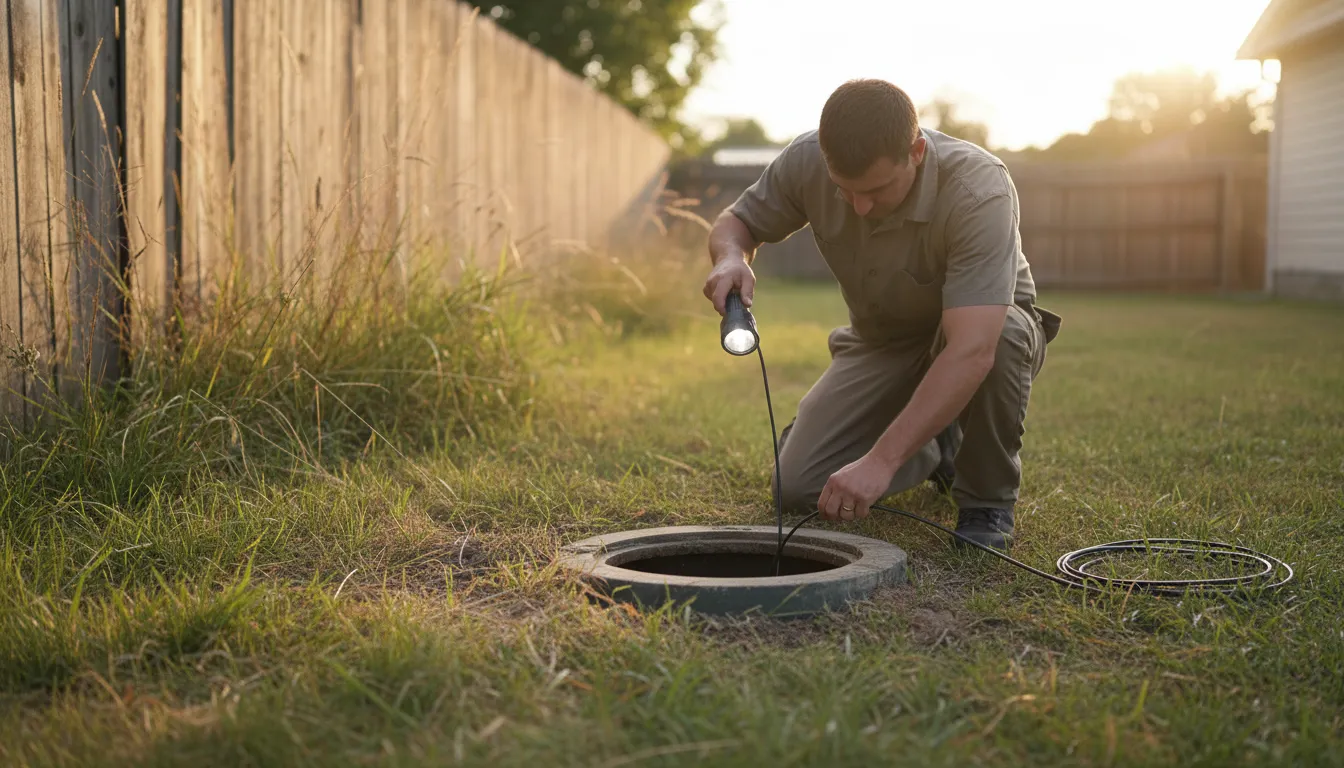
Find the Best Septic Tank Inspection Companies for Your Business
No obligation • Fast responses • Nationwide coverage

Why you can trust Septic Spot
Septic Spot is a leading United States resource for understanding and comparing septic services. Our editors review providers using consistent criteria and verify key business details. Listings and scores are independent, and companies cannot pay to influence our content.
Search providers near you
Top Septic Tank Inspection Companies in San Marcos, Texas Ranked
A septic tank inspection is a professional evaluation of your on-site sewage facility (OSSF) to ensure it is functioning properly and complies with state regulations. In Texas, these inspections are not just a good idea-they are often a legal requirement for system maintenance and property transfers. This guide explains the inspection process, state and local rules, typical costs, and how to find qualified local professionals to assess your system.
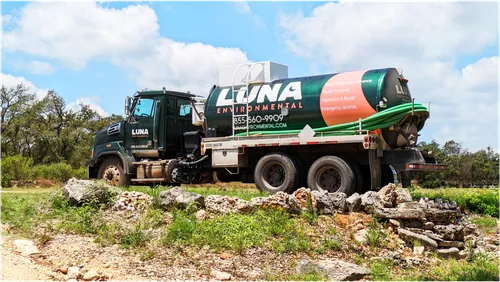
Luna Environmental
151 Las Flores Dr Suite 201, Wimberley, TX 78676
Luna Environmental is a septic service company based in Austin, TX, providing septic tank pumping, inspection, maintenance, and repair services. They serve residential and commercial clients throughout Central Texas, offering tailored solutions to keep septic systems functioning properly. The company is equipped to handle 24-hour emergency maintenance and pumping, ensuring prompt response to urgent septic issues. Luna Environmental emphasizes comprehensive reporting and environmental stewardship in their work, aiming to support sustainable septic system health and community well-being.
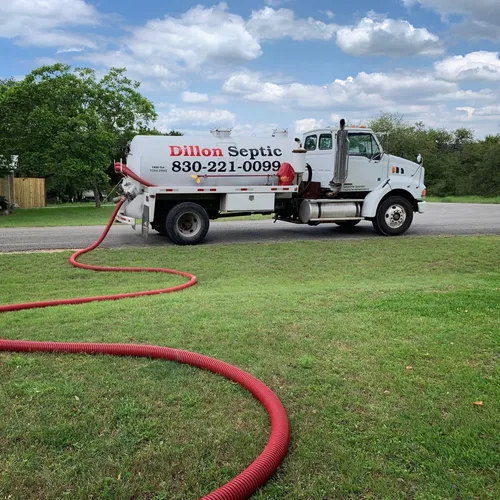
Dillon Septic
136 Sycamore Cir, Spring Branch, TX 78070
Dillon Septic offers a full range of septic services including pumping, inspections, repairs, and new installations for residential and commercial properties in San Antonio, TX. The company has years of experience and a skilled team that handles all aspects of septic system care, ensuring efficient and reliable operation. Dillon Septic is licensed and trained to provide maintenance, emergency repairs, and complete system installations with a focus on clear communication and tailored solutions.

DryNow Restoration & Plumbing
136 Sycamore Cir, Spring Branch, TX 78070
DryNow Restoration & Plumbing provides septic system services in San Antonio, TX, covering residential and commercial properties. The company offers a full range of septic solutions including pumping, inspections, repairs, and new installations. Their team is experienced in maintaining and restoring septic systems to ensure proper function and safety. DryNow Restoration & Plumbing emphasizes personalized service and clear communication to address each customer's specific needs.
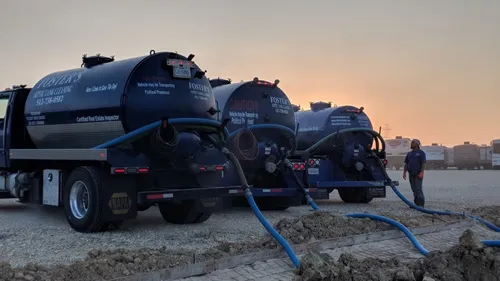
Foster's Septic Cleaning and Inspections
105 Foster Blvd, Maxwell, TX 78656
Foster's Septic Cleaning and Inspections is a veteran and family-owned company based near San Antonio, TX. They provide septic tank inspection and cleaning services primarily for homeowners. The company serves Hays, Caldwell, Guadalupe, Comal, and Bastrop counties, offering expert septic care with over 25 years of experience. Their team is known for thorough septic inspections and maintenance, supporting local families with reliable septic system solutions.

Hines Septic Of San Marcos
Austin, TX
Hines Septic Of San Marcos is a family-owned septic service provider operating in Austin, TX, as well as San Marcos and San Antonio. They offer septic tank pumping, inspection, installation, repair, and drain field repair or replacement. The company is fully licensed and insured, ensuring all work meets code requirements. They provide a one-year labor warranty on new septic tank and drain field installations. Hines Septic also offers 24/7 emergency septic services to support urgent needs in the area.
Understanding Texas Septic System Regulations
In Texas, septic systems are formally known as On-Site Sewage Facilities (OSSFs) and are regulated by the Texas Commission on Environmental Quality (TCEQ) along with local authorized agents, often county health or engineering departments. The state's rules are designed to protect public health and groundwater quality. A key aspect of compliance is the mandatory inspection schedule, which varies significantly based on the type of system installed on your property.
Before any new installation, repair, or modification can begin, a permit with an approved plan must be obtained from the local permitting authority 1. This process starts with a site evaluation conducted by a licensed professional who tests the soil, analyzes the slope, and checks groundwater levels to determine the most suitable type of septic system for the location 1.
Types of Septic Systems and Their Inspection Requirements
The frequency and focus of your required septic system check-up depend entirely on the technology your system uses.
Aerobic Treatment Systems (ATUs)
Aerobic systems, which use oxygen to break down waste more thoroughly, have the most stringent inspection mandate in Texas. State law requires that these systems be inspected by a licensed Maintenance Provider every four months (three times per year). The inspection verifies that aerators, pumps, chlorinators, and alarm systems are all operating correctly to ensure effective treatment 2.
Conventional Gravity-Fed Systems
The most common type, conventional systems typically rely on anaerobic bacteria and gravity. For these, Texas does not mandate a specific annual inspection frequency by a licensed provider. Instead, the general guideline is to have the tank pumped and the system checked every 3 to 5 years, depending on household size and water usage 3. However, local county rules may be more specific.
Alternative and Advanced Systems
Systems employing secondary treatment, drip irrigation, or other advanced technologies often follow the same four-month inspection cycle as aerobic systems 4. It is crucial to verify the specific requirements for your system's design with your local permitting authority or a licensed inspector.
What Happens During a Septic Inspection?
A thorough septic system evaluation goes beyond just checking the tank. A professional inspector will follow state guidelines to assess the entire OSSF.
For Routine Maintenance Inspections:
- Tank Access and Scum/Sludge Levels: The inspector locates and opens access ports to measure the scum and sludge layers inside the tank to determine if pumping is needed.
- Component Operation: For aerobic and pumped systems, this includes testing pumps, aerators, float switches, and alarm panels.
- Drain Field Assessment: The inspector looks for signs of failure in the drain field (leach field), such as surfacing effluent, soggy ground, or unusually lush vegetation.
- Overall System Integrity: Checks for tank cracks, inlet/outlet pipe blockages, and the condition of baffles.
For Real Estate Transactions: Inspections for property sales are typically more comprehensive and may include:
- Full System Scoping: Using a specialized camera to inspect the interior of distribution lines.
- Dye Testing: Introducing a non-staining dye into the system and checking for its emergence on the property surface, indicating a leak.
- Detailed Reporting: Providing an extensive report on the system's condition, capacity, and remaining lifespan, which is crucial for buyers and lenders.
Find the perfect septic tank inspection companies for your needs
Get personalized recommendations and expert advice
Legal and Reporting Obligations
Texas administrative code (30 TAC §285.91(4)) outlines the standards for OSSF maintenance and inspections 5. Following an inspection, licensed Maintenance Providers must submit an official report to both the local permitting authority and the property owner within 14 days 5. This documentation is essential for proving compliance, especially for aerobic system owners. Failure to maintain inspection records can result in fines and legal liability if a system fails and causes environmental contamination.
It's worth noting that some Texas jurisdictions allow homeowners to perform maintenance on their own systems after completing a state-approved training course, while others require all services to be completed by a licensed provider 6. Always check with your local county office to understand the rules that apply to you.
Cost of Septic Inspections in Texas
The price of a septic system evaluation in Texas varies based on the inspection's purpose, system type, and property size.
- Routine Maintenance Inspection: Typically ranges from $200 to $600.
- Real Estate / Detailed Inspection: These more in-depth evaluations average between $500 and $900 or more7 8.
- Permit Application Fees: If your inspection is part of a new installation or repair, remember that local permit application fees themselves can range from $300 to $1,2009.
While cost is a factor, choosing a qualified, licensed, and insured professional is critical. An incomplete or incorrect inspection can lead to costly system failures down the line.
Finding a Qualified Inspector in Texas
When searching for a septic inspection professional, ensure they are licensed by the TCEQ as a Maintenance Provider or Site Evaluator, as required for the work being performed. Verify their standing with the state and ask for proof of insurance. Look for companies with strong local reputations and experience with your specific system type (e.g., aerobic, conventional, drip irrigation). Reading verified customer reviews and asking for references can provide insight into their thoroughness and professionalism. Ultimately, a proper inspection is an investment in your property's value, your family's health, and environmental protection.
Frequently asked questions
Sources
Footnotes
-
Getting a Permit for an OSSF - Such as a Septic System - https://www.tceq.texas.gov/permitting/ossf/ossfpermits.html ↩ ↩2
-
Aerobic Septic System Inspection - https://ctxhomeinspection.com/aerobic-septic-system-inspection/ ↩
-
Advice for an Owner of an On-Site Sewage Facility (Septic System) - https://www.tceq.texas.gov/permitting/ossf/ossfadvice.html ↩
-
Texas Septic Tank Rules - https://dillonseptic.com/texas-septic-tank-rules/ ↩
-
Maintenance of On-Site Sewage Facilities (Septic Systems) - https://www.tceq.texas.gov/permitting/ossf/ossfmaintenance.html ↩ ↩2
-
Basics for Septic Systems - https://www.tceq.texas.gov/assistance/water/fyiossfs.html ↩
-
How Much Does a Septic Inspection Cost? [2026 Data] - Angie's List - https://www.angi.com/articles/septic-inspection-cost.htm ↩
-
Septic System Inspection Guide for Homeowners - https://uneeksepticservices.com/septic-system-inspection-guide-for-homeowners/ ↩
-
Texas Septic System Regulations - https://dillonseptic.com/texas-septic-system-regulations/ ↩