Find the Best Septic Tank Installation & Replacement Contractors for Your Business
No obligation • Fast responses • Nationwide coverage

Why you can trust Septic Spot
Septic Spot is a leading United States resource for understanding and comparing septic services. Our editors review providers using consistent criteria and verify key business details. Listings and scores are independent, and companies cannot pay to influence our content.
Search providers near you
Top Septic Tank Installation & Replacement Contractors in Austin, Texas Ranked
Installing or replacing a septic system is a significant investment in your property's long-term health and value. A properly designed and permitted on-site sewage facility (OSSF) safely treats household wastewater, protects local groundwater, and ensures your home meets all Texas health and environmental regulations. For Austin homeowners, navigating the process of septic system installation or replacement involves specific local permits, soil evaluations, and working with licensed professionals. This guide provides the essential information you need to understand the steps, costs, and regulations for a successful septic tank project in the Austin area.
Aerobic Services
145 FM1441, Bastrop, TX 78602
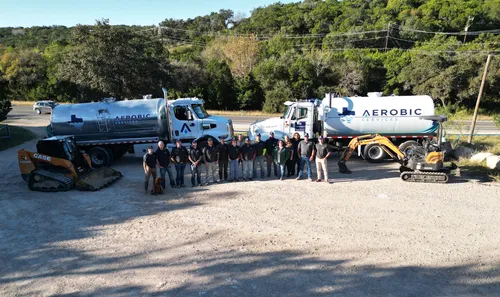
Aerobic Services is a septic tank pumping and installation company serving Austin, TX, and the surrounding Central Texas area. Established in 1999, the company offers residential and commercial wastewater services including septic system installations, maintenance, and pumping. With over 20 years of experience, Aerobic Services is known for its knowledgeable staff and thorough approach to septic system care.
Synergy Onsite Septic Solutions
Austin, TX
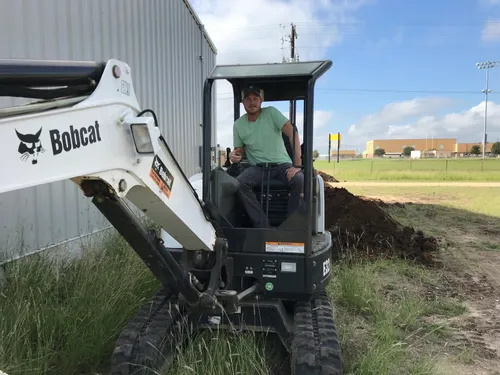
Synergy Onsite Septic Solutions is a septic tank inspection, repair, and installation company based in Austin, TX. They serve Austin and Central Texas, including many surrounding communities. Their services include repairs, diagnostics, locating and marking septic systems, installation, replacements, maintenance contracts, and consulting. The company is known for providing accurate assessments and appropriate solutions to septic system issues, often helping customers avoid unnecessary repairs. They also offer assistance with inspection preparation and referrals for pumping and design services.
Aerobic Services
13341 W US Hwy, 290 Service Rd Bldg2 #B17, Austin, TX 78737
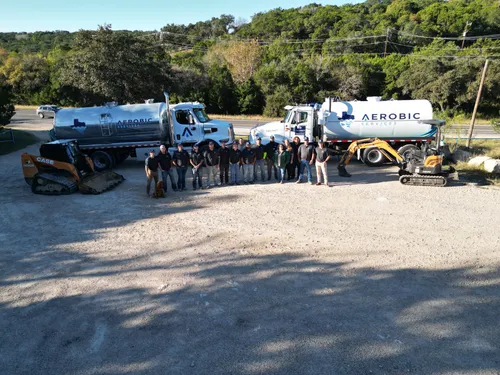
Aerobic Services is a septic tank pumping and installation company based in Austin, TX. Serving New Braunfels and the surrounding areas, they provide residential and commercial septic system services including installation, maintenance, and pumping. With over 20 years of experience since 1999, Aerobic Services has established itself as a significant wastewater service provider in Central Texas.

Larry's Septic Tank Service
283 Lost Oaks Trl, Bastrop, TX 78602
Larry's Septic Tank Service is a family-owned and Christian-based business providing septic system services in Austin, TX, and the surrounding Central Texas area. Since 1993, they have offered septic tank installation, pumping, repair, inspections, and site evaluations. Their certified NAWT inspectors handle state-required septic inspections and maintenance contracts to keep systems compliant and functioning properly. The company emphasizes integrity and transparency with competitively priced services and no hidden fees.

Tanker's Plumbing & Septics
111 Meadowlakes Dr Ste C, Marble Falls, TX 78654
Tanker's Plumbing & Septics is a family-owned plumbing and septic contractor based near Austin, TX, serving the Hill Country community. They provide septic tank installation and plumbing services with a focus on personalized care and local expertise. The company emphasizes honest, skilled workmanship and treats each job with attention and respect. As a long-standing local business, they handle a range of plumbing needs, including emergency services.
Understanding Septic Systems and Local Regulations
In Texas, septic systems are formally known as On-Site Sewage Facilities (OSSFs). These systems are a self-contained wastewater treatment solution for properties not connected to a municipal sewer line. In Austin, the regulatory authority depends on your location: within city limits, Austin Water oversees OSSF permits, while properties in unincorporated Travis County fall under the jurisdiction of the Texas Commission on Environmental Quality (TCEQ) or county authorities. All installations and replacements must comply with state and local codes designed to protect public health and water quality, such as preventing contamination of the Edwards Aquifer.
The cornerstone of Texas septic law is proper maintenance. Homeowners are legally responsible for ensuring their system does not create a nuisance or health hazard. This begins with a correctly installed system. Whether you're building a new home or replacing a failing septic tank, the process is governed by a strict permitting sequence that ensures every system is tailored to the specific site conditions and household size.
The Step-by-Step Installation and Replacement Process
Replacing a failed system follows the same rigorous process as a new installation. You cannot simply install a new tank in the old location; a full site evaluation and new permit are required. Here is the standard workflow for a septic system project in Central Texas.
1. Site Evaluation and Soil Testing
Before any design work can begin, a licensed professional-either a Professional Engineer (PE) or a Registered Sanitarian-must conduct a thorough site evaluation. This critical first step determines the feasibility and type of system your property can support.
The evaluation includes a percolation test (or "perc test"), which measures how quickly water drains through your soil. The results, along with an assessment of soil composition, depth to bedrock, and groundwater levels, dictate the size and design of the drain field 1 2. This evaluation typically costs between $700 and $2,000 and is a non-negotiable requirement for permit submission.
2. System Design and Planning
Using the data from the site evaluation, a licensed designer creates a detailed system plan. The design must comply with all TCEQ standards and local regulations. Key design factors include:
- System Sizing: Tank and drain field size are based on the number of bedrooms in the home, which estimates daily wastewater flow. A standard 3-bedroom home typically requires a 900-1,000 gallon tank, while a 4-bedroom home often needs a 1,000-1,200 gallon tank 3.
- System Type: The soil conditions will determine whether a conventional gravity-fed system, a pressure-dosed system, or an advanced aerobic treatment unit (ATU) is necessary.
- Location: The design will specify the placement of the tank and drain field, adhering to mandatory setbacks from wells, property lines, water bodies, and structures.
3. Permit Application and Approval
With the site evaluation and design plan in hand, you or your contractor submits a complete application to the permitting authority (Austin Water or TCEQ). The application packet must include the site evaluation report, the engineered design, and the applicable fees. Once reviewed and approved, the authority issues a "permit to construct" 4. Do not begin any excavation before receiving this permit.
4. Professional Installation
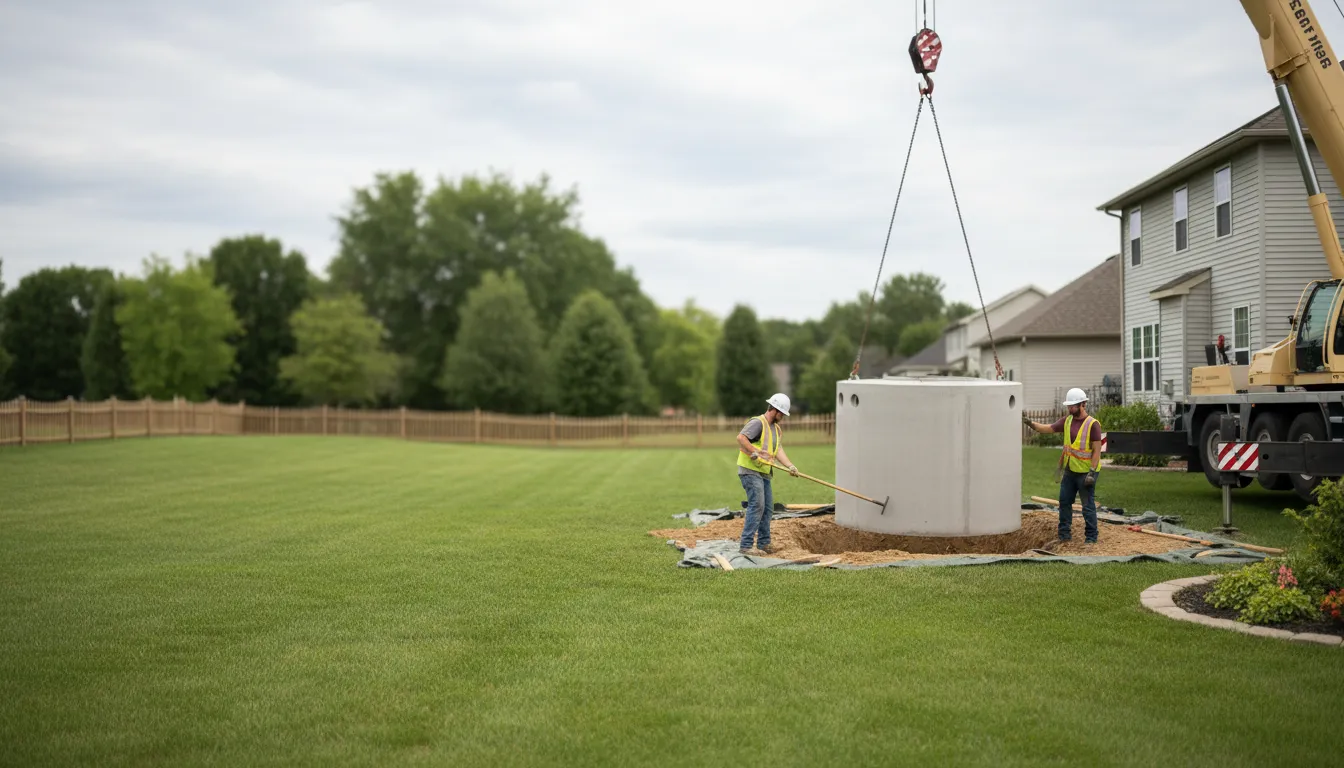
Only a licensed septic system installer should perform the excavation and installation. The process involves setting the septic tank, constructing the distribution box and drain field (with gravel, chambers, or other approved media), and laying all connecting piping. Proper installation is vital for long-term performance and to pass the upcoming inspections.
Find the perfect septic tank installation & replacement contractors for your needs
Get personalized recommendations and expert advice
5. Mandatory Inspections
Austin Water and TCEQ require multiple inspections during construction to ensure compliance with the approved design. These inspections are typically conducted by the permitting authority or a licensed engineer and are critical for receiving final approval.
- Open Hole Inspection: This occurs after the tank is set in the ground and the drain field trenches are dug but before any gravel or piping is placed. The inspector verifies the dimensions, depth, and soil conditions 5.
- Drainfield/System Inspection: After the drain field media (like gravel or chambers) and distribution pipes are laid but before the trenches are backfilled, the inspector checks the materials and construction quality.
- Final Inspection: A final walkthrough is conducted once the entire system is installed and backfilled. The inspector checks for proper grading, the installation of risers and lids for access, and overall system functionality 6.
6. Final Approval and Operation Permit
After the final inspection is passed, the permitting authority issues a "permit to operate." This document is your official record that the system was installed according to code and is approved for use. Keep this permit with your property records 7 8.
Cost Factors for Septic System Projects in Austin
The total cost for a new septic system or a full system replacement in Austin can vary widely based on site conditions, system type, and property specifics. Here's a breakdown of typical cost components:
- Site Evaluation & Perc Test: $700 - $2,000
- Land Survey (if needed): $330 - $900
- Standard Conventional System Installation: $5,000 - $12,000+ 9. This range typically covers a standard gravity system for a favorable site.
- Engineering & Design Fees: These are separate from installation and can add significant cost, especially for complex sites requiring advanced system designs.
- Permitting Fees: Fees paid to Austin Water or TCEQ for plan review and inspections.
It's important to note that difficult sites with poor soil, high groundwater, or limited space may require an advanced Aerobic Treatment Unit (ATU) or other alternative system, which can increase the total project cost to $15,000 - $30,000 or more 10 11. Always get detailed, written estimates that break down all costs-design, permitting, installation, and inspection fees.
Maintaining Your New or Replacement System
Your responsibility begins once the system is operational. Texas law mandates that homeowners maintain their OSSF to prevent failures 12. For a conventional system, this means:
- Regular Pumping: Have the septic tank pumped by a licensed pumper every 3 to 5 years, depending on usage and household size 13.
- Water Conservation: Reducing water flow extends the system's life.
- Mindful Flushing: Only human waste and toilet paper should go into the system. Avoid chemicals, grease, and non-biodegradable items.
- Protect the Drainfield: Never drive or park over it, and keep roof drains and other surface water away from the area.
Proper maintenance is not just a good idea-it's the law, and it protects your investment by avoiding premature and costly system failure.
Frequently asked questions
Sources
Footnotes
-
On-Site Sewage Facilities | Austin Water - AustinTexas.gov - https://www.austintexas.gov/water/site-sewage-facilities ↩
-
SEPTIC SYSTEM LAWS IN TEXAS - https://www.terseptic.com/posts/septic-systems-its-the-law ↩
-
Texas Septic Tank Rules - https://dillonseptic.com/texas-septic-tank-rules/ ↩
-
Getting a Permit for an OSSF - Such as a Septic System - https://www.tceq.texas.gov/permitting/ossf/ossfpermits.html ↩
-
Installing a Septic System at Your Home: What the Process ... - https://brighteyestexas.com/installing-a-septic-system-at-your-home-what-the-process-looks-like/ ↩
-
Complete Septic System Installation: Process, Permits, And Pitfalls - https://www.theseptictankman.com/blog/complete-septic-system-installation-process-permits-and-pitfalls ↩
-
Texas Septic System Regulations - https://dillonseptic.com/texas-septic-system-regulations/ ↩
-
Design - & - Installation - in - Central - Texas - EPIC™ Septic - https://epicseptic.com/the-ultimate-guide-to-septic-system-design-installation-in-central-texas-what-every-homeowner-builder-needs-to-know/ ↩
-
Average Cost to Install Septic System in Texas - https://dillonseptic.com/average-cost-to-install-septic-system-in-texas/ ↩
-
How Much Does It Cost To Install a Septic System in Austin, TX? - https://www.angi.com/articles/what-does-it-cost-install-septic-system/tx/austin ↩
-
Septic system cost, free pricing information. Septic tank cost. - https://www.texasonsite.com/septicsystemcost.html ↩
-
Septic Tank Laws in Texas - https://dillonseptic.com/septic-tank-laws-in-texas/ ↩
-
Does Texas Require Septic Inspection - TexInspec - https://texinspec.com/does-texas-require-septic-inspection/ ↩