
Find the Best Septic Tank Installation & Replacement Contractors for Your Business
No obligation • Fast responses • Nationwide coverage

Why you can trust Septic Spot
Septic Spot is a leading United States resource for understanding and comparing septic services. Our editors review providers using consistent criteria and verify key business details. Listings and scores are independent, and companies cannot pay to influence our content.
Search providers near you
Top Septic Tank Installation & Replacement Contractors in McAllen, Texas Ranked
Installing or replacing a septic system is a significant investment in your property's long-term functionality and environmental health. In McAllen, this process is governed by specific state and county regulations to ensure systems are safe, effective, and protect our local groundwater. This guide explains the essential steps, costs, and local requirements for septic tank installation and replacement, helping you navigate the process and connect with qualified professionals in the Rio Grande Valley.
Understanding Septic System Installation in Hidalgo County
A septic system installation, often referred to as an On-Site Sewage Facility (OSSF) in Texas, is not a simple DIY project. It is a multi-step process that begins with proper planning and permitting. In McAllen and throughout Hidalgo County, all new installations, replacements, and major alterations require a permit from the Hidalgo County Health and Human Services Department, which enforces regulations set by the Texas Commission on Environmental Quality (TCEQ) 1. This regulatory framework is designed to prevent contamination of the soil and water table, which is especially important in our region.
The journey to a new septic tank system typically follows a standardized path: site evaluation, system design, permitting, construction, and final inspection. Skipping any step, especially the permit, can result in hefty fines, orders to remove a non-compliant system, and legal complications if you sell your property. Working with a licensed installer is crucial, as they understand the local soil conditions and bureaucratic requirements.
The Critical First Step: Site Evaluation and Soil Testing
Before any design work can begin, a licensed professional must conduct a thorough site evaluation. The cornerstone of this evaluation is a soil analysis, commonly called a percolation (perc) test.
- What it Measures: This test determines the soil's absorption rate-how quickly water drains through it. The Rio Grande Valley's soil can vary significantly, with some areas having heavy clay that drains slowly and others having sandy soil that drains quickly.
- Why it's Mandatory: The results of the perc test dictate the entire system's design. A conventional gravity-fed septic system may only be suitable for soils with adequate drainage. For properties with poor drainage or high groundwater, a more advanced aerobic treatment unit (ATU) or other alternative system will be necessary to properly treat wastewater and avoid premature system failure.
- The Outcome: The evaluator will produce a report that identifies the best location for the drain field and recommends the type and size of system your property can support.
Navigating the Permit Process
With a soil evaluation in hand, the formal permitting process begins. This is where many homeowners appreciate the guidance of an experienced septic contractor.
- System Design & Plan Submission: A site plan is created, detailing the proposed location of the tank, drain field, and any necessary components. This plan, along with the soil evaluation report and the permit application, is submitted to the Hidalgo County Health Department or directly to the TCEQ in some cases 2 3.
- Authorization to Construct: Once the plans are reviewed and approved, you will receive an Authorization to Construct. This is your green light to begin physical work. Note that only a licensed installer or the property owner (if they meet specific qualifications) can legally install the system 4 5.
- Permit Fees: Be prepared for permit fees, which typically range from $300 to $1,200, depending on the system's complexity and the specific county requirements. For the most current fee schedule, contacting the Hidalgo County Health and Human Services Department directly is recommended.
The Installation Process: What to Expect
A professional septic tank installation is usually a 1-3 day process, weather and soil conditions permitting.
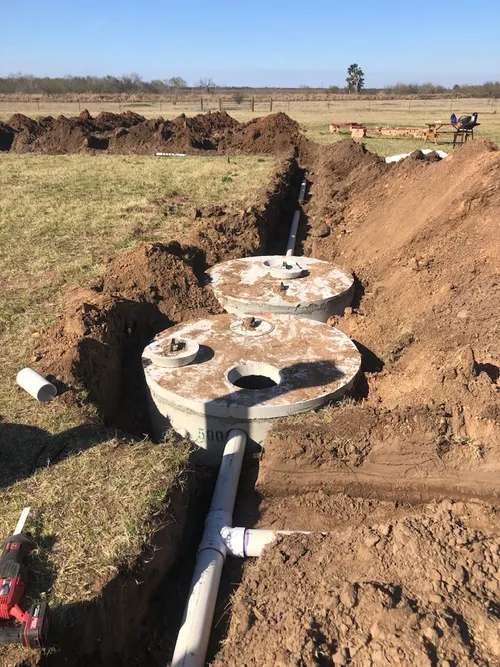
- Excavation: Heavy equipment is used to dig the hole for the septic tank and the trenches for the drain field lines.
- Tank Placement & Plumbing: The tank (often concrete or plastic) is set into place, and all inlet and outlet pipes are connected with the correct slope to ensure proper flow.
- The Crucial Pre-Cover Inspection: This is a non-negotiable milestone. Before the installer backfills the excavation, a county inspector must visit the site to perform a pre-cover inspection. They will check the tank's placement, pipe connections, and, if applicable, the electrical components for pumps or alarms. Passing this inspection is required before the work can be covered.
- Backfill and Restoration: Once approved, the area is backfilled, compacted, and the landscape is restored as much as possible.
Find the perfect septic tank installation & replacement contractors for your needs
Get personalized recommendations and expert advice
Cost Breakdown for Septic System Installation in McAllen
The total cost for a new septic system in the McAllen area can vary widely based on soil conditions, system type, property size, and labor. It's important to view this as a total project cost, encompassing design, permits, materials, excavation, installation, and inspections.
- Conventional Gravity System: For properties with suitable soil, a conventional system is typically the most affordable option, with installation costs generally ranging from $3,500 to $8,500.
- Alternative/Aerobic Treatment System (ATU): Required for poor-draining soils, these advanced systems provide additional treatment and can cost between $4,000 and $15,000 for the installation itself 6.
- Total Project Cost: When you factor in the site evaluation, permit fees, excavation, and other associated costs, many complete septic system projects in Texas reach $10,000 or more 7 8.
Getting multiple detailed quotes from licensed installers is the best way to understand the specific investment for your property.
When is Septic Tank Replacement Necessary?
Knowing when to repair versus replace your septic tank is key to avoiding a catastrophic failure. Consider replacement if you experience:
- Persistent Drainage Issues: Frequent backups, slow drains, or surfacing sewage in the yard often indicate a failing drain field or a compromised tank.
- Structural Damage: Cracks in a concrete tank or collapse due to age or root intrusion cannot be reliably repaired.
- Changes in Property Use: Adding bedrooms or significantly increasing water usage may require a larger system to meet the new demand.
- System Age: Most conventional septic systems have a lifespan of 20-40 years. If yours is approaching or exceeding this age, proactive planning for replacement is wise.
The replacement process mirrors a new installation, requiring the same site evaluation, permitting, and inspection steps. It often involves removing the old tank and may include repairing or relocating the drain field.
Choosing a Licensed Installation Professional in McAllen
Your choice of contractor is one of the most important decisions you'll make. Look for a professional who is:
- Licensed by the TCEQ to install OSSFs in Texas.
- Experienced with local soil conditions in Hidalgo County.
- Knowledgeable about the county permit process and can help guide you through it.
- Willing to provide references from past installation projects.
- Insured and bonded to protect your property during the work.
A reputable installer, like Dillon Septic, which serves the region, will handle the permit paperwork, schedule the critical inspections, and ensure the entire system is built to last and compliant with all Texas septic tank rules 9 10 11.
Frequently asked questions
Sources
Footnotes
-
What laws in Texas apply to septic systems? - Water School - https://brazos.org/about-us/education/water-school/articleid/349/what-laws-in-texas-apply-to-septic-systems ↩
-
Getting a Permit for an OSSF - Such as a Septic System - Texas Commission on Environmental Quality - https://www.tceq.texas.gov/permitting/ossf/ossfpermits.html ↩
-
Steps to Obtain an OSSF Permit | Comal County, TX - https://www.comalcounty.gov/793/Steps-to-Obtain-an-OSSF-Permit ↩
-
Basics for Septic Systems - https://www.tceq.texas.gov/assistance/water/fyiossfs.html ↩
-
SEPTIC SYSTEM LAWS IN TEXAS - https://www.terseptic.com/posts/septic-systems-its-the-law ↩
-
Cost of a Septic System in Texas - https://dillonseptic.com/cost-of-a-septic-system-in-texas/ ↩
-
Average Cost to Install Septic System in Texas - https://dillonseptic.com/average-cost-to-install-septic-system-in-texas/ ↩
-
average cost of new septic installation? - Facebook - https://www.facebook.com/groups/217535903122864/posts/1094726938737085/ ↩
-
Texas Septic System Regulations - https://dillonseptic.com/texas-septic-system-regulations/ ↩
-
Installing a Septic System at Your Home: What the Process ... - https://brighteyestexas.com/installing-a-septic-system-at-your-home-what-the-process-looks-like/ ↩
-
Texas Septic Tank Rules - https://dillonseptic.com/texas-septic-tank-rules/ ↩