
Find the Best Septic Tank Installation & Replacement Contractors for Your Business
No obligation • Fast responses • Nationwide coverage

Why you can trust Septic Spot
Septic Spot is a leading United States resource for understanding and comparing septic services. Our editors review providers using consistent criteria and verify key business details. Listings and scores are independent, and companies cannot pay to influence our content.
Search providers near you
Top Septic Tank Installation & Replacement Contractors in North Richland Hills, Texas Ranked
Installing or replacing a septic system is a significant home improvement project that requires careful planning and adherence to strict local and state regulations. For homeowners in North Richland Hills, this process involves navigating permits, soil evaluations, and choosing the right type of On-Site Sewage Facility (OSSF) for your property. This guide explains the key steps, costs, and requirements to help you understand what's involved in securing a new or replacement septic system, connecting you with the information needed to find qualified local professionals.
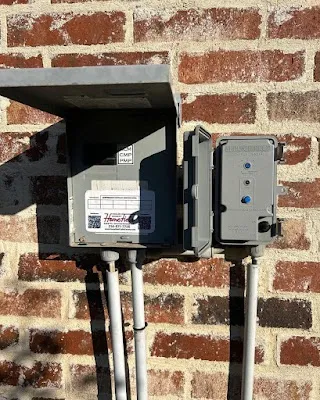
HomeField Parker County
617 Pine St, Aledo, TX 76008
HomeField Parker County is a septic service provider based in Fort Worth, TX, offering comprehensive septic system solutions for both residential and commercial clients. Their services include septic tank pumping, inspections, repairs, installations, drain field replacement, and system design. They also provide real estate septic inspections and maintenance plans to help customers stay compliant with local regulations. HomeField Parker County serves Parker, Johnson, and Hood counties, bringing local expertise to every job. Their team is equipped to handle emergency septic repairs and routine maintenance, ensuring systems operate efficiently and meet current standards.
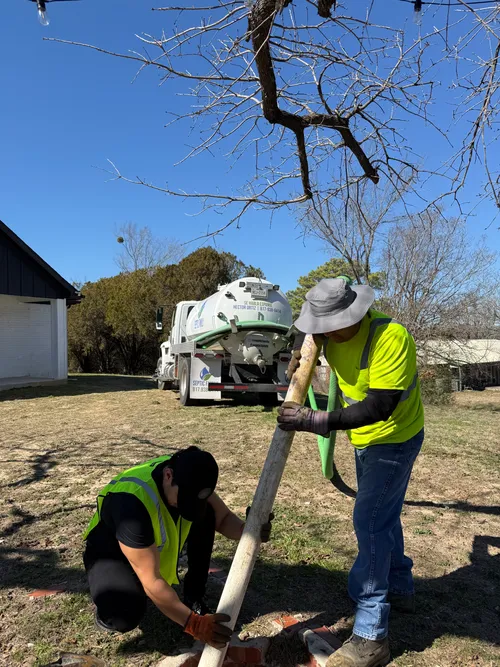
Septic family
545 Harrold St apt 7001, Fort Worth, TX 76107
Septic Family is a septic tank pumping, cleaning, repair, and installation company serving Dallas, TX, and surrounding areas including Fort Worth and multiple nearby communities. The company specializes in both conventional and aerobic septic systems, offering maintenance contracts, installations, and repairs. With 17 years of experience, Septic Family provides bilingual services in English and Spanish and is available 24/7 for septic system needs.
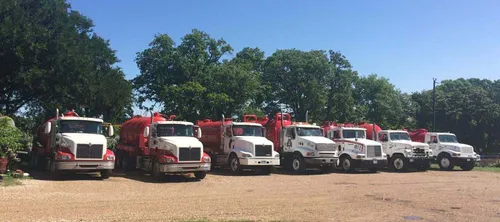
Harrington Environmental - Septic Pumping & Grease Trap Service
3778 Burleson Retta Rd, Burleson, TX 76028
Harrington Environmental - Septic Pumping & Grease Trap Service is a full-service liquid waste company based near Dallas, TX. They provide septic tank pumping, aerobic septic system installation and repair, and commercial grease trap services. Their licensed and certified technicians handle grease and sand trap cleaning, grit trap service, lift station pumping, and maintenance of aerobic systems. Harrington Environmental serves the Dallas-Fort Worth metroplex and surrounding counties, offering expertise in both residential and commercial environmental waste management.
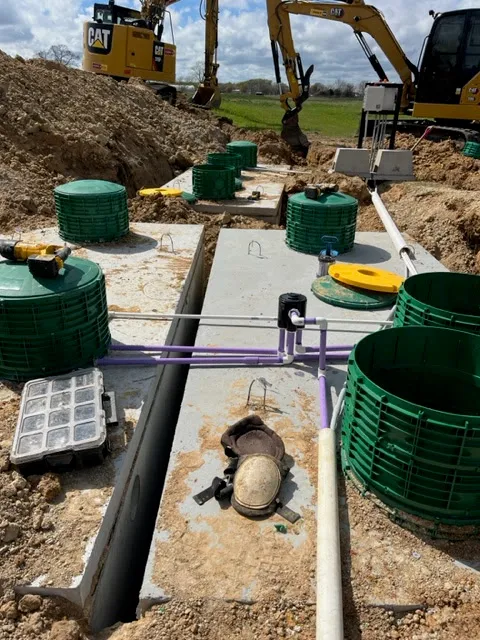
B2 Septic Services
9301 County Rd 519, Alvarado, TX 76009
B2 Septic Services is a licensed septic system repair and installation company based near Dallas, TX. They provide septic tank installation, septic pump repair, and lift station services tailored to individual customer needs. Their licensed status allows them to handle a range of septic system solutions efficiently.
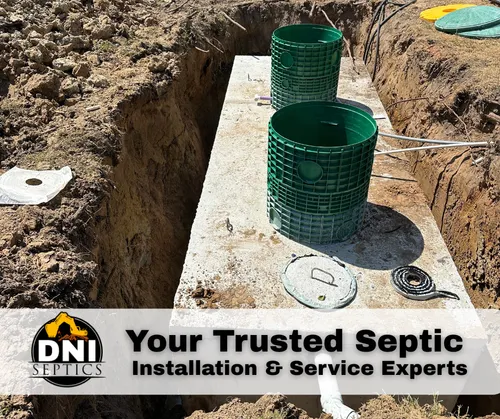
DNI Septics
2009 Corriente Ct, Springtown, TX 76082
DNI Septics is a septic tank inspection and installation contractor serving Fort Worth, TX, and surrounding counties. They provide a full range of septic system services including installation, inspection, maintenance, and cleanup, along with excavation and storm cellar construction. With over 50 years of experience in excavation services, DNI Septics offers expertise in site preparation and land development to support both residential and commercial projects.
Understanding Septic System Basics in Texas
A septic system, formally known as an On-Site Sewage Facility (OSSF), is a private wastewater treatment system for properties not connected to a municipal sewer line. In Texas, these systems are regulated by the Texas Commission on Environmental Quality (TCEQ) under Title 30, Chapter 285 of the Texas Administrative Code (30 TAC 285). The primary goal is to protect public health and groundwater by ensuring wastewater is properly treated before being returned to the environment. For North Richland Hills residents, the process begins and ends with the city's Development Services Department, which enforces these state rules locally.
The Permit Process: Your First and Most Critical Step
Before any digging begins, you must secure a permit. A permit is mandatory for installing, altering, or replacing any septic system in Texas 1. In North Richland Hills, applications are submitted to the City's Development Services Department.
Key permit requirements include:
- Licensed Installer: The installing contractor must be licensed and registered with the city, and they must provide proof of insurance 2.
- Site Evaluation Report: A licensed site evaluator or professional engineer must complete a thorough site assessment (more details below).
- System Design: Detailed plans for the proposed OSSF must be submitted for review.
- Fees: Permit fees typically range from $400 to $700 for conventional systems, with aerobic system permits often costing more.
It's crucial to understand that replacing an existing, failing system is not a simple one-for-one swap. Replacement projects often trigger requirements to upgrade the entire system to meet current, more stringent regulations, which may mandate improved treatment techniques 3 4.
The Site Evaluation: Determining What Your Land Can Handle
The cornerstone of a successful septic installation is a proper site evaluation. This isn't a simple visual check; it's a scientific assessment conducted by a licensed professional to determine if your property can safely support a septic system and what type is required 5.
The evaluation focuses on three critical factors:
- Soil Analysis: The evaluator performs percolation ("perc") tests to determine how quickly water drains through your soil. Different soil types have different absorption rates.
- Groundwater Depth: The depth to the seasonal high water table must be measured to ensure a safe separation between the drain field and groundwater.
- Topography and Setbacks: The slope of the land and distances from property lines, wells, water bodies, and structures are all measured.
The results of this evaluation directly dictate your system options. In North Richland Hills, lot size is also a key factor. The minimum lot size is typically between 20,000 and 25,000 square feet, with specific requirements depending on whether your water source is a public supply or a private well 6.
Choosing Your System Type: Conventional vs. Aerobic
Based on the site evaluation, your property will be suited for one of two primary system types:
- Conventional (Anaerobic) System: This is the most common type, consisting of a septic tank and a subsurface drain field (leach field). Wastewater separates in the tank, and the liquid effluent is dispersed into the soil for final treatment. These are suitable for properties with adequately draining soil.
- Aerobic Treatment Unit (ATU): An aerobic system uses oxygen to break down waste more efficiently inside a multi-chambered tank. It produces a higher quality of effluent, making it necessary for properties with poor soil conditions, high groundwater, or smaller lots. They require electricity to run an air pump and have more mechanical parts.
Find the perfect septic tank installation & replacement contractors for your needs
Get personalized recommendations and expert advice
Installation Costs and Budgeting for North Richland Hills
Understanding the potential investment is essential for planning your septic project. Costs can vary widely based on system type, soil conditions, and property specifics.
Here's a breakdown of typical costs for the North Richland Hills area 7:
- Site Evaluation & Soil Test: $350 - $750
- Conventional Septic System Installation: $6,000 - $12,000+
- Aerobic Septic System Installation: $12,000 - $20,000+
- System Replacement Premium: Adding a new system where an old one exists often adds $3,000 - $8,000 to the total cost for excavation, removal of old components, and potential soil remediation.
Important Note on Aerobic Systems: If an aerobic treatment unit is required, Texas law mandates that homeowners maintain a valid maintenance contract with a licensed provider. Annual maintenance costs for these systems typically range from $400 to $800 8 9.
The Installation Timeline and Required Inspections
Once your permit is approved, installation can begin. The process is monitored through a series of mandatory inspections conducted by the city to ensure compliance with the approved plans 10 11.
- Pre-construction Inspection: Before any installation work, an inspector may verify the site layout and design plans.
- Tank Placement Inspection: After the septic tank is set in the ground but before it's connected, an inspection ensures it is level and properly positioned.
- Drain Field Inspection: The trenches for the drain field are inspected for correct depth, width, and placement of distribution pipes or chambers.
- Final Inspection: This critical inspection occurs after the entire system is installed but before the tank and drain field are backfilled. The inspector checks all components, connections, and electrical elements (for aerobic systems) 12.
Only after passing the final inspection can the system be covered. Skipping or failing an inspection can lead to costly rework and delays.
Maintaining Your New Septic System
A properly installed system is just the beginning. Long-term functionality depends on responsible use and regular maintenance. All systems require periodic pumping of the septic tank (typically every 3-5 years) to remove accumulated solids. As mentioned, aerobic systems have additional, legally required maintenance for their mechanical components. Proper care protects your investment and prevents premature system failure, which is far more expensive to fix than routine maintenance.
Frequently asked questions
Sources
Footnotes
-
Basics for Septic Systems - https://www.tceq.texas.gov/assistance/water/fyiossfs.html ↩
-
Standard Permitting Procedures | Richland Hills, TX - https://www.richlandhills.com/271/Standard-Permitting-Procedures ↩
-
Getting a Permit for an OSSF - Such as a Septic System - Texas Commission on Environmental Quality - https://www.tceq.texas.gov/permitting/ossf/ossfpermits.html ↩
-
Texas Septic System Regulations - https://dillonseptic.com/texas-septic-system-regulations/ ↩
-
SEPTIC SYSTEM LAWS IN TEXAS - https://www.terseptic.com/posts/septic-systems-its-the-law ↩
-
Notice of Rulemaking Hearing - https://publications.tnsosfiles.com/rules_filings/09-22-08.pdf ↩
-
Texas Septic Systems & OSSF Requirements | 2026 Guide - https://texaslandbrokerage.com/resources/texas-septic-systems-ossf-requirements-guide/ ↩
-
Cost of a Septic System in Texas - https://dillonseptic.com/cost-of-a-septic-system-in-texas/ ↩
-
Average Cost to Install Septic System in Texas - https://dillonseptic.com/average-cost-to-install-septic-system-in-texas/ ↩
-
Installing a Septic System at Your Home: What the Process ... - https://brighteyestexas.com/installing-a-septic-system-at-your-home-what-the-process-looks-like/ ↩
-
Texas Septic Tank Rules - https://dillonseptic.com/texas-septic-tank-rules/ ↩
-
application for on-site sewage facility (ossf) permit instructions ... - https://newtools.cira.state.tx.us/upload/page/7634/docs/HILL%20COUNTY%20OSSF%20PERMIT%20APPLICATION%20PACKAGE%202018.pdf ↩