
Find the Best Septic Tank Installation & Replacement Contractors for Your Business
No obligation • Fast responses • Nationwide coverage

Why you can trust Septic Spot
Septic Spot is a leading United States resource for understanding and comparing septic services. Our editors review providers using consistent criteria and verify key business details. Listings and scores are independent, and companies cannot pay to influence our content.
Search providers near you
Top Septic Tank Installation & Replacement Contractors in Pflugerville, Texas Ranked
Installing or replacing a septic system is a significant home infrastructure project that ensures safe and effective wastewater treatment for properties not connected to a municipal sewer line. In Pflugerville, this process is governed by specific state and local regulations to protect public health and groundwater. This guide explains the key steps, costs, and requirements for septic system installation and replacement, helping you understand what to expect and how to find qualified local professionals for the job.
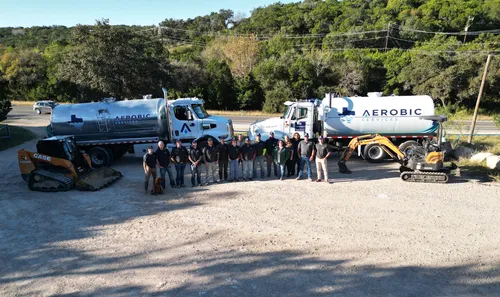
Aerobic Services
145 FM1441, Bastrop, TX 78602
Aerobic Services is a septic tank pumping and installation company serving Austin, TX, and the surrounding Central Texas area. Established in 1999, the company offers residential and commercial wastewater services including septic system installations, maintenance, and pumping. With over 20 years of experience, Aerobic Services is known for its knowledgeable staff and thorough approach to septic system care.
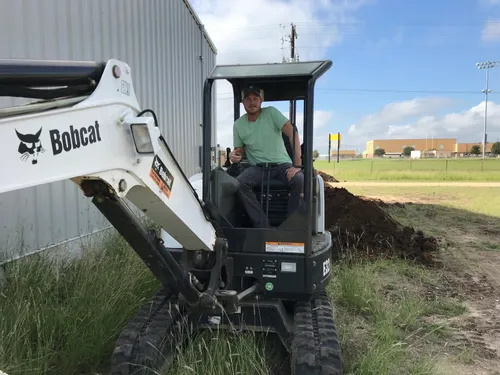
Synergy Onsite Septic Solutions
Austin, TX
Synergy Onsite Septic Solutions is a septic tank inspection, repair, and installation company based in Austin, TX. They serve Austin and Central Texas, including many surrounding communities. Their services include repairs, diagnostics, locating and marking septic systems, installation, replacements, maintenance contracts, and consulting. The company is known for providing accurate assessments and appropriate solutions to septic system issues, often helping customers avoid unnecessary repairs. They also offer assistance with inspection preparation and referrals for pumping and design services.
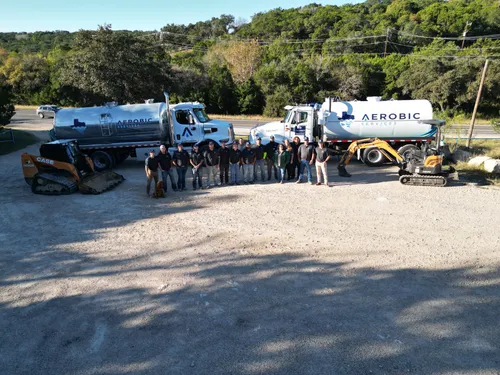
Aerobic Services
13341 W US Hwy, 290 Service Rd Bldg2 #B17, Austin, TX 78737
Aerobic Services is a septic tank pumping and installation company based in Austin, TX. Serving New Braunfels and the surrounding areas, they provide residential and commercial septic system services including installation, maintenance, and pumping. With over 20 years of experience since 1999, Aerobic Services has established itself as a significant wastewater service provider in Central Texas.
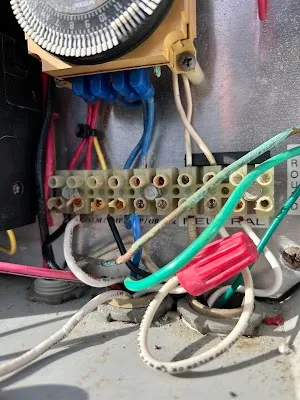
HomeField Williamson County
40203 Industrial Park Cir, Georgetown, TX 78626
HomeField Williamson County provides comprehensive septic system services in Austin, TX, covering residential and commercial needs. Their offerings include septic tank pumping, inspections, repairs, installations, drain field replacements, and system design. The company emphasizes local expertise and proactive maintenance plans to help prevent future problems. They serve Williamson County with a team familiar with local regulations and conditions, ensuring septic systems meet current requirements. HomeField also offers various maintenance plans tailored to different levels of coverage and support.
Godinez Septics Inc
5407 Phillips Cir, Austin, TX 78734
Godinez Septics Inc is a family-owned septic system company serving Austin, TX, and the surrounding Lake Travis area. They provide a range of services including septic tank pumping, inspection, repair, installation, and drain field replacement. The company is licensed by TCEQ for septic system maintenance and installation, offering specialized services such as aerobic system maintenance contracts and hydro-jetting to clear sewer lines. With over 40 years of experience in the septic and excavation business, Godinez Septics is led by Orlando Godinez, a longtime local resident and licensed installer.
Understanding Septic System Basics in Texas
An On-Site Sewage Facility (OSSF), commonly called a septic system, is a self-contained wastewater treatment system for individual properties. In Texas, all OSSF installations, alterations, and replacements are regulated under Title 30 of the Texas Administrative Code, Chapter 285 (30 TAC 285). These rules are enforced to ensure systems are designed, installed, and maintained to prevent contamination of water sources. For Pflugerville homeowners, the process typically involves coordination with Travis County or the Texas Commission on Environmental Quality (TCEQ), as the city may defer to county authority for permitting.
The type of system you can install is not a matter of preference but is determined by a rigorous site evaluation. This is because Central Texas soil, particularly around Pflugerville, often contains heavy clay layers that do not allow for rapid water absorption.
The Mandatory First Step: Site Evaluation and Soil Analysis
Before any plans are drawn, a professional site evaluator must assess your property. This evaluation is the cornerstone of the entire process and is required for the permit application.
- Soil Analysis: A licensed professional will conduct soil tests (often called percolation or "perc" tests) to analyze the soil's structure, texture, and depth to determine its absorption capability. The presence of clay, rock, or a high water table significantly influences the system design.
- Groundwater and Topography Check: The evaluator will also measure the depth to the seasonal high groundwater table and assess the land's slope. State law requires specific setbacks from property lines, water wells, and surface water.
- Determining System Type: The results dictate whether a conventional anaerobic system (typically a septic tank and drain field) is viable or if an aerobic treatment system (which uses oxygen to break down waste more efficiently and includes a spray irrigation component) is necessary. In areas with poor soil percolation, like much of Pflugerville, aerobic systems are commonly required 1.
Navigating the Permit Process
You cannot legally begin construction without an approved permit. The process is designed to ensure the proposed system meets all health and environmental standards 2.
- Design Submission: After the site evaluation, a licensed engineer or registered site evaluator uses the data to create a formal system design.
- Application: This design, along with the application, is submitted to the local permitting authority. In Pflugerville, this is typically the Travis County Transportation and Natural Resources (TNR) department or, in some cases, the TCEQ.
- Authorization to Construct: Once the design is reviewed and approved, you will receive an Authorization to Construct (ATC) permit. Only then can installation begin 3.
- Important Exceptions: It's crucial to note that a permit is required for any new, altered, or replaced system. A rare exemption may apply for properties over 10 acres under specific conditions, but this should never be assumed without direct confirmation from the permitting authority 4.
Installation: What to Expect During Construction
With permit in hand, a licensed installer can begin work. The physical installation of a septic system is a precise operation that usually takes 1 to 3 days for a standard residential project.
- Excavation: The installer will excavate the area for the septic tank and the drain field or spray field.
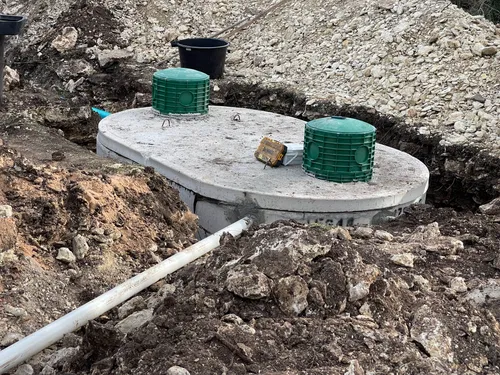
- Tank Placement: The septic tank (concrete or plastic) is set in place and leveled. For aerobic systems, the treatment unit and pump tank are also installed.
- Pipe Network: A network of perforated pipes is laid in the drain field trenches, which are filled with gravel, or the irrigation lines and spray heads are installed for an aerobic system.
- Connections: All plumbing from the house to the tank and from the tank to the dispersal area is securely connected.
Throughout construction, the work will be subject to inspections. A pre-construction inspection verifies the site layout, and a critical construction inspection occurs after the tanks and pipes are placed but before they are buried. The inspector checks tank placement, pipe slopes, and connection integrity.
Find the perfect septic tank installation & replacement contractors for your needs
Get personalized recommendations and expert advice
Understanding Costs for Septic System Installation
The total cost for a new septic system in Pflugerville varies widely based on system type, soil conditions, and property size. The figures below are typical ranges for Texas.
- Permit and Design Fees: The initial permit, site evaluation, and design fees typically range from $400 to $900.
- Conventional System Cost: If your site supports a conventional anaerobic system, total project costs generally range from $6,000 to $15,000. This includes materials ($4,500-$7,500) and labor ($4,000-$6,000).
- Aerobic System Cost: More common in the local clay soils, aerobic treatment units are more complex. Total installed costs typically range from $10,000 to $16,000 for materials and an additional $6,000 to $9,000 for labor, putting the full project cost often between $16,000 and $25,000 5.
- High-Complexity Systems: For properties with significant challenges (e.g., high water table, small lot size), advanced systems like mound or drip irrigation can exceed $28,000 6.
The Special Considerations of System Replacement
Replacing a failed or aging septic system involves all the steps of a new installation, plus additional complexities.
- Mandatory Upgrades: Texas law requires that any replacement system must be built to current 30 TAC 285 standards. This often means you cannot simply replace a failed conventional system with another like-for-like system if the soil no longer meets criteria. You will likely need to upgrade to an aerobic treatment unit.
- Addressing Contamination: If the old system has failed, it may have caused soil contamination in the drain field area. This contaminated soil often must be removed and properly disposed of before a new system can be installed in a new location on the property 7.
- Final Inspection: After installation and before backfilling, a final inspection is conducted. For aerobic systems, this includes verifying that pumps, alarms, and spray heads are operational 8.
Choosing a Licensed Professional
Given the regulatory and technical complexity, hiring a qualified professional is non-negotiable. Always verify that your installer holds a current license from the TCEQ. A licensed professional will understand the local permit process, ensure the design is followed precisely, schedule the required inspections, and provide the necessary documentation for the system's operating permit upon completion.
Disclaimer: Regulations and fees are subject to change. Always confirm the latest requirements directly with Travis County TNR or local city officials before beginning your project 9.
Frequently asked questions
Sources
Footnotes
-
Installing a Septic System at Your Home: What the Process ... - https://brighteyestexas.com/installing-a-septic-system-at-your-home-what-the-process-looks-like/ ↩
-
Basics for Septic Systems - https://www.tceq.texas.gov/assistance/water/fyiossfs.html ↩
-
Getting a Permit for an OSSF - Such as a Septic System - Texas Commission on Environmental Quality - https://www.tceq.texas.gov/permitting/ossf/ossfpermits.html ↩
-
What laws in Texas apply to septic systems? - Water School - https://brazos.org/about-us/education/water-school/articleid/349/what-laws-in-texas-apply-to-septic-systems ↩
-
Average Cost to Install Septic System in Texas - https://dillonseptic.com/average-cost-to-install-septic-system-in-texas/ ↩
-
Cost of a Septic System in Texas - https://dillonseptic.com/cost-of-a-septic-system-in-texas/ ↩
-
Texas Septic System Regulations - https://dillonseptic.com/texas-septic-system-regulations/ ↩
-
Septic Tank Laws in Texas - https://dillonseptic.com/septic-tank-laws-in-texas/ ↩
-
City of Pflugerville, TX PRIVATE SEWAGE FACILITIES - https://ecode360.com/39348881 ↩