
Find the Best Septic Tank Installation & Replacement Contractors for Your Business
No obligation • Fast responses • Nationwide coverage

Why you can trust Septic Spot
Septic Spot is a leading United States resource for understanding and comparing septic services. Our editors review providers using consistent criteria and verify key business details. Listings and scores are independent, and companies cannot pay to influence our content.
Search providers near you
Top Septic Tank Installation & Replacement Contractors in Temple, Texas Ranked
Installing or replacing a septic system is a significant home infrastructure project that ensures the safe and effective treatment of household wastewater. In Temple, these systems, formally known as On-Site Sewage Facilities (OSSF), are governed by specific state and local regulations to protect public health and the environment. Understanding the process-from permits and soil testing to final inspection-is crucial for a successful installation. This guide outlines the key steps and considerations for homeowners in Temple, Texas, to help you navigate finding qualified local professionals for your septic system needs.
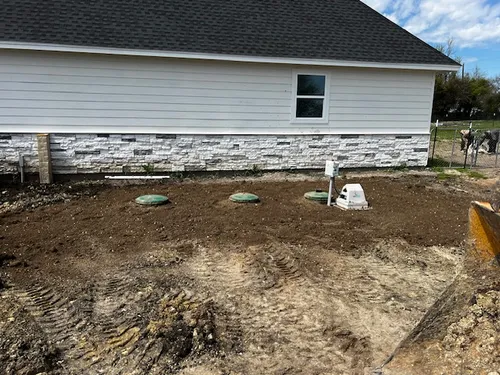
Understanding Septic System Regulations in Bell County
In Texas, the Texas Commission on Environmental Quality (TCEQ) sets the statewide standards for all On-Site Sewage Facilities. However, oversight is often delegated to a local permitting authority, which in Bell County is typically the county health department. A fundamental rule is that a permit is mandatory to construct, install, alter, extend, or repair an OSSF. There is a narrow exception for properties of 10 acres or larger serving a single-family dwelling that meet strict setback and environmental criteria, but for most Temple homeowners, securing a permit is the non-negotiable first step. Starting work without one can lead to fines and legal complications.
It's important to distinguish between a new installation and a replacement. A replacement involves removing an old, failing system and installing a new one, which follows the same rigorous permitting and inspection process as a brand-new installation. For emergency repairs, such as a sudden tank failure, work can begin without a prior permit but must be reported to the local authority within 72 hours 1. The entire process from initial design to final approval typically takes between 2 to 4 weeks, so planning ahead is essential 2.
The Critical First Step: Site Evaluation and Soil Testing
Before any system design can be created, a licensed professional must conduct a formal site evaluation. This is not a mere formality; it determines the very feasibility and type of system your property can support. The evaluation assesses the soil's ability to treat and filter wastewater, which is critical for preventing groundwater contamination.
The key components of a site evaluation include:
- Soil Classification: A professional will dig test pits to classify the soil type (e.g., clay, sand, loam), which directly impacts the drainage rate.
- Percolation Test ("Perc Test"): This test measures how quickly water drains through the soil in a prepared hole. The results determine the size and design of the necessary drain field 3 4.
- Depth to Limiting Conditions: The evaluator will check the depth to groundwater, bedrock, or other impermeable layers, as state law requires specific separation distances.
- Slope and Drainage: The topography of your lot is assessed to ensure proper wastewater flow and to avoid runoff issues.
This evaluation must be performed by a licensed sanitarian or a professional engineer (PE) 5 6. The findings from this report will dictate whether a conventional gravity-fed system, an advanced aerobic treatment unit (ATU), or another alternative system is required for your Temple property.
Designing Your Septic System
With the site evaluation complete, a system design can be drafted. This design is based on the soil data, local regulations, and the estimated wastewater flow from your household (determined by the number of bedrooms). Common system types in Central Texas include:
- Conventional Systems: These use a septic tank and a gravity-fed drain field. They are often suitable for properties with permeable soil and adequate depth to groundwater.
- Aerobic Treatment Units (ATUs): These systems inject oxygen into the treatment tank, accelerating the breakdown of waste. They are frequently required in areas with poor soil conditions, high groundwater, or smaller lots. It's important to note that aerobic systems in Texas generally require routine maintenance inspections every four months by a licensed provider 7.
- Alternative Systems: For challenging sites, systems like mound, drip irrigation, or sand filter systems may be designed.
The design will specify the tank capacity, the layout and size of the drain field, and the placement of all components relative to property lines, wells, and water bodies. This engineered plan is what you submit for your permit application.
The Installation Process and Required Inspections
Once your permit is approved, installation can begin. A reputable installer will follow the approved design precisely. The process involves excavating for the tank and drain field, placing the tank (often concrete or plastic), connecting inlet and outlet pipes with proper slope, and constructing the drain field with perforated pipes in gravel-filled trenches.
Inspections are not a single event but occur at critical milestones to ensure compliance:
- Initial/Pre-Construction Inspection: May be required to verify the staked location matches the plan before digging begins.
- Pre-Covering Inspection: This is arguably the most important inspection. Before any components are buried, an inspector (often from the county) will check the tank's level and integrity, pipe slopes, the drain field construction, and, if applicable, the electrical connections for pumps and alarms 8. This is your chance to verify everything is correct before it's hidden from view.
- Final Inspection: After installation is complete and the ground is restored, a final inspection is conducted. For systems with pumps, this includes verifying the operational performance of pumps, float switches, and alarm systems 9. Only after passing this inspection is the system approved for use.
Find the perfect septic tank installation & replacement contractors for your needs
Get personalized recommendations and expert advice
Cost Considerations for Temple Homeowners
The cost of a septic system installation or replacement in Temple varies widely based on several factors 10. There is no flat fee, as each property and home has unique requirements. Key cost drivers include:
- System Type and Size: A conventional system for a three-bedroom home is typically less expensive than a large aerobic system needed for a five-bedroom home on poor soil.
- Site Conditions: Challenging sites with heavy clay, shallow bedrock, or high groundwater require more complex engineering and system types, increasing costs significantly. The need for extensive rock removal or significant grading also adds expense.
- Labor and Materials: Local market rates for excavation, concrete tanks, piping, and gravel influence the final price.
- Permitting and Design Fees: These include the cost for the licensed site evaluator and the system designer, as well as the permit fees paid to the county.
While providing an exact quote requires a site evaluation, understanding these factors helps you interpret estimates from local providers. It's wise to get multiple detailed bids that break down costs for design, permits, materials, labor, and any required long-term maintenance contracts (especially for aerobic systems).
Choosing a Provider for Your Installation
Selecting the right contractor is paramount for a compliant and long-lasting system. Look for providers with:
- Proper Licensing: Ensure they are licensed by the TCEQ to install OSSF systems in Texas.
- Local Experience: Choose a company familiar with Bell County's specific regulations, inspectors, and common soil types.
- Insurance: Verify they carry liability and workers' compensation insurance.
- References and Reviews: Ask for local references and check online reviews to gauge their reputation for quality and reliability.
- Detailed Proposals: A trustworthy provider will offer a clear, written proposal that outlines the scope of work, system specifications, timeline, and total cost.
A properly installed and permitted septic system is a long-term investment in your property's value and your family's health. By understanding the regulated process from evaluation to final inspection, Temple homeowners can make informed decisions and partner effectively with qualified local professionals.
Frequently asked questions
Sources
Footnotes
-
Getting a Permit for an OSSF - Such as a Septic System - https://www.tceq.texas.gov/permitting/ossf/ossfpermits.html ↩
-
SEPTIC SYSTEM LAWS IN TEXAS - https://www.terseptic.com/posts/septic-systems-its-the-law ↩
-
Septic System Installation Checklist - https://www.mecindustries.com/morse-engineering-and-construction-industries/septic-system-installation-checklist ↩
-
How to Know if You Need a Septic System Permit - Pippin Home Designs - https://www.pippinhomedesigns.com/septic-system-permit/ ↩
-
Design - & - Installation - in - Central - Texas - EPIC™ Septic - https://epicseptic.com/the-ultimate-guide-to-septic-system-design-installation-in-central-texas-what-every-homeowner-builder-needs-to-know/ ↩
-
Septic Tank Laws in Texas - https://dillonseptic.com/septic-tank-laws-in-texas/ ↩
-
Installing a Septic System at Your Home: What the Process ... - https://brighteyestexas.com/installing-a-septic-system-at-your-home-what-the-process-looks-like/ ↩
-
Texas Septic Tank Rules - https://dillonseptic.com/texas-septic-tank-rules/ ↩
-
Texas Septic System Regulations - https://dillonseptic.com/texas-septic-system-regulations/ ↩
-
Average Cost to Install Septic System in Texas - https://dillonseptic.com/average-cost-to-install-septic-system-in-texas/ ↩