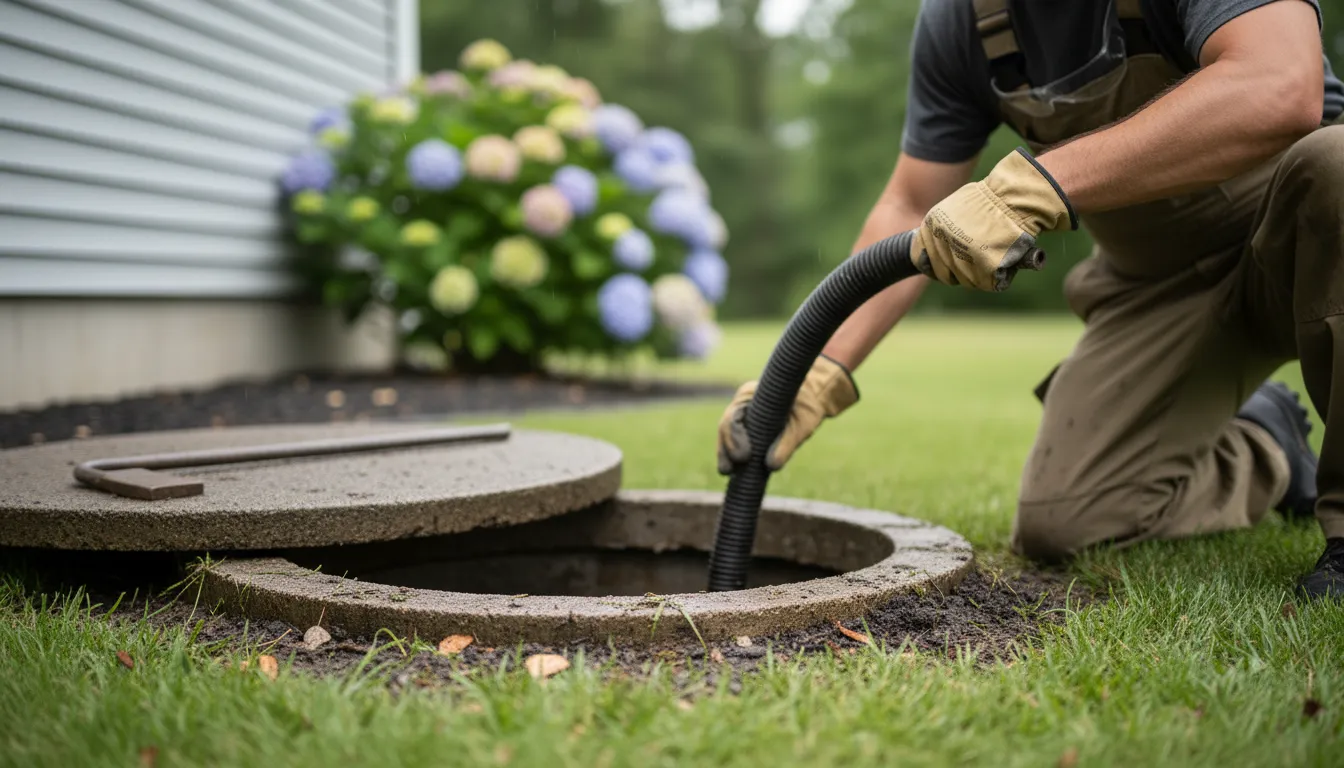
Find the Best Septic Tank Pumping Contractors for Your Business
No obligation • Fast responses • Nationwide coverage

Why you can trust Septic Spot
Septic Spot is a leading United States resource for understanding and comparing septic services. Our editors review providers using consistent criteria and verify key business details. Listings and scores are independent, and companies cannot pay to influence our content.
Search providers near you
Top Septic Tank Pumping Contractors in Austin, Texas Ranked
Maintaining your septic system is a crucial, though often overlooked, part of homeownership in Austin. Regular septic tank pumping is essential for preventing backups, protecting your property, and ensuring your wastewater system operates safely and efficiently for years to come. This guide provides local insights on septic maintenance, including recommended service frequency, what to expect from a professional pump-out, and how to find qualified, licensed providers in the Austin area.
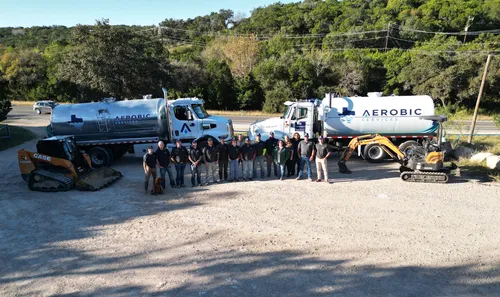
Aerobic Services
145 FM1441, Bastrop, TX 78602
Aerobic Services is a septic tank pumping and installation company serving Austin, TX, and the surrounding Central Texas area. Established in 1999, the company offers residential and commercial wastewater services including septic system installations, maintenance, and pumping. With over 20 years of experience, Aerobic Services is known for its knowledgeable staff and thorough approach to septic system care.

Epic Septic & Service
3900 Ranch Rd 620 S #101, Austin, TX 78738
Epic Septic & Service is a septic tank pumping company based in Austin, TX. They offer septic services within a 60-mile radius of Austin, covering urban, suburban, and rural areas. The company aims to modernize the septic industry by providing fast and professional service.
Septic Squad
Austin, TX
Septic Squad provides septic tank pumping, cleaning, and inspection services in Austin, TX, and nearby communities. They offer full system inspections, safe pumping, and grease trap cleaning to maintain residential and commercial septic systems. Their licensed technicians deliver detailed maintenance reports and conduct thorough evaluations to identify issues such as blockages or leaks. Septic Squad serves multiple counties including Williamson and Hays, covering cities like Round Rock, Cedar Park, and Kyle.
Hambone Plumbing and Septic Pumping
818 W 2nd St, Taylor, TX 76574
Hambone Plumbing and Septic Pumping is a family-owned business serving the Austin, TX area with over 30 years of experience. They provide residential and commercial plumbing and septic services, including septic tank pumping, inspections, and repairs. Their licensed team offers comprehensive solutions such as water heater installation and flushing, drain and sewer line cleaning, and advanced leak detection using thermal imaging technology. Hambone Plumbing and Septic Pumping is available 24/7 to handle emergency plumbing needs and maintain efficient, safe plumbing systems.
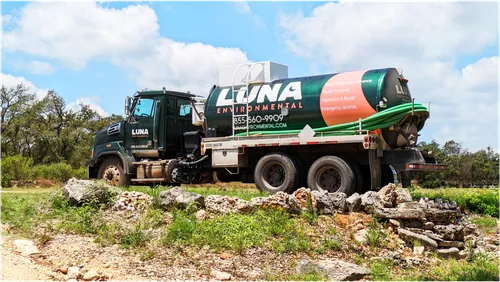
Luna Environmental
151 Las Flores Dr Suite 201, Wimberley, TX 78676
Luna Environmental is a septic service company based in Austin, TX, providing septic tank pumping, inspection, maintenance, and repair services. They serve residential and commercial clients throughout Central Texas, offering tailored solutions to keep septic systems functioning properly. The company is equipped to handle 24-hour emergency maintenance and pumping, ensuring prompt response to urgent septic issues. Luna Environmental emphasizes comprehensive reporting and environmental stewardship in their work, aiming to support sustainable septic system health and community well-being.
Why Regular Septic Maintenance is Non-Negotiable
Your septic system is a self-contained wastewater treatment plant on your property. When it functions correctly, it quietly and safely processes everything from shower water to kitchen waste. The key to this longevity is regular removal of the solid waste, or sludge, that accumulates at the bottom of the tank. Without periodic pumping, these solids can clog the system, leading to sewage backups into your home, foul odors in your yard, and contamination of groundwater-a serious environmental and health hazard. For Austin residents, adhering to a proactive maintenance schedule is the most effective way to avoid costly emergency repairs and system replacements.
How Often Should You Schedule Septic Pumping in Austin?
The standard recommendation for septic tank cleaning is every 3 to 5 years. However, this is a general guideline. The exact frequency for your Austin home depends on several key factors:
- Household Size: More people generate more wastewater and solid waste.
- Tank Size: Smaller tanks fill with solids faster than larger ones.
- Overall Water Usage: Garbage disposals, frequent laundry loads, and long showers can increase the tank's workload.
A more tailored schedule based on common tank sizes provides a clearer picture:
- 1,000-gallon tank (typical for a 3-bedroom home): Pump every 3 years.
- 1,250-gallon tank (typical for a 4-bedroom home): Pump every 3 years.
- 1,500-gallon tank (typical for a 5-bedroom home): Pump every 2 to 3 years.
- 1,750-gallon tank (for 6+ bedrooms): Pump every 2 years.
Ultimately, the most reliable method is to have a licensed professional measure the sludge and scum levels during an inspection. They can then give you a precise recommendation for your next service 1 2.
What to Expect from a Professional Pumping Service
A thorough septic service involves much more than just removing waste. When you hire a qualified provider for septic system pumping, they should follow a comprehensive process.
Licensing is Critical: In Texas, always use a TCEQ-licensed professional, specifically a registered sludge transporter. This ensures they are trained in proper procedures and legal waste disposal.
The Standard Service Scope: A complete job typically includes:
- Locating and carefully excavating to expose the tank's access ports.
- Pumping out all liquid and solid waste from the tank.
- Inspecting the tank's interior and components for cracks, leaks, and the condition of inlet/outlet baffles.
- Measuring sludge and scum levels to assess your system's health.
- Providing a detailed report of their findings and any recommended follow-up actions 3.
State regulations require inspection or cleanout ports to be positioned over these inlet/outlet devices, allowing for proper assessment 4.
Find the perfect septic tank pumping contractors for your needs
Get personalized recommendations and expert advice
Understanding Costs for Septic Pumping in Austin
The cost to pump a septic tank in Austin typically ranges from $290 to $700 5 6. Several variables influence the final price:
- Tank Size: The most significant factor. A standard 1,000 to 1,500-gallon residential tank is common, but larger tanks cost more to pump.
- Accessibility: If the tank is buried deep, under a deck, or difficult for trucks to reach, the job will require more labor.
- Volume of Solids: Some companies charge per gallon of waste removed, with rates often between $0.30 and $0.70 per gallon 7 8.
- Additional Services: Inspections, repairs, or filter cleaning will add to the base pumping cost.
While price is a consideration, the provider's licensing, reputation, and the thoroughness of their service should be your primary concerns.
Navigating Texas and Local Austin Regulations
Septic systems, known officially as On-Site Sewage Facilities (OSSF), are regulated in Texas by the Texas Commission on Environmental Quality (TCEQ) 9. These guidelines set the standard for design, installation, and maintenance to protect public health and water quality.
For homeowners in Austin and Travis County, it's important to understand that local regulations may have additional requirements. Before undertaking any major maintenance or repair beyond standard pumping, it's wise to contact local Environmental Health services to confirm if permits are needed 10 11. Using a TCEQ-licensed professional helps ensure compliance with these state and local rules 12.
Signs Your Austin Septic Tank Needs Immediate Attention
Don't wait for a full-blown disaster. Be aware of these warning signs that your system may need pumping or repair:
- Slow Drains: Sinks, showers, and toilets that drain slowly throughout the house.
- Sewage Backups: Wastewater coming back up into household drains.
- Foul Odors: Persistent sewage smells inside your home or around the drain field in your yard.
- Lush, Green Grass: Unusually vibrant grass over the drain field, which may indicate a leak.
- Standing Water: Puddles or soggy soil in the area of your tank or drain field.
If you notice any of these issues, contact a licensed septic professional promptly to assess the situation.
Choosing a Reliable Septic Service Provider
Selecting the right company is essential for quality work and peace of mind. Here are key steps to take:
- Verify TCEQ License: Confirm the company and its personnel hold current TCEQ licenses for sludge transport and septic system work.
- Check Reviews and References: Look for consistently positive feedback on local review platforms and ask for references from recent customers.
- Get Detailed Estimates: Obtain written estimates from a few companies that detail the scope of work (pumping, inspection, etc.) and all associated costs.
- Ask About the Process: A reputable company will happily explain their process, including how they inspect the tank and dispose of the waste.
- Ensure They Are Insured: Verify the company carries adequate liability and workers' compensation insurance.
Frequently asked questions
Sources
Footnotes
-
How Often Should You Pump Your Septic Tank? - https://tlsepticpumper.com/septic-system-education/how-often-pump-septic-tank/ ↩
-
Septic Systems | Department of Environmental Protection - https://www.pa.gov/agencies/dep/residents/my-water/septic-systems ↩
-
30 Tex. Admin. Code § 285.32 - Criteria for Sewage Treatment ... - https://www.law.cornell.edu/regulations/texas/30-Tex-Admin-Code-SS-285-32 ↩
-
ORDER ADOPTION OF WASHINGTON COUNTY, TEXAS ON-SITE SEWAGE FACILITIES - https://newtools.cira.state.tx.us/upload/page/0901/OSSF%20CO%202009.pdf ↩
-
How Much Does It Cost to Pump a Septic Tank in Austin, TX? - https://www.angi.com/articles/how-much-does-septic-tank-pumping-cost/tx/austin ↩
-
Septic Pumping in Austin, TX - WasteDoor - https://wastedoor.com/texas/austin/septic-pumping ↩
-
How Often to Pump a Septic Tank 2026 - Clear River Environmental - https://clearriverenvironmental.com/how-often-to-pump-a-septic-tank/ ↩
-
How Much Does it Cost to Pump a Septic Tank? 2026 Price Guide - https://rescueheroplumbing.com/how-much-does-it-cost-to-pump-a-septic-tank ↩
-
On-Site Sewage Facilities (Septic Systems): General Information - Texas Commission on Environmental Quality - www.tceq.texas.gov - https://www.tceq.texas.gov/permitting/ossf/ossfgeneral.html ↩
-
Your Guide to Choosing a Commercial Septic System - 1 Source - https://tx1source.com/blog/commercial-septic-system-guide/ ↩
-
Frequent Questions on Septic Systems | US EPA - https://www.epa.gov/septic/frequent-questions-septic-systems ↩
-
Septic Tank Laws in Texas - https://dillonseptic.com/septic-tank-laws-in-texas/ ↩