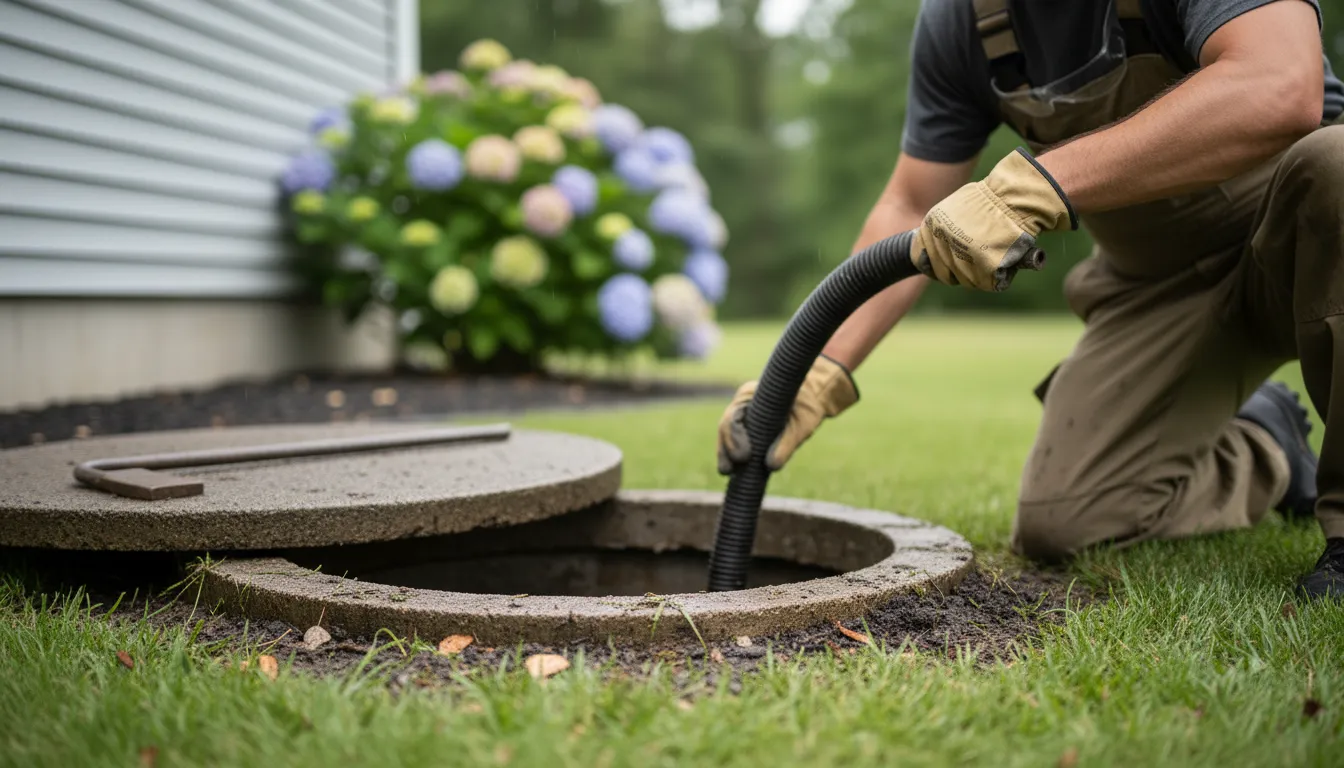
Find the Best Septic Tank Pumping Contractors for Your Business
No obligation • Fast responses • Nationwide coverage

Why you can trust Septic Spot
Septic Spot is a leading United States resource for understanding and comparing septic services. Our editors review providers using consistent criteria and verify key business details. Listings and scores are independent, and companies cannot pay to influence our content.
Search providers near you
Top Septic Tank Pumping Contractors in Missouri City, Texas Ranked
Maintaining your septic system is a crucial responsibility for any homeowner not connected to a municipal sewer line. Regular septic tank pumping and inspection prevents costly backups, protects your property value, and safeguards local groundwater quality. This guide provides essential information on septic system maintenance, local regulations, and typical costs to help Missouri City residents make informed decisions about caring for their on-site sewage facility.
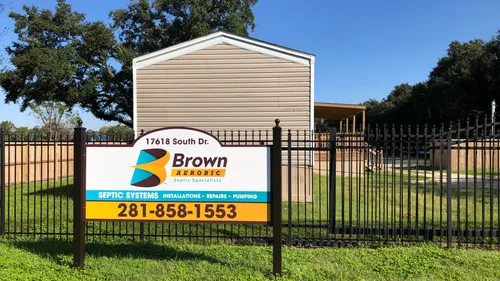
Brown Aerobic Septic Specialists
17618 South Dr, Cypress, TX 77433
Brown Aerobic Septic Specialists is a licensed septic and excavation company serving Houston, TX, and surrounding counties. They provide a wide range of services including aerobic and conventional septic system installation, repair, pumping, inspections, and drain field replacement. Their team also offers excavation services such as grading, land clearing, trenching, and pond construction. With a focus on local soil and weather conditions, they ensure systems meet code and perform reliably. The company is led by a second-generation septic professional and has experience servicing over 1,000 systems.
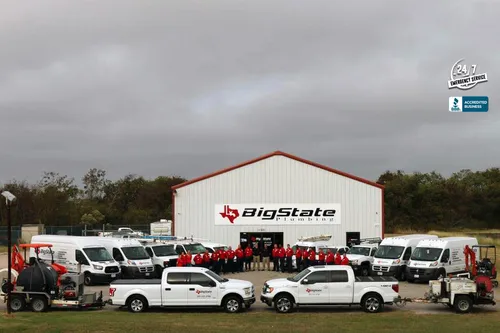
Big State Plumbing, AC & Heating
11510 TX-36, Needville, TX 77461
Big State Plumbing, AC & Heating is a woman-owned plumbing company serving Houston, TX, and surrounding areas. With over 20 years of experience, they offer a wide range of plumbing services including septic tank pumping and inspections. They provide 24/7 emergency plumbing coverage to handle urgent needs at any time. Their team is licensed and certified, focusing on efficient repairs and maintenance to keep plumbing systems functioning properly.
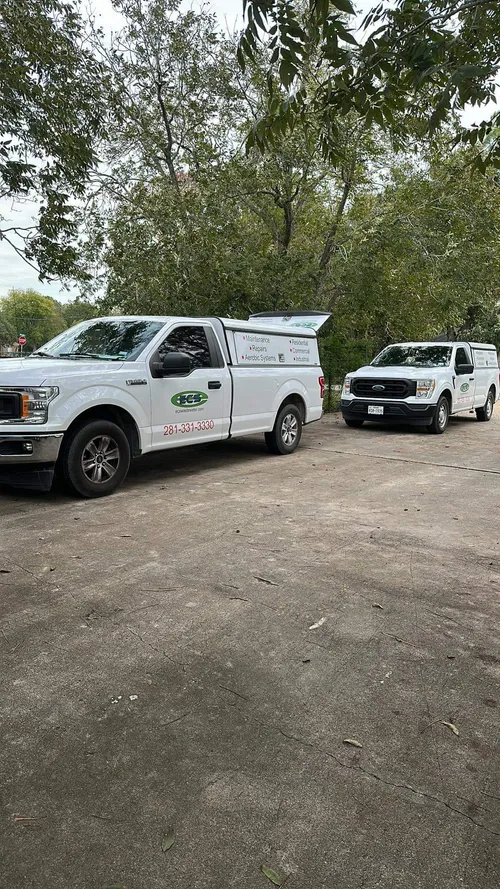
Environmental Construction Services
8916 Quail Valley Dr, Manvel, TX 77578
Environmental Construction Services is a licensed and insured septic system company serving Houston, TX, and surrounding counties. Since 1992, they have provided residential and commercial septic system installation, maintenance, and repair services, specializing in aerobic septic systems. Their technicians are licensed by the Texas Commission on Environmental Quality and are available seven days a week to address septic system needs. The company serves a large area including Brazoria, Fort Bend, Galveston, and Harris counties. Environmental Construction Services also offers maintenance contracts and uses quality parts to help extend the life of septic systems.
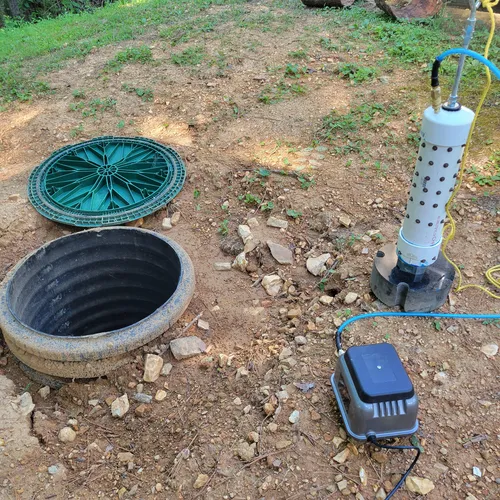
Briggs Septic Service
16842 Southwest Fwy unit 2, Sugar Land, TX 77479
Briggs Septic Service provides comprehensive septic system services in Houston, TX, including septic tank installation, pumping, inspection, repair, drain field installation, and maintenance. They serve both residential and commercial clients, using advanced equipment and adhering to local regulations to ensure quality and environmental responsibility. Their team is fully licensed and certified, offering expertise tailored to the unique soil and land conditions of the area. Briggs Septic Service has years of experience and offers 24/7 emergency service to address urgent septic needs promptly.
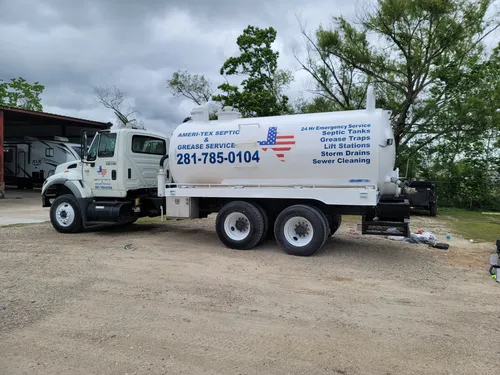
Ameri-Tex Septic and Grease Service
Houston, TX
Ameri-Tex Septic and Grease Service is a septic tank pumping, inspection, and repair company serving Houston, TX, and the Greater Houston area. They provide services for residential and commercial clients, including septic tank cleanouts, grease trap repairs, lift station maintenance, and sewer line cleaning. With 35 years of industry experience, they handle emergency septic and sewer issues to prevent backflow and maintain proper wastewater flow. Ameri-Tex offers same-day services and is available for urgent plumbing needs.
Understanding Your Septic System
A septic system is an underground wastewater treatment structure, commonly used in rural and suburban areas like parts of Missouri City. It consists of two primary parts: the septic tank and the drain field (or soil absorption field). Household wastewater flows into the tank, where solids settle to form sludge, and fats and oils float to create a scum layer. The partially treated liquid then exits into the drain field, where it is further filtered by the soil.
The tank itself is a watertight container, typically made of concrete, fiberglass, or polyethylene. Its job is to hold wastewater long enough for the separation process to occur. Baffles or tees at the inlet and outlet pipes prevent the scum and sludge from flowing out into the drain field. Over time, these accumulated solids must be removed via pumping to keep the entire system functioning properly.
Why Regular Pumping is Non-Negotiable
Skipping routine septic tank cleaning is the most common cause of system failure. When the tank becomes too full, solids can be carried out into the drain field. These solids clog the pores in the soil, causing the effluent to back up. The results can be disastrous: sewage surfacing in your yard, foul odors, and toilets or drains that won't work in the house. Repairing or replacing a failed drain field is extremely expensive and disruptive, often costing thousands of dollars-far more than the relatively modest investment of regular pumping 1.
Beyond preventing failure, regular maintenance protects public health. A malfunctioning system can contaminate nearby wells, streams, and groundwater with harmful bacteria, viruses, and nitrates. In Texas, the Texas Commission on Environmental Quality (TCEQ) regulates on-site sewage facilities (OSSF) to ensure they don't become a public health nuisance or environmental hazard 2.
How Often Should You Pump Your Septic Tank in Missouri City?
The standard recommendation for most households is to have your septic tank pumped every 3 to 5 years. However, this is a general guideline. The exact frequency for your home depends on several key factors:
- Tank Size: Smaller tanks (under 1,000 gallons) fill with solids more quickly and may require service every 1-2 years.
- Household Size and Water Usage: More people in a home means more wastewater generated, accelerating the accumulation of sludge and scum. High water usage from frequent laundry, long showers, or leaky fixtures has the same effect.
- Garbage Disposal Use: Using a garbage disposal significantly increases the amount of solids entering the tank. If you use a disposal regularly, you should plan for more frequent pumping, potentially every 1-2 years.
- Volume of Solids: The definitive way to know if you need pumping is to measure the sludge and scum layers. A tank should be pumped when the combined depth of sludge and scum exceeds half the liquid depth of the tank 3 4.
The best practice is to have your system inspected annually. A professional can measure the sludge level and give you a personalized recommendation for your next pumping schedule.
Find the perfect septic tank pumping contractors for your needs
Get personalized recommendations and expert advice
What to Expect During a Professional Pumping Service
A standard septic tank pumping service involves several key steps. First, the technician will locate and uncover your tank's access lids. They will then visually inspect the inlet and outlet baffles or tees for damage or blockages. Using a large vacuum truck, they will pump out all the contents of the tank-scum, sludge, and liquid-and transport it to a licensed disposal facility, as required by Texas law.
After pumping, the tank should be inspected again, but this time empty. This allows the technician to check for cracks, leaks, or structural issues. They may also rinse the tank with water to help break up residual solids, but they should avoid harsh chemicals. The service concludes with the lids being securely replaced. A reputable provider will leave you with a record of the service, including the sludge levels measured and any observations about the system's condition.
Aerobic Treatment Unit (ATU) Systems: Special Considerations
Many newer homes in Texas, including some in the Missouri City area, are equipped with Aerobic Treatment Units (ATUs). These systems use an aerobic (oxygen-using) process to treat wastewater to a higher standard than conventional anaerobic tanks. ATUs have significantly different maintenance requirements.
State regulations typically mandate that ATUs be under an ongoing maintenance contract with a licensed provider 5. These systems have mechanical parts like aerators, pumps, and filters that need regular checking and servicing. Maintenance contracts usually include inspections 3 to 4 times per year to ensure the unit is aerating properly, the chlorine tablets are stocked (if required for disinfection), and all components are functional 6. While the underlying tank still needs periodic pumping, the rigorous inspection schedule for the mechanical components is critical for ATU compliance and operation.
Understanding Costs for Septic Tank Pumping
In the Missouri City region, the cost to pump a septic tank typically ranges from $300 to $600 7. The final price depends on a few variables:
- Tank Size and Capacity: This is the primary cost driver.
- Tank Accessibility: If the tank is buried deep, difficult to locate, or obstructed by landscaping or structures, the job will take more labor and may cost more.
- Condition of the Tank: Excessively clogged tanks or those with damaged lids or baffles may require additional work.
- Additional Services: Costs will be higher if you add a full system inspection, camera line scoping, or minor repairs to the pumping service.
While price is a factor, always choose a licensed and insured professional. They have the expertise to do the job correctly and safely dispose of the waste in accordance with TCEQ regulations for sludge transporters 10.
Proactive Maintenance Tips for Homeowners
Between professional services, you can take simple steps to extend the life of your septic system and avoid problems:
- Conserve Water: Fix leaky faucets and toilets promptly. Spread out laundry loads over the week instead of doing many loads in one day. Installing high-efficiency fixtures can significantly reduce the water load on your system.
- Mind What You Flush: Only human waste and toilet paper should go down the toilet. Never flush wipes (even "flushable" ones), feminine hygiene products, dental floss, diapers, or cat litter.
- Be Careful in the Kitchen: Avoid pouring cooking oils, grease, or fat down the drain. Minimize use of the garbage disposal. Harsh chemicals like drain cleaners, paint thinners, or large amounts of bleach can kill the beneficial bacteria in your tank.
- Protect Your Drain Field: Never park or drive heavy vehicles over the drain field. Keep roof drains, sump pumps, and other surface water away from the area. Plant only grass over the drain field; tree and shrub roots can cause severe damage.
Local Texas and Fort Bend County Regulations
Texas state law governs septic systems through the TCEQ. Key regulations for Missouri City homeowners include:
- System Siting: Tanks must be located at least 50 feet from a private water well and 10 feet from property lines 11 12.
- Licensed Professionals: Pumping and major repairs must be performed by individuals licensed by the TCEQ.
- Waste Disposal: All septage (pumped waste) must be transported and disposed of by a registered sludge hauler at an approved facility.
- Property Transfers: When selling a home with a septic system, a voluntary assessment by a licensed inspector is highly recommended and often required by lenders.
While Missouri City is within Fort Bend County, the TCEQ is the primary state-level regulator. It's always wise to check if any additional local county ordinances apply to your specific property.
Frequently asked questions
Sources
Footnotes
-
Septic Systems | Department of Environmental Protection - https://www.pa.gov/agencies/dep/residents/my-water/septic-systems ↩
-
On-Site Sewage Facilities (Septic Systems): General Information - Texas Commission on Environmental Quality - www.tceq.texas.gov - https://www.tceq.texas.gov/permitting/ossf/ossfgeneral.html ↩
-
Septic Tank/Absorption Field Systems: A Homeowner's Guide to ... - https://extension.missouri.edu/publications/eq401 ↩
-
Septic System - Texas Water Resources Institute - https://twri.tamu.edu/wp-content/uploads/2024/04/em-126-septic-system-maintenance-inspection-pocket-guide.pdf ↩
-
Texas Septic System Regulations - https://dillonseptic.com/texas-septic-system-regulations/ ↩
-
Untitled - https://www.d3septic.com/uploads/cms/nav-19-5e45d13ddcdec.pdf ↩
-
How Much Does It Cost to Pump a Septic Tank - https://www.benjaminfranklinplumbing.com/league-city/blog/2025/february/how-much-does-it-cost-to-pump-a-septic-tank-essential-budget-guide/ ↩
-
How Often to Pump Septic Tank Pearland | Cost Guide 2025 - https://accurateplumbingtx.com/septic-tank-pumping-frequency-pearland/ ↩
-
Cost to Pump Septic Tank: Tips to Save on Cleaning Fees - https://ivanssiteservices.com/blog/cost-to-pump-septic-tank-what-to-expect-and-how-to-save/ ↩
-
Texas Septic Tank Rules - https://dillonseptic.com/texas-septic-tank-rules/ ↩
-
Septic Tank Laws in Texas - https://dillonseptic.com/septic-tank-laws-in-texas/ ↩
-
Untitled - https://cms8.revize.com/revize/vernoncountywi/zoning/SepticGuide.pdf ↩