Find the Best Septic Tank Pumping Contractors for Your Business
No obligation • Fast responses • Nationwide coverage

Why you can trust Septic Spot
Septic Spot is a leading United States resource for understanding and comparing septic services. Our editors review providers using consistent criteria and verify key business details. Listings and scores are independent, and companies cannot pay to influence our content.
Search providers near you
Top Septic Tank Pumping Contractors in Temple, Texas Ranked
Maintaining a healthy septic system is a crucial responsibility for homeowners in Temple. Regular septic tank pumping is the most important maintenance task to prevent backups, foul odors, and costly drain field failures. This guide provides essential information on septic system care, including local pumping frequency, costs, and inspection requirements, to help you find qualified professionals for this vital service.
Hometown Septic Services
Austin, TX
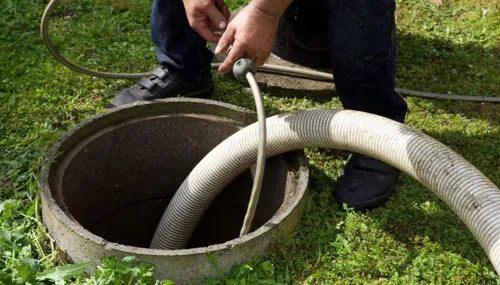
Hometown Septic Services provides comprehensive septic system solutions in Austin, TX, and surrounding communities. They serve both residential and commercial clients, offering services such as septic tank pumping, inspections, repairs, and pump replacements. The company specializes in septic pump repairs to ensure efficient wastewater management and compliance with local regulations. Hometown Septic also offers emergency septic services to address urgent system failures promptly. Their team is equipped to handle a wide range of septic system needs, maintaining system functionality and preventing future issues.
Ace in the Hole Septic Waste Removal LLC
Waco, TX
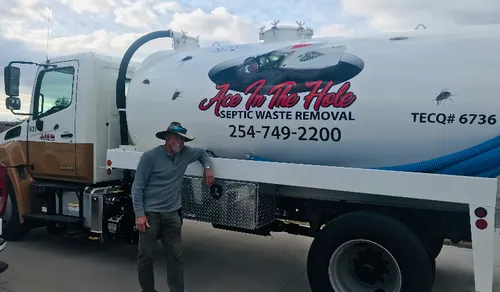
Ace in the Hole Septic Waste Removal LLC is a family-owned septic tank pumping company based in Waco, TX. They provide residential and commercial septic pumping services to Waco and surrounding areas. Their professional team operates pump trucks to ensure septic tanks are properly maintained, helping to prevent odors and environmental contamination. Regular pumping helps protect health and the environment by preventing harmful bacteria and chemicals from entering groundwater. The company is locally owned and operated by David Culp.

Heart of Texas Pumping LLC
Waco, TX
Heart of Texas Pumping LLC provides septic tank pumping and inspection services in Waco, TX, and surrounding Central Texas communities including Temple, Belton, Moody, and Salado. They serve residential, commercial, and agricultural clients with comprehensive septic solutions such as routine pumping, sludge removal, and emergency cleanouts. The company uses advanced camera imaging and locating tools to diagnose septic issues without unnecessary digging. They offer 24/7 emergency septic pumping to address urgent system failures. With years of hands-on experience, their licensed and insured technicians prioritize safety and environmental responsibility in every job.
Best Texas Septic
11244 TX-36 Unit D, Temple, TX 76504
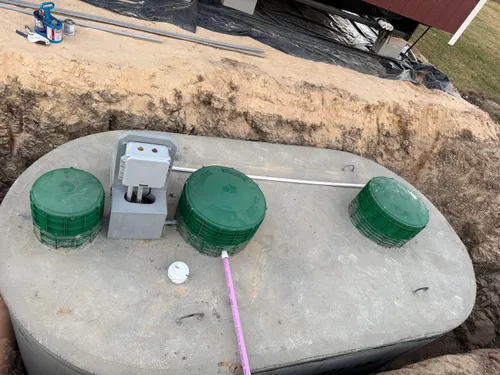
Best Texas Septic is a septic tank pumping, inspection, and repair company serving Killeen, TX. They provide professional septic system services for both residential and commercial properties, focusing on tailored solutions to meet specific property needs. The company emphasizes long-term care and preventative maintenance to extend the life of septic systems. They handle emergency service calls promptly, including weekends, aiming to respond within 48 hours and often the same day.
Understanding Your Septic System
A septic system is an on-site wastewater treatment structure, commonly used in areas without centralized sewer systems. It consists of a large underground tank and a drain field. When wastewater from your home enters the tank, solids settle to the bottom as sludge, oils and grease float to the top as scum, and the partially treated liquid effluent flows out to the drain field for further filtration into the soil. Over time, the sludge and scum layers accumulate, which is why periodic septic tank cleaning is non-negotiable. If these layers become too thick, they can flow into and clog the drain field, leading to system failure and environmental contamination.
How Often Should You Pump Your Septic Tank in Temple?
The standard recommendation for conventional systems in Bell County is to schedule septic tank service every 3 to 5 years. However, this is a general guideline, and your specific schedule can vary significantly based on several household factors.
- Household Size: More people generate more wastewater and solids, filling the tank faster.
- Tank Size: A smaller tank (e.g., 750-gallon) will require more frequent pumping than a larger one (e.g., 1,500-gallon).
- Total Wastewater Generated: High water usage from frequent laundry loads, long showers, or large tubs accelerates accumulation.
- Garbage Disposal Use: Regular use of an in-sink garbage disposal significantly increases the amount of solid waste entering the tank, necessitating more frequent septic system maintenance 1.
- System Type: If you have an aerobic treatment unit (ATU), it requires more attentive care. These systems need, at minimum, monthly or quarterly checks by a licensed maintenance provider, and the tank often requires pumping every 1 to 2 years 2.
The only way to know for sure is through a professional inspection, which should measure the sludge and scum levels inside the tank. A common rule is to pump the tank when the sludge depth reaches about one-third of the tank's liquid depth.
The Importance of Regular Septic Inspections
While pumping removes accumulated waste, inspections ensure the entire system is functioning properly. The U.S. Environmental Protection Agency (EPA) recommends having a septic system inspection at least every three years 3. For Temple homeowners, an inspection is a smart investment that can identify small problems before they become expensive disasters.
A thorough inspection by a licensed professional will:
- Measure sludge and scum levels to determine if pumping is needed.
- Check the tank's structural integrity for cracks or leaks.
- Inspect inlet and outlet baffles to ensure they are intact.
- Examine the drain field for signs of surfacing effluent or soggy ground.
- Assess the condition of mechanical components like pumps or alarms (if present) 4 5.
Relying on licensed professionals is not just a recommendation-it's often a requirement. The Texas Commission on Environmental Quality (TCEQ) mandates that sludge haulers and many system inspectors be properly licensed to protect public health and the environment 6 7.
Find the perfect septic tank pumping contractors for your needs
Get personalized recommendations and expert advice
What to Expect: The Pumping Process and Costs
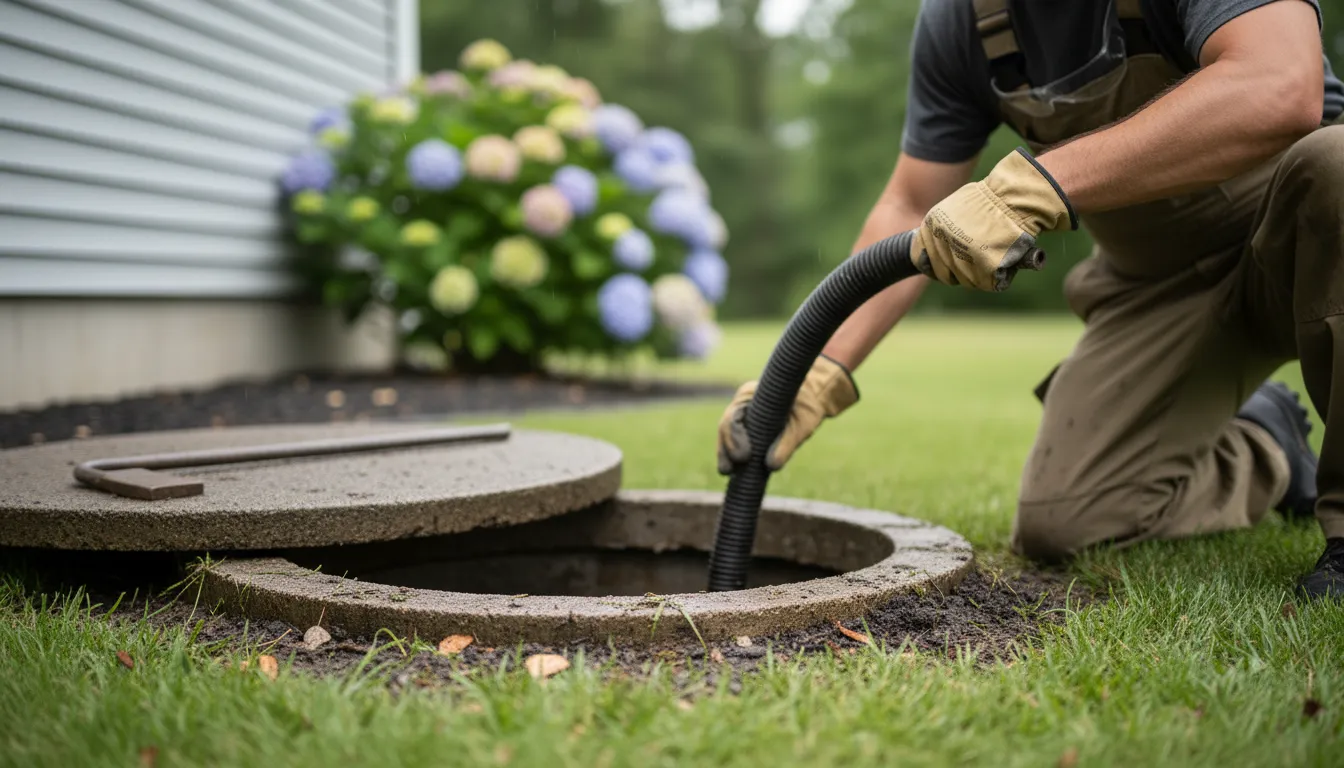
When you schedule a septic tank emptying service, a professional will arrive with a large vacuum truck. They will locate and uncover your tank's access lids, insert a large hose, and vacuum out all the contents-sludge, scum, and liquid. They may also rinse the tank with water and inspect components before securely replacing the lids.
In the Temple area, the average cost for this essential septic tank maintenance ranges from $350 to $650 or more for a standard residential tank 8 9. Several factors influence the final price:
- Tank Size: Pumping a 1,000-gallon tank costs less than a 1,500-gallon tank.
- Accessibility: If the tank lids are buried deep, require digging to uncover, or are located far from where the truck can park, the price will increase.
- Condition: Tanks with severe buildup or hardened sludge may require more time and effort.
- Additional Services: Many companies offer bundled services. Adding a full system inspection or effluent filter cleaning will increase the total but provides greater value and peace of mind 10.
Protecting Your System Between Pumpings
Proper daily care extends the life of your system and stretches the time between necessary pumpings. Follow these best practices:
- Conserve Water: Fix leaky faucets and toilets, and spread out laundry loads over the week to avoid overwhelming the system.
- Mind What You Flush: Only human waste and toilet paper should go down the toilet. Never flush wipes (even "flushable" ones), feminine hygiene products, dental floss, diapers, or cat litter.
- Use the Trash Can: Avoid using your garbage disposal excessively. Dispose of cooking grease, coffee grounds, and food scraps in the trash.
- Protect the Drain Field: Never park vehicles or build structures over the drain field. Keep roof drains, sump pumps, and other surface water away from the area.
Finding Licensed Professionals in Bell County
For local requirements and to verify a company's credentials, you can contact the Bell County Public Health District or the TCEQ regional office. They can provide lists of licensed installers, pumpers, and maintenance providers 11. Always choose a provider with the proper TCEQ licensing, good local references, and clear, upfront pricing.
Frequently asked questions
Sources
Footnotes
-
Maintenance of On-Site Sewage Facilities (Septic Systems) - https://www.tceq.texas.gov/permitting/ossf/ossfmaintenance.html ↩
-
Septic System Maintenance K. Mancl and J. A. Moore - https://www.deschutes.org/sites/default/files/fileattachments/community_development/page/776/es-septic_system_maintenance.pdf ↩
-
How to Care for Your Septic System | US EPA - https://www.epa.gov/septic/how-care-your-septic-system ↩
-
Septic System - Texas Water Resources Institute - https://twri.tamu.edu/wp-content/uploads/2024/04/em-126-septic-system-maintenance-inspection-pocket-guide.pdf ↩
-
Septic Inspection Guide: Homeowner Tips & Best Practices - https://www.rciseptic.com/comprehensive-guide-to-septic-inspection-what-homeowners-need-to-know ↩
-
On-Site Sewage Facilities (Septic Systems): General Information - Texas Commission on Environmental Quality - www.tceq.texas.gov - https://www.tceq.texas.gov/permitting/ossf/ossfgeneral.html ↩
-
Texas Septic Tank Rules - https://dillonseptic.com/texas-septic-tank-rules/ ↩
-
How Much Does It Cost to Pump a Septic Tank? - https://dillonseptic.com/how-much-does-it-cost-to-pump-a-septic-tank/ ↩
-
Septic Tank Pumping Frequency: Crucial Maintenance Guide - https://septic911.com/septic-tank-pumping-frequency/ ↩
-
How Often to Pump Septic Tank Pearland | Cost Guide 2025 - https://accurateplumbingtx.com/septic-tank-pumping-frequency-pearland/ ↩
-
Pumping and Inspecting Your System | Maintaining Your Septic System Guide - https://www.ihs.gov/california/index.cfm/offices/oehe/dsfc/drinking-water-and-sanitation/maintaining-your-septic-system-guide/pumping-and-inspecting-your-system/ ↩